Risk Summary
TLANDO is contraindicated in pregnant women and not indicated for use in females [see Contraindications (4)]. Testosterone is teratogenic and may cause fetal harm when administered to a pregnant woman based on data from animal studies (see Data) and its mechanism of action [see Clinical Pharmacology (12.1)]. Exposure of a female fetus to androgens may result in varying degrees of virilization. In animal developmental studies, exposure to testosterone in utero resulted in hormonal and behavioral changes in offspring and structural impairments of reproductive tissues in female and male offspring. These studies did not meet current standards for nonclinical development toxicity studies.
Data
Animal Data
In developmental studies conducted in rats, rabbits, pigs, sheep and rhesus monkeys, pregnant animals received intramuscular injection of testosterone during the period of organogenesis. Testosterone treatment at doses that were comparable to those used for testosterone replacement therapy resulted in structural impairments in both female and male offspring. Structural impairments observed in females included increased anogenital distance, phallus development, empty scrotum, no external vagina, intrauterine growth retardation, reduced ovarian reserve, and increased ovarian follicular recruitment. Structural impairments seen in male offspring included increased testicular weight, larger seminal tubular lumen diameter, and higher frequency of occluded tubule lumen. Increased pituitary weight was seen in both sexes.
Testosterone exposure in utero also resulted in hormonal and behavioral changes in offspring. Hypertension was observed in pregnant females and offspring in rats exposed to doses approximately twice those used for testosterone replacement therapy.
Risk Summary
TLANDO is not indicated for use in females.
Infertility
Males
During treatment with large doses of exogenous androgens, including TLANDO, spermatogenesis may be suppressed through feedback inhibition of the hypothalamic-pituitary-testicular axis [see Warnings and Precautions (5.8)]. Reduced fertility is observed in some men taking testosterone replacement therapy. The impact on fertility may be irreversible. Testicular atrophy, subfertility, and infertility have also been reported in men who abuse anabolic androgenic steroids [see Drug Abuse and Dependence (9.2)].
Abuse-Related Adverse Reactions
Serious adverse reactions have been reported in individuals who abuse anabolic androgenic steroids and include cardiac arrest, myocardial infarction, hypertrophic cardiomyopathy, congestive heart failure, cerebrovascular accident, hepatotoxicity, and serious psychiatric manifestations, including major depression, mania, paranoia, psychosis, delusions, hallucinations, hostility and aggression.
The following adverse reactions have also been reported in men: transient ischemic attacks, convulsions, hypomania, irritability, dyslipidemias, testicular atrophy, subfertility, and infertility.
The following additional adverse reactions have been reported in women: hirsutism, virilization, deepening of voice, clitoral enlargement, breast atrophy, male-pattern baldness, and menstrual irregularities.
The following adverse reactions have been reported in male and female adolescents: premature closure of bony epiphyses with termination of growth, and precocious puberty.
Because these reactions are reported voluntarily from a population of uncertain size and may include abuse of other agents, it is not always possible to reliably estimate their frequency or establish a causal relationship to drug exposure.
Behaviors Associated with Addiction
Continued abuse of testosterone and other anabolic steroids, leading to addiction is characterized by the following behaviors:
- Taking greater dosages than prescribed
- Continued drug use despite medical and social problems due to drug use
- Spending significant time to obtain the drug when supplies of the drug are interrupted
- Giving a higher priority to drug use than other obligations
- Having difficulty in discontinuing the drug despite desires and attempts to do so
- Experiencing withdrawal symptoms upon abrupt discontinuation of use
Physical dependence is characterized by withdrawal symptoms after abrupt drug discontinuation or a significant dose reduction of a drug. Individuals taking supratherapeutic doses of testosterone may experience withdrawal symptoms lasting for weeks or months which include depressed mood, major depression, fatigue, craving, restlessness, irritability, anorexia, insomnia, decreased libido and hypogonadotropic hypogonadism.
Drug dependence in individuals using approved doses of testosterone for approved indications has not been documented.
Absorption
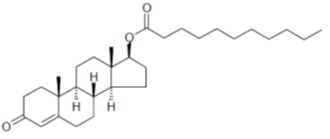
Testosterone undecanoate is a lipophilic molecule that is primarily absorbed into the lymph system after oral administration and then released into the general blood circulation by the thoracic duct, avoiding absorption into the portal vein thereby circumventing first-pass metabolism in the liver. Testosterone undecanoate is converted to testosterone following absorption.
Following administration of 225 mg of TLANDO in ninety-five hypogonadal males, maximum serum testosterone concentrations were observed at a median (Tmax) of about 5 hours. The mean maximum (Cmax) serum testosterone concentrations observed were 979 ng/dL and 989 ng/dL following the morning and evening TLANDO doses, respectively. The average serum testosterone concentrations over 24 hours (Cavg0-24h) observed following TLANDO administration was 476 ng/dL.
Figure 1 shows the mean serum total testosterone concentration-time profile for hypogonadal men (N=90) administered TLANDO.
Figure 1: Mean (±SEM) Serum Total Testosterone Concentrations (ng/dL)
Following TLANDO administration, the mean serum dihydrotestosterone (DHT) Cavg0-24h was 108 ng/dL, the mean serum testosterone undecanoate Cavg0-24h was 11,100 ng/dL and the mean serum dihydrotestosterone undecanoate Cavg0-24h was 4,700 ng/dL.
Effect of Food
Administration of TLANDO with moderate fat containing food did not significantly impact the pharmacokinetic parameters of testosterone compared to high or low fat. However, there is decrease in exposure when administered without food compared to fed conditions.
In studies with 13 to 14 hypogonadal males, mean testosterone Cmax and AUC were comparable when TLANDO was administered with food containing low, moderate or high fat amounts. Administration in fasting conditions resulted in approximately 65 % and 38% lower Cmax and AUC, respectively, compared to administration with food (high fat).
Distribution
Circulating testosterone is primarily bound in serum to sex hormone-binding globulin (SHBG) and albumin. Approximately 40% of testosterone in plasma is bound to SHBG, 2% remains unbound (free) and the rest is bound to albumin and other proteins.
Elimination
The elimination half-life of testosterone undecanoate is approximately 2 hours. Once testosterone is formed from testosterone undecanoate, there is considerable variation in the half-life of testosterone as reported in the literature, ranging from 10 to 100 minutes.
Metabolism
Testosterone undecanoate is metabolized to testosterone via ester cleavage of the undecanoate group and reduced to DHTU by 5α-reductase. Testosterone is metabolized to various 17-keto steroids. The major active metabolites of testosterone are DHT and estradiol.
Excretion
About 90% of a dose of testosterone given intramuscularly is excreted in the urine as glucuronic and sulfuric acid conjugates of testosterone and its metabolites. About 6% of a dose is excreted in the feces, mostly in the unconjugated form. Inactivation of testosterone occurs primarily in the liver.
Carcinogenesis
Testosterone has been tested by subcutaneous injection and implantation in mice and rats. In mice, the implant induced cervical-uterine tumors, which metastasized in some cases. There is suggestive evidence that injection of testosterone into some strains of female mice increases their susceptibility to hepatoma. Testosterone is also known to increase the number of tumors and decrease the degree of differentiation of chemically induced carcinomas of the liver in rats.
Mutagenesis
Mutagenic effects of testosterone undecanoate were not detected in a battery of in vitro tests including bacterial mutation assays (Ames test) and chromosomal aberration tests in human lymphocytes. Testosterone undecanoate was also negative in an in vivo bone marrow micronucleus assay in rats. Testosterone was negative in the in vitro Ames and in the in vivo mouse micronucleus assays.
Impairment of Fertility
The administration of exogenous testosterone has been reported to suppress spermatogenesis in the rat, dog and non-human primates, which was reversible on cessation of the treatment.
Increase in Blood Pressure and Cardiovascular Risk
Advise patients that TLANDO can increase blood pressure (BP) which can result in an increase in the risk of major adverse cardiovascular events (MACE), including myocardial infarction, stroke, and cardiovascular death. This risk is greater in patients with established cardiovascular disease or risk factors for cardiovascular disease. Advise patients about the importance of monitoring BP periodically while on TLANDO. Advise patients to report to their healthcare provider the use of concomitant prescription or nonprescription medication, including cough and cold medications which can also increase BP [see Warnings and Precautions (5.1 and 5.3)].
Polycythemia
Advise patients that TLANDO can cause an increase in hematocrit levels that may increase the risk of thromboembolic events. Advise patients about the importance of completing laboratory testing as instructed by their health care provider while on TLANDO. [see Warnings and Precautions (5.2)].
Worsening of Benign Prostatic Hyperplasia (BPH) and Potential Risk of Prostate Cancer
Advise patients that TLANDO can cause increased symptoms of BPH and can increase the risk for prostate cancer. Advise patients to contact their health care provider if they have any prostate-related symptoms [see Warnings and Precautions (5.4)].
Edema
Advise patients with preexisting cardiac, renal, or hepatic disease that TLANDO can cause edema. Advise patients to notify their health care provider if edema develops or worsens [see Warnings and Precautions (5.10)].
Sleep Apnea
Advise patients that TLANDO can worsen sleep apnea especially in patients with risk factors such as obesity or chronic lung diseases [see Warnings and Precautions (5.11)].
Gynecomastia
Advise patients that TLANDO can cause gynecomastia. [see Warnings and Precautions (5.12)].
Administration Instructions
- Advise patients to take TLANDO with food [see Dosage and Administration (2.3)].
Verity Pharma Medical Affairs:
1-844-VERITY-1 (1-844-837-4891)
Manufactured for:

Verity_logo (Verity Logo)
Manufactured for Verity Pharmaceuticals, Inc.
Ewing, NJ 08628
Manufactured in the United Kingdom
TLANDO® and its design are registered trademarks of Verity Pharmaceuticals Inc.
Verity Pharmaceuticals, Verity Pharma, and their designs are trademarks of Verity Pharmaceuticals, Inc.
© 2024 Verity Pharmaceuticals Inc. All rights reserved.
TLA-001