Oncoderm Rx Mineral Sunscreen Spf-30 Cream
Product Images NDC 75087-074

View Photos of Packaging, Regulatory Labels, and Product Appearance

Product Visual Gallery

This gallery contains 1 technical images submitted to the FDA as part of the official labeling for Oncoderm Rx Mineral Sunscreen Spf-30 (NDC 75087-074). Unlike standard consumer photos, these assets often include clinical data figures, molecular chemical structures, and official manufacturer packaging layouts.

As provided by Oncoderm, Llc, these visuals offer a comprehensive scientific overview of the product's physical and chemical identity, aiding pharmacists and researchers in product verification and study.

Product Images & Figures Index

FDA Label Image

Label (Label)

Label (Label)
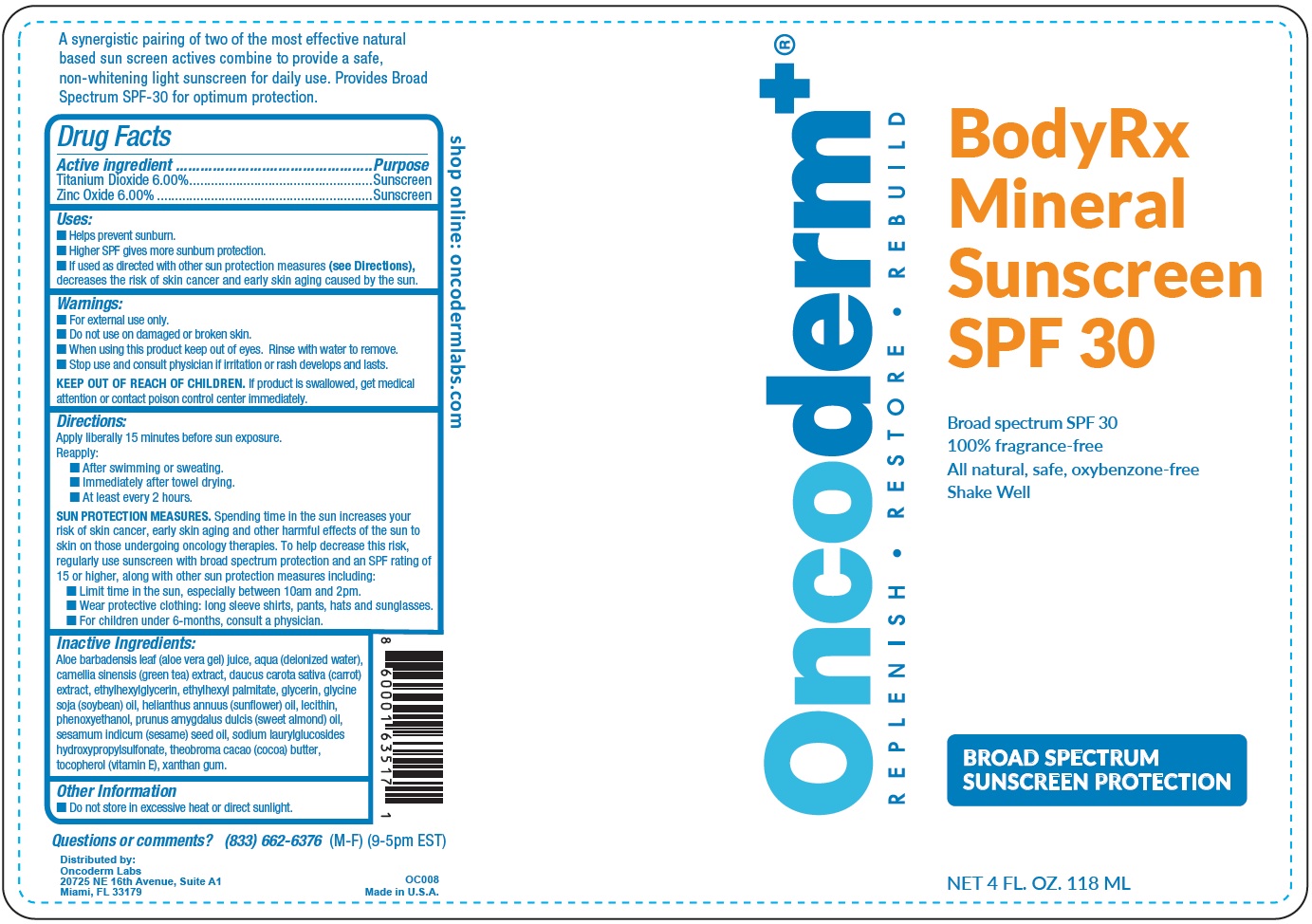
BodyRx Mineral Sunscreen SPF 30 is a synergistic pairing of two natural, safe, oxybenzone-free sunscreen actives that provide a non-whitening light sunscreen for daily use. This sunscreen provides Broad Spectrum SPF-30 for optimum protection against sunburns, skin cancer, and early skin aging caused by the sun. The active ingredients, Zinc Oxide and Titanium Dioxide, are both present in 6.0% concentration. The product is 100% fragrance-free and can be applied liberally 15 minutes before sun exposure, then reapplied immediately after towel drying, sweating, or swimming, or at least every 2 hours. For best results, the product should be used with other sun protection measures such as wearing protective clothing, hats, and sunglasses, and avoiding exposure to the sun between 10 am and 2 pm. It is essential to keep the product out of reach of children and not use it on damaged or broken skin, and rinse with water if it comes in contact with the eyes. If a rash develops or lasts, discontinue use and consult a physician immediately. The product is distributed by Oncoderm Labs, Miami, FL, and made in the USA. For further information or clarifications, customers can contact (833)-662-6376 from Monday to Friday during 9-5 pm EST.*

* These product label images have been analyzed using experimental machine learning. Please verify findings with the primary label text.