Antibacterial Hand Lavender Sage
Product Images NDC 75763-003

View Photos of Packaging, Regulatory Labels, and Product Appearance

Product Visual Gallery

This gallery contains 2 technical images submitted to the FDA as part of the official labeling for Antibacterial Hand Lavender Sage (NDC 75763-003). Unlike standard consumer photos, these assets often include clinical data figures, molecular chemical structures, and official manufacturer packaging layouts.

As provided by Guangzhou Sluj Special Chemical Co., Ltd, these visuals offer a comprehensive scientific overview of the product's physical and chemical identity, aiding pharmacists and researchers in product verification and study.

Product Images & Figures Index

FDA Label Image

Label (Label)

Label (Label)
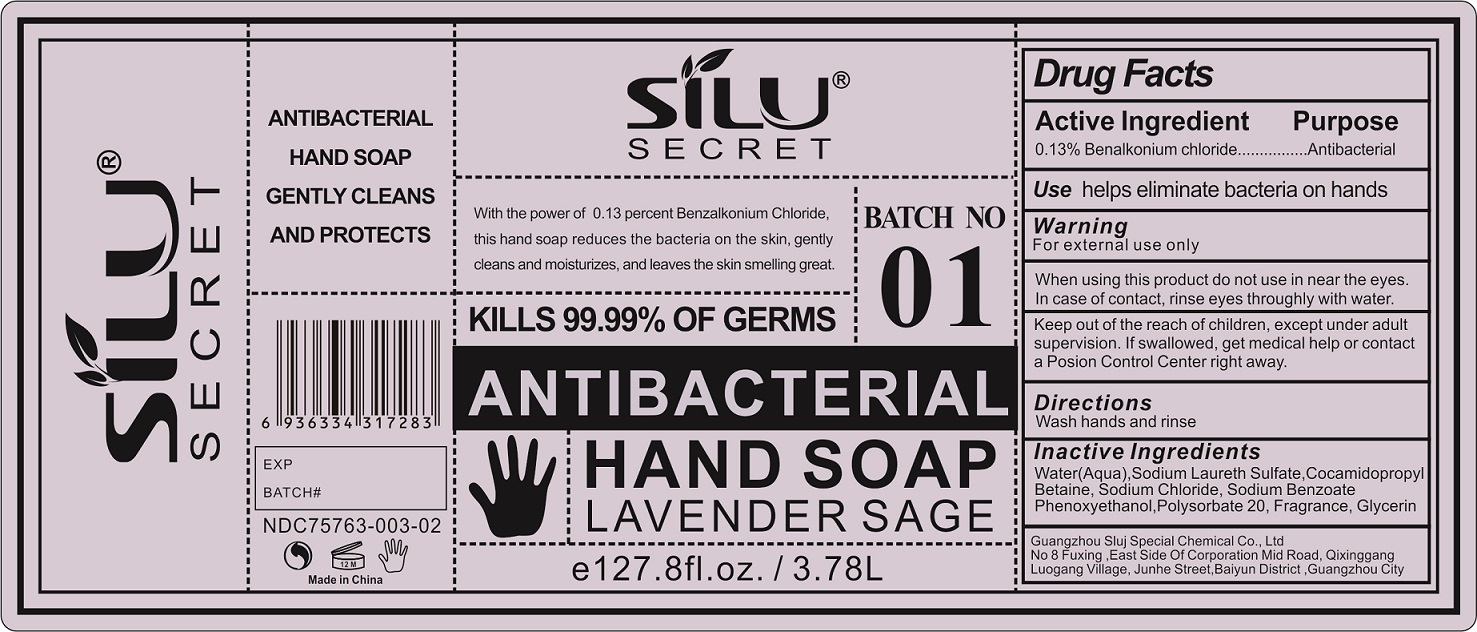
This is a 500ml bottle of Antibacterial Lavender Sage Hand Soap made in China by Guangzhou Sluj Special Chemical Co., Ltd. The active ingredient, 0.13% Benzalkonium Chloride, helps reduce bacteria on the skin while gently cleansing and moisturizing. It also has a fragrance that leaves the skin smelling great. The soap includes a warning to avoid contact with eyes, and it should not be used near the eyes. It is intended for external use only and should be kept out of the reach of children unless under adult supervision.*
FDA Label Image

Label2 (Label2)

Label2 (Label2)
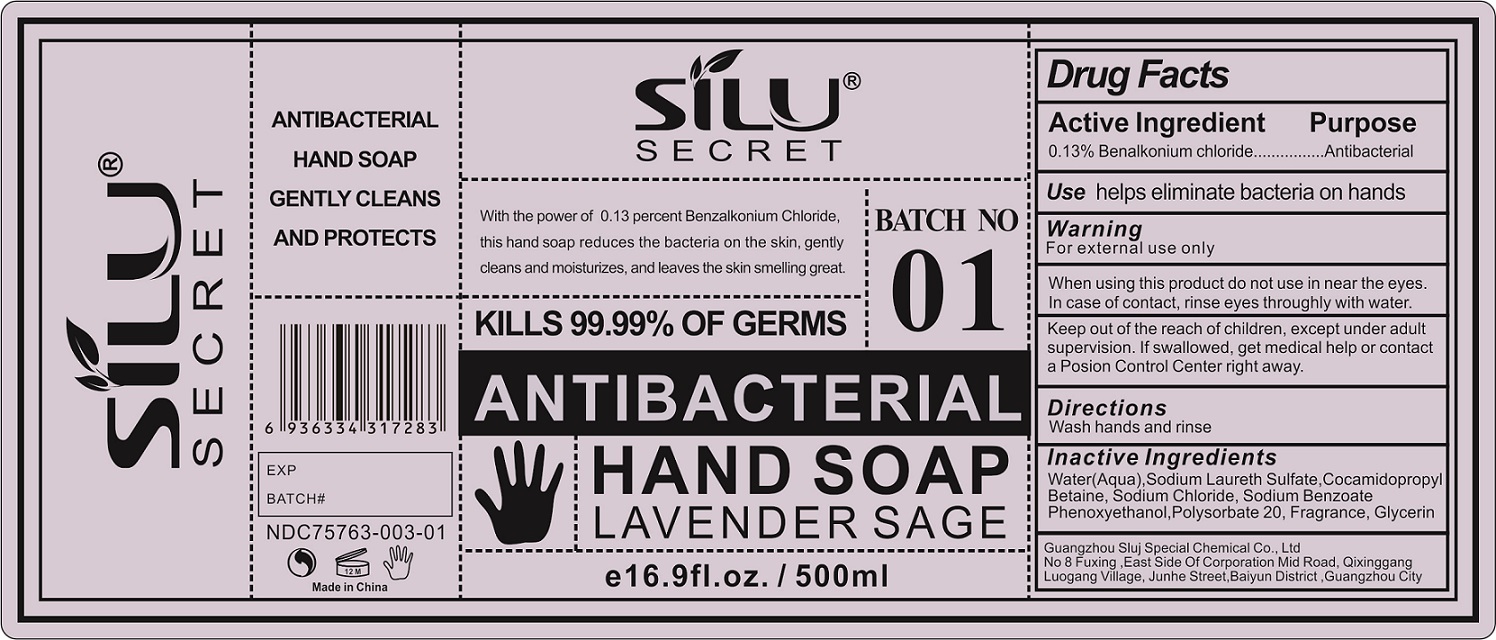
This is a description of an antibacterial hand soap that gently cleans and protects while killing 99.99% of germs. The soap contains 0.13% Benzalkonium Chloride and Lavender Sage, which helps reduce bacteria on the skin while moisturizing and leaving a pleasant scent. The product can help eliminate bacteria on hands but should not be used near the eyes. The soap comes with directions to wash hands and rinse, and it contains water, Sodium Laureth Sulfate, Cocamidopropyl Betaine, Sodium Chioride, Sodium Benzoate Phenoxyethanol Polysorbate 20, Fragrance, and Glycerin as inactive ingredients. It is made in China by Guangzhou Sluj Special Chemical Co., Ltd.*

* These product label images have been analyzed using experimental machine learning. Please verify findings with the primary label text.