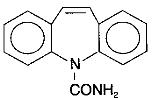
Serious Dermatologic Reactions
Serious and sometimes fatal dermatologic reactions, including toxic epidermal necrolysis (TEN) and Stevens-Johnson syndrome (SJS), have been reported with carbamazepine treatment. The risk of these events is estimated to be about 1 to 6 per 10,000 new users in countries with mainly Caucasian populations. However, the risk in some Asian countries is estimated to be about 10 times higher. Carbamazepine should be discontinued at the first sign of a rash, unless the rash is clearly not drug-related. If signs or symptoms suggest SJS/TEN, use of this drug should not be resumed and alternative therapy should be considered.
SJS/TEN and HLA-B*1502 Allele
Retrospective case-control studies have found that in patients of Chinese ancestry there is a strong association between the risk of developing SJS/TEN with carbamazepine treatment and the presence of an inherited variant of the HLA-B gene, HLA-B*1502. The occurrence of higher rates of these reactions in countries with higher frequencies of this allele suggests that the risk may be increased in allele-positive individuals of any ethnicity.
Across Asian populations, notable variation exists in the prevalence of HLA-B*1502. Greater than 15% of the population is reported positive in Hong Kong, Thailand, Malaysia, and parts of the Philippines, compared to about 10% in Taiwan and 4% in North China. South Asians, including Indians, appear to have intermediate prevalence of HLA-B*1502, averaging 2% to 4%, but higher in some groups. HLA-B*1502 is present in less than 1% of the population in Japan and Korea.
HLA-B*1502 is largely absent in individuals not of Asian origin (e.g., Caucasians, African-Americans, Hispanics, and Native Americans).
Prior to initiating carbamazepine therapy, testing for HLA-B*1502 should be performed in patients with ancestry in populations in which HLA-B*1502 may be present. In deciding which patients to screen, the rates provided above for the prevalence of HLA-B*1502 may offer a rough guide, keeping in mind the limitations of these figures due to wide variability in rates even within ethnic groups, the difficulty in ascertaining ethnic ancestry, and the likelihood of mixed ancestry. Carbamazepine should not be used in patients positive for HLA-B*1502 unless the benefits clearly outweigh the risks. Tested patients who are found to be negative for the allele are thought to have a low risk of SJS/TEN (see BOXED WARNING and
PRECAUTIONS,
Laboratory Tests).
Over 90% of carbamazepine treated patients who will experience SJS/TEN have this reaction within the first few months of treatment. This information may be taken into consideration in determining the need for screening of genetically at-risk patients currently on carbamazepine.
The HLA-B*1502 allele has not been found to predict risk of less severe adverse cutaneous reactions from carbamazepine such as maculopapular eruption (MPE) or to predict Drug Reaction with Eosinophilia and Systemic Symptoms (DRESS).
Limited evidence suggests that HLA-B*1502 may be a risk factor for the development of SJS/TEN in patients of Chinese ancestry taking other antiepileptic drugs associated with SJS/TEN, including phenytoin. Consideration should be given to avoiding use of other drugs associated with SJS/TEN in HLA-B*1502 positive patients, when alternative therapies are otherwise equally acceptable.
Hypersensitivity Reactions and HLA-A*3101 Allele
Retrospective case-control studies in patients of European, Korean, and Japanese ancestry have found a moderate association between the risk of developing hypersensitivity reactions and the presence of HLA-A*3101, an inherited allelic variant of the HLA-A gene, in patients using carbamazepine. These hypersensitivity reactions include SJS/TEN, maculopapular eruptions, and Drug Reaction with Eosinophilia and Systemic Symptoms (see DRESS/Multiorgan hypersensitivity below).
HLA-A*3101 is expected to be carried by more than 15% of patients of Japanese, Native American, Southern Indian (for example, Tamil Nadu) and some Arabic ancestry; up to about 10% in patients of Han Chinese, Korean, European, Latin American, and other Indian ancestry; and up to about 5% in African-Americans and patients of Thai, Taiwanese, and Chinese (Hong Kong) ancestry.
The risks and benefits of carbamazepine therapy should be weighed before considering carbamazepine in patients known to be positive for HLA-A*3101.
Application of HLA genotyping as a screening tool has important limitations and must never substitute for appropriate clinical vigilance and patient management. Many HLA-B*1502-positive and HLA-A*3101-positive patients treated with carbamazepine will not develop SJS/TEN or other hypersensitivity reactions, and these reactions can still occur infrequently in HLA-B*1502-negative and HLA-A*3101-negative patients of any ethnicity. The role of other possible factors in the development of, and morbidity from, SJS/TEN and other hypersensitivity reactions, such as antiepileptic drug (AED) dose, compliance, concomitant medications, comorbidities, and the level of dermatologic monitoring, have not been studied.
Aplastic Anemia and Agranulocytosis
Aplastic anemia and agranulocytosis have been reported in association with the use of carbamazepine (see BOXED WARNING). Patients with a history of adverse hematologic reaction to any drug may be particularly at risk of bone marrow depression.
Drug Reaction with Eosinophilia and Systemic Symptoms (DRESS)/ Multiorgan Hypersensitivity
Drug Reaction with Eosinophilia and Systemic Symptoms (DRESS), also known as multiorgan hypersensitivity, has occurred with carbamazepine. Some of these events have been fatal or life-threatening. DRESS typically, although not exclusively, presents with fever, rash, and/or lymphadenopathy, and/or facial swelling in association with other organ system involvement, such as hepatitis, nephritis, hematologic abnormalities, myocarditis, or myositis sometimes resembling an acute viral infection. Eosinophilia is often present. This disorder is variable in its expression, and other organ systems not noted here may be involved. It is important to note that early manifestations of hypersensitivity (e.g., fever, lymphadenopathy) may be present even though rash is not evident. If such signs or symptoms are present, the patient should be evaluated immediately. Carbamazepine should be discontinued if an alternative etiology for the signs or symptoms cannot be established.
Hypersensitivity
Hypersensitivity reactions to carbamazepine have been reported in patients who previously experienced this reaction to anticonvulsants including phenytoin, primidone, and phenobarbital. If such history is present, benefits and risks should be carefully considered and, if carbamazepine is initiated, the signs and symptoms of hypersensitivity should be carefully monitored.
Patients should be informed that about a third of patients who have had hypersensitivity reactions to carbamazepine also experience hypersensitivity reactions with oxcarbazepine (Trileptal®).
Anaphylaxis and Angioedema
Rare cases of anaphylaxis and angioedema involving the larynx, glottis, lips, and eyelid have been reported in patients after taking the first or subsequent doses of Carbamazepine. Angioedema associated with laryngeal edema can be fatal. If a patient develops any of these reactions with Carbamazepine, the drug should be discontinued and an alternative treatment started. These patients should not be rechallenged with the drugs.
Suicidal Behavior and Ideation
Antiepileptic drugs (AEDs), including carbamazepine, increase the risk of suicidal thoughts or behavior in patients taking these drugs for any indication. Patients treated with any AED for any indication should be monitored for the emergence or worsening of depression, suicidal thoughts or behavior, and/or any unusual changes in mood or behavior.
Pooled analyses of 199 placebo-controlled clinical trials (mono-and adjunctive therapy) of 11 different AEDs showed that patients randomized to one of the AEDs had approximately twice the risk (adjusted Relative Risk 1.8, 95% CI:1.2, 2.7) of suicidal thinking or behavior compared to patients randomized to placebo. In these trials, which had a median treatment duration of 12 weeks, the estimated incidence rate of suicidal behavior or ideation among 27,863 AED-treated patients was 0.43%, compared to 0.24% among 16,029 placebo-treated patients, representing an increase of approximately one case of suicidal thinking or behavior for every 530 patients treated. There were four suicides in drug-treated patients in the trials and none in placebo-treated patients, but the number is too small to allow any conclusion about drug effect on suicide.
The increased risk of suicidal thoughts or behavior with AEDs was observed as early as one week after starting drug treatment with AEDs and persisted for the duration of treatment assessed. Because most trials included in the analysis did not extend beyond 24 weeks, the risk of suicidal thoughts or behavior beyond 24 weeks could not be assessed.
The risk of suicidal thoughts or behavior was generally consistent among drugs in the data analyzed. The finding of increased risk with AEDs of varying mechanisms of action and across a range of indications suggests that the risk applies to all AEDs used for any indication. The risk did not vary substantially by age (5 to 100 years) in the clinical trials analyzed. Table 1 shows absolute and relative risk by indication for all evaluated AEDs.
Table 1 Risk by Indication for Antiepileptic Drugs in the Pooled Analysis
Indication
| Placebo Patients with Events Per 1,000 Patients
| Drug Patients with Events Per 1,000 Patients
| Relative Risk: Incidence of Events in Drug Patients/Incidence in Placebo Patients
| Risk Difference: Additional Drug Patients with Events Per 1,000 Patients
|
Epilepsy
| 1.0
| 3.4
| 3.5
| 2.4
|
Psychiatric
| 5.7
| 8.5
| 1.5
| 2.9
|
Other
| 1.0
| 1.8
| 1.9
| 0.9
|
Total
| 2.4
| 4.3
| 1.8
| 1.9
|
The relative risk for suicidal thoughts or behavior was higher in clinical trials for epilepsy than in clinical trials for psychiatric or other conditions, but the absolute risk differences were similar for the epilepsy and psychiatric indications.
Anyone considering prescribing carbamazepine or any other AED must balance the risk of suicidal thoughts or behavior with the risk of untreated illness. Epilepsy and many other illnesses for which AEDs are prescribed are themselves associated with morbidity and mortality and an increased risk of suicidal thoughts and behavior. Should suicidal thoughts and behavior emerge during treatment, the prescriber needs to consider whether the emergence of these symptoms in any given patient may be related to the illness being treated.
General
Carbamazepine has shown mild anticholinergic activity that may be associated with increased intraocular pressure; therefore, patients with increased intraocular pressure should be closely observed during therapy.
Because of the relationship of the drug to other tricyclic compounds, the possibility of activation of a latent psychosis and, in elderly patients, of confusion or agitation should be borne in mind.
The use of carbamazepine should be avoided in patients with a history of hepatic porphyria (e.g., acute intermittent porphyria, variegate porphyria, porphyria cutanea tarda). Acute attacks have been reported in such patients receiving carbamazepine therapy. Carbamazepine administration has also been demonstrated to increase porphyrin precursors in rodents, a presumed mechanism for the induction of acute attacks of porphyria.
As with all antiepileptic drugs, carbamazepine should be withdrawn gradually to minimize the potential of increased seizure frequency.
Hyponatremia can occur as a result of treatment with carbamazepine. In many cases, the hyponatremia appears to be caused by the syndrome of inappropriate antidiuretic hormone secretion (SIADH). The risk of developing SIADH with carbamazepine treatment appears to be dose-related. Elderly patients and patients treated with diuretics are at greater risk of developing hyponatremia. Signs and symptoms of hyponatremia include headache, new or increased seizure frequency, difficulty concentrating, memory impairment, confusion, weakness, and unsteadiness, which can lead to falls. Consider discontinuing carbamazepine in patients with symptomatic hyponatremia.
Usage in Pregnancy
Carbamazepine can cause fetal harm when administered to a pregnant woman.
Epidemiological data suggest that there may be an association between the use of carbamazepine during pregnancy and congenital malformations, including spina bifida. There have also been reports that associate carbamazepine with developmental disorders and congenital anomalies (e.g., craniofacial defects, cardiovascular malformations, and anomalies involving various body systems). Developmental delays based on neurobehavioral assessments have been reported. When treating or counseling women of childbearing potential, the prescribing physician will wish to weigh the benefits of therapy against the risks. If this drug is used during pregnancy, or if the patient becomes pregnant while taking this drug, the patient should be apprised of the potential hazard to the fetus.
Retrospective case reviews suggest that, compared with monotherapy, there may be a higher prevalence of teratogenic effects associated with the use of anticonvulsants in combination therapy. Therefore, if therapy is to be continued, monotherapy may be preferable for pregnant women.
In humans, transplacental passage of carbamazepine is rapid (30 to 60 minutes), and the drug is accumulated in the fetal tissues, with higher levels found in liver and kidney than in brain and lung.
Carbamazepine has been shown to have adverse effects in reproduction studies in rats when given orally in dosages 10 to 25 times the maximum human daily dosage (MHDD) of 1200 mg on a mg/kg basis or 1.5 to 4 times the MHDD on a mg/m2 basis. In rat teratology studies, 2 of 135 offspring showed kinked ribs at 250 mg/kg and 4 of 119 offspring at 650 mg/kg showed other anomalies (cleft palate, 1; talipes, 1; anophthalmos, 2). In reproduction studies in rats, nursing offspring demonstrated a lack of weight gain and an unkempt appearance at a maternal dosage level of 200 mg/kg.
Antiepileptic drugs should not be discontinued abruptly in patients in whom the drug is administered to prevent major seizures because of the strong possibility of precipitating status epilepticus with attendant hypoxia and threat to life. In individual cases where the severity and frequency of the seizure disorder are such that removal of medication does not pose a serious threat to the patient, discontinuation of the drug may be considered prior to and during pregnancy, although it cannot be said with any confidence that even minor seizures do not pose some hazard to the developing embryo or fetus.
Tests to detect defects using currently accepted procedures should be considered a part of routine prenatal care in childbearing women receiving carbamazepine.
There have been a few cases of neonatal seizures and/or respiratory depression associated with maternal carbamazepine and other concomitant anticonvulsant drug use. A few cases of neonatal vomiting, diarrhea, and/or decreased feeding have also been reported in association with maternal carbamazepine use. These symptoms may represent a neonatal withdrawal syndrome.
To provide information regarding the effects of in utero exposure to carbamazepine, physicians are advised to recommend that pregnant patients taking carbamazepine enroll in the North American Antiepileptic Drug (NAAED) Pregnancy Registry. This can be done by calling the toll free number 1-888-233-2334, and must be done by patients themselves. Information on the registry can also be found at the website http://www.aedpregnancyregistry.org/.
General
Before initiating therapy, a detailed history and physical examination should be made.
Carbamazepine should be used with caution in patients with a mixed seizure disorder that includes atypical absence seizures, since in these patients carbamazepine has been associated with increased frequency of generalized convulsions (see
INDICATIONS AND USAGE).
Therapy should be prescribed only after critical benefit-to-risk appraisal in patients with a history of cardiac conduction disturbance, including second-and third-degree AV heart block; cardiac, hepatic, or renal damage; adverse hematologic or hypersensitivity reaction to other drugs, including reactions to other anticonvulsants; or interrupted courses of therapy with carbamazepine.
AV heart block, including second-and third-degree block, have been reported following carbamazepine treatment. This occurred generally, but not solely, in patients with underlying EKG abnormalities or risk factors for conduction disturbances.
Hepatic effects, ranging from slight elevations in liver enzymes to rare cases of hepatic failure have been reported (see
ADVERSE REACTIONS and
PRECAUTIONS,
Laboratory Tests). In some cases, hepatic effects may progress despite discontinuation of the drug. In addition rare instances of vanishing bile duct syndrome have been reported. This syndrome consists of a cholestatic process with a variable clinical course ranging from fulminant to indolent, involving the destruction and disappearance of the intrahepatic bile ducts. Some, but not all, cases are associated with features that overlap with other immunoallergenic syndromes such as multiorgan hypersensitivity (DRESS syndrome) and serious dermatologic reactions. As an example there has been a report of vanishing bile duct syndrome associated with Stevens-Johnson syndrome and in another case an association with fever and eosinophilia.
Since a given dose of carbamazepine suspension will produce higher peak levels than the same dose given as the tablet, it is recommended that patients given the suspension be started on lower doses and increased slowly to avoid unwanted side effects (see
DOSAGE AND ADMINISTRATION).
Carbamazepine suspension contains sorbitol and, therefore, should not be administered to patients with rare hereditary problems of fructose intolerance.
Information for Patients
Patients should be informed of the availability of a Medication Guide and they should be instructed to read the Medication Guide before taking carbamazepine.
Patients should be made aware of the early toxic signs and symptoms of a potential hematologic problem, as well as dermatologic, hypersensitivity or hepatic reactions. These symptoms may include, but are not limited to, fever, sore throat, rash, ulcers in the mouth, easy bruising, lymphadenopathy and petechial or purpuric hemorrhage, and in the case of liver reactions, anorexia, nausea/vomiting, or jaundice. The patient should be advised that, because these signs and symptoms may signal a serious reaction, that they must report any occurrence immediately to a physician. In addition, the patient should be advised that these signs and symptoms should be reported even if mild or when occurring after extended use.
Patients should be advised that serious skin reactions have been reported in association with carbamazepine. In the event a skin reaction should occur while taking carbamazepine, patients should consult with their physician immediately (see
WARNINGS).
Patients should be advised that anaphylactic and angioedema may occur during treatment with Carbamazepine (see
WARNINGS). Advise patients to immediately report signs and symptoms suggesting angioedema (swelling of face, eyes, lips, or tongue, or difficulty in swallowing or breathing) and to stop taking the drug until they have consulted with their healthcare provider.
Patients, their caregivers, and families should be counseled that AEDs, including carbamazepine, may increase the risk of suicidal thoughts and behavior and should be advised of the need to be alert for the emergence or worsening of symptoms of depression, any unusual changes in mood or behavior, or the emergence of suicidal thoughts, behavior, or thoughts about self-harm. Behaviors of concern should be reported immediately to healthcare providers.
Carbamazepine may interact with some drugs. Therefore, patients should be advised to report to their doctors the use of any other prescription or nonprescription medications or herbal products.
Caution should be exercised if alcohol is taken in combination with carbamazepine therapy, due to a possible additive sedative effect.
Since dizziness and drowsiness may occur, patients should be cautioned about the hazards of operating machinery or automobiles or engaging in other potentially dangerous tasks.
Patients should be encouraged to enroll in the NAAED Pregnancy Registry if they become pregnant. This registry is collecting information about the safety of antiepileptic drugs during pregnancy. To enroll, patients can call the toll free number 1-888-233-2334 (see
WARNINGS, Usage in Pregnancy subsection).
Laboratory Tests
For genetically at-risk patients (see WARNINGS), high-resolution ‘HLA-B*1502 typing’ is recommended. The test is positive if either one or two HLA-B*1502 alleles are detected and negative if no HLA-B*1502 alleles are detected.
Complete pretreatment blood counts, including platelets and possibly reticulocytes and serum iron, should be obtained as a baseline. If a patient in the course of treatment exhibits low or decreased white blood cell or platelet counts, the patient should be monitored closely. Discontinuation of the drug should be considered if any evidence of significant bone marrow depression develops.
Baseline and periodic evaluations of liver function, particularly in patients with a history of liver disease, must be performed during treatment with this drug since liver damage may occur (see
PRECAUTIONS, General and
ADVERSE REACTIONS). Carbamazepine should be discontinued, based on clinical judgment, if indicated by newly occurring or worsening clinical or laboratory evidence of liver dysfunction or hepatic damage, or in the case of active liver disease.
Baseline and periodic eye examinations, including slit-lamp, funduscopy, and tonometry, are recommended since many phenothiazines and related drugs have been shown to cause eye changes.
Baseline and periodic complete urinalysis and BUN determinations are recommended for patients treated with this agent because of observed renal dysfunction.
Monitoring of blood levels (see
CLINICAL PHARMACOLOGY) has increased the efficacy and safety of anticonvulsants. This monitoring may be particularly useful in cases of dramatic increase in seizure frequency and for verification of compliance. In addition, measurement of drug serum levels may aid in determining the cause of toxicity when more than one medication is being used.
Thyroid function tests have been reported to show decreased values with carbamazepine administered alone.
Interference with some pregnancy tests has been reported.
MEDICATION GUIDE
CARBAMAZEPINE (kar-bah-MAZ-eh-peen)
TABLETS USP, 100 mg and 200 mg
Read this Medication Guide before you start taking carbamazepine. There may be new information. This information does not take the place of talking to your healthcare provider about your medical condition or treatment.
What is the most important information I should know about carbamazepine?
Do not stop taking carbamazepine without first talking to your healthcare provider.
Stopping carbamazepine suddenly can cause serious problems.
Carbamazepine can cause serious side effects, including:
1. Carbamazepine may cause rare but serious skin rashes that may lead to death. These serious skin reactions are more likely to happen when you begin taking carbamazepine within the first four months of treatment but may occur at later times. These reactions can happen in anyone, but are more likely in people of Asian descent. If you are of Asian descent, you may need a genetic blood test before you take carbamazepine to see if you are at a higher risk for serious skin reactions with this medicine. Symptoms may include:
• skin rash
• hives
• sores in your mouth
• blistering or peeling of the skin
2. Carbamazepine may cause rare but serious blood problems. Symptoms may include:
• fever, sore throat, or other infections that come and go or do not go away
• easy bruising
• red or purple spots on your body
• bleeding gums or nose bleeds
• severe fatigue or weakness
3. Carbamazepine may cause allergic reactions or serious problems, which may affect organs and other parts of your body like the liver or blood cells. You may or may not have a rash with these types of reactions.
Call your healthcare provider right away if you have any of the following:
• swelling of your face, eyes, lips, or tongue
• a skin rash
• painful sores in the mouth or around your eyes
• unusual bruising or bleeding
• frequent infections or infections that do not go away
• fever, swollen glands, or sore throat that do not go away or come and go
• trouble swallowing or breathing
• hives
• yellowing of your skin or eyes
• severe fatigue or weakness
• an extreme increase in activity and talking (mania)
• severe muscle pain
4. Like other antiepileptic drugs, carbamazepine may cause suicidal thoughts or actions in a very small number of people, about 1 in 500.
Call your healthcare provider right away if you have any of these symptoms, especially if they are new, worse, or worry you:
• thoughts about suicide or dying
• attempts to commit suicide
• new or worse depression
• new or worse anxiety
• feeling agitated or restless
• panic attacks
• trouble sleeping (insomnia)
• new or worse irritability
• acting aggressive, being angry, or violent
• acting on dangerous impulses
• an extreme increase in activity and talking (mania)
• other unusual changes in behavior or mood
How can I watch for early symptoms of suicidal thoughts and actions?
• Pay attention to any changes, especially sudden changes, in mood, behaviors, thoughts, or feelings.
• Keep all follow-up visits with your healthcare provider as scheduled.
Call your healthcare provider between visits as needed, especially if you are worried about symptoms.
Do not stop carbamazepine without first talking to a healthcare provider.
Stopping carbamazepine suddenly can cause serious problems. You should talk to your healthcare provider before stopping.
Suicidal thoughts or actions can be caused by things other than medicines. If you have suicidal thoughts or actions, your healthcare provider may check for other causes.
What is carbamazepine?
Carbamazepine is a prescription medicine used to treat:
• certain types of seizures (partial, tonic-clonic, mixed)
• certain types of nerve pain (trigeminal and glossopharyngeal neuralgia)
Carbamazepine is not a regular pain medicine and should not be used for aches or pains.
Who should not take carbamazepine?
Do not take carbamazepine if you:
• have a history of bone marrow depression.
• are allergic to carbamazepine or any of the ingredients in Carbamazepine Tablets. See the end of this Medication Guide for a complete list of ingredients in Carbamazepine Tablets.
• take nefazodone.
• are allergic to medicines called tricyclic antidepressants (TCAs). Ask your healthcare provider or pharmacist for a list of these medicines if you are not sure.
• have taken a medicine called a Monoamine Oxidase Inhibitor (MAOI) in the last 14 days. Ask your healthcare provider or pharmacist for a list of these medicines if you are not sure.
What should I tell my healthcare provider before taking carbamazepine?
Before you take carbamazepine, tell your healthcare provider if you:
• have or have had suicidal thoughts or actions, depression, or mood problems
• have or ever had heart problems
• have or ever had blood problems
• have or ever had liver problems
• have or ever had kidney problems
• have or ever had allergic reactions to medicines
• have or ever had increased pressure in your eye
• have any other medical conditions
• drink grapefruit juice or eat grapefruit
• use birth control. Carbamazepine may make your birth control less effective. Tell your healthcare provider if your menstrual bleeding changes while you take birth control and
carbamazepine.
• are pregnant or plan to become pregnant. Carbamazepine may harm your unborn baby. Tell your healthcare provider right away if you become pregnant while taking carbamazepine.
You and your healthcare provider should decide if you should take carbamazepine while you are pregnant.
▪ If you become pregnant while taking carbamazepine, talk to your healthcare provider about registering with the North American Antiepileptic Drug (NAAED) Pregnancy Registry. The
purpose of this registry is to collect information about the safety of antiepileptic medicine during pregnancy. You can enroll in this registry by calling 1-888-233-2334.
• are breastfeeding or plan to breastfeed. Carbamazepine passes into breast milk. You and your healthcare provider should discuss whether you should take carbamazepine or breastfeed;
you should not do both.
Tell your healthcare provider about all the medicines you take, including prescription and non-prescription medicines, vitamins, and herbal supplements.
Taking carbamazepine with certain other medicines may cause side effects or affect how well they work. Do not start or stop other medicines without talking to your healthcare provider.
Know the medicines you take. Keep a list of them and show it to your healthcare provider and pharmacist when you get a new medicine.
How should I take carbamazepine?
• Do not stop taking carbamazepine without first talking to your healthcare provider. Stopping carbamazepine suddenly can cause serious problems. Stopping seizure medicine suddenly in
a patient who has epilepsy may cause seizures that will not stop (status epilepticus).
• Take carbamazepine exactly as prescribed. Your healthcare provider will tell you how much carbamazepine to take.
• Your healthcare provider may change your dose. Do not change your dose of carbamazepine without talking to your healthcare provider.
• Take carbamazepine with food.
• If you take too much carbamazepine , call your healthcare provider or local Poison Control Center right away.
What should I avoid while taking carbamazepine ?
• Do not drink alcohol or take other drugs that make you sleepy or dizzy while taking carbamazepine until you talk to your healthcare provider. Carbamazepine taken with alcohol or drugs
that cause sleepiness or dizziness may make your sleepiness or dizziness worse.
• Do not drive, operate heavy machinery, or do other dangerous activities until you know how carbamazepine affects you. Carbamazepine may slow your thinking and motor skills.
What are the possible side effects of carbamazepine ?
See
"What is the most important information I should know about carbamazepine ?"
Carbamazepine may cause other serious side effects. These include:
• Irregular heartbeat - symptoms include:
o Fast, slow, or pounding heartbeat
o Shortness of breath
o Feeling lightheaded
o Fainting
• Liver problem-symptoms include:
o yellowing of your skin or the whites of your eyes
o dark urine
o pain on the right side of your stomach area (abdominal pain)
o easy bruising
o loss of appetite
o nausea or vomiting
Get medical help right away if you have any of the symptoms listed above or listed in "What is the most important information I should know about carbamazepine ?"
The most common side effects of carbamazepine include:
• dizziness
• drowsiness
• problems with walking and coordination (unsteadiness)
• nausea
• vomiting
These are not all the possible side effects of carbamazepine . For more information, ask your healthcare provider or pharmacist.
Tell your healthcare provider if you have any side effect that bothers you or that does not go away.
Call your doctor for medical advice about side effects. You may report side effects to FDA at 1-800-FDA-1088.
How should I store Carbamazepine Tablets?
• Store Carbamazepine Tablets at 20° to 25°C (68° to 77°F); excursions permitted between 15° to 30°C (59° to 86°F) [See USP Controlled Room Temperature].
Protect from moisture.
Dispense in a tight, light-resistant container
.
Keep this and all medicines out of the reach of children.
General Information about
Carbamazepine
Medicines are sometimes prescribed for purposes other than those listed in a Medication Guide. Do not use carbamazepine for a condition for which it was not prescribed. Do not give carbamazepine to other people, even if they have the same symptoms that you have. It may harm them.
This Medication Guide summarizes the most important information about carbamazepine . If you would like more information, talk with your healthcare provider. You can ask your pharmacist or healthcare provider for the full prescribing information about carbamazepine that is written for health professionals.
PHARMACIST: Umedica Laboratories Pvt. Ltd. intent to provide a sufficient quantity of medication guide with each bottle such that the pharmacist may provide one with each prescription that is dispensed.
What are the ingredients in
Carbamazepine Tablets ?
Active ingredient: carbamazepine, USP
Inactive ingredients:
•
Carbamazepine Tablets :
pregelatinized maize starch, FD & C red 40, croscarmellose sodium, colloidal silicon dioxide and magnesium stearate.
This Medication Guide has been approved by the U.S Food and Drug Administration.
Manufactured by:
Umedica Laboratories Pvt. Ltd.
Plot No.221, PB No.73, GIDC, II nd Phase,
Vapi, Gujarat 396195, India (IND)
Manufactured for:
Nivagen Pharmaceuticals, Inc.
Sacramento, CA 95827, USA
Toll free number: 1-877-977-0687
Revised: April 2020, V- 05