Exacerbation of Pre-existing Psychosis
CNS stimulants may exacerbate symptoms of behavior disturbance and thought disorder in patients with a preexisting psychotic disorder.
Induction of a Manic Episode in Patients with Bipolar Disorder
CNS stimulants may induce a manic or mixed mood episode in patients. Prior to initiatingmethylphenidate hydrochloride extended release capsules (LA) treatment, screen patients for risk factors for developing a manic episode (e.g., comorbid or history of depressive symptoms or a family history of suicide, bipolar disorder, or depression).
New Psychotic or Manic Symptoms
CNS stimulants, at the recommended doses, may cause psychotic or manic symptoms (e.g., hallucinations, delusional thinking, or mania) in patients without a prior history of psychotic illness or mania. In a pooled analysis of multiple short-term, placebo-controlled studies of CNS stimulants, psychotic or manic symptoms occurred in approximately 0.1% of CNS stimulant-treated patients, compared to 0% of placebo-treated patients. If such symptoms occur, consider discontinuing methylphenidate hydrochloride extended release capsules (LA).
AdverseReactions Associated with Discontinuation of Treatment
In the 2-week double-blind treatment phase of a placebo-controlled parallel-group study in children with ADHD, one methylphenidate hydrochloride extended-release capsules (LA)-treated subject (1/65, 1.5%) discontinued due to an adverse event (depressed mood).
In the single-blind titration period of this study, subjects received methylphenidate hydrochloride extended-release capsules (LA) for up to 4 weeks. During this period a total of 6 subjects (6/161, 3.7%) discontinued due to adverse events. The adverse events leading to discontinuation were anger (2 patients), hypomania, anxiety, depressed mood, fatigue, migraine, and lethargy.
Adverse Reactions Reported With Methylphenidate Hydrochloride Tablets and Methylphenidate Hydrochloride Extended- Release Capsules (LA)
Infections and Infestations: nasopharyngitis
Blood and the Lymphatic System Disorders: leukopenia, thrombocytopenia, anemia
Immune System Disorders: hypersensitivity reactions, including angioedema and anaphylaxis
Metabolism and Nutrition Disorders: decreased appetite, reduced weight gain, and suppression of growth during prolonged use in children
Psychiatric Disorders: insomnia, anxiety, restlessness, agitation, psychosis (sometimes with visual and tactile hallucinations), depressed mood
Nervous System Disorders: headache, dizziness, tremor, dyskinesia, including choreoathetoid movements, drowsiness, convulsions, cerebrovascular disorders (including vasculitis, cerebral hemorrhages and cerebrovascular accidents), serotonin syndrome in combination with serotonergic drugs
Eye Disorders: blurred vision, difficulties in visual accommodation
Cardiac Disorders: tachycardia, palpitations, increased blood pressure, arrhythmias, angina pectoris
Respiratory, Thoracic, and Mediastinal Disorders: cough
Gastrointestinal Disorders: dry mouth, nausea, vomiting, abdominal pain, dyspepsia
Hepatobiliary Disorders: abnormal liver function, ranging from transaminase elevation to severe hepatic injury
Skin and Subcutaneous Tissue Disorders: hyperhidrosis, pruritus, urticaria, exfoliative dermatitis, scalp hair loss, erythema multiforme rash, thrombocytopenic purpura
Musculoskeletal and connective tissue disorders: arthralgia, muscle cramps, rhabdomyolysis
Investigations: weight loss (adult ADHD patients)
Vascular Disorders: peripheral coldness, Raynaud's phenomenon
Adverse Reactions Reported with Other Methylphenidate-Containing Products
The list below shows adverse reactions not listed with methylphenidate hydrochloride tablets, methylphenidate hydrochloride extended-release tablets, or methylphenidate hydrochloride extended-release capsules (LA) formulations that have been reported with other methylphenidate-containing products.
Blood and Lymphatic Disorders: pancytopenia
Immune System Disorders: hypersensitivity reactions, such as auricular swelling, bullous conditions, eruptions, exanthemas
Psychiatric Disorders: affect lability, mania, disorientation, libido changes,
Nervous System Disorders: migraine, motor and verbal tics
Eye Disorders: diplopia, increased intraocular pressure, mydriasis
Cardiac Disorders: sudden cardiac death, myocardial infarction, bradycardia, extrasystole
Respiratory, Thoracic, and Mediastinal Disorders: pharyngolaryngeal pain, dyspnea
Gastrointestinal Disorders: diarrhea, constipation
Skin and Subcutaneous Tissue Disorders: angioneurotic edema, erythema, fixed drug eruption
Musculoskeletal, Connective Tissue, and Bone Disorders: myalgia, muscle twitching
Renal and Urinary Disorders: hematuria
Reproductive System and Breast Disorders: gynecomastia
General Disorders: fatigue, hyperpyrexia
Urogenital Disorders: priapism
Pregnancy Exposure Registry
There is a pregnancy exposure registry that monitors pregnancy outcomes in women exposed to ADHD medications, including methylphenidate hydrochloride extended-release capsules (LA) during pregnancy. Healthcare providers are encouraged to register patients by calling the National Pregnancy Registry for ADHD medications at 1-866-961-2388 or visiting https://womensmentalhealth.org/adhd-medications/.
Risk Summary
Published studies and postmarketing reports on methylphenidate use during pregnancy have not identified a drug-associated risk of major birth defects, miscarriage or adverse maternal or fetal outcomes. There may be risks to the fetus associated with the use of CNS stimulants use during pregnancy (see Clinical Considerations). No effects on morphological development were observed in embryo-fetal development studies with oral administration of methylphenidate to pregnant rats and rabbits during organogenesis at doses up to 10 and 15 times, respectively, the maximum recommended human dose (MRHD) of 60 mg/day given to adolescents on a mg/m2 basis. However, spina bifida was observed in rabbits at a dose 52 times the MRHD given to adolescents. A decrease in pup body weight was observed in a pre- and post-natal development study with oral administration of methylphenidate to rats throughout pregnancy and lactation at doses 6 times the MRHD given to adolescents (see Data).
The estimated background risk of major birth defects and miscarriage for the indicated population is unknown. All pregnancies have a background risk of birth defect, loss, or other adverse outcomes. In the U.S. general population, the estimated background risk of major birth defects and miscarriage in clinically recognized pregnancies is 2% to 4% and 15% to 20%, respectively.
Clinical Considerations
Fetal/Neonatal Adverse Reactions
CNS stimulants, such as methylphenidate hydrochloride extended-release capsules (LA), can cause vasoconstriction and thereby decrease placental perfusion. No fetal and/or neonatal adverse reactions have been reported with the use of therapeutic doses of methylphenidate during pregnancy; however, premature delivery and low birth weight infants have been reported in amphetamine-dependent mothers.
Data
Animal Data
In embryo-fetal development studies conducted in rats and rabbits, methylphenidate was administered orally at doses of up to 75 and 200 mg/kg/day, respectively, during the period of organogenesis. Malformations (increased incidence of fetal spina bifida) were observed in rabbits at the highest dose, which is approximately 52 times the MRHD of 60 mg/day given to adolescents on a mg/m2 basis. The no effect level for embryo-fetal development in rabbits was 60 mg/kg/day (15 times the MRHD given to adolescents on a mg/m2 basis). There was no evidence of morphological development effects in rats, although increased incidences of fetal skeletal variations were seen at the highest dose level (10 times the MRHD of 60 mg/day given to adolescents on a mg/m2 basis), which was also maternally toxic. The no effect level for embryo-fetal development in rats was 25 mg/kg/day (3 times the MRHD on a mg/m2 basis). When methylphenidate was administered to rats throughout pregnancy and lactation at doses of up to 45 mg/kg/day, offspring body weight gain was decreased at the highest dose (6 times the MRHD of 60 mg/day given to adolescents on a mg/m2 basis), but no other effects on postnatal development were observed. The no effect level for pre- and postnatal development in rats was 15 mg/kg/day (pproximately 2 times the MRHD given to adolescents on a mg/m2 basis).
Risk Summary
Limited published literature, based on milk sampling from seven mothers reports that methylphenidate is present in human milk, which resulted in infant doses of 0.16% to 0.7% of the maternal weight-adjusted dosage and a milk/plasma ratio ranging between 1.1 and 2.7. There are no reports of adverse effects on the breastfed infant and no effects on milk production. Long-term neurodevelopmental effects on infants from stimulant exposure are unknown. The developmental and health benefits of breastfeeding should be considered along with the mother's clinical need for methylphenidate hydrochloride extended-release capsules (LA) and any potential adverse effects on the breastfed infant from methylphenidate hydrochloride extended-release capsules (LA) or from the underlying maternal condition.
Clinical Considerations
Monitor breastfeeding infants for adverse reactions, such as agitation, insomnia, anorexia, and reduced weight gain.
Long-Term Suppression of Growth
Growth should be monitored during treatment with stimulants, including methylphenidate hydrochloride extended release-capsules (LA). Pediatric patients who are not growing or gaining weight as expected may need to have their treatment interrupted [see Warnings and Precautions (5.7)].
Juvenile Animal Toxicity Data
Rats treated with methylphenidate early in the postnatal period through sexual maturation demonstrated a decrease in spontaneous locomotor activity in adulthood. A deficit in acquisition of a specific learning task was observed in females only. The doses at which these findings were observed are at least 4 times the MRHD of 60 mg/day given to children on a mg/m2 basis.
In a study conducted in young rats, methylphenidate was administered orally at doses of up to 100 mg/kg/day for 9 weeks, starting early in the postnatal period (postnatal Day 7) and continuing through sexual maturity (postnatal Week 10). When these animals were tested as adults (postnatal Weeks 13 to 14), decreased spontaneous locomotor activity was observed in males and females previously treated with 50 mg/kg/day (approximately 4 times the MRHD of 60 mg/day given to children on a mg/m2 basis) or greater, and a deficit in the acquisition of a specific learning task was seen in females exposed to the highest dose (8 times the MRHD given to children on a mg/m2 basis). The no effect level for juvenile neurobehavioral development in rats was 5 mg/kg/day (approximately 0.5 times the MRHD given to children on a mg/m2 basis). The clinical significance of the long-term behavioral effects observed in rats is unknown.
Clinical Effects of Overdose
Overdose of CNS stimulants is characterized by the followingsympathomimetic effects:
- Cardiovascular effects including tachyarrhythmias, and hypertension or hypotension. Vasospasm, myocardial infarction, or aortic dissection may precipitate sudden cardiac death. Takotsubo cardiomyopathy may develop.
- CNS effects including psychomotor agitation, confusion, and hallucinations. Serotonin syndrome, seizures, cerebral vascular accidents, and coma may occur.
- Life-threatening hyperthermia (temperatures greater than 104°F) and rhabdomyolysis may develop.
Overdose Management
Consider the possibility of multiple drug ingestion. The pharmacokinetic profile of methylphenidate hydrochloride extended release capsules (LA) should be considered when treating patients with overdose. Because methylphenidate has a large volume of distribution and is rapidly metabolized, dialysis is not useful. Consider contacting the Poison Help line (1-800-222-1222) or a medical toxicologist for additional overdose management recommendations.
Cardiac Electrophysiology
A formal QT study has not been conducted in patients taking methylphenidate hydrochloride extended-release capsules (LA).
The effect of dexmethylphenidate, the pharmacologically active d-enantiomer of methylphenidate hydrochloride tablets, on the QT interval was evaluated in a double-blind, placebo- and open-label active (moxifloxacin)-controlled study following single doses of dexmethylphenidate XR 40mg (maximum recommended adult total daily dosage) in 75 healthy volunteers. Electrocardiograms were collected up to 12 hours postdose. Frederica's method for heart rate correction was employed to derive the corrected QT interval (QTcF). The maximum mean prolongation of QTcF intervals was less than 5 ms, and the upper limit of the 90% confidence interval was below 10 ms for all time matched comparisons versus placebo. This was below the threshold of clinical concern and there was no evident-exposure response relationship.
Absorption
The absolute oral bioavailability of methylphenidate in children was 22 ± 8% for d-methylphenidate and 5 ± 3% for l- methylphenidate. The relative bioavailability of methylphenidate hydrochloride extended-release capsules (LA) given once daily is comparable to the same total dose of methylphenidate hydrochloride tablets given in 2 doses 4 hours apart in both children and adults.
The initial rate of absorption for methylphenidate hydrochloride extended-release capsules (LA) is similar to that of methylphenidate hydrochloride tablets as shown by the similar rate parameters between the 2 formulations, i.e., initial lag time (Tlag), first peak concentration (Cmax1), and time to the first peak (Tmax1), which is reached in 1 to 3 hours. The mean time to the interpeak minimum (Tminip), and time to the second peak (Tmax2) are also similar for methylphenidate hydrochloride extended-release capsules (LA) given once daily and methylphenidate hydrochloride tablets given in 2 doses 4 hours apart (see Figure 1 and Table 1), although the ranges observed are greater for methylphenidate hydrochloride extended-release capsules (LA).
Methylphenidate hydrochloride extended-release capsules (LA) given once daily exhibits a lower second peak concentration (Cmax2), higher interpeak minimum concentrations (Cminip), and less peak and trough fluctuations than methylphenidate hydrochloride tablets given in 2 doses given 4 hours apart. This is due to an earlier onset and more prolonged absorption from the delayed-release beads (see Figure 1 and Table 4).
Figure 1: Mean Plasma Concentration Time-profile of Methylphenidate After a Single Dose of Methylphenidate Hydrochloride Extended-Release Capsule (LA) 40 mg and Methylphenidate Hydrochloride Tablets 20 mg Given in Two Doses 4 Hours Apart

Figure 1 (Methylphenidate 02)
Table 4: Mean ± SD and Range of Pharmacokinetic Parameters of Methylphenidate After a Single Dose of Methylphenidate Hydrochloride Extended-Release Capsules (LA) and Methylphenidate Hydrochloride Tablets Given in Two Doses 4 Hours Apart| Population | Children | Adult Males |
|---|
| Formulation | Methylphenidate Hydrochloride Tablets | Methylphenidate Hydrochloride Extended-Release Capsules (LA) | Methylphenidate Hydrochloride Tablets | Methylphenidate Hydrochloride Extended-Release Capsules (LA) |
|---|
Dose
N | 10 mg & 10 mg
21 | 20 mg
18 | 10 mg & 10 mg
9 | 20 mg
8 |
|---|
| Tlag (h) | 0.24 ± 0.44
0 – 1 | 0.28 ± 0.46
0 - 1 | 1.0 ± 0.5
0.7 - 1.3 | 0.7 ± 0.2
0.3 - 1.0 |
| Tmax1 (h) | 1.8 ± 0.6
1 – 3 | 2.0 ± 0.8
1 - 3 | 1.9 ± 0.4
1.3 - 2.7 | 2.0 ± 0.9
1.3 - 4.0 |
| Cmax1 (ng/mL) | 10.2 ± 4.2
4.2 - 20.2 | 10.3 ± 5.1
5.5 - 26.6 | 4.3 ± 2.3
1.8 - 7.5 | 5.3 ± 0.9
3.8 - 6.9 |
| Tminip (h) | 4.0 ± 0.2
4 – 5 | 4.5 ± 1.2
2 - 6 | 3.8 ± 0.4
3.3 - 4.3 | 3.6 ± 0.6
2.7 - 4.3 |
| Cminip (ng/mL) | 5.8 ± 2.7
3.1 - 14.4 | 6.1 ± 4.1
2.9 - 21.0 | 1.2 ± 1.4
0.0 - 3.7 | 3.0 ± 0.8
1.7 - 4.0 |
| Tmax2 (h) | 5.6 ± 0.7
5 – 8 | 6.6 ± 1.5
5 - 11 | 5.9 ± 0.5
5.0 - 6.5 | 5.5 ± 0.8
4.3 - 6.5 |
| Cmax2 (ng/mL) | 15.3 ± 7.0
6.2 - 32.8 | 10.2 ± 5.9
4.5 - 31.1 | 5.3 ± 1.4
3.6 - 7.2 | 6.2 ± 1.6
3.9 - 8.3 |
AUC(0-∞)
(ng/mL × h-1) | 102.4 ± 54.6
40.5 - 261.6 | 86.6 ± 64.0 N = 15
43.3 - 301.44 | 37.8 ± 21.9
14.3 - 85.3 | 45.8 ± 10.0
34.0 - 61.6 |
| t1/2 (h) | 2.5 ± 0.8
1.8 - 5.3 | 2.4 ± 0.7
1.5 - 4.0 | 3.5 ± 1.9
1.3 - 7.7 | 3.3 ± 0.4
3.0 - 4.2 |
Effect of Food
Administration times relative to meals and meal composition may need to be individually titrated.
When methylphenidate hydrochloride extended-release capsules (LA) was administered with a high fat breakfast to adults, methylphenidate hydrochloride extended-release capsules (LA) had a longer lag time until absorption began and variable delays in the time until the first peak concentration, the time until the interpeak minimum, and the time until the second peak. The first peak concentration and the extent of absorption were unchanged after food relative to the fasting state, although the second peak was approximately 25% lower. The effect of a high fat lunch was not examined.
There were no differences in the pharmacokinetics of methylphenidate hydrochloride extended-release capsules (LA) when administered with applesauce, compared to administration in the fasting condition. There is no evidence of dose dumping in the presence or absence of food.
Effect of Alcohol
An in vitro study was conducted to explore the effect of alcohol on the release characteristics of methylphenidate from the methylphenidate hydrochloride extended-release capsules (LA) 40 mg dosage form. At an alcohol concentration of 40% there was a 98% release of methylphenidate in the first hour. The results with the 40 mg capsule are considered to be representative of the other available capsule strengths.
Distribution
Binding to plasma proteins is low (10% to 33%). The volume of distribution was 2.65 ± 1.11 L/kg for d- methylphenidate and 1.80 ± 0.91 L/kg for l-methylphenidate.
Elimination
The systemic clearance is 0.40 ± 0.12 L/h/kg for d-methylphenidate and 0.73 ± 0.28 L/h/kg for l-methylphenidate. In studies with methylphenidate hydrochloride extended-release capsules (LA) and methylphenidate hydrochloride tablets in adults, methylphenidate from methylphenidate hydrochloride tablets is eliminated from plasma with an average half-life of about 3.5 hours, (range, 1.3 to 7.7 hours). In children the average half-life is about 2.5 hours, with a range of about 1.5 to 5.0 hours. The rapid half-life in both children and adults may result in un-measurable concentrations between the morning and mid-day doses with methylphenidate hydrochloride tablets. No accumulation of methylphenidate is expected following multiple once a day oral dosing with methylphenidate hydrochloride extended-release capsules (LA). The half-life of ritalinic acid is about 3 to 4 hours.
Metabolism
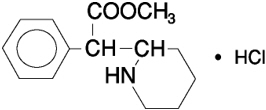
The absolute oral bioavailability of methylphenidate in children was 22 ± 8% for d-methylphenidate and 5 ± 3% for l- methylphenidate, suggesting pronounced presystemic metabolism. Biotransformation of methylphenidate by the carboxylesterase CES1A1 is rapid and extensive leading to the main, de-esterified metabolite α-phenyl-2-piperidine acetic acid (ritalinic acid), which has little or no pharmacologic activity. Only small amounts of hydroxylated metabolites (e.g., hydroxymethylphenidate and hydroxyritalinic acid) are detectable in plasma. Therapeutic activity is principally due to the parent compound.
Excretion
After oral administration of an immediate release formulation of methylphenidate, 78% to 97% of the dose is excreted in the urine and 1% to 3% in the feces in the form of metabolites within 48 to 96 hours. Only small quantities (less than 1%) of unchanged methylphenidate appear in the urine. Most of the dose is excreted in the urine as ritalinic acid (60% to 86%), the remainder being accounted for by minor metabolite.
Studies in Specific Populations
Male and Female Patients
There were no apparent gender differences in the pharmacokinetics of methylphenidate between healthy male and female adults when administered methylphenidate hydrochloride extended-release capsules (LA).
Racial or Ethnic Groups
There is insufficient experience with the use of methylphenidate hydrochloride extended-release capsules (LA) to detect ethnic variations in pharmacokinetics.
Pediatric Patients
The pharmacokinetics of methylphenidate hydrochloride extended-release capsules (LA) was examined in 18 children with ADHD between 7 and 12 years of age. Fifteen of these children were between 10 and 12 years of age. The time until the between peak minimum, and the time until the second peak were delayed and more variable in children compared to adults. After a 20-mg dose of methylphenidate hydrochloride extended-release capsules (LA), concentrations in children were approximately twice the concentrations observed in 18 to 35 year old adults. This higher exposure is almost completely due to the smaller body size and total volume of distribution in children, as apparent clearance normalized to body weight is independent of age.
Patients with Renal Impairment
Methylphenidate hydrochloride extended-release capsules (LA) has not been studied in renally-impaired patients. Renal impairment is expected to have minimal effect on the pharmacokinetics of methylphenidate since less than 1% of a radiolabeled dose is excreted in the urine as unchanged compound, and the major metabolite (ritalinic acid), has little or no pharmacologic activity.
Patients with Hepatic Impairment
Methylphenidate hydrochloride extended-release capsules (LA) has not been studied in patients with hepatic impairment. Hepatic impairment is expected to have minimal effect on the pharmacokinetics of methylphenidate since it is metabolized primarily to ritalinic acid by nonmicrosomal hydrolytic esterases that are widely distributed throughout the body.
Carcinogenesis
In a lifetime carcinogenicity study carried out in B6C3F1 mice, methylphenidate caused an increase in hepatocellular adenomas, and in males only, an increase in hepatoblastomas at a daily dose of approximately 60 mg/kg/day. This dose is approximately 2 times the (MRHD) of 60 mg/day given to children on a mg/m2 basis. Hepatoblastoma is a relatively rare rodent malignant tumor type. There was no increase in total malignant hepatic tumors. The mouse strain used is sensitive to the development of hepatic tumors, and the significance of these results to humans is unknown.
Methylphenidate did not cause any increase in tumors in a lifetime carcinogenicity study carried out in F344 rats; the highest dose used was approximately 45 mg/kg/day, which is approximately 4 times the MRHD (children) on a mg/m2 basis.
In a 24-week carcinogenicity study in the transgenic mouse strain p53+/-, which is sensitive to genotoxic carcinogens, there was no evidence of carcinogenicity. Male and female mice were fed diets containing the same concentration of methylphenidate as in the lifetime carcinogenicity study; the high-dose groups were exposed to 60 to 74 mg/kg/day of methylphenidate.
Mutagenesis
Methylphenidate was not mutagenic in the in vitro Ames reverse mutation assay, in the in vitro mouse lymphoma cell forward mutation assay, or in the in vitro chromosomal aberration assay using human lymphocytes. Sister chromatid exchanges and chromosome aberrations were increased, indicative of a weak clastogenic response, in an in vitro assay in cultured Chinese Hamster Ovary cells. Methylphenidate was negative in vivo in males and females in the mouse bone marrow micronucleus assay.
Impairment of Fertility
Methylphenidate did not impair fertility in male or female mice that were fed diets containing the drug in an 18-week continuous breeding study. The study was conducted at doses up to 160 mg/kg/day, approximately 10 times the maximum recommended dose of 60 mg/day given to adolescents on a mg/m2 basis.
Abuse, Misuse, and Addiction
Educate patients and their families about the risks of abuse, misuse, and addiction of methylphenidate hydrochloride extended release capsules (LA), which can lead to overdose and death, and proper disposal of any unused drug [see Warnings and Precautions (5.1), Drug Abuse and Dependence (9.2), Overdosage (10)]. Advise patients to store methylphenidate hydrochloride extended release capsules (LA) in a safe place, preferably locked, and instruct patients to not give methylphenidate hydrochloride extended release capsules (LA) to anyone else.
Risks to Patients with Serious Cardiac Disease
Advise patients that there are potential risks to patients with serious cardiac disease, including sudden death, with methylphenidate hydrochloride extended release capsules (LA) use. Instruct patients to contact a healthcare provider immediately if they develop symptoms, such as exertional chest pain, unexplained syncope, or other symptoms suggestive of cardiac disease [see Warnings and Precautions (5.2)].
Increased Blood Pressure and Heart Rate
Instruct patients that methylphenidate hydrochloride extended-release capsules (LA) can cause elevations of their blood pressure and pulse rate [see Warnings and Precautions (5.3)].
Psychiatric Adverse Reaction
Advise patients that methylphenidate hydrochloride extended-release capsules (LA), at recommended doses, can cause psychotic or manic symptoms, even in patients without prior history of psychotic symptoms or mania [see Warnings and Precautions (5.4)].
Priapism
Advise patients of the possibility of painful or prolonged penile erections (priapism). Instruct them to seek immediate medical attention in the event of priapism [see Warnings and Precautions (5.5)].
Circulation Problems in Fingers and Toes [Peripheral Vasculopathy, Including Raynaud's Phenomenon]
Instruct patients beginning treatment with methylphenidate hydrochloride extended-release capsules (LA) about the risk of peripheral vasculopathy, including Raynaud's phenomenon, and associated signs and symptoms: fingers or toes may feel numb, cool, painful, and/or may change color from pale, to blue, to red. Instruct patients to report to their physician any new numbness, pain, skin color change, or sensitivity to temperature in fingers or toes.
Instruct patients to call their physician immediately with any signs of unexplained wounds appearing on fingers or toes while taking methylphenidate hydrochloride extended-release capsules (LA). Further clinical evaluation (e.g., rheumatology referral) may be appropriate for certain patients [see Warnings and Precautions (5.6)].
Long-term Suppression of Growth in Pediatric Patients
Advise patients that methylphenidate hydrochloride extended-release capsules (LA) may cause slowing of growth and weight loss [see Warnings and Precautions (5.7)].
Alcohol Effect
Advise patients to avoid alcohol while taking methylphenidate hydrochloride extended-release capsules (LA). Consumption of alcohol while taking methylphenidate hydrochloride extended-release capsules (LA) may result in a more rapid release of the dose of methylphenidate [see Clinical Pharmacology (12.3)].
Pregnancy Registry
Advise patients that there is a pregnancy exposure registry that monitors pregnancy outcomes in patients exposed to methylphenidate hydrochloride extended-release capsules (LA) during pregnancy [see Use in Specific Populations (8.1)].
Distributed by:
Dr. Reddy's Laboratories, Inc
Princeton, NJ08540