Bosutinib Tablet, Film Coated
FDA Label NDC 75907-405

Full FDA labeling including Indications, Dosage, Usage, and Precautions

Structured Product Label

The following Structured Product Label (SPL) was submitted to the FDA by Dr. Reddy's Laboratories Inc. for the product Bosutinib (NDC 75907-405). This document serves as the official prescribing information, containing essential scientific data and clinical materials required for healthcare providers and patients.

This specific version of the label includes detailed information regarding 1 indications and usage, 2.1 recommended dosage, 2.2 dose escalation, 2.3 dosage adjustments for non-hematologic adverse reactions, 2.4 dosage adjustments for myelosuppression, 2.5 dosage adjustments for renal impairment or hepatic impairment, 3 dosage forms and strengths, 4 contraindications, and other regulatory disclosures. Use the navigation below to review specific sections of the FDA submission.

1 Indications And Usage

Bosutinib tablets are indicated for the treatment of:

  • Adult patients  with chronic phase (CP) Philadelphia chromosome-positive chronic myelogenous leukemia (Ph+ CML), newly-diagnosed or resistant or intolerant to prior therapy [see Clinical Studies (14.1, 14.2)]
  • Adult patients with accelerated phase (AP), or blast phase (BP) Ph+ CML with resistance or intolerance to prior therapy [see Clinical Studies (14.2)]. 
  • Pediatric use information is approved for PF PRISM CV’s BOSULIF® (bosutinib) tablets. However, due to PF PRISM CV’s marketing exclusivity rights, this drug product is not labeled with that information.
The recommended dosage is taken orally once daily with food. Swallow tablets whole. Do not cut, crush, break or chew tablets. Continue treatment with bosutinib tablets until disease progression or intolerance to therapy.
If a dose is missed beyond 12 hours, the patient should skip the dose and take the usual prescribed dose on the following day.
Dosage in Adult Patients with Newly-Diagnosed CP Ph+ CML
The recommended dosage of bosutinib tablet is 400 mg orally once daily with food. 
Dosage in Adult Patients with CP, AP, or BP Ph+ CML with Resistance or Intolerance to Prior Therapy
The recommended dosage of bosutinib tablet is 500 mg orally once daily with food. 

 
Pediatric use information is approved for PF PRISM CV’s BOSULIF® (bosutinib) tablets. However, due to PF PRISM CV’s marketing exclusivity rights, this drug product is not labeled with that information.

2.2 Dose Escalation


In clinical studies of adult patients with Ph+ CML, dose escalation by increments of 100 mg once daily to a maximum of 600 mg once daily was allowed in patients who did not achieve or maintain a hematologic, cytogenetic, or molecular response and who did not have Grade 3 or higher adverse reactions at the recommended starting dosage.
The maximum dose in  adult patients is 600 mg once daily.
 
Pediatric use information is approved for PF PRISM CV’s BOSULIF® (bosutinib) tablets. However, due to PF PRISM CV’s marketing exclusivity rights, this drug product is not labeled with that information.

2.3 Dosage Adjustments For Non-Hematologic Adverse Reactions


Elevated liver transaminases: If elevations in liver transaminases greater than 5×institutional upper limit of normal (ULN) occur, withhold bosutinib tablets until recovery to less than or equal to 2.5×ULN and resume at 400 mg once daily thereafter. If recovery takes longer than 4 weeks, discontinue bosutinib tablets. If transaminase elevations greater than or equal to 3×ULN occur concurrently with bilirubin elevations greater than 2×ULN and alkaline phosphatase less than 2×ULN (Hy’s law case definition), discontinue bosutinib tablets [see Warnings and Precautions (5.3)].
Diarrhea: For National Cancer Institute Common Terminology Criteria for Adverse Events (NCI CTCAE) Grade 3 to 4 diarrhea (increase of greater than or equal to 7 stools/day over baseline/pretreatment), withhold bosutinib tablets until recovery to Grade less than or equal to 1. Bosutinib tablets may be resumed at 400 mg once daily [see Warnings and Precautions (5.1)].
For other clinically significant, moderate or severe non-hematological toxicity, withhold bosutinib tablets until the toxicity has resolved, then consider resuming bosutinib tablets at a dose reduced by 100 mg taken once daily. If clinically appropriate, consider re-escalating the dose of bosutinib tablets to the starting dose taken once daily.

 
Pediatric use information is approved for PF PRISM CV’s BOSULIF® (bosutinib) tablets. However, due to PF PRISM CV’s marketing exclusivity rights, this drug product is not labeled with that information.


2.4 Dosage Adjustments For Myelosuppression

Dose reductions for severe or persistent neutropenia and thrombocytopenia are described below (Table 3).


Table 3: Dose Adjustments for Neutropenia and Thrombocytopenia in Adult Patients


ANCa less than 1,000×106/L
or
Platelets less than 50,000×106/L
 
Withhold bosutinib tablets until ANC greater than or equal to 1,000×106/L and platelets greater than or equal to 50,000×106/L.
Resume treatment with bosutinib tablets at the same dose if recovery occurs within 2 weeks. If blood counts remain low for greater than 2 weeks, upon recovery, reduce dose by 100 mg and resume treatment.
If cytopenia recurs, reduce dose by an additional 100 mg upon recovery and resume treatment.

a Absolute Neutrophil Count   
Pediatric use information is approved for PF PRISM CV’s BOSULIF® (bosutinib) tablets. However, due to PF PRISM CV’s marketing exclusivity rights, this drug product is not labeled with that information.


2.5 Dosage Adjustments For Renal Impairment Or Hepatic Impairment

The recommended starting doses for patients with renal and hepatic impairment are described in Table 4 below.

Table 4: Dose Adjustments for Renal and Hepatic Impairment in Adult Patients

 
Recommended Starting Dosage
 
Newly-diagnosed chronic phase Ph+ CML
 
Chronic, accelerated, or blast phase Ph+ CML with resistance or intolerance to prior therapy
Normal renal and hepatic function
400 mg daily
500 mg daily
Renal impairment
Creatinine clearance 30 to 50 mL/min
300 mg daily
400 mg daily
Creatinine clearance less than 30 mL/min
200 mg daily
300 mg daily
Hepatic impairment
Mild (Child-Pugh A), Moderate (Child-Pugh B) or Severe (Child-Pugh C)
200 mg daily
200 mg daily

 [see Use in Specific Populations (8.6, 8.7) andClinical Pharmacology (12.3)].


Pediatric use information is approved for PF PRISM CV’s BOSULIF® (bosutinib) tablets. However, due to PF PRISM CV’s marketing exclusivity rights, this drug product is not labeled with that information.

3 Dosage Forms And Strengths

  • 400 mg: orange, oval, biconvex, film-coated tablets debossed with ''400'' on one side and “B” on other side.

4 Contraindications


Bosutinib tablets are contraindicated in patients with a history of hypersensitivity to bosutinib. Reactions have included anaphylaxis [see Adverse Reactions (6.1)].

5.1 Gastrointestinal Toxicity


Diarrhea, nausea, vomiting, and abdominal pain occur with bosutinib treatment. Monitor and manage patients using standards of care, including antidiarrheals, antiemetics, and fluid replacement.
In the randomized clinical trial in adult patients with newly-diagnosed Ph+ CML, the median time to onset for diarrhea (all grades) was 4 days and the median duration per event was 3 days.
Among 546 adult patients in a single-arm study in patients with CML who were resistant or intolerant to prior therapy, the median time to onset for diarrhea (all grades) was 2 days and the median duration per event was 2 days. Among the patients who experienced diarrhea, the median number of episodes of diarrhea per patient during treatment with bosutinib was 3 (range 1 to 268).
To manage gastrointestinal toxicity, withhold, dose reduce, or discontinue bosutinib as necessary [see Dosage and Administration (2.3) and Adverse Reactions (6)].

 
Pediatric use information is approved for PF PRISM CV’s BOSULIF® (bosutinib) tablets. However, due to PF PRISM CV’s marketing exclusivity rights, this drug product is not labeled with that information.

5.2 Myelosuppression


Thrombocytopenia, anemia and neutropenia occur with bosutinib treatment. Perform complete blood counts weekly for the first month of therapy and then monthly thereafter, or as clinically indicated. To manage myelosuppression, withhold, dose reduce, or discontinue bosutinib as necessary [see Dosage and Administration (2.4) and Adverse Reactions (6)].

5.3 Hepatic Toxicity


Bosutinib may cause elevations in serum transaminases (alanine aminotransferase [ALT], aspartate aminotransferase [AST]).
Two cases consistent with drug induced liver injury (defined as concurrent elevations in ALT or AST greater than or equal to 3×ULN with total bilirubin greater than 2×ULN and alkaline phosphatase less than 2×ULN) have occurred without alternative causes. This represented 2 out 1,711 patients in bosutinib clinical trials.
In the 268 adult patients from the safety population in the randomized clinical trial in patients with newly-diagnosed CML in the bosutinib treatment group, the incidence of ALT elevation was 68.3% and increased AST was 56%. Of patients who experienced increased transaminases of any grade, 73% experienced their first increase within the first 3 months. The median time to onset of increased ALT and AST was 29 and 56 days, respectively, and the median duration was 19 and 15 days, respectively.
Among the 546 adult patients in a single-arm study in patients with CML who were resistant or intolerant to prior therapy, the incidence of increased ALT was 53.3% and AST elevation was 46.7%. Sixty percent of the patients experienced an increase in either ALT or AST. Most cases of transaminase elevations in this study occurred early in treatment; of patients who experienced increased transaminases of any grade, more than 81% experienced their first increase within the first 3 months. The median time to onset of increased ALT and AST was 22 and 29 days, respectively, and the median duration for each was 21 days. 
Perform hepatic enzyme tests monthly for the first 3 months of bosutinib treatment and as clinically indicated. In patients with transaminase elevations, monitor liver enzymes more frequently. Withhold, dose reduce, or discontinue bosutinib as necessary [seeDosage and Administration (2.3)and Adverse Reactions (6)].

 
Pediatric use information is approved for PF PRISM CV’s BOSULIF® (bosutinib) tablets. However, due to PF PRISM CV’s marketing exclusivity rights, this drug product is not labeled with that information.

5.4 Cardiovascular Toxicity


Bosutinib can cause cardiovascular toxicity including cardiac failure, left ventricular dysfunction, and cardiac ischemic events. Cardiac failure events occurred more frequently in previously treated patients than in patients with newly diagnosed CML and were more frequent in patients with advanced age or risk factors, including previous medical history of cardiac failure. Cardiac ischemic events occurred in both previously treated patients and in patients with newly diagnosed CML and were more common in patients with coronary artery disease risk factors, including history of diabetes, body mass index greater than 30, hypertension, and vascular disorders. 
In a randomized study of adult patients with newly diagnosed CML, cardiac failure occurred in 1.9% of patients treated with bosutinib compared to 0.8% of patients treated with imatinib. Cardiac ischemic events occurred in 4.9% of patients treated with bosutinib compared to 0.8% of patients treated with imatinib. 
In a single-arm study in adult patients with CML who were resistant or intolerant to prior therapy, cardiac failure was observed in 5.3% of patients and cardiac ischemic events were observed in 5.1% of patients treated with bosutinib.
Monitor patients for signs and symptoms consistent with cardiac failure and cardiac ischemia and treat as clinically indicated. Interrupt, dose reduce, or discontinue bosutinib as necessary [see Dosage and Administration (2.3) andAdverse Reactions (6)]. 

 
Pediatric use information is approved for PF PRISM CV’s BOSULIF® (bosutinib) tablets. However, due to PF PRISM CV’s marketing exclusivity rights, this drug product is not labeled with that information.


5.5 Fluid Retention


Fluid retention occurs with bosutinib and may manifest as pericardial effusion, pleural effusion, pulmonary edema, and/or peripheral edema.
In the randomized clinical trial of 268 adult patients with newly-diagnosed CML in the bosutinib treatment group, 3 patients (1.1%) experienced severe fluid retention of Grade 3, 1 patient experienced Grade 3 pericardial effusion, and 2 patients experienced Grade 3 pleural effusion.
Among 546 adult patients in a single-arm study in patients with Ph+ CML who were resistant or intolerant to prior therapy, Grade 3 or 4 fluid retention was reported in 30 patients (6%). Some patients experienced more than one fluid retention event. Specifically, 24 patients experienced Grade 3 or 4 pleural effusions, 9 patients experienced Grade 3 or Grade 4 pericardial effusions, and 6 patients experienced Grade 3 edema. 
Monitor and manage patients using standards of care. Interrupt, dose reduce or discontinue bosutinib as necessary [see Dosage and Administration (2.3) and Adverse Reactions (6)].

 
Pediatric use information is approved for PF PRISM CV’s BOSULIF® (bosutinib) tablets. However, due to PF PRISM CV’s marketing exclusivity rights, this drug product is not labeled with that information.

5.6 Renal Toxicity


An on-treatment decline in estimated glomerular filtration rate (eGFR) has occurred in patients treated with bosutinib. Table 6 identifies the shift from baseline to lowest observed eGFR during bosutinib therapy for patients in the pooled leukemia studies regardless of line of therapy. The median duration of therapy with bosutinib was approximately 24 months (range, 0.03 to 155) for patients in these studies.
Table 6: Shift From Baseline to Lowest Observed eGFR Group During Treatment Safety Population in Clinical Studies (N= 1,372)*

Baseline
Follow-Up
Renal Function Status
N
Normal
n (%)
Mild
n (%)
Mild to
Moderate
n (%)
Moderate to
Severe
n (%)
Severe
n (%)
Kidney Failure
n (%)
Normal
527
115
(21.8)
330 (62.6)
50 (9.5)
23 (4.4)
3 (0.6)
5 (0.9)
Mild
672
10 (1.5)
259 (38.5)
271 (40.3)
96 (14.3)
26 (3.9)
6 (0.9)
Mild to Moderate
137
0
6 (4.4)
40 (29.2)
66 (48.2)
24 (17.5)
1 (0.7)
Moderate to Severe
33
0
1 (3)
1 (3)
8 (24.2)
19 (57.6)
4 (12.1)
Severe
1
0
0
0
0
0
1(100)
Total
1,370
125
(9.1)
596 (43.5)
362 (26.4)
193 (14.1)
72 (5.2)
17 (1.2)
Abbreviations: eGFR=estimated glomerular filtration rate; N/n=number of patients.
Notes: eGFR was calculated using Modification in Diet in Renal Disease method (MDRD).
Notes: Grading is based on Kidney Disease Improving Global Outcomes (KDIGO) Classification by eGFR: Normal: greater than or equal to 90, Mild: 60 to less than 90, Mild to Moderate: 45 to less than 60, Moderate to Severe: 30 to less than 45, Severe: 15 to less than 30, Kidney Failure: less than 15 ml/min/1.73 m2 .
*Among the 1,372 patients, eGFR was missing in 7 patients at baseline or on-therapy. There were no patients with kidney failure at baseline.

Monitor renal function at baseline and during therapy with bosutinib, with particular attention to those patients who have preexisting renal impairment or risk factors for renal dysfunction. Consider dose adjustment in patients with baseline and treatment emergent renal impairment [see Dosage and Administration (2.5)].

 
Pediatric use information is approved for PF PRISM CV’s BOSULIF® (bosutinib) tablets. However, due to PF PRISM CV’s marketing exclusivity rights, this drug product is not labeled with that information.

5.7 Embryo-Fetal Toxicity


Based on findings from animal studies and its mechanism of action, bosutinib can cause fetal harm when administered to a pregnant woman. There are no available data in pregnant women to inform the drug-associated risk. In animal reproduction studies conducted in rats and rabbits, oral administration of bosutinib during organogenesis caused adverse developmental outcomes, including structural abnormalities, embryo-fetal mortality, and alterations to growth at maternal exposures (AUC) as low as 1.2 times the human exposure at the dose of 500 mg/day. Advise pregnant women of the potential risk to a fetus. Advise females of reproductive potential to use effective contraception during treatment and for 2 weeks after the last dose [see Use in Specific Populations (8.1, 8.3) and Clinical Pharmacology (12.1)].

6 Adverse Reactions

The following clinically significant adverse reactions are discussed in greater detail in other sections of the labeling:
      • Gastrointestinal toxicity [see Warnings and Precautions (5.1)].
      • Myelosuppression [seeWarnings and Precautions (5.2)].
      • Hepatic toxicity [see Warnings and Precautions (5.3)].
      • Cardiovascular toxicity [see Warnings and Precautions (5.4)].
      • Fluid retention [see Warnings and Precautions (5.5)].
      • Renal toxicity [see Warnings and Precautions (5.6)].

6.1 Clinical Trials Experience

Because clinical trials are conducted under widely varying conditions, adverse reaction rates observed in the clinical trials of a drug cannot be directly compared to rates in the clinical trials of another drug and may not reflect the rates observed in practice.
The most common adverse reactions, in ≥20% of adults with newly diagnosed CP Ph+ CML or CP, AP, or BP Ph+ CML with resistance or intolerance to prior therapy (N=814) were diarrhea (80%), rash (44%), nausea (44%), abdominal pain (43%), vomiting (33%), fatigue (33%), hepatic dysfunction (33%), respiratory tract infection (25%), pyrexia (24%), and headache (21%).
The most common laboratory abnormalities that worsened from baseline in ≥20% of adults were creatinine increased (93%), hemoglobin decreased (90%), lymphocyte count decreased (72%), platelets decreased (69%), ALT increased (58%), calcium decreased (53%), white blood cell count decreased (52%), absolute neutrophils count decreased (50%), AST increased (50%), glucose increased (46%), phosphorus decreased (44%), urate increased (41%), alkaline phosphatase increased (40%), lipase increased (36%), creatine kinase increased (29%), and amylase increased (24%).

Adverse Reactions in Adult Patients With Newly-Diagnosed CP CML
The clinical trial randomized and treated 533 patients with newly-diagnosed CP CML to receive bosutinib 400 mg daily or imatinib 400 mg daily as single agents (Newly-Diagnosed CP CML Study) [see Clinical Studies (14.1)]. The safety population (received at least 1 dose of bosutinib) included:

  • two hundred sixty-eight (268) patients with newly-diagnosed CP CML had a median duration of bosutinib treatment of 55 months (range: 0.3 to 60 months) and a median dose intensity of 394 mg/day.
  • Serious adverse reactions occurred in 22% of patients with newly-diagnosed CP CML who received bosutinib. Serious adverse reactions reported in >2% of patients included hepatic dysfunction (4.1%), pneumonia (3.4%), coronary artery disease (3.4%), and gastroenteritis (2.2%). Fatal adverse reactions occurred in 3 patients (1.1%) due to coronary artery disease (0.4%), cardiac failure acute (0.4%), and renal failure (0.4%).
    Permanent discontinuation of bosutinib due to an adverse reaction occurred in 20% of patients with newly-diagnosed CP CML who received bosutinib. Adverse reactions which resulted in permanent discontinuation in > 2% of patients included hepatic dysfunction (9%).
    Dose modifications (dose interruption or reductions) of bosutinib due to an adverse reaction occurred in 68% of patients with newly-diagnosed CP CML. Adverse reactions which required dose interruptions or reductions in >5% of patients included hepatic dysfunction (27%), thrombocytopenia (16%), diarrhea (16%), lipase increased (10%), neutropenia (7%), abdominal pain (6%), rash (5%).
    The most common adverse reactions, in >20% of bosutinib-treated patients with newly-diagnosed CML (N=268) were diarrhea (75%), hepatic dysfunction (45%), rash (40%), abdominal pain (39%), nausea (37%), fatigue (33%), respiratory tract infection (27%), headache (22%), and vomiting (21%).
    The most common laboratory abnormalities that worsened from baseline in ≥20% of patients were creatinine increased (94%), hemoglobin decreased (89%), lymphocyte count decreased (84%), ALT increased (68%), platelet count decreased (68%), glucose increased (57%), AST increased (56%), calcium decreased (55%), phosphorus decreased (54%), lipase increased (53%), white blood cell count decreased (50%), absolute neutrophil count decreased (42%), alkaline phosphatase increased (41%), creatine kinase increased (36%), and amylase increased (32%).
    Table 7 identifies adverse reactions greater than or equal to 10% for All Grades and Grades 3 or 4 (3/4) for the Phase 3 CP CML safety population.
    Table 7: Adverse Reactions (10% or Greater) in Patients With Newly-Diagnosed CML in Bosutinib 400 mg Study*

     
    System Organ Class 
     
    Preferred Term 
    Bosutinib 400 mg 
    Chronic Phase CML
    (N=268) 
    Imatinib 400 mg 
    Chronic Phase CML
    (N=265) 
    All Grades 
    % 
    Grade 3/4 
    % 
    All Grades 
    % 
    Grade 3/4 
    % 
    Gastrointestinal disorders
     
    Diarrhea
    75
    9
    40
    1
     
    Abdominal paina
    39
    2
    27
    1
     
    Nausea 
    37
    0
    42
    0
     
    Vomiting 
    21
    1
    20
    0
    Hepatobiliary disorders
    Constipation 
    13
    0
    6
    0
    Skin and subcutaneous tissue disorders
    Hepatic dysfunctionf 
    45
    27
    15
    4
     
    Rashd 
    40
    2
    30
    2
     
    Pruritus
    11
    <1
    4
    0
    General disorders and administration-site conditions
    Fatigueb
    33
    1
    30
    <1
     
    Pyrexia
    17
    1
    11
    0
     
    Edemag
    15
    0
    46
    2
    Infections and infestations
    Respiratory tract infectione
    27
    1
    25
    <1
    Nervous system disorders
    Headache
    22
    1
    15
    1
    Musculoskeletal and connective tissue disorders
    Arthralgia
    18
    1
    18
    <1
     
    Back pain 
    12
    <1
    9
    <1
    Respiratory, thoracic, and mediastinal disorders
    Cough 
    11
    0
    10
    0
     
    Dyspnea 
    11
    1
    6
    1
    Metabolism and nutrition disorders
    Decreased appetite 
    11
    <1
    6
    0
    Vascular disorders
    Hypertensionc
    10
    5
    11
    5

    *Based on a Minimum of 57 Months of Follow-up.
    Adverse drug reactions are based on all-causality treatment-emergent adverse events. The commonality stratification is based on 'All Grades' under Total column.
    'Grade 3', 'Grade 4' columns indicate maximum toxicity.
    aAbdominal pain includes the following preferred terms: Abdominal discomfort, Abdominal pain, Abdominal pain lower, Abdominal pain upper, Abdominal tenderness, Dyspepsia, Epigastric discomfort, Gastrointestinal pain.
    bFatigue includes the following preferred terms: Asthenia, Fatigue, Malaise.
    cHypertension* includes the preferred terms: Blood pressure systolic increased, Hypertension, Hypertensive crisis, Hypertensive heart disease, Retinopathy hypertensive.
    fHepatic dysfunction includes the preferred terms: Alanine aminotransferase increased, Aspartate aminotransferase, Aspartate aminotransferase increased, Bilirubin conjugated increased, Blood alkaline phosphatase increased, Blood bilirubin increased,
    Drug-induced liver injury, Gamma-glutamyltransferase increased, Hepatic enzyme increased, Hepatic steatosis, Hepatitis, Hepatitis toxic, Hepatocellular injury, Hepatotoxicity, Hyperbilirubinemia, Jaundice, Liver disorder, Liver function test increased, Ocular icterus, Transaminases increased.
    gEdema includes the following preferred terms: Eye edema, Eyelid edema, Face edema, Edema, Edema peripheral, Orbital edema, Periorbital edema, Periorbital swelling, Peripheral swelling, Swelling, Swelling face, Swelling of eyelid, Swollen tongue.
    dRash includes the following preferred terms: Acne, Blister, Dermatitis, Dermatitis acneiform, Dermatitis bullous, Dermatitis exfoliative generalized, Drug reaction with eosinophilia and systemic symptoms, Dyshidrotic eczema, Eczema, Eczema asteatotic, Erythema, Erythema nodosum, Genital rash, Lichen planus, Perivascular dermatitis, Photosensitivity reaction, Psoriasis, Rash, Rash erythematous, Rash macular, Rash maculo-papular, Rash papular, Rash pruritic, Rash pustular, Rash vesicular, Seborrhoeic keratosis, Skin discoloration, Skin exfoliation, Skin hypopigmentation, Skin irritation, Skin lesion, Stasis dermatitis.
    eRespiratory tract infection includes the following preferred terms: Nasopharyngitis, Respiratory tract congestion, Respiratory tract infection, Respiratory tract infection viral, Upper respiratory tract infection.
    In the randomized study in patients with newly-diagnosed CP CML, one patient in the group treated with bosutinib experienced a Grade 3 QTcF prolongation (>500 msec). Patients with uncontrolled or significant cardiovascular disease including QT interval prolongation were excluded by protocol.
    Table 8 identifies the clinically relevant or severe Grade 3/4 laboratory test abnormalities for the Phase 3 newly-diagnosed CML safety population.

    Table 8: Select Laboratory Abnormalities (>20%) That Worsened From Baseline in Patients with Newly-Diagnosed CML in Bosutinib 400 mg Study*

     
    Bosutinib 
    N=268 
    % 
    Imatinib 
    N=265 
    % 
    All Grade 
    Grade 3 to 4 
    All Grade
    Grade 3 to 4
    Hematology Parameters 
    Platelet Count decreased
    68
    14
    60
    6
    Absolute Neutrophil Count decreased
    42
    9
    65
    20
    Hemoglobin decreased
    89
    9
    90
    7
    White Blood Cell Count decreased
    50
    6
    70
    8
    Lymphocyte Count decreased
    84
    12
    82
    14
    Biochemistry Parameters
    SGPT/ALT increased
    68
    26
    28
    3
    SGOT/AST increased
    56
    13
    29
    3.4
    Lipase increased
    53
    19
    35
    8
    Phosphorus decreased
    54
    9
    69
    21
    Amylase increased
    32
    3.4
    18
    2.3
    Alkaline Phosphatase increased
    41
    0
    43
    0.4
    Calcium decreased
    55
    1.5
    57
    1.1
    Glucose increased
    57
    3
    65
    3.4
    Creatine Kinase increased
    36
    3
    65
    5
    Creatinine
    increased
    94
    1.1
    98
    0.8

    *Based on a Minimum of 57 Months of Follow-up.

    Abbreviations: ALT=alanine aminotransferase; AST=aspartate aminotransferase; CML=chronic myelogenous leukemia; SGPT=serum glutamic-pyruvic transaminase; SGOT=serum glutamic-oxaloacetic transaminase; N/n=number of patients; ULN=upper limit of normal.
    Graded using CTCAE v 4.03
    Adverse Reactions in Adult Patients With Imatinib-Resistant or -Intolerant Ph+ CP, AP, and BP CML
    The single-arm clinical trial enrolled patients with Ph+ CP, AP, or BP CML and with resistance or intolerance to prior therapy [see Clinical Studies (14.2)]. The safety population (received at least 1 dose of bosutinib) included 546 CML patients:

    • two hundred eighty-four (284) patients with CP CML previously treated with imatinib only who had a median duration of bosutinib treatment of 26 months (range: 0.2 to 155 months), and a median dose intensity of 437 mg/day.
    • one hundred nineteen (119) patients with CP CML previously treated with both imatinib and at least 1 additional tyrosine kinase inhibitor (TKI) who had a median duration of bosutinib treatment of 9 months (range: 0.2 to 148 months) and a median dose intensity of 427 mg/day.
    • one hundred forty-three (143) patients with advanced phase (AdvP) CML including 79 patients with AP CML and 64 patients with BP CML. In the patients with AP CML and BP CML, the median duration of bosutinib treatment was 10 months (range: 0.1 to 140 months) and 3 months (range: 0.03 to 71 months), respectively. The median dose intensity was 406 mg/day, and 456 mg/day, in the AP CML and BP CML cohorts, respectively.
    • Serious adverse reactions occurred in 30% of patients in the safety population of the single-arm trial in patients with CML (N=546) who were resistant or intolerant to prior therapy. Serious adverse reactions reported in >2% of patients included pneumonia (7%), pleural effusion (6%), pyrexia (3.7%), coronary artery disease (3.5%), dyspnea (2.6%), rash (2.2%), thrombocytopenia (2%), abdominal pain (2%), and diarrhea (2%).
      Fatal adverse reactions occurred in 12 patients (2.2%) due to coronary artery disease (0.9%), pneumonia (0.4%), respiratory failure (0.4%), gastrointestinal hemorrhage (0.2%), acute kidney injury (0.2%), and acute pulmonary edema (0.2%).
      Permanent discontinuation of bosutinib due to an adverse reaction occurred in 22% of patients with CML who were resistant or intolerant to prior therapy. Adverse reactions which resulted in permanent discontinuation in >2% of patients included thrombocytopenia (6%), hepatic dysfunction (3.3%), and neutropenia (2%).
      Dose modifications (dose interruption or reductions) of bosutinib due to an adverse reaction occurred in 66% of patients with CML who were resistant or intolerant to prior therapy. Adverse reactions which required dose interruptions or reductions in >5% of patients included thrombocytopenia (24%), diarrhea (14%), rash (13%), hepatic dysfunction (10%), neutropenia (9%), pleural effusion (8%), vomiting (7%), anemia (6%), and abdominal pain (6%).
      The most common adverse reactions, in ≥20% of patients in the safety population of the single-arm trial in patients with CML (N=546) who were resistant or intolerant to prior therapy were diarrhea (83%), nausea (47%), rash (46%), abdominal pain (45%), vomiting (39%), fatigue (33%), pyrexia (28%), hepatic dysfunction (27%), respiratory tract infection (24%), cough (23%), and headache (21%).
      The most common laboratory abnormalities that worsened from baseline in ≥20% were creatinine increased (93%), hemoglobin decreased (91%), lymphocyte decreased (80%), platelets decreased (69%), absolute neutrophil count (54%), ALT increased (53%), calcium decreased (53%), white blood cell count decreased (52%), urate increased (48%), AST increased (47%), phosphorus decreased (39%), alkaline phosphatase increased (39%), lipase increased (28%), magnesium increased (25%), potassium decreased (24%), potassium increased (23%). See Table 10 for Grade 3/4 laboratory abnormalities.
      Table 9 identifies adverse reactions greater than or equal to 10% for All Grades and Grades 3 or 4 for the Phase 1/2 CML safety population based on long-term follow-up.

      Table 9: Adverse Reactions (10% or Greater) in Patients With CML Who Were Resistant or Intolerant to Prior Therapy in Single-Arm Trial*


      System Organ Class 


      Preferred Term 
      CP CML 
      (N=403) 
      AdvP CML 
      (N=143) 
      All Grades 
      % 
      Grade 3/4 % 
      All Grades 
      % 
      Grade 3/4 % 
      Gastrointestinal disorders
      Diarrhea
      85
      10
      76
      4
       
      Abdominal paina
      49
      2
      36
      7
       
      Nausea 
      47
      1
      48
      2
       
      Vomiting 
      38
      3
      43
      3
       
      Constipation 
      15
      <1
      17
      1
      Skin and subcutaneous tissue disorders
      Rashe
      48
      9
      42
      5
       
      Pruritus 
      12
      1
      7
      0
      General disorders and administration- site conditions
      Fatigue
      35
      3
      27
      6
       
      Pyrexia
      25
      1
      37
      3
       
      Edemac
      19
      <1
      17
      1
       
      Chest paing 
      8
      1
      12
      1
      Hepatobiliary disorders
      Hepatic dysfunctionh 
      29
      11
      21
      10
      Infections and infestations
      Respiratory tract infectionf
      27
      <1
      17
      0
       
      Influenzai 
      11
      1
      3
      0
       
      Pneumoniad 
       
      10
       
      4
       
      18
      12
      Respiratory, thoracic, and mediastinal disorders
      Cough 
      24
      0
      22
      0
       
      Pleural effusion
      14
      4
      9
      4
       
      Dyspnea
      12
      2
      20
      6
      Nervous system disorders
      Headache 
      21
      1
      18
      4
       
      Dizziness
      11
      0
      14
      1
      Musculoskeletal and connective tissue disorders
      Arthralgia 
      19
      1
      15
      0
       
      Back pain
      14
      1
      8
      1
      Metabolism and nutrition disorders
      Decreased appetite 
      14
      1
      14
      0
      Vascular disorders
      Hypertensionb
      11
      3
      8
      3

      ADR Definition

      *Based on a Minimum of 105 Months of Follow-up.
      Adverse drug reactions are based on all-causality treatment-emergent adverse events.
      The commonality stratification is based on 'All Grades' under Total column.
      'Grade 3', 'Grade 4' columns indicate maximum toxicity
      aAbdominal pain includes the following preferred terms: Abdominal discomfort, Abdominal pain, Abdominal pain lower, Abdominal pain upper, Abdominal tenderness, Dyspepsia, Epigastric discomfort, Gastrointestinal pain, Hepatic pain.
      gChest pain includes the following preferred terms: Chest discomfort, Chest pain.
      hHepatic dysfunction includes the following preferred terms: Alanine aminotransferase increased, Aspartate aminotransferase increased, Bilirubin conjugated increased, Blood alkaline phosphatase increased, Blood bilirubin increased, Blood bilirubin unconjugated increased, Gamma-glutamyltransferase increased, Hepatic enzyme increased, Hepatic function abnormal, Hepatic steatosis, Hepatitis toxic, Hepatomegaly, Hepatotoxicity, Hyperbilirubinemia, Liver disorder, Liver function test abnormal, Liver function test increased, Transaminases increased.
      bHypertension* includes the following preferred terms: Blood pressure increased, Blood pressure systolic increased, Essential hypertension, Hypertension, Hypertensive crisis, Retinopathy hypertensive.
      iInfluenza includes the following preferred terms: H1N1 influenza, Influenza.
      cEdema includes the following preferred terms: Eye edema, Eyelid edema, Face edema, Generalized edema, Localized edema, Edema, Edema peripheral, Penile edema, Periorbital edema, Periorbital swelling, Peripheral swelling, Scrotal edema, Scrotal swelling, Swelling, Swelling face, Swelling of eyelid, Testicular edema, Tongue edema.
      dPneumonia includes the following preferred terms: Atypical pneumonia, Lower respiratory tract congestion, Lower respiratory tract infection, Pneumonia, Pneumonia aspiration, Pneumonia bacterial, Pneumonia fungal, Pneumonia necrotising, Pneumonia streptococcal.
      eRash includes the following preferred terms: Acarodermatitis, Acne, Angular cheilitis, Blister, Dermatitis, Dermatitis acneiform, Dermatitis psoriasiform, Drug eruption, Eczema, Eczema asteatotic, Erythema, Erythema annulare, Exfoliative rash, Lichenoid keratosis, Palmar erythema, Photosensitivity reaction, Pigmentation disorder, Psoriasis, Pyoderma gangrenosum, Pyogenic granuloma, Rash, Rash erythematous, Rash generalised, Rash macular, Rash maculo-papular, Rash pruritic, Rash pustular, Seborrhoeic dermatitis, Seborrhoeic keratosis, Skin depigmentation, Skin discoloration, Skin disorder, Skin exfoliation, Skin hyperpigmentation, Skin hypopigmentation, Skin irritation, Skin lesion, Skin plaque, Skin toxicity, Stasis dermatitis.

      fRespiratory tract infection includes the following preferred terms: Nasopharyngitis, Respiratory tract congestion, Respiratory tract infection, Respiratory tract infection viral, Upper respiratory tract infection, Viral upper respiratory tract infection.
      *ADR identified post-marketing
      In the single-arm study in patients with CML who were resistant or intolerant to prior therapy, 2 patients (0.4%) experienced QTcF interval of greater than 500 milliseconds. Patients with uncontrolled or significant cardiovascular disease including QT interval prolongation were excluded by protocol.
      Table 10 identifies the clinically relevant or severe Grade 3/4 laboratory test abnormalities for the safety population of the study in patients with CML who were resistant or intolerant to prior therapy based on long-term follow-up.

      Table 10: Number (%) of Patients With Clinically Relevant All Grade or Grade 3/4 Laboratory Test Abnormalities in the Safety Population of the Study of Patients With CML Who Were Resistant or Intolerant to Prior Therapy*

       
      CP CML
      N=403%
      AdvP CML 
      N=143 %
       
      All grade 
      Grade 3/4 
      All grade 
      Grade 3/4 
      Hematology Parameters 
       
      Platelet Count decreased
      66
      26
      80
      57
      Absolute Neutrophil Count decreased
      50
      16
      66
      39
      Hemoglobin decreased
      89
      13
      97
      38
      Lymphocyte decreased
      79
      14
      82
      21
      White Blood Cell Count decreased
      51
      7
      57
      27
      Biochemistry Parameters 


      SGPT/ALT increased
      58
      11
      39
      6
      SGOT/AST increased
      50
      5
      37
      3.5
      Lipase increased
      32
      12
      19
      6
      Phosphorus decreased
      41
      8
      33
      7
      Total Bilirubin increased
      16
      0.7
      22
      2.8
      Creatinine increased
      95
      3
      87
      1.4
      Alkaline Phosphatase increased
      39
      0
      39
      1.4
      Glucose increased
      42
      2.7
      39
      6
      Sodium increased
      23
      0.5
      11
      0
      Sodium decreased
      18
      2.2
      27
      6
      Calcium decreased
      55
      4.7
      45
      3.5
      Urate increased
      49
      6
      43
      6
      Magnesium increased
      27
      7
      18
      4.9
      Potassium decreased
      22
      1.7
      29
      4.9
      Potassium increased
      25
      2.7
      19
      2.1

      *Based on a Minimum of 105 Months of Follow-up.


      Abbreviations: AdvP=advanced phase; ALT=alanine aminotransferase; AST=aspartate aminotransferase; CML=chronic myelogenous leukemia; CP=chronic phase; N/n=number of patients; SGPT=serum glutamate-pyruvate transaminase; SGOT=serum glutamate-oxaloacetate aminotransferase; ULN=upper limit of normal.
      Additional Adverse Reactions From Multiple Clinical Trials
      The following adverse reactions were reported in patients in clinical trials with bosutinib (less than 10% of bosutinib-treated patients). They represent an evaluation of the adverse reaction data from all 1,372 patients with leukemia who received at least 1 dose of single-agent bosutinib. These adverse reactions are presented by system organ class and are ranked by frequency. These adverse reactions are included based on clinical relevance and ranked in order of decreasing seriousness within each category.
      Blood and Lymphatic System Disorders:0.1% and less than 1% - Febrile neutropenia
      Cardiac Disorders: 1% and less than 10%-Cardiac ischemia (includes Acute coronary syndrome, Acute myocardial infarction, Angina pectoris, Angina unstable, Arteriosclerosis coronary artery, Coronary artery disease, Coronary artery occlusion, Coronary artery stenosis, Myocardial infarction, Myocardial ischemia, Troponin increased), Pericardial effusion, Cardiac failure (includes Cardiac failure, Cardiac failure acute, Cardiac failure chronic, Cardiac failure congestive, Cardiogenic shock, Cardiorenal syndrome, Ejection fraction decreased, Left ventricular failure); 0.1% and less than 1% - Pericarditis
      Ear and Labyrinth Disorders:1% and less than 10% - Tinnitus
      Endocrine Disorders: 1% and less than 10% - Hypothyroidism; 0.1% and less than 1% - Hyperthyroidism
      Gastrointestinal Disorders: 1% and less than 10% - Gastritis, Pancreatitis (includes Edematous pancreatitis, Pancreatic enzymes increased, Pancreatitis, Pancreatitis acute, Pancreatitis chronic), Gastrointestinal hemorrhage (includes Anal hemorrhage, Gastric hemorrhage, Gastrointestinal hemorrhage, Intestinal hemorrhage, Lower gastrointestinal hemorrhage, Rectal hemorrhage, Upper gastrointestinal hemorrhage)
      General Disorders and Administrative Site Conditions: 1% and less than 10% - Pain
      Immune System Disorders: 1% and less than 10% - Drug hypersensitivity; 0.1% and less than 1% - Anaphylactic shock
      Infections and Infestations:1% and less than 10% - Bronchitis
      Investigations:1% and less than 10% - Electrocardiogram QT prolonged (includes Electrocardiogram QT prolonged, Long QT syndrome)
      Metabolism and Nutrition Disorders:1% and less than 10% - Dehydration
      Musculoskeletal and Connective Tissue Disorders: 1% and less than 10% - Myalgia
      Nervous System Disorders:1% and less than 10% - Dysgeusia
      Renal and Urinary Disorders: 1% and less than 10% - Acute kidney injury, Renal impairment, Renal failure
      Respiratory, Thoracic and Mediastinal Disorders: 1% and less than 10% - Pulmonary hypertension (includes Pulmonary hypertension, Pulmonary arterial hypertension, Pulmonary arterial pressure increased); 0.1% and less than 1% - Acute pulmonary edema (includes Acute pulmonary edema, Pulmonary edema), Interstitial lung disease, Respiratory failure
      Skin and Subcutaneous Disorders:0.1% and less than 1% - Erythema multiforme, Cutaneous vasculitis


      Pediatric use information is approved for PF PRISM CV’s BOSULIF® (bosutinib) tablets. However, due to PF PRISM CV’s marketing exclusivity rights, this drug product is not labeled with that information.

6.2 Postmarketing Experience

The following additional adverse reactions have been identified during post-approval use of bosutinib. Because these reactions are reported voluntarily from a population of uncertain size, it is not always possible to reliably estimate their frequency or establish a causal relationship to drug exposure.
Blood and Lymphatic System Disorders: Thrombotic microangiopathy
Skin and Subcutaneous Tissue Disorders: Stevens-Johnson syndrome

7.1 Effect Of Other Drugs On Bosutinib


Strong or Moderate CYP3A Inhibitors
Avoid the concomitant use of strong or moderate CYP3A inhibitors with bosutinib. Bosutinib is a CYP3A substrate. Concomitant use with a strong or moderate CYP3A inhibitor increases bosutinib Cmax and AUC [see Clinical Pharmacology (12.3)] which may increase the risk of toxicities.
Strong CYP3A Inducers
Avoid the concomitant use of strong CYP3A inducers with bosutinib. Bosutinib is a CYP3A substrate.
Concomitant use with a strong CYP3A inducer decreases bosutinib Cmax and AUC [see Clinical Pharmacology (12.3)] which may reduce bosutinib efficacy.
Proton Pump Inhibitors (PPI)
As an alternative to PPIs, use short-acting antacids or H2 blockers and separate dosing by more than 2 hours from bosutinib dosing. Bosutinib displays pH dependent aqueous solubility, Concomitant use with a PPI decreases bosutinib Cmax and AUC [see Clinical Pharmacology (12.3)] which may reduce bosutinib efficacy.

8.1 Pregnancy

Risk Summary

Based on findings from animal studies and its mechanism of action, bosutinib can cause fetal harm when administered to a pregnant woman [see Clinical Pharmacology (12.1)].

There are no available data in pregnant women to inform the drug-associated risk. In animal reproduction studies conducted in rats and rabbits, oral administration of bosutinib during organogenesis caused adverse developmental outcomes, including structural abnormalities, embryo-fetal mortality, and alterations to growth at maternal exposures (AUC) as low as 1.2 times the human exposure at the dose of 500 mg/day (see Data). Advise pregnant women of the potential risk to a fetus.

The background risk of major birth defects and miscarriage for the indicated population is unknown. All pregnancies have a background risk of birth defect, loss, or other adverse outcomes. In the U.S. general population, the estimated background risk of major birth defects and miscarriage in clinically recognized pregnancies are 2 to 4% and 15 to 20%, respectively.

Data

Animal Data                   

In a rat fertility and early embryonic development study, bosutinib was administered orally to female rats for approximately 3 to 6 weeks, depending on day of mating (2 weeks prior to cohabitation with untreated breeder males until gestation day [GD] 7). Increased embryonic resorptions occurred at greater than or equal to 10 mg/kg/day of bosutinib (1.6 and 1.2 times the human exposure at the recommended doses of 400 or 500 mg/day, respectively), and decreased implantations and reduced number of viable embryos at 30 mg/kg/day of bosutinib (3.4 and 2.5 times the human exposure at the recommended doses of 400 or 500 mg/day, respectively).

In an embryo-fetal development study conducted in rabbits, bosutinib was administered orally to pregnant animals during the period of organogenesis at doses of 3, 10, and 30 mg/kg/day. At the maternally-toxic dose of 30 mg/kg/day of bosutinib, there were fetal anomalies (fused sternebrae, and 2 fetuses had various visceral observations), and an approximate 6% decrease in fetal body weight. The dose of 30 mg/kg/day resulted in exposures (AUC) approximately 5.1 and 3.8 times the human exposures at the recommended doses of 400 and 500 mg/day, respectively.

Fetal exposure to bosutinib-derived radioactivity during pregnancy was demonstrated in a placental-transfer study in pregnant rats. In a rat pre- and postnatal development study, bosutinib was administered orally to pregnant animals during the period of organogenesis through lactation day 20 at doses of 10, 30, and 70 mg/kg/day. Reduced number of pups born occurred at greater than or equal to 30 mg/kg/day bosutinib (3.4 and 2.5 times the human exposure at the recommended doses of 400 or 500 mg/day, respectively), and increased incidence of total litter loss and decreased growth of offspring after birth occurred at 70 mg/kg/day bosutinib (6.9 and 5.1 times the human exposure at the recommended doses of 400 or 500 mg/day, respectively).

8.2 Lactation


Risk Summary
No data are available regarding the presence of bosutinib or its metabolites in human milk or its effects on a breastfed child or on milk production. However, bosutinib is present in the milk of lactating rats. Because of the potential for serious adverse reactions in a nursing child, breastfeeding is not recommended during treatment with bosutinib and for 2 weeks after the last dose.
Animal Data
After a single radiolabeled bosutinib dose to lactating rats, radioactivity was present in the plasma of suckling offspring for 24 to 48 hours.

8.3 Females And Males Of Reproductive Potential


Based on findings from animal studies, bosutinib can cause fetal harm when administered to a pregnant woman [see Use in Specific Populations (8.1)]. 
Pregnancy
Females of reproductive potential should have a pregnancy test prior to starting treatment with bosutinib.
Contraception
Females
Advise females of reproductive potential to use effective contraception (methods that result in less than 1% pregnancy rates) during treatment with bosutinib and for 2 weeks after the last dose.
Infertility
The risk of infertility in females or males of reproductive potential has not been studied in humans. Based on findings from animal studies, bosutinib may cause reduced fertility in females and males of reproductive potential [see Nonclinical Toxicology (13.1)].

8.4 Pediatric Use


The safety and effectiveness of bosutinib in pediatric patients younger than 1 year of age with newly diagnosed CP Ph+ CML, pediatric patients younger than 1 year of age with CP Ph+ CML that is resistant or intolerant to prior therapy, and pediatric patients with AP Ph+ CML or BP Ph+ CML have not been established.

Pediatric use information is approved for PF PRISM CV’s BOSULIF® (bosutinib) tablets. However, due to PF PRISM CV’s marketing exclusivity rights, this drug product is not labeled with that information.

8.5 Geriatric Use

In the single-arm study in patients with CML who were resistant or intolerant to prior therapy of bosutinib in patients with Ph+ CML, 20% were age 65 and over, 4% were 75 and over. Of the 268 patients who received bosutinib in the study for newly diagnosed CML, 20% were age 65 and over, 5% were 75 and over. No overall differences in safety or effectiveness were observed between these patients and younger patients, and other reported clinical experience has not identified differences in responses between the elderly and younger patients, but greater sensitivity of some older individuals cannot be ruled out.

8.6 Renal Impairment

Reduce the bosutinib starting dose in patients with moderate (creatinine clearance [CLcr] 30 to 50 mL/min, estimated by Cockcroft-Gault (C-G)) and severe (CLcr less than 30 mL/min, C-G) renal impairment at baseline. For patients who have declining renal function while on bosutinib who cannot tolerate the starting dose, follow dose adjustment recommendations for toxicity [see Dosage and Administration (2.3,2.5)and Clinical Pharmacology (12.3)]. Bosutinib has not been studied in patients undergoing hemodialysis.

10 Overdosage

Experience with bosutinib overdose in clinical studies was limited to isolated cases. There were no reports of any serious adverse events associated with the overdoses. Patients who take an overdose of bosutinib should be observed and given appropriate supportive treatment.

11 Description


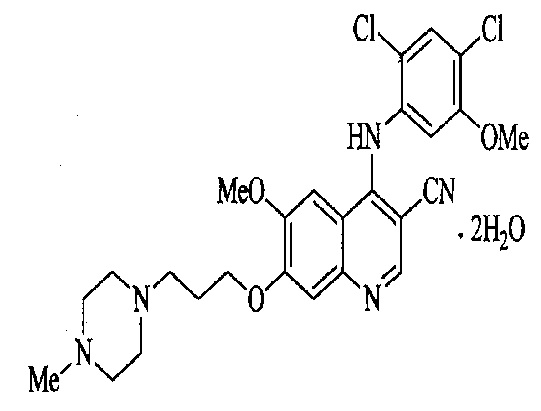
Bosutinib tablets contains bosutinib, a kinase inhibitor. The chemical name of bosutinib is 3-Quinolinecarbonitrile, 4-[(2,4-dichloro-5-methoxyphenyl)amino]-6-methoxy-7-[3-(4-methyl-1-piperazinyl) propoxy]-hydrate (1:2). Its chemical formula is C26H29Cl2N5O3.2H2O; its molecular weight is 566.48 Bosutinib has the following chemical structure:


Bosutinib-structure (Bosutinib Structure)

Bosutinib-structure (Bosutinib Structure)


Bosutinib is a white to yellowish-tan powder. Bosutinib is soluble in dimethyl sulfoxide, sparingly soluble in acetone and practically insoluble in water.
Bosutinib tablets are supplied for oral administration in a single strength of 400 mg, equivalent to 400 mg of bosutinib on an anhydrous basis. The tablets contain the following inactive ingredients: crospovidone, hypromellose, magnesium stearate, microcrystalline cellulose, poloxamer, povidone, titanium dioxide, polyethylene glycol, iron oxide yellow and iron oxide red.

12.1 Mechanism Of Action

Bosutinib is a TKI. Bosutinib inhibits the BCR-ABL kinase that promotes CML; it is also an inhibitor of Src-family kinases including Src, Lyn, and Hck. Bosutinib inhibited 16 of 18 imatinib-resistant forms of BCR-ABL kinase expressed in murine myeloid cell lines. Bosutinib did not inhibit the T315I and V299L mutant cells.

12.2 Pharmacodynamics


A greater likelihood of response and a greater likelihood of safety events were observed with higher bosutinib exposure in clinical studies. The time course of bosutinib pharmacodynamic response has not been fully characterized.
Cardiac Electrophysiology 
At a single oral dose of 500 mg bosutinib with ketoconazole (a strong CYP3A inhibitor), bosutinib does not prolong the QT interval to any clinically relevant extent.

12.3 Pharmacokinetics

Bosutinib pharmacokinetics were assessed following oral dosing with food in adult patients with CML and were presented as geometric mean (CV%), unless otherwise specified.

Bosutinib exhibits dose proportional increases in Cmax and AUC over the oral dose range of 200 to 800 mg (0.33 to 1.3 times the maximum approved recommended dosage of 600 mg). Bosutinib steady state Cmax was 127 ng/mL (31%), Ctrough was 68 ng/mL (39%) and AUC was 2,370 ng•h/mL (34%) following multiple oral doses of bosutinib 400 mg; Bosutinib steady state Cmax was 171 ng/mL (38%), Ctrough was 91 ng/mL (42%) and AUC was 3,150 ng•h/mL (38%) following multiple oral doses of bosutinib 500 mg. No clinically significant differences in the pharmacokinetics of bosutinib were observed following administration of either the tablet dosage forms of bosutinib at the same dose, under fed conditions.

Absorption

The median bosutinib (minimum, maximum) time--to-Cmax (tmax) was 6 (6, 6) hours following oral administration of a single oral dose of bosutinib 500 mg with food. The absolute bioavailability was 34% in healthy subjects.

Effect of Food

Bosutinib Cmax increased 1.8-fold and AUC increased 1.7-fold when bosutinib tablets were given with a high fat meal to healthy subjects compared to administration under fasted condition. Bosutinib Cmax increased 1.6-fold and AUC increased 1.5-fold when bosutinib capsules were given with a high fat meal to healthy subjects compared to administration under fasted condition. The high-fat meal (800 to 1,000 total calories) consisted of approximately 150 protein calories, 250 carbohydrate calories, and 500 to 600 fat calories.

No clinically significant differences in the pharmacokinetics of bosutinib were observed following administration of a bosutinib capsule that was opened and the contents mixed with applesauce or yogurt immediately before use.

Distribution

The mean (SD) apparent bosutinib volume of distribution is 6,080 (1,230) L after an oral dose of 500 mg of bosutinib.

Bosutinib protein binding is 94% in vitro and 96% ex vivo, and is independent of concentration.

Elimination

The mean (SD) bosutinib terminal phase elimination half life (t½) was 22.5 (1.7) hours, and the mean

 (SD) apparent clearance was 189 (48) L/h following a single oral dose of bosutinib.

Metabolism

Bosutinib is primarily metabolized by CYP3A4.

Excretion

Following a single oral dose of [14C] radiolabeled bosutinib without food, 91.3% of the dose was recovered in feces and 3.3% of the dose recovered in urine.

Specific Populations

Patients with Renal Impairment

Bosutinib AUC increased 1.4-fold in subjects with moderate renal impairment (CLcr: 30 to 50 mL/min, estimated by Cockcroft-Gault (C-G)) and increased 1.6-fold in subjects with severe renal impairment (CLcr less than 30 mL/min) following a single oral dose of bosutinib 200 mg (0.33 times the maximum approved recommended dosage of 600 mg). No clinically significant difference in the pharmacokinetics of bosutinib was observed in subjects with mild renal impairment (CLcr: 51 to 80 mL/min, C-G). Bosutinib has not been studied in patients undergoing hemodialysis.

Patients with Hepatic Impairment

Bosutinib Cmax increased 2.4-fold, 2-fold, and 1.5-fold, and AUC increased 2.3-fold, 2-fold, and 1.9-fold in hepatic impairment Child-Pugh A, B, and C, respectively, following a single oral dose of bosutinib 200 mg (0.33 times the maximum approved recommended dosage of 600 mg).

Drug Interaction Studies

Clinical Studies

Strong CYP3A Inhibitors: Bosutinib Cmax increased 5.2-fold and AUC increased 8.6-foldfollowing a single dose of bosutinib 100 mg (0.17 times the maximum approved recommended dosage) without food when used concomitantly with 400 mg ketoconazole (a strong CYP3A inhibitor) administered over multiple daily doses.

Moderate CYP3A Inhibitors: Bosutinib Cmax increased 1.5-fold and AUC increased 2-fold following a single dose of bosutinib 500 mg with food when administered concomitantly with 125 mg aprepitant (a moderate CYP3A inhibitor).

Strong CYP3A Inducers: Bosutinib Cmax decreased by 86% and AUC decreased by 94% following a single dose of bosutinib 500 mg with food administered concomitantly with multiple daily doses of 600 mg of rifampin (a strong CYP3A inducer).

Proton Pump Inhibitors: Lansoprazole decreased bosutinib Cmax by 46% and AUC by 26% following a single oral dose of bosutinib 400 mg without food when used concomitantly with lansoprazole 60 mg (proton pump inhibitor) administered over multiple daily doses. Bosutinib displays pH-dependent aqueous solubility, in vitro[see Description (11)].

P-gp Substrates: No clinically significant differences in bosutinib pharmacokinetics were observed when used concomitantly with dabigatran etexilate mesylate (a P-glycoprotein (P-gp) substrate).

In Vitro Studies

Transporters Systems:

Bosutinib inhibits breast cancer resistance protein (BCRP)but, does not inhibit organic anion transporting polypeptide (OATP)1B1, OATP1B3, organic anion transporter (OAT)1, OAT3, organic cation transporter (OCT)1, and OCT2.


Pediatric use information is approved for PF PRISM CV’s BOSULIF® (bosutinib) tablets. However, due to PF PRISM CV’s marketing exclusivity rights, this drug product is not labeled with that information.

13.1 Carcinogenesis, Mutagenesis, Impairment Of Fertility


Bosutinib was not carcinogenic in rats or transgenic mice. The rat 2-year carcinogenicity study was conducted at bosutinib oral doses up to 25 mg/kg in males and 15 mg/kg in females. Exposures at these doses were approximately 1.5 times (males) and 3.1 times (females) the human exposure at the 400 mg dose and 1.2 times (males) and 2.4 times (females) exposure in humans at the 500 mg dose. The 6-month RasH2 transgenic mouse carcinogenicity study was conducted at bosutinib oral doses up to 60 mg/kg.
Bosutinib was not mutagenic or clastogenic in a battery of tests, including the bacteria reverse mutation assay (Ames Test), the in vitro assay using human peripheral blood lymphocytes and the micronucleus test in orally treated male mice.
In a rat fertility study, drug-treated males were mated with untreated females, or untreated males were mated with drug-treated females. Females were administered the drug from pre-mating through early embryonic development. The dose of 70 mg/kg/day of bosutinib resulted in reduced fertility in males as demonstrated by 16% reduction in the number of pregnancies. There were no lesions in the male reproductive organs at this dose. This dose of 70 mg/kg/day resulted in exposure (AUC) in male rats approximately 1.5 times and equal to the human exposure at the recommended doses of 400 and 500 mg/day, respectively. Fertility (number of pregnancies) was not affected when female rats were treated with bosutinib. However, there were increased embryonic resorptions at greater than or equal to 10 mg/kg/day of bosutinib (1.6 and 1.2 times the human exposure at the recommended doses of 400 and 500 mg/day, respectively), and decreased implantations and reduced number of viable embryos at 30 mg/kg/day of bosutinib (3.4 and 2.5 times the human exposure at the recommended doses of 400 or 500 mg/day, respectively).

14.1 Adult Patients With Newly-Diagnosed Cp Ph+ Cml


The efficacy of bosutinib in patients with newly-diagnosed chronic phase Ph+ CML was evaluated in the Bosutinib trial in First-line chrOnic myelogenous leukemia tREatment (BFORE) Trial: “A Multicenter Phase 3, Open-Label Study of Bosutinib Versus Imatinib in Adult Patients With Newly Diagnosed Chronic Phase Chronic Myelogenous Leukemia” [NCT02130557].
The BFORE Trial is a 2-arm, open-label, randomized, multicenter trial conducted to investigate the efficacy and safety of bosutinib 400 mg once daily alone compared with imatinib 400 mg once daily alone in adult patients with newly-diagnosed CP Ph+ CML. The trial randomized 536 patients (268 in each arm) with Ph+ or Ph- newly-diagnosed CP CML (intent-to-treat [ITT] population) including 487 patients with Ph+ CML harboring b2a2 and/or b3a2 transcripts at baseline and baseline BCR-ABL copies >0 (modified intent-to-treat [mITT] population). Randomization was stratified by Sokal score and geographical region. All patients are being treated and/or followed for up to 5 years (240 weeks). Efficacy was evaluated in the mITT population. The major efficacy outcome measure was major molecular response (MMR) at 12 months (48 weeks) defined as ≤0.1% BCR-ABL ratio on international scale (corresponding to ≥3 log reduction from standardized baseline) with a minimum of 3,000 ABL transcripts as assessed by the central laboratory. Additional efficacy outcomes included CCyR by 12 months, defined as the absence of Ph+ metaphases in chromosome banding analysis of ≥20 metaphases derived from bone marrow aspirate or MMR if an adequate cytogenetic assessment was unavailable and MMR by 18 months (72 weeks).
In the mITT population in this study, 57% of patients were males, 78% were Caucasian, and 19% were 65 years or older. The median age was 53 years. At baseline, the distribution of Sokal risk scores was similar in bosutinib and imatinib-treated patients (low risk: 35% and 39%; intermediate risk: 44% and 38%; high risk: 22% and 22%, respectively). After a minimum of 12 months follow-up, 78% of the 246 bosutinib -treated patients and 72% of the 239 imatinib-treated patients were still receiving treatment and with a minimum of 60 months of follow-up, 60% and 60% of patients, respectively, were still receiving treatment. The median treatment duration was 55.1 months for bosutinib and 55 months for imatinib.
The efficacy results from the BFORE trial are summarized in Table 13.
Table 13:
Summary of Major Molecular Response (MMR) and Complete Cytogenetic Response (CCyR), by Treatment Group in the Modified Intent-to-Treat (mITT) Population                           

  
 Response
 
 
Bosutinib
 
N=246 n (%)


Imatinib
 
N=241 n (%)


2-sided p-value 
 MMR at Month 12 (Week 48)
 MMR (%)
(95% CI)


116 (47)
 
(41, 53)


89 (37)
 
(31, 43)


0.0200* 
 CCyR by Month 12 (Week 48)
 CCyR (%)
(95% CI)


190 (77)
 
(72, 83)


160 (66)
 
(60, 72)


0.0075* 
 MMR by Month 18 (Week 72)
 MMR (%)
(95% CI)


150 (61)
 
(55, 67)


127 (53)
 
(46, 59)


0.0606* 

Abbreviations: CCyR=complete cytogenetic response; CI=confidence interval; CMH=Cochran-Mantel-Haenszel; MMR=major molecular response; N/n=number of patients.

* Derived from CMH test stratified by Geographical region and Sokal score at randomization.

The MMR rate at Month 12 for all randomized patients (ITT population) was consistent with the mITT population (47% [95% CI: 41, 53] in the bosutinib treatment group and 36% [95% CI: 30, 42] in the imatinib treatment group; odds ratio of 1.57 [95% CI: 1.10, 2.22]). MMR by Month 60 (Week 240) in the mITT population was 74% (95% CI: 69, 80) in the bosutinib treatment group and 66% (95% CI: 60, 72) in the imatinib treatment group; odds ratio of 1.52 (95% CI: 1.02, 2.25). MMR by Month 60 in the ITT population was also consistent with the mITT population (1.57 [95% CI: 1.08, 2.28]).

After 60 months of follow-up, the median time to MMR in responders was 9 months for bosutinib and 11.9 months for imatinib.

By 60 months, the MMR rates in each Sokal risk group for the bosutinib and imatinib-treated patients, respectively, were 78% and 72% for low risk, 74% and 67% for intermediate risk and 68% and 52% for high risk.

After 60 months of follow-up, 6 (2%) bosutinib patients and 7 (3%) imatinib patients transformed to AP CML or BP CML while on treatment.

At 60 months, the estimated overall survival rate was 95% (95% CI: 91, 97) in the bosutinib group and 94% (95% CI: 90, 96) in the imatinib group.

14.2 Adult Patients With Imatinib-Resistant Or -Intolerant Ph+ Cp, Ap, And Bp Cml


Study 200 (NCT00261846), a single-arm, open-label, multicenter study in patients with CML who were resistant or intolerant to prior therapy was conducted to evaluate the efficacy and safety of bosutinib 500 mg once daily in patients with imatinib-resistant or -intolerant CML with separate cohorts for CP, AP, and BP disease previously treated with 1 prior TKI (imatinib) or more than 1 TKI (imatinib followed by dasatinib and/or nilotinib). The definition of imatinib resistance included (1) failure to achieve or maintain any hematologic improvement within 4 weeks; (2) failure to achieve a CHR by 3 months, cytogenetic response by 6 months or major cytogenetic response (MCyR) by 12 months; (3) progression of disease after a previous cytogenetic or hematologic response; or (4) presence of a genetic mutation in the BCR-ABL gene associated with imatinib resistance. Imatinib intolerance was defined as inability to tolerate imatinib due to toxicity, or progression on imatinib and inability to receive a higher dose due to toxicity. The definitions of resistance and intolerance to both dasatinib and nilotinib were similar to those for imatinib. The protocol was amended to exclude patients with a known history of the T315I mutation after 396 patients were enrolled in the trial.
The efficacy endpoints for patients with CP CML previously treated with 1 prior TKI (imatinib) were the rate of attaining MCyR by Week 24 and the duration of MCyR. The efficacy endpoints for patients with CP CML previously treated with both imatinib and at least 1 additional TKI were the cumulative rate of attaining MCyR by Week 24 and the duration of MCyR. The efficacy endpoints for patients with previously treated AP and BP CML were confirmed CHR and overall hematologic response (OHR).
The study enrolled 546 patients with CP, AP or BP CML. Of the total patient population 73% were imatinib resistant and 27% were imatinib intolerant. In this trial, 53% of patients were males, 65% were Caucasian, and 20% were 65 years old or older. Of the 546 treated patients, 506 were considered evaluable for cytogenetic or hematologic efficacy assessment. Patients were evaluable for efficacy if they had received at least 1 dose of bosutinib and had a valid baseline efficacy assessment. Among evaluable patients, there were 262 patients with CP CML previously treated with 1 prior TKI (imatinib), 112 patients with CP CML previously treated with both imatinib and at least 1 additional TKI, and 132 patients with advanced phase CML previously treated with at least 1 TKI.
Median duration of bosutinib treatment was 26 months in patients with CP CML previously treated with 1 TKI (imatinib), 9 months in patients with CP CML previously treated with imatinib and at least 1 additional TKI, 10 months in patients with AP CML previously treated with at least imatinib, and 3 months in patients with BP CML previously treated with at least imatinib.
The 24 week efficacy and MCyR at any time results are summarized in Table 14.
Table 14: Efficacy Results in Patients with Ph+ CP CML With Resistance to or Intolerance to Imatinib


Prior Treatment
With Imatinib Only
(N=262 evaluable) 
n (%) 
Prior Treatment With Imatinib and Dasatinib or Nilotinib (N=112 evaluable) 
n (%) 
By Week 24
MCyR
 (95% CI)
 
105 (40.1)
(34.1, 46.3)
 
29 (25.9)
(18.1, 35)
MCyR any time
156 (59.5)
(53.3, 65.5)
45 (40.2)
(31, 49.9)

Abbreviations: CI=confidence interval; CML=chronic myelogenous leukemia; CP=chronic phase; MCyR=major
cytogenetic response; N/n=number of patients; Ph+=Philadelphia chromosome positive.
The long-term follow-up data analysis was based on a minimum of 60 months for patients with CP CML treated with 1 prior TKI (imatinib) and a minimum of 48 months for patients with CP CML treated with imatinib and at least 1 additional TKI. For the 59.5% of patients with CP CML treated with 1 prior TKI (imatinib) who achieved a MCyR at any time, the median duration of MCyR was not reached. Among these patients, 65.4% and 42.9% had a MCyR lasting at least 18 and 54 months, respectively. For the 40.2% of patients with CP CML treated with imatinib and at least 1 additional TKI who achieved a MCyR at any time, the median duration of MCyR was not reached. Among these patients, 64.4% and 35.6% had a MCyR lasting at least 9 and 42 months, respectively. Of the 403 treated patients with CP CML, 20 patients had confirmed disease transformation to AP or BP while on treatment with bosutinib.
The 48-week efficacy results in patients with accelerated and blast phases CML previously treated with at least imatinib are summarized in Table 15.
Table 15: Efficacy Results in Patients With Accelerated Phase and Blast Phase CML Previously Treated With at Least Imatinib


AP CML 
(N=72 evaluable) 
n (%) 
BP CML 
(N=60 evaluable) 
n (%) 
 
CHRa by Week 48
 (95% CI)
 
22 (30.6)
(20.2, 42.5)
 
10 (16.7)
(8.3, 28.5)
 
OHRa by Week 48 (95% CI)
 
41 (56.9)
(44.7, 68.6)
 
17 (28.3) (17.5, 41.4)

Abbreviations: AP=accelerated phase; BP=blast phase; CHR=complete hematologic response; CI=confidence interval; CML=chronic myelogenous leukemia; CI=confidence interval, OHR=overall hematologic response, CHR=complete hematologic response, N/n=number of patients
a Overall hematologic response (OHR) = major hematologic response (complete hematologic response + no evidence of leukemia) or return to chronic phase (RCP). All responses were confirmed after 4 weeks. Complete hematologic response (CHR) for AP and BP CML: WBC less than or equal to institutional ULN, platelets greater than or equal to 100,000/mm3 and less than 450,000/mm3, absolute neutrophil count (ANC) greater than or equal to 1×10⁹ /L, no blasts or promyelocytes in peripheral blood, less than 5% myelocytes + metamyelocytes in bone marrow, less than 20% basophils in peripheral blood, and no extramedullary involvement. No evidence of leukemia (NEL): Meets all other criteria for CHR except may have thrombocytopenia (platelets greater than or equal to 20,000/mm3 and less than 100,000/mm3) and/or neutropenia (ANC greater than or equal to 0.5×10⁹ /L and less than 1×10⁹ /L). Return to chronic phase (RCP) = disappearance of features defining accelerated or blast phases but still in chronic phase.
The long-term follow-up data analysis was based on a minimum of 48 months for patients with AP CML and BP CML. Of the 79 treated patients with AP CML, 3 patients had confirmed disease transformation to BP while on bosutinib treatment.

Pediatric use information is approved for PF PRISM CV’s BOSULIF® (bosutinib) tablets. However, due to PF PRISM CV’s marketing exclusivity rights, this drug product is not labeled with that information.

16 How Supplied/Storage And Handling

Tablets - How Supplied


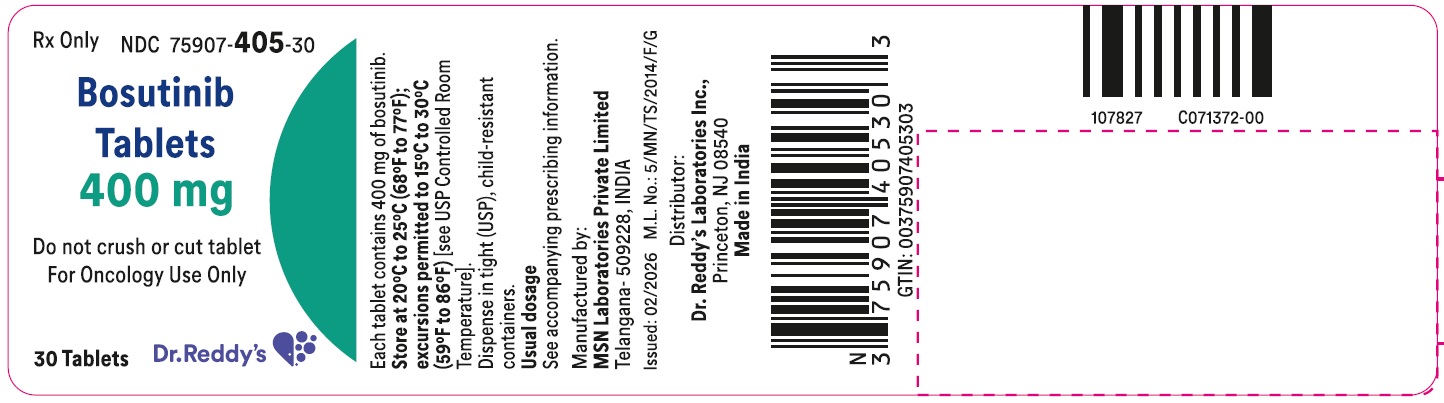
Bosutinib tablets are supplied for oral administration in a single strength 400 mg orange, oval, biconvex, film-coated tablets debossed with “400” on one side and “B” on other side. Bosutinib tablets are available in the following packaging configurations with a child-resistant CR) closure (Table 17). Bottles contain a desiccant.

Table 17: Tablet Presentations

Bosutinib Tablets 
Package Configuration 
Tablet Strength
(mg)
NDC 
Tablet Description 
30 tablets per bottle
400 mg
75907-405-30
Orange, oval, biconvex, film-coated tablets, debossed with
“400” on one side and “B” on other side. 

Abbreviation: NDC=National drug code.

Storage
Store at 20°C to 25°C (68°F to 77°F); excursions permitted to 15°C to 30°C (59°F to 86°F) [see USP Controlled Room Temperature].
Handling and Disposal
Procedures for proper disposal of anticancer drugs should be considered. Touching or handling crushed or broken tablets is to be avoided. Any unused product or waste material should be disposed of in accordance with local requirements, or drug take back programs.

17 Patient Counseling Information


Advise the patient to read the FDA-approved patient labeling (Patient Information and Instructions for Use).
• Dosage and Administration
Instruct patients to take bosutinib exactly as prescribed, not to change their dose or to stop taking bosutinib unless they are told to do so by their doctor. If patients miss a dose beyond 12 hours, they should be advised to take the next scheduled dose at its regular time. A double dose should not be taken to make up for any missed dose. Advise patients to take bosutinib with food. Patients should be advised: “Swallow tablets whole. Do not crush, break, or cut tablet. Do not touch or handle crushed or broken tablets."
• Gastrointestinal Toxicity
Advise patients that they may experience diarrhea, nausea, vomiting, abdominal pain, or blood in their stools with bosutinib and to seek medical attention promptly for these symptoms [see Warnings and Precautions (5.1)].
• Myelosuppression
Advise patients of the possibility of developing low blood cell counts and to immediately report fever, any suggestion of infection, or signs or symptoms suggestive of bleeding or easy bruising [see Warnings and Precautions (5.2)].
• Hepatic Toxicity
Advise patients of the possibility of developing liver function abnormalities and to immediately report jaundice [see Warnings and Precautions (5.3)].
Cardiovascular Toxicity
Advise patients that cardiac failure, left ventricular dysfunction, and cardiac ischemic events have been reported. Advise patients to seek immediate medical attention if any symptoms suggestive of cardiac failure and cardiac ischemia occur, such as shortness of breath, weight gain, or fluid retention [see Warnings and Precautions (5.4)].
• Fluid Retention
Advise patients of the possibility of developing fluid retention (swelling, weight gain, or shortness of breath) and to seek medical attention promptly if these symptoms arise [see Warnings and Precautions (5.5)].
• Renal Toxicity
Advise patients of the possibility of developing renal problems and to immediately report frequent urination, polyuria or oliguria [see Warnings and Precautions (5.6)].
• Adverse Reactions
Advise patients that they may experience other adverse reactions such as respiratory tract infections, rash, fatigue, headache, dizziness, back pain, arthralgia, pruritus with bosutinib and to seek medical attention if symptoms are significant. There is a possibility of anaphylactic shock [see Contraindications (4) and Adverse Reactions (6)].
• Embryo-Fetal Toxicity
Advise females to inform their healthcare provider if they are pregnant or become pregnant. Advise female patients of the risk to a fetus and potential loss of the pregnancy [see Use in Specific Populations (8.1)].
Advise females of reproductive potential, to use effective contraception during treatment and for 2 weeks after receiving the last dose of bosutinib [see Warnings and Precautions (5.7)and Use in Specific Populations (8.1, 8.3)].
Advise lactating women not to breastfeed during treatment with bosutinib and for 2 weeks after the last dose [see Use in Specific Populations (8.2)].
• Drug Interactions
Advise patients that bosutinib and certain other medicines, including over the counter medications or herbal supplements (such as St. John’s wort) can interact with each other and may alter the effects of bosutinib [see Drug Interactions (7)].


Manufactured by:
MSN Laboratories Private Limited

Telangana – 509 228,
INDIA
Distributor
Dr. Reddy's Laboratories Inc.,
Princeton, NJ 08540

Made in India


Issued: 04/2026

Other


PATIENT INFORMATION
Bosutinib (boe-SUE-ti-nib)
Tablets

What arebosutinib tablets?

Bosutinib tablets area prescription medicine used to treat:
  • adults who have a certain type of leukemia called chronic phase (CP) Philadelphia chromosome-positive chronic myelogenous leukemia (Ph+ CML) who are newly-diagnosed or who no longer benefit from or did not tolerate other treatment.
  • adults with accelerated phase (AP), or blast phase (BP) Ph+ CML who can no longer benefit from or did not tolerate other treatment.
    It is not known if bosutinib tabletsaresafe and effective in children less than 1 year of age with CP Ph+ CML who are newly-diagnosed or who no longer benefit from or did not tolerate other treatment or in children with AP Ph+ CML or BP Ph+ CML.

Do not take bosutinib tabletsif you are allergic to bosutinib or any of the ingredients in bosutinib tablets. See the end of this leaflet for a complete list of ingredients of bosutinib tablets.

Before taking bosutinib tablets, tell your doctor about all of your medical conditions, including if you:
have liver problems
• have heart problems
• have kidney problems
• have high blood pressure
• have diabetes
• are pregnant or plan to become pregnant. Bosutinib tablets can harm your unborn baby. Females who are able to become pregnant should have a pregnancy test before starting treatment with bosutinib tablets. Tell your doctor right away if you become pregnant during treatment with bosutinib tablets.
o Females
who are able to become pregnant should use effective birth control (contraception) during treatment with bosutinib tablets and for 2 weeks after the last dose. Talk to your doctor about birth control methods that may be right for you.
• are breastfeeding or plan to breastfeed. It is not known if bosutinib passes into your breast milk or if it can harm your baby. Do not breastfeed during treatment with bosutinib tablets and for 2 weeks after the last dose.
Tell your doctor about all the medicines you take,
including prescription medicines, over-the-counter medicines, vitamins, and herbal supplements. When taken together, bosutinib tablets and certain other medicines can affect each other.
Know the medicines you take. Keep a list of your medicines and show it to your doctor and pharmacist when you get a new medicine.

How should I take bosutinib tablets?
  • Take bosutinib tablets exactly as prescribed by your doctor.
  • Do not change your dose or stop taking bosutinib tablets without first talking with your doctor. 
  • Take bosutinib tablets with food.
  • Swallow bosutinib tablets whole. Do not crush, break, chew or cut bosutinib tablets. Do not touch or handle crushed or broken bosutinib tablets.
  • If you take an antacid or H2 blocker medicine, take it at least 2 hours before or 2 hours after bosutinib tablets. If you take a Proton Pump Inhibitor (PPI) medicine, talk to your doctor or pharmacist.
  • You should avoid grapefruit, grapefruit juice, and supplements that contain grapefruit extract during treatment with bosutinib tablet. Grapefruit products increase the amount of bosutinib tablets in your body.
  • If you miss a dose of bosutinib tablets, take it as soon as you remember. If you miss a dose by more than 12 hours, skip that dose and take your next dose at your regular time. Do not take 2 doses at the same time.
  • If you take too much bosutinib, call your doctor or go to the nearest hospital emergency room right away.


What are the possible side effects of bosutinib tablets?
Bosutinib tablets may cause serious side effects, including:
• Stomach problems. Bosutinib tablets may cause stomach (abdomen) pain, nausea, diarrhea, vomiting, or blood in your stools. Get medical help right away for any stomach problems.
• Low blood cell counts. Bosutinib tablets may cause low platelet counts (thrombocytopenia), low red blood cell counts (anemia) and low white blood cell counts (neutropenia). Your doctor should do blood tests to check your blood cell counts regularly during your treatment with bosutinib tablets. Call your doctor right away if you have unexpected bleeding or bruising, blood in your urine or stools, fever, or any signs of an infection.
• Liver problems. Your doctor should do blood tests to check your liver function regularly during your treatment with bosutinib tablets. Call your doctor right away if your skin or the white part of your eyes turns yellow (jaundice) or you have dark “tea color” urine.
• Heart problems. Bosutinib tablets may cause heart problems, including heart failure and decreased blood flow to the heart which can lead to heart attack. Get medical help right away if you get shortness of breath, weight gain, chest pain, or swelling in your hands, ankles or feet.
• Your body may hold too much fluid (fluid retention). Fluid may build up in the lining of your lungs, the sac around your heart, or your stomach cavity. Get medical help right away if you get any of the following symptoms during your treatment with bosutinib tablets:
o shortness of breath and cough
o chest pain
o swelling in your hands, ankles, or feet  
o swelling all over your body
o weight gain
• Kidney problems. Your doctor should do tests to check your kidney function when you start treatment with bosutinib tablets and during your treatment. Call your doctor right away if you get any of the following symptoms during your treatment with bosutinib tablets:
o you urinate more often than normal
o you urinate less often than normal
o you make a much larger amount of urine than normal
o you make a much smaller amount of urine than normal
The most common side effects of bosutinib tablets in adults with CML include:
• diarrhea
• stomach (abdominal) pain
• vomiting
• nausea
• rash
• tiredness
• liver problems
• headache
• fever
• respiratory tract infections (infections in nose, throat or lungs)
• changes in certain blood tests. Your doctor may do blood tests during treatment with bosutinib tablets to check for changes
Tell your doctor or get medical help right away if you get respiratory tract infections, loss of appetite, headache, dizziness, back pain, joint pain, rash or itching while taking bosutinib tablets. These may be symptoms of a severe allergic reaction.
Your doctor may change your dose, temporarily stop, or permanently stop treatment with bosutinib tablets if you have certain side effects.
Bosutinib tablets may cause fertility problems in females and males. This may affect your ability to have a child. Talk to your doctor if this is a concern for you.
Tell your doctor if you have any side effect that bothers you or that does not go away.
These are not all of the possible side effects of bosutinib tablets.
Call your doctor for medical advice about side effects. You may report side effects to FDA at 1-800-FDA-1088. 

How should I store bosutinib tablets?
• Store bosutinib tablets at room temperature between 68°F to 77°F (20°C to 25°C).
• The bosutinib tablets bottle has a child-resistant closure.
• The bosutinib tablets bottle contains a desiccant to help keep your medicine dry (protect it from moisture). Keep the desiccant in the bottle. Do not eat the desiccant.
• Ask your doctor or pharmacist about the right way to throw away outdated or unused bosutinib tablets.
Keep bosutinib tablets and all medicines out of the reach of children.


General information about the safe and effective use of bosutinib tablets.
 Medicines are sometimes prescribed for purposes other than those listed in a Patient Information leaflet. Do not use bosutinib tablets for a condition for which it is not prescribed. Do not give bosutinib tablets to other people even if they have the same symptoms you have. It may harm them. You can ask your doctor or pharmacist for information about bosutinib tablets that is written for health professionals.


What are the ingredients in bosutinib tablets?
Active ingredient: bosutinib.
Inactive ingredients: crospovidone,hypromellose, magnesium stearate, microcrystalline cellulose, poloxamer, povidone, titanium dioxide, polyethylene glycol, iron oxide yellow and iron oxide red.
Pediatric use information is approved for PF PRISM CV’s BOSULIF® (bosutinib) tablets. However, due to PF PRISM CV’s marketing exclusivity rights, this drug product is not labeled with that information.


Manufactured by:
MSN Laboratories Private Limited
Telangana – 509 228,
INDIA
 
Distributor
Dr. Reddy's Laboratories Inc.,
Princeton, NJ 08540
Made in India

For more information call 1-888-375-3784.


This Patient Information has been approved by the U.S. Food and Drug Administration.

Issued: 04/2026

Package Label.Principal Display Panel

400-mg-Container-Label-30s-count

Bosutinib-400-mg-30s-count (Bosutinib 400 mg 30s Count)

Bosutinib-400-mg-30s-count (Bosutinib 400 mg 30s Count)

* Please review the disclaimer below.