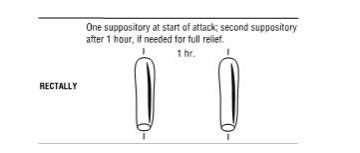
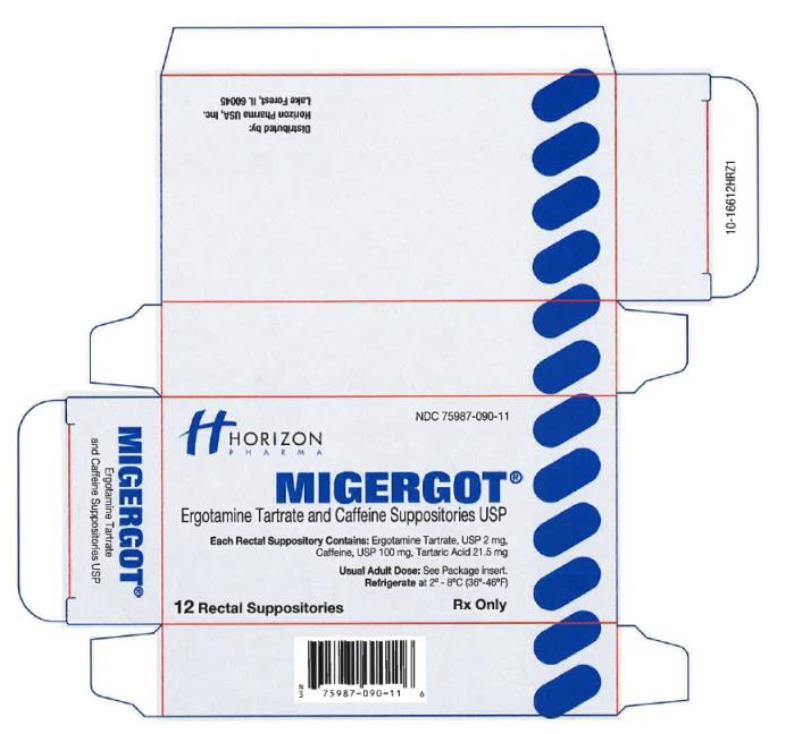
Although signs and symptoms of ergotism rarely develop even after long term intermittent use of the rectally administered drug, care should be exercised to remain within the limits of recommended dosage.
Ergotism is manifested by intense arterial vasoconstriction, producing signs and symptoms of peripheral vascular ischemia. Ergotamine induces vasoconstriction by a direct action on vascular smooth muscle. In chronic intoxication with ergot derivatives, headache, intermittent claudication, muscle pains, numbness, coldness and pallor of the digits may occur. If the condition is allowed to progress untreated, gangrene can result.
While most cases of ergotism associated with ergotamine treatment result from frank overdosage, some cases have involved apparent hypersensitivity. There are few reports of ergotism among patients taking doses within the recommended limits or for brief periods of time. In rare instances, patients, particularly those who have used the medication indiscriminately over long periods of time, may display withdrawal symptoms consisting of rebound headache upon discontinuation of the drug.
Rare cases of a solitary rectal or anal ulcer have occurred from abuse of ergotamine suppositories usually in higher than recommended doses or with continual use at the recommended dose for many years. Spontaneous healing occurs within usually 4-8 weeks after drug withdrawal.