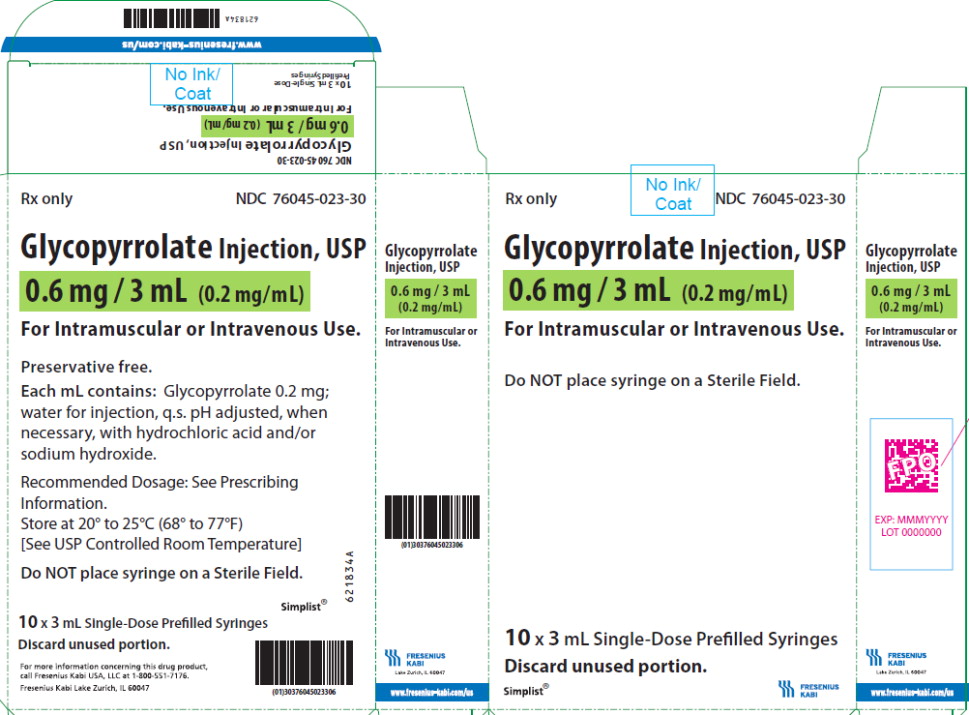
Preanesthetic Medication
The recommended dose of Glycopyrrolate Injection is 0.004 mg/kg by intramuscular injection, given 30 to 60 minutes prior to the anticipated time of induction of anesthesia or at the time the preanesthetic narcotic and/or sedative are administered.
Intraoperative Medication
Glycopyrrolate Injection may be used during surgery to counteract drug-induced or vagal reflexes and their associated arrhythmias (e.g., bradycardia). It should be administered intravenously as single doses of 0.1 mg and repeated, as needed, at intervals of 2 to 3 minutes. Attempt to determine the etiology of the arrhythmia, and perform the surgical or anesthetic manipulations necessary to correct parasympathetic imbalance.
Reversal of Neuromuscular Blockade
The recommended dose of Glycopyrrolate Injection is 0.2 mg for each 1 mg of neostigmine or 5 mg of pyridostigmine.
Peptic Ulcer
The usual recommended dose of Glycopyrrolate Injection is 0.1 mg administered at 4-hour intervals, 3 or 4 times daily intravenously or intramuscularly. Where more profound effect is required, 0.2 mg may be given. Some patients may need only a single dose. Frequency of administration should be dictated by patient response up to a maximum of four times daily.
Preanesthetic Medication
The recommended dose of Glycopyrrolate Injection in pediatric patients is 0.004 mg/kg intramuscularly, given 30 to 60 minutes prior to the anticipated time of induction of anesthesia or at the time the preanesthetic narcotic and/or sedative are administered. Patients under 2 years of age may require up to 0.009 mg/kg.
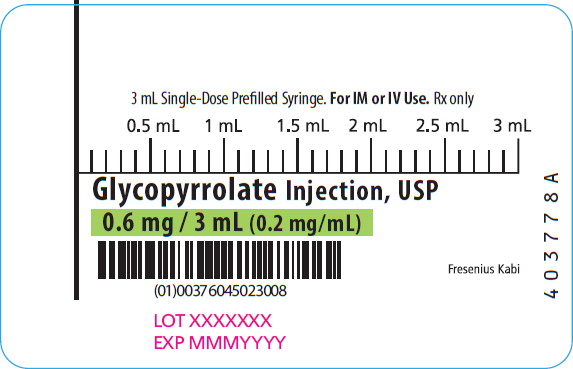
Do not use this prefilled syringe to administer a dose of less than 0.1 mg (0.5 mL).
Intraoperative Medication
Because of the long duration of action of Glycopyrrolate Injection if used as preanesthetic medication, additional Glycopyrrolate Injection for anticholinergic effect intraoperatively is rarely needed; in the event it is required the recommended pediatric dose is 0.004 mg/kg intravenously, not to exceed 0.1 mg in a single dose which may be repeated, as needed, at intervals of 2 to 3 minutes. Attempt to determine the etiology of the arrhythmia, and perform the surgical or anesthetic manipulations necessary to correct parasympathetic imbalance.
Do not use this prefilled syringe to administer a dose of less than 0.1 mg (0.5 mL).
Reversal of Neuromuscular Blockade
The recommended pediatric dose of Glycopyrrolate Injection is 0.2 mg for each 1 mg of neostigmine or 5 mg of pyridostigmine. In order to minimize the appearance of cardiac side effects, the drugs may be administered simultaneously by intravenous injection and may be mixed in the same syringe.
Do not use this prefilled syringe to administer a dose of less than 0.1 mg (0.5 mL).
Peptic Ulcer
Glycopyrrolate Injection is not indicated for the treatment of peptic ulcer in pediatric patients.
Diluent Compatibilities
Dextrose 5% and 10% in water, or saline, dextrose 5% in sodium chloride 0.45%, sodium chloride 0.9%, and Ringer's Injection.
Diluent Incompatibilities
Lactated Ringer's solution.
Admixture Compatibilities
Physical Compatibility
This list does not constitute an endorsement of the clinical utility or safety of co-administration of Glycopyrrolate Injection with these drugs. Glycopyrrolate Injection is compatible for mixing and injection with the following injectable dosage forms: atropine sulfate, USP; physostigmine salicylate; diphenhydramine HCl; codeine phosphate, USP; benz-quinamide HCl; hydromorphone HCl, USP; droperidol; levorphanol tartrate; lidocaine, USP; meperidine HCl, USP; pyridostigmine bromide; morphine sulfate, USP; nalbuphine HCl; oxymorphone HCl; procaine HCl, USP; promethazine HCl, USP; neostigmine methylsulfate, USP; scopolamine HBr, USP; butorphanol tartrate; fentanyl citrate; trimethobenzamide HCl; and hydroxyzine HCl. Glycopyrrolate Injection may be administered via the tubing of a running infusion of normal saline.
Admixture Incompatibilities
Physical Incompatibility
Because the stability of glycopyrrolate is questionable above a pH of 6.0 do not combine Glycopyrrolate Injection in the same syringe with methohexital Na; chloramphenicol Na succinate; dimenhydrinate; pentobarbital Na; thiopental Na; secobarbital Na; sodium bicarbonate; diazepam; dexamethasone Na phosphate; or pentazocine lactate. These mixtures will result in a pH higher than 6.0 and may result in gas production or precipitation.
Risk summary
Limited data are available with glycopyrrolate use during pregnancy have not identified a drug-associated risk of birth defects and miscarriage, however, most of the reported exposures occurred after the first trimester. Most of the available data are based on studies with exposures that occurred at the time of Cesarean-section delivery, and these studies have not identified an adverse effect on maternal outcomes or infant Apgar scores (see Data).
In animal reproduction studies in pregnant rats and rabbits administered glycopyrrolate orally (rats) and intramuscularly (rabbits) during the period of organogenesis, no teratogenic effects were seen at 320-times and 5 times the maximum recommended human dose (MRHD) of 2 mg (on a mg/m2 basis), respectively (see Data).
The estimated background risk for major birth defects and miscarriage for the indicated population is unknown. All pregnancies have a background risk of birth defect, loss, or other adverse outcomes. In the U.S. general population, the estimated background risk of major birth defects and miscarriage in the clinically recognized pregnancies is 2-4% and 15−20%, respectively.
Data
Human Data
Published, randomized, controlled trials over several decades, which compared the use of glycopyrrolate to another antimuscarinic agent in pregnant women during Cesarean section, have not identified adverse maternal or infant outcomes. In normal doses (0.004 mg/kg), glycopyrrolate does not appear to affect fetal heart rate or fetal heart rate variability to a significant degree. Concentrations of glycopyrrolate in umbilical venous and arterial blood and in the amniotic fluid are low after intramuscular administration to parturients. Therefore, glycopyrrolate does not appear to penetrate through the placental barrier in significant amounts.
There are no studies on the safety of glycopyrrolate exposure during the period of organogenesis, and therefore, it is not possible to draw any conclusions on the risk of birth defects following exposure to glycopyrrolate during pregnancy. In addition, there are no data on the risk of miscarriage following fetal exposure to glycopyrrolate.
Animal Data
Reproduction studies with glycopyrrolate were performed in rats at a dietary dose of approximately 65 mg/kg/day (exposure was approximately 320 times the maximum recommended daily human dose of 2 mg on a mg/m2 basis) and rabbits at intramuscular doses of up to 0.5 mg/kg/day (exposure was approximately 5 times the maximum recommended daily human dose on a mg/m2 basis). These studies produced no teratogenic effects to the fetus.
A preclinical study on reproductive performance of rats given glycopyrrolate resulted in a decreased rate of conception and survival at weaning.
Risk summary
There are no data on the presence of glycopyrrolate in either human milk or animal milk, the effects on the breastfed infant, or the effects on milk production. As with other anticholinergics, glycopyrrolate may cause suppression of lactation [see Adverse Reactions (6)]. The developmental and health benefits of breast feeding should be considered along with the mother's clinical need for Glycopyrrolate Injection and any potential adverse effects on the breastfed child from Glycopyrrolate Injection or from the underlying maternal condition.
Distribution
The mean volume of distribution of glycopyrrolate was estimated to be 0.42 ± 0.22 L/kg.
Elimination
Metabolism
The in vivo metabolism of glycopyrrolate in humans has not been studied.
Excretion
The mean clearance and mean t1/2 values were reported to be 0.54 ± 0.14 L/kg/hr and 0.83 ± 0.27 hr, respectively post IV administration. After IV administration of a 0.2 mg radiolabeled glycopyrrolate, 85% of dose recovered was recovered in urine 48 hours postdose and some of the radioactivity was also recovered in bile. After IM administration of glycopyrrolate to adults, the mean t1/2 value is reported to be between 0.55 to 1.25 hrs. Over 80% of IM dose administered was recovered in urine and the bile as unchanged drug and half the IM dose is excreted within 3 hrs. The following table summarizes the mean and standard deviation of pharmacokinetic parameters from a study.
|
| Group
| t1/2
(hr)
| Vss
(L/kg)
| CL
(L/kg/hr)
| Tmax
(min)
| Cmax (mcg /L)
| AUC
(mcg/L●hr)
|
| (6 mcg/kg IV)
| 0.83 ± 0.27
| 0.42 ± 0.22
| 0.54 ± 0.14
| -
| -
| 8.64 ± 1.49*
|
| (8 mcg/kg IM)
| -
| -
| -
| 27.48 ± 6.12
| 3.47 ± 1.48
| 6.64 ± 2.33*
|
Specific Populations
Pediatric Patients
Following IV administration (5 mcg/kg glycopyrrolate) to infants and children, the mean t1/2 values were reported to be between 21.6 and 130.0 minutes and between 19.2 and 99.2 minutes, respectively.
Patients with Renal Impairment
In one study glycopyrrolate was administered IV in uremic patients undergoing renal transplantation. The mean elimination half-life was significantly longer (46.8 minutes) than in healthy patients (18.6 minutes). The mean area-under-the-concentration-time curve (10.6 hr- mcg /L), mean plasma clearance (0.43 L/hr/kg), and mean 3-hour urine excretion (0.7%) for glycopyrrolate were also significantly different than those of controls (3.73 hr-mcg/L, 1.14 L/hr/kg, and 50%, respectively). These results suggest that the elimination of glycopyrrolate is severely impaired in patients with renal failure.
Carcinogenesis
Long-term studies in animals have not been performed to evaluate carcinogenic potential.
Mutagenesis
Studies to evaluate the mutagenic potential of glycopyrrolate have not been conducted.
Impairment of Fertility
In reproduction studies in rats, dietary administration of glycopyrrolate resulted in diminished rates of conception in a dose-related manner. Other studies in dogs suggest that this may be due to diminished seminal secretion which is evident at high doses of glycopyrrolate.
Drowsiness or Blurred Vision: Inform patients that Glycopyrrolate Injection may cause drowsiness or blurred vision. Warn patients not to operate a motor vehicle or other machinery or perform hazardous work until these issues resolve. [see Warnings and Precautions (5.2)].
Heat Prostration: Inform patients that in the presence of fever, high environmental temperature and/or during physical exercise, heat prostration can occur with use of anticholinergic agents, including Glycopyrrolate Injection (due to decreased sweating), particularly in children and the elderly. Advise patients to avoid exertion and high environmental temperature after receiving Glycopyrrolate Injection [see Warnings and Precautions (5.3)].
Light Sensitivity: Advise patients that Glycopyrrolate Injection may cause sensitivity of the eyes to light and to protect their eyes from light after receiving Glycopyrrolate Injection [see Warnings and Precautions (5.9)].
Drug Interactions: Inform patients that Glycopyrrolate Injection may interact with other drugs. Advise patients to report to their healthcare provider the use of any other medication [see Drug Interactions (7)].
For more information concerning this drug, please call Fresenius Kabi USA, LLC at 1-800-551-7176.
To report SUSPECTED ADVERSE REACTIONS, contact Fresenius Kabi USA, LLC at 1-800-551-7176 or FDA at 1-800-FDA-1088 or www.fda.gov/medwatch.
U.S. Patent 9,731,082

Fresenius Kabi Logo (Gly0c 0000 05)
www.fresenius-kabi.com/us
XXXXXX