Nintedanib Capsules, 100 Mg And 150 Mg Capsule
Product Images NDC 76282-786

View Photos of Packaging, Regulatory Labels, and Product Appearance

Product Visual Gallery

This gallery contains 12 technical images submitted to the FDA as part of the official labeling for Nintedanib Capsules, 100 Mg And 150 Mg (NDC 76282-786). Unlike standard consumer photos, these assets often include clinical data figures, molecular chemical structures, and official manufacturer packaging layouts.

As provided by Exelan Pharmaceuticals Inc., these visuals offer a comprehensive scientific overview of the product's physical and chemical identity, aiding pharmacists and researchers in product verification and study.

FDA Label Image

Image (498b4ddd 7f47 477c Ba30 C3bdd8c7b8b7 02)
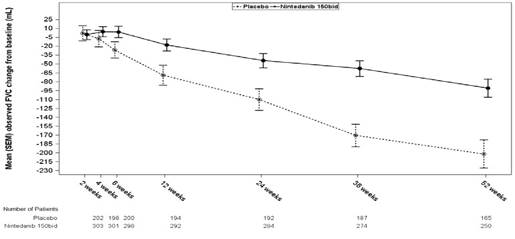
Image (498b4ddd 7f47 477c Ba30 C3bdd8c7b8b7 02)
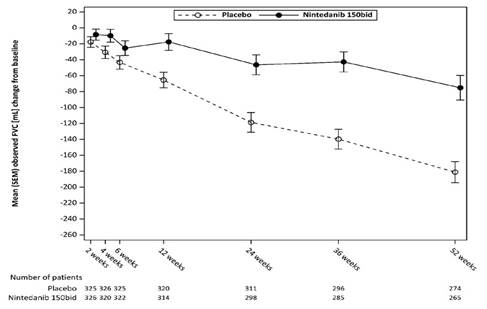
A line graph depicting mean forced vital capacity (FVC) change from baseline over time in weeks for two groups: placebo and Nintedanib 150 mg twice daily. The x-axis shows time points from baseline to 52 weeks, while the y-axis shows the mean FVC change in mL. Data points include error bars indicating variability. Patient numbers at each time point are listed below the graph.*
FDA Label Image

Image (498b4ddd 7f47 477c Ba30 C3bdd8c7b8b7 03)

Image (498b4ddd 7f47 477c Ba30 C3bdd8c7b8b7 03)
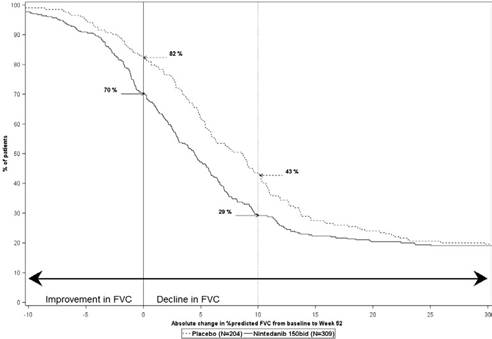
A survival curve graph depicting the percentage of patients over time with changes in predicted forced vital capacity (FVC). The X-axis shows the absolute change in predicted FVC from baseline to Week 52, ranging from improvement to decline. Two curves represent patients treated with placebo and those treated with Nintedanib 150 mg, with respective percentages of patients at various decline levels indicated.*
FDA Label Image

Image (498b4ddd 7f47 477c Ba30 C3bdd8c7b8b7 04)

Image (498b4ddd 7f47 477c Ba30 C3bdd8c7b8b7 04)
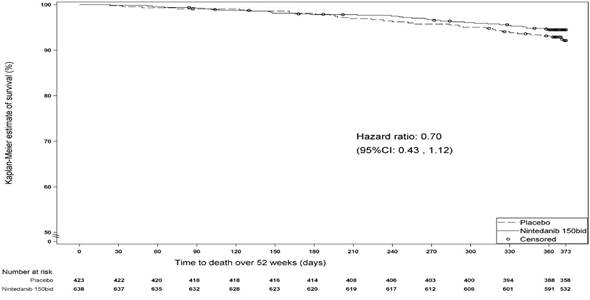
A Kaplan-Meier survival curve depicting the estimated survival percentage over 52 weeks (days) comparing two groups: Placebo and Nintedanib 150 mg. The graph includes a hazard ratio of 0.70 with 95% confidence interval (0.43 to 1.12). A table below the x-axis shows the number of subjects at risk over time for each group.*
FDA Label Image

Image (498b4ddd 7f47 477c Ba30 C3bdd8c7b8b7 05)

Image (498b4ddd 7f47 477c Ba30 C3bdd8c7b8b7 05)
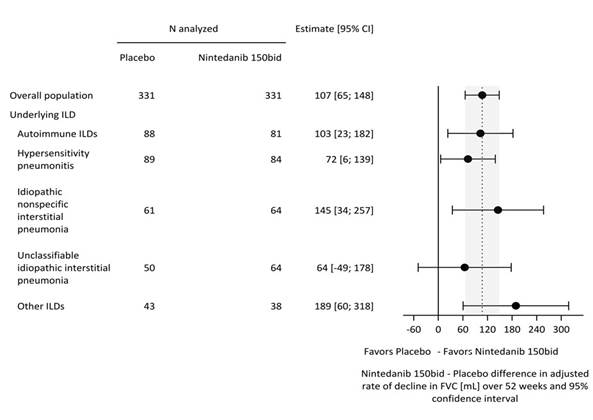
A forest plot comparing the adjusted rate of decline in FVC (mL) over 52 weeks between placebo and Nintedanib 150 mg twice daily (150bid) across different patient subgroups with interstitial lung diseases (ILDs). The graph displays point estimates and 95% confidence intervals for overall population and ILD subcategories, illustrating the treatment effect favoring Nintedanib or placebo.*
FDA Label Image

Image (498b4ddd 7f47 477c Ba30 C3bdd8c7b8b7 06)

Image (498b4ddd 7f47 477c Ba30 C3bdd8c7b8b7 06)
A line graph comparing mean changes from baseline in FVC (mL) over time for patients treated with placebo versus Nintedanib 150 mg bid. The x-axis shows time points from 0 to 52 weeks, and the y-axis shows mean change in FVC. Data points with error bars represent variability and patient numbers are listed beneath the x-axis for each group.*
FDA Label Image

Image (498b4ddd 7f47 477c Ba30 C3bdd8c7b8b7 07)

Image (498b4ddd 7f47 477c Ba30 C3bdd8c7b8b7 07)
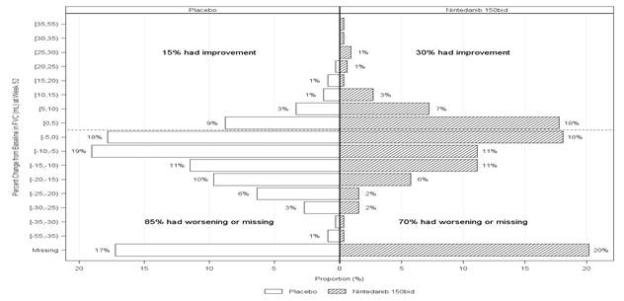
A horizontal bar graph comparing the proportions of patients with changes in forced vital capacity (FVC) between placebo and Nintedanib 150 mg groups. The graph shows categories of improvement and worsening percentages, with 15% improvement in placebo and 30% in Nintedanib, and 85% worsening or missing in placebo versus 70% in Nintedanib.*
FDA Label Image

Exelan-100mg-label (Exelan 100mg Label)

Exelan-100mg-label (Exelan 100mg Label)
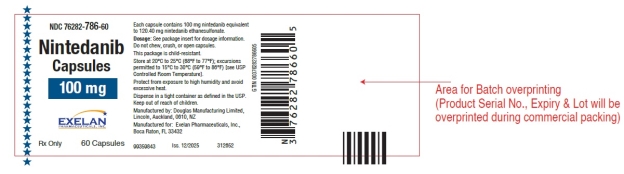
Nintedanib Capsules 100 mg oral dosage form label for a 60-capsule bottle. The label includes the proprietary name, strength, manufacturer Exelan Pharmaceuticals Inc., storage instructions, and barcode. It notes usage restrictions and packaging details, with space allocated for batch overprinting during commercial packaging.*
FDA Label Image

Exelan-150mg-label (Exelan 150mg Label)

Exelan-150mg-label (Exelan 150mg Label)
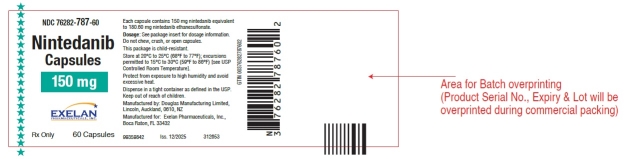
Nintedanib Capsules 150 mg oral capsules carton label from Exelan Pharmaceuticals Inc. The box contains 60 capsules and includes dosing and storage information. The label displays the NDC number 76282-787-60 and has a barcode on the right side. There is a note about batch overprinting for product serial number, expiry, and lot during commercial packaging.*
FDA Label Image

Figure-7 (Figure 7)

Figure-7 (Figure 7)
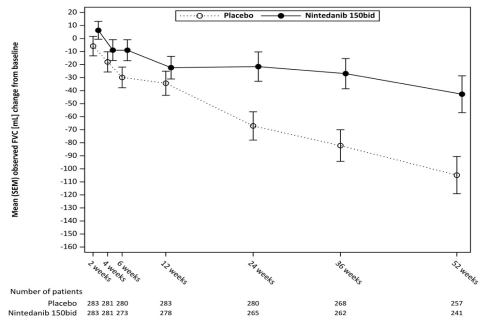
A line graph comparing the mean observed forced vital capacity (FVC) changes from baseline over time in weeks between placebo and Nintedanib 150 mg twice daily (150bid). The graph includes data points with error bars and patient numbers at different time intervals from baseline to 52 weeks.*
FDA Label Image

Figure-8 (Figure 8)

Figure-8 (Figure 8)
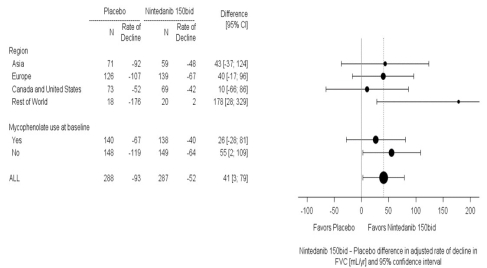
A forest plot illustrating the comparison of decline rates in forced vital capacity (FVC) between placebo and Nintedanib 150 mg across different regions (Asia, Europe, Canada and United States, Rest of World) and by baseline mycophenolate use status. The plot shows adjusted rate differences and 95% confidence intervals, with markers indicating whether results favor placebo or Nintedanib 150 mg.*
FDA Label Image

Figure-9 (Figure 9)

Figure-9 (Figure 9)
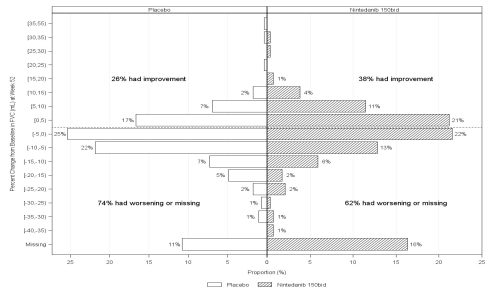
A horizontal bar chart comparing the proportion of placebo and Nintedanib 150 mg groups across percent change from baseline in FVC (Forced Vital Capacity) levels. The chart illustrates categories of improvement and worsening or missing outcomes, with percentages labeled for each group. Placebo and Nintedanib 150 mg data are shown side by side for each outcome category.*
FDA Label Image

Structure (Structure)

Structure (Structure)
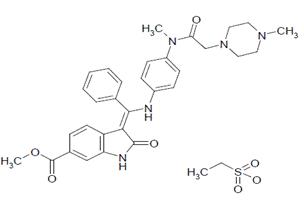
Chemical structure of Nintedanib, showing the molecular arrangement of atoms and bonds characteristic of this active ingredient used in Nintedanib Capsules 100 mg and 150 mg by Exelan Pharmaceuticals Inc.*

* About these descriptions: Image descriptions on this page are generated by automated AI analysis of the product label images from the manufacturer's FDA label submission (SPL). They are provided for reference only and may contain errors or omissions. Always rely on the printed label itself and the official FDA labeling, and consult a pharmacist or healthcare professional with any questions about this product.