Mononessa
Product Images NDC 76413-166

14 FDA label images from Central Texas Community Health Centers · Packaging, Regulatory Labels, and Product Appearance

Product Visual Gallery

This gallery contains 14 technical images submitted to the FDA as part of the official labeling for Mononessa (NDC 76413-166). Unlike standard consumer photos, these assets often include clinical data figures, molecular chemical structures, and official manufacturer packaging layouts.

As provided by Central Texas Community Health Centers, these visuals offer a comprehensive scientific overview of the product's physical and chemical identity, aiding pharmacists and researchers in product verification and study.

FDA Label Image

Label Image (Lbl76413166)

Label Image (Lbl76413166)
Text panel from MonoNessa prescription instructions provided by CommUnityCare Federally Qualified Health Centers. It includes directions to take one tablet by mouth daily, with the active ingredient Norgestimate and Ethinyl Estradiol, mentions a 28-day cycle, and shows batch and expiration details along with the labeler ACTAVIS.*
FDA Label Image

Illustration (Mono Tri 01)

Illustration (Mono Tri 01)
Illustrations of two circular birth control pill packs labeled MonoNessa and Trinessa. Both diagrams show an outer and inner circle of tablets, with the MonoNessa pack indicating white tablets containing norgestimate and ethinyl estradiol. The Trinessa pack includes white, blue, and light blue tablets, each labeled accordingly, with both packs featuring a 'V' notch and nibs for alignment.*
FDA Label Image

Chemical Structure (Mono Tri 02)

Chemical Structure (Mono Tri 02)
Chemical structure of Norgestimate, the active ingredient in MonoNessa. The diagram shows the molecular arrangement with labelled carbon, hydrogen, oxygen, and nitrogen atoms.*
FDA Label Image

Chemical Structure (Mono Tri 03)

Chemical Structure (Mono Tri 03)
Chemical structure diagram of Ethinyl Estradiol, showing its molecular arrangement with labeled chemical groups including hydroxyl (OH) and methyl (CH3) groups.*
FDA Label Image

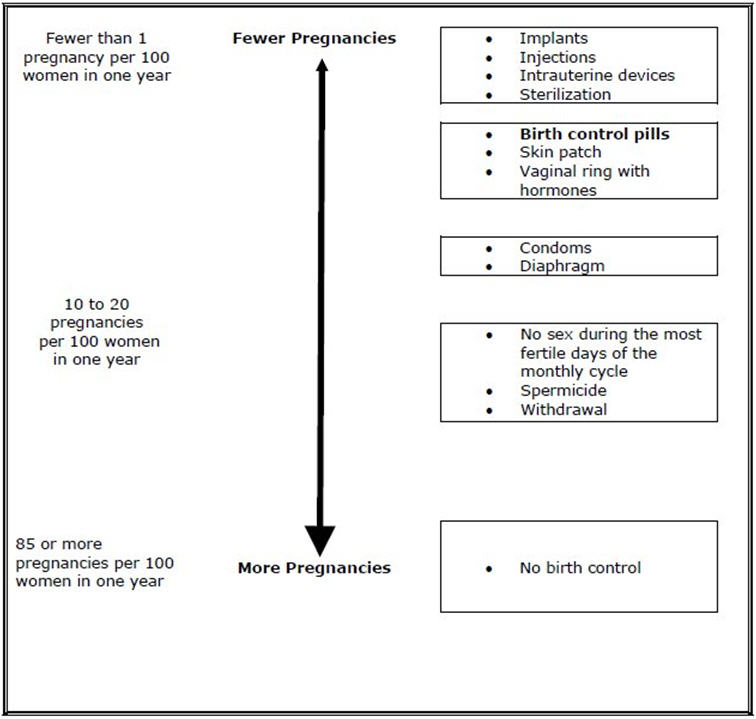
Figure (Mono Tri 04)

Figure (Mono Tri 04)
A vertical chart illustrating pregnancy likelihood associated with various birth control methods. The top shows methods with fewer than 1 pregnancy per 100 women per year, including implants, injections, intrauterine devices, and sterilization. Birth control pills, skin patch, and vaginal ring with hormones are listed next. Condoms and diaphragm follow, then methods like abstaining during fertile days, spermicide, and withdrawal. At the bottom, no birth control corresponds to 85 or more pregnancies per 100 women per year.*
FDA Label Image

Figure A (Mono Tri 05)

Figure A (Mono Tri 05)
An instructional diagram showing two contraceptive pill packs labeled MonoNessa and Trinessa. Each pack is circular with an inner and outer circle of tablets. The MonoNessa pack has black and white tablets arranged in a circle, with the days of the week labeled. The Trinessa pack features white, light blue, and blue tablets also arranged in a circular pattern with weekday labels. Both packs include a 'V' notch and nibs for alignment or dispensing.*
FDA Label Image

Figure B (Mono Tri 06)

Figure B (Mono Tri 06)
An instructional diagram showing the arrangement of tablets in a circular birth control pill pack, with arrows indicating the sequence for pill intake. It illustrates how to start taking the pills from the first day and continue following the arrows through the pack.*
FDA Label Image

Figure C (Mono Tri 07)

Figure C (Mono Tri 07)
The image shows an open oral contraceptive pill dispenser of MonoNessa. It is a circular dial with individual compartments for each daily pill, arranged sequentially for a 28-day cycle. The dispenser cap is partially visible above the dial. The labeler is Central Texas Community Health Centers.*
FDA Label Image

Figure D (Mono Tri 08)

Figure D (Mono Tri 08)
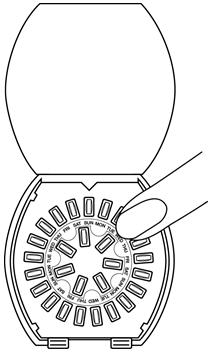
An illustration showing the inside of a MonoNessa birth control pill dispenser. It depicts a circular arrangement of pills within a compact case, a finger pointing to one of the pills, indicating how to use the dispenser to select or remove a pill.*
FDA Label Image

Figure E (Mono Tri 09)

Figure E (Mono Tri 09)
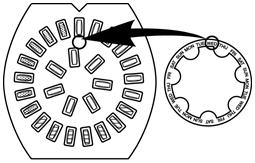
An instructional diagram showing a circular arrangement of 28 tablets, with an arrow pointing to a shaded tablet on the outer ring, indicating the positioning of a tablet in the MonoNessa pack. A smaller circular inset shows the day labels for each tablet position, guiding the user on the daily tablet schedule.*
FDA Label Image

Figure F (Mono Tri 10)

Figure F (Mono Tri 10)
An illustrated diagram showing an open circular birth control pill dispenser with days of the week marked around the circle. A finger is pointing to one of the pill slots, indicating how to use or select a pill in the pack. The image relates to use instructions for MonoNessa oral contraceptive.*
FDA Label Image

Figure G (Mono Tri 11)

Figure G (Mono Tri 11)
MonoNessa oral contraceptive pill packaging, featuring a circular pill dispenser with 28 individual pill compartments arranged around the center. The case lid is open, showing day labels for each pill slot. The blister pack is white with black printing and the labeler is Central Texas Community Health Centers.*
FDA Label Image

Figure H (Mono Tri 12)

Figure H (Mono Tri 12)
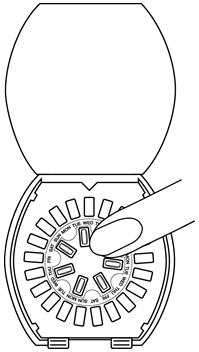
An instructional diagram showing a finger pointing to a specific day on a circular oral contraceptive pill dispenser labeled with days of the week. The dispenser contains multiple pill compartments arranged in a ring.*
FDA Label Image

Figure I (Mono Tri 13)

Figure I (Mono Tri 13)
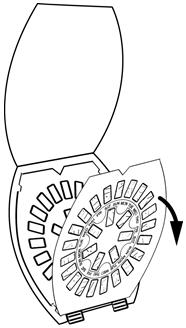
An instructional illustration showing the inside of a MonoNessa oral contraceptive pill pack. The image depicts a hinged pill case with a circular dial containing individual pill compartments, and an arrow indicating the direction to rotate the dial for pill dispensing.*

* About these descriptions: Image descriptions on this page are generated by automated AI analysis of the product label images from the manufacturer's FDA label submission (SPL). They are provided for reference only and may contain errors or omissions. Always rely on the printed label itself and the official FDA labeling, and consult a pharmacist or healthcare professional with any questions about this product.