Finasteride Tablet, Film Coated
Product Images NDC 76420-154

7 FDA label images from Asclemed Usa, Inc. · Packaging, Regulatory Labels, and Product Appearance

Product Visual Gallery

This gallery contains 7 technical images submitted to the FDA as part of the official labeling for Finasteride (NDC 76420-154). Unlike standard consumer photos, these assets often include clinical data figures, molecular chemical structures, and official manufacturer packaging layouts.

As provided by Asclemed Usa, Inc., these visuals offer a comprehensive scientific overview of the product's physical and chemical identity, aiding pharmacists and researchers in product verification and study.

FDA Label Image

Figure 1 Symptom Score In A Long-term Efficacy And Safety Study (Finasteride Fig1)
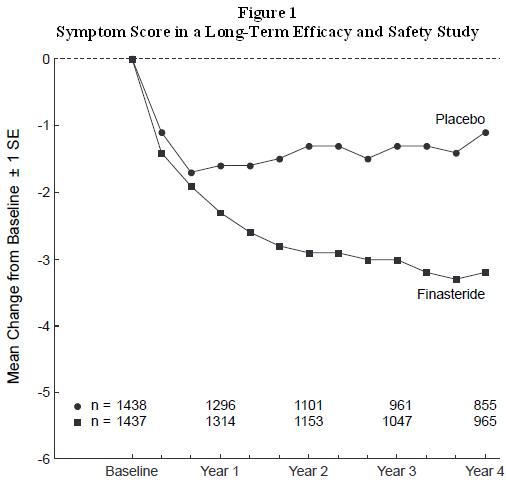
Figure 1 Symptom Score In A Long-term Efficacy And Safety Study (Finasteride Fig1)
A line graph titled 'Symptom Score in a Long-Term Efficacy and Safety Study' showing mean change from baseline ± 1 SE over four years. The graph compares two groups: Placebo and Finasteride. The Finasteride group shows a greater decline in symptom scores over time compared to Placebo. Sample sizes for each time point are displayed below the x-axis.*
FDA Label Image

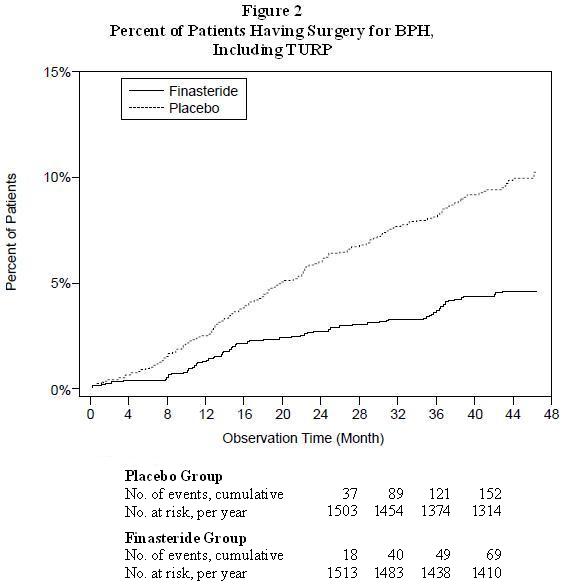
Figure 2 Percent Of Patients Having Surgery For Bph, Including Turp (Finasteride Fig2)

Figure 2 Percent Of Patients Having Surgery For Bph, Including Turp (Finasteride Fig2)
A line graph showing the percent of patients having surgery for BPH, including TURP, over 48 months of observation time. The graph compares Finasteride and placebo groups, with the Finasteride group showing a lower percentage of patients undergoing surgery throughout the period. Below the graph, a table summarizes the cumulative number of events and the number of patients at risk per year for both groups.*
FDA Label Image

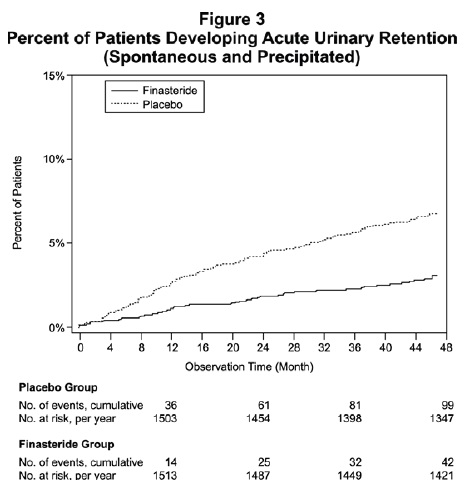
Figure 3 (Finasteride Fig3)

Figure 3 (Finasteride Fig3)
A line graph titled 'Percent of Patients Developing Acute Urinary Retention (Spontaneous and Precipitated)' comparing Finasteride and placebo groups over 48 months. The y-axis represents percent of patients (0 to 15%), and the x-axis shows observation time in months. The placebo group shows a higher cumulative percentage over time, with detailed event and at-risk counts listed below for both groups.*
FDA Label Image

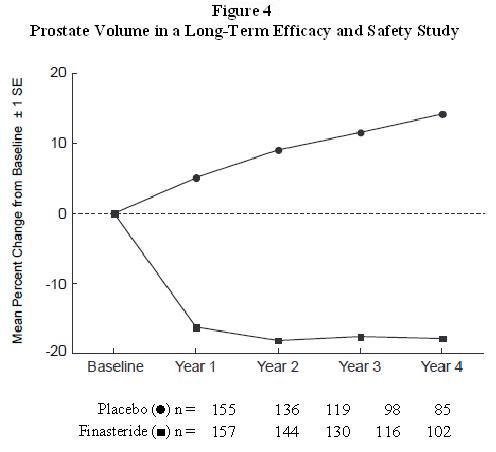
Figure 4 (Finasteride Fig4)

Figure 4 (Finasteride Fig4)
Line graph titled 'Prostate Volume in a Long-Term Efficacy and Safety Study' showing mean percent change from baseline over four years. Two lines compare placebo and finasteride groups, with placebo showing an increase and finasteride showing a decrease in prostate volume. Sample sizes for each group are listed for baseline through year 4.*
FDA Label Image

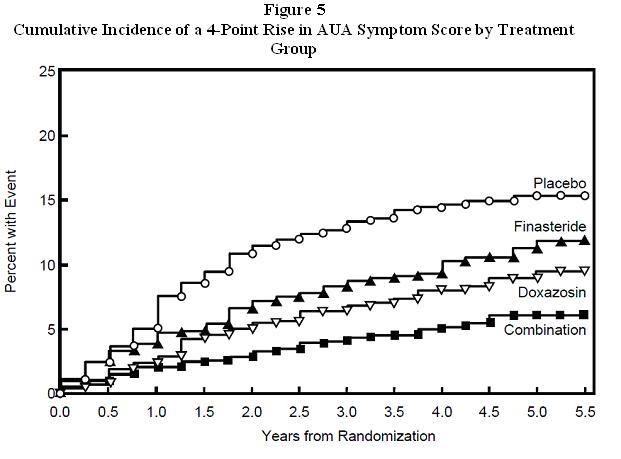
Figure 5 (Finasteride Fig5)

Figure 5 (Finasteride Fig5)
A line graph titled 'Cumulative Incidence of a 4-Point Rise in AUA Symptom Score by Treatment Group' showing the percent of patients with the event over 5.5 years from randomization. Four treatment groups are compared: Placebo, Finasteride, Doxazosin, and Combination, with Placebo having the highest incidence and Combination the lowest.*
FDA Label Image

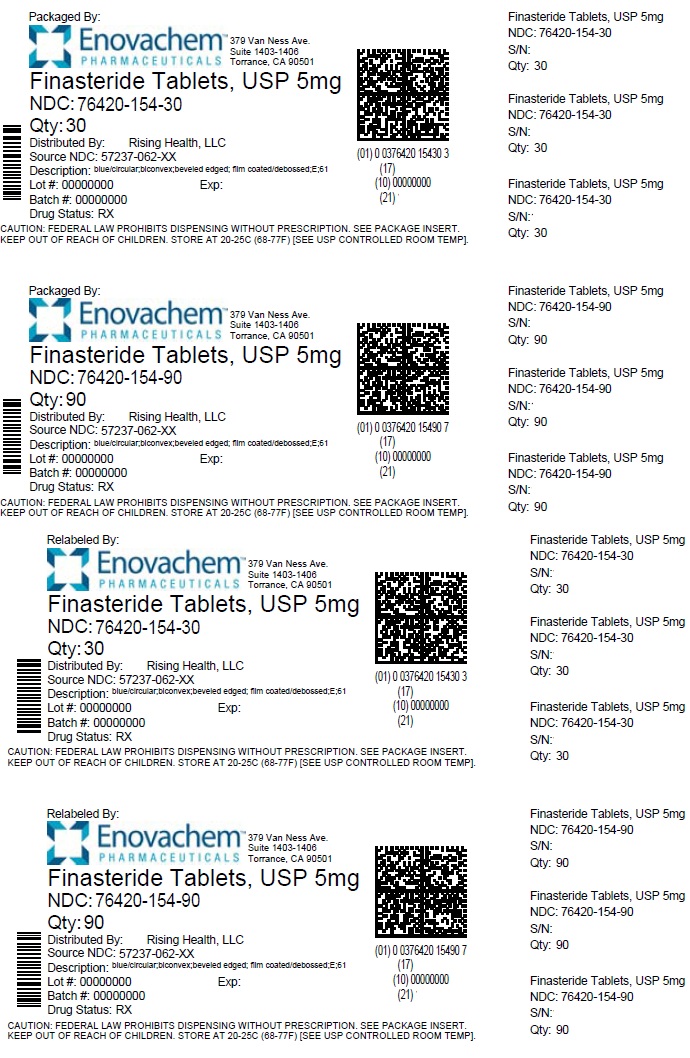
Label (Finasteride Fig6)

Label (Finasteride Fig6)
This image shows multiple packaging labels for Finasteride Tablets, USP 5 mg in film-coated tablet form. Labels include NDC numbers 76420-154-30 and 76420-154-90, indicating package quantities of 30 and 90 tablets respectively. They are relabeled by Enovachem Pharmaceuticals and distributed by Rising Health, LLC. Each label includes barcodes, storage instructions, and legal dispensing cautions.*
FDA Label Image

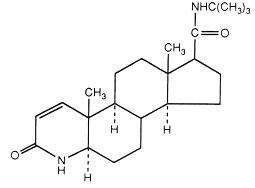
Chemical Structure (Finasteride Str)

Chemical Structure (Finasteride Str)
Chemical structure diagram of Finasteride, showing its molecular framework with detailed arrangement of carbon rings and functional groups including a ketone and an amide moiety, as indicated in the image.*

* About these descriptions: Image descriptions on this page are generated by automated AI analysis of the product label images from the manufacturer's FDA label submission (SPL). They are provided for reference only and may contain errors or omissions. Always rely on the printed label itself and the official FDA labeling, and consult a pharmacist or healthcare professional with any questions about this product.