Tramadol Hydrochloride Tablet, Extended Release
Product Images NDC 76420-537

View Photos of Packaging, Regulatory Labels, and Product Appearance

Product Visual Gallery

This gallery contains 8 technical images submitted to the FDA as part of the official labeling for Tramadol Hydrochloride (NDC 76420-537). Unlike standard consumer photos, these assets often include clinical data figures, molecular chemical structures, and official manufacturer packaging layouts.

As provided by Asclemed Usa, Inc., these visuals offer a comprehensive scientific overview of the product's physical and chemical identity, aiding pharmacists and researchers in product verification and study.

FDA Label Image

Image-1 (Image 01)

FDA Label Image

Image-2 (Image 02)

Image-2 (Image 02)
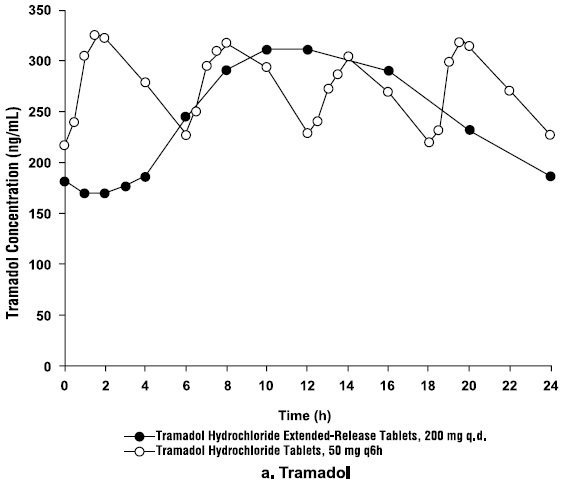
This appears to be a graph showing the concentration of Tramadol (measured in ng/mL) over time (measured in hours) for two different forms of the medication: Tramadol Hydrochioride Extended-Release Tablets (at a dosage of 200mg per day) and Tramadol Hydrochloride Tablets (at a dosage of 50mg every 6 hours).*
FDA Label Image

Image-3 (Image 03)

Image-3 (Image 03)
This is a chart that displays the concentration of M1 in ng/mL over time (in hours) for two different types of tramadol medication: Tramadol Hydrochloride Extended-Release Tablets (200mg per day) and Tramadol Hydrochloride Tablets (50mg every 6 hours). The concentration of M1 decreases over time for both medications.*
FDA Label Image

Image-4 (Image 04)

Image-4 (Image 04)
The text is displaying a chart representing the percentage of patients that achieved a response threshold from a study analyzing the WOMAC pain using tramadol hydrochloride extended-release tablets. The chart shows different doses of tramadol hydrochloride extended-release tablets, highlighting the response threshold obtained by each one. The response threshold is shown in percentage improvement from baseline. Additionally, there is also a placebo represented in the chart.*
FDA Label Image

Image-5 (Image 05)

Image-5 (Image 05)
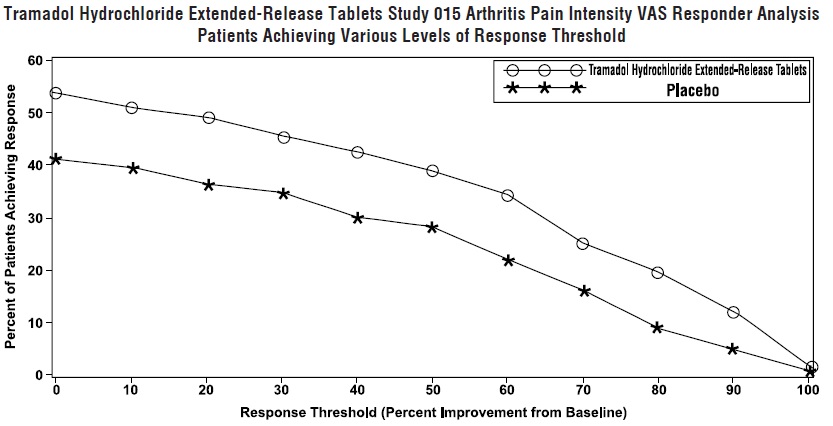
The text describes a study (Study 015) on Tramadol Hydrochloride Extended-Release Tablets for arthritis pain. The study analyzed the percentage of patients achieving various levels of response, represented by a response threshold measured in percent improvement from baseline, using a visual analog scale (VAS) responder analysis. The analysis compared the drug to a placebo. The text appears to be a data table showing the percent of patients achieving a response at different levels of improvement.*
FDA Label Image

Image-6 (Image 06)

Image-6 (Image 06)
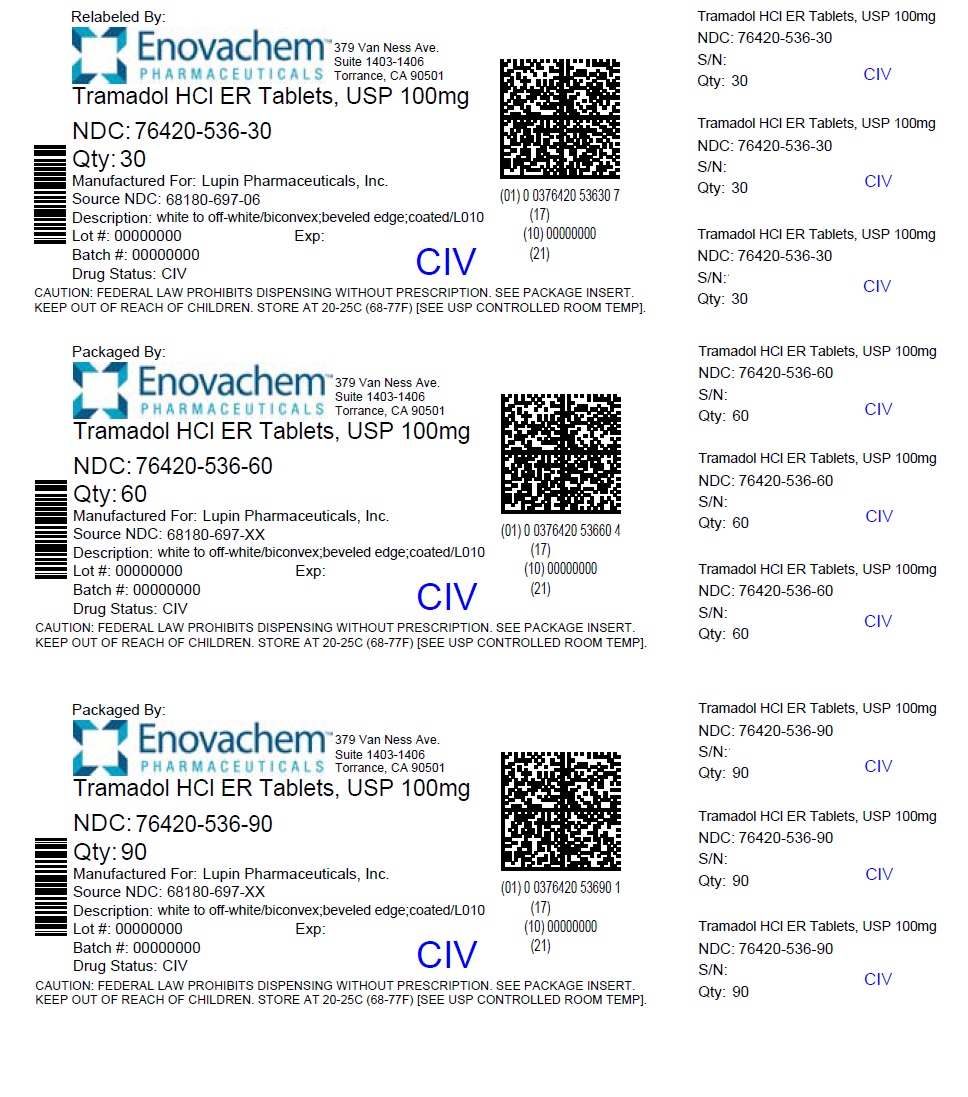
This is a list of different batches of Tramadol HCI ER Tablets, USP 100mg in different packagings and quantities. The drug is classified as CIV Clv, and it is for sale only with prescription, according to federal law. The tablets are manufactured by Lupin Pharmaceuticals, Inc. and packaged by Enovachem gy, with label and description. All packaging should be stored between 20-25°C in a USP controlled room temperature. The lot number for all the different quantities is 00000000, and the expiration is 10-0-0000.*
FDA Label Image

Image-7 (Image 07)

Image-7 (Image 07)
The text provides information on Tramadol HCI ER Tablets, a prescription drug available in 200mg dosage. It is manufactured by Lupin Pharmaceuticals, Inc. and packaged by Enovchem in different quantities such as 30, 60, and 90 tablets per pack. The tablets are described as white to off-white, circular, biconvex with beveled edge and lot numbers and batch numbers are provided for reference. The drug status is CIV C|V which is a controlled substance and has federal law prohibitions for dispensing without a prescription. The tablets should be stored at 20-25C controlled room temperature and kept out of reach of children.*
FDA Label Image

Image-8 (Image 08)

Image-8 (Image 08)
The text is a list of different packages of Tramadol HCI ER Tablets with a defined quantity, dosage and other details including the manufacturer's information, drug status, caution and storage instructions.*

* These product label images have been analyzed using experimental machine learning. Please verify findings with the primary label text.