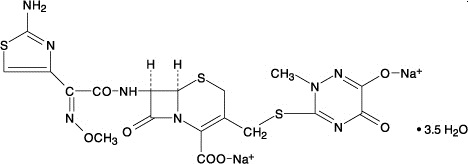
Before instituting treatment with Ceftriaxone for injection, USP, appropriate specimens should be obtained for isolation of the causative organism and for determination of its susceptibility to the drug. Therapy may be instituted prior to obtaining results of susceptibility testing.
To reduce the development of drug-resistant bacteria and maintain the effectiveness of Ceftriaxone for injection, USP and other antibacterial drugs, Ceftriaxone for injection, USP should be used only to treat or prevent infections that are proven or strongly suspected to be caused by susceptible bacteria. When culture and susceptibility information are available, they should be considered in selecting or modifying antibacterial therapy. In the absence of such data, local epidemiology and susceptibility patterns may contribute to the empiric selection of therapy.
Ceftriaxone for injection, USP is indicated for the treatment of the following infections when caused by susceptible organisms:
LOWER RESPIRATORY TRACT INFECTIONScaused by
Streptococcus pneumoniae, Staphylococcus aureus, Haemophilus influenzae, Haemophilus parainfluenzae, Klebsiella pneumoniae, Escherichia coli, Enterobacter aerogenes, Proteus mirabilisor
Serratia marcescens.
ACUTE BACTERIAL OTITIS MEDIAcaused by
Streptococcuspneumoniae,Haemophilus influenzae(including beta-lactamase producing strains) or
Moraxella catarrhalis(including beta-lactamase producing strains).
NOTE: In one study lower clinical cure rates were observed with a single dose of Ceftriaxone for injection, USP compared to 10 days of oral therapy. In a second study comparable cure rates were observed between single dose Ceftriaxone for injection, USP and the comparator. The potentially lower clinical cure rate of Ceftriaxone for injection, USP should be balanced against the potential advantages of parenteral therapy (see
CLINICAL STUDIES).
SKIN AND SKIN STRUCTURE INFECTIONScaused by
Staphylococcus aureus, Staphylococcus epidermidis, Streptococcus pyogenes, Viridans group streptococci,
Escherichia coli, Enterobacter cloacae, Klebsiella oxytoca, Klebsiella pneumoniae, Proteus mirabilis, Morganella morganii,*Pseudomonas aeruginosa, Serratia marcescens, Acinetobacter calcoaceticus, Bacteroides fragilis*or
Peptostreptococcusspecies.
URINARY TRACT INFECTIONS (complicated and uncomplicated)caused by
Escherichia coli, Proteus mirabilis, Proteus vulgaris, Morganella morganiior
Klebsiella pneumoniae.
UNCOMPLICATED GONORRHEA (cervical/urethral and rectal)caused by
Neisseria gonorrhoeae,including both penicillinase- and nonpenicillinase-producing strains, and pharyngeal gonorrhea caused by nonpenicillinase-producing strains of
Neisseria gonorrhoeae.
PELVIC INFLAMMATORY DISEASEcaused by
Neisseria gonorrhoeae.Ceftriaxone for injection, USP, like other cephalosporins, has no activity against
Chlamydia trachomatis. Therefore, when cephalosporins are used in the treatment of patients with pelvic inflammatory disease and
Chlamydia trachomatisis one of the suspected pathogens, appropriate antichlamydial coverage should be added.
BACTERIAL SEPTICEMIAcaused by
Staphylococcus aureus, Streptococcus pneumoniae, Escherichia coli, Haemophilus influenzaeor
Klebsiella pneumoniae.
BONE AND JOINT INFECTIONScaused by
Staphylococcus aureus, Streptococcus pneumoniae, Escherichia coli, Proteus mirabilis, Klebsiella pneumoniaeor
Enterobacterspecies.
INTRA-ABDOMINAL INFECTIONScaused by
Escherichia coli, Klebsiella pneumoniae, Bacteroides fragilis, Clostridiumspecies (Note: most strains of
Clostridium difficileare resistant) or
Peptostreptococcusspecies.
MENINGITIScaused by
Haemophilus influenzae, Neisseria meningitidisor
Streptococcus pneumoniae.Ceftriaxone for injection, USP has also been used successfully in a limited number of cases of meningitis and shunt infection caused by
Staphylococcus epidermidis*and
Escherichia coli.*
* Efficacy for this organism in this organ system was studied in fewer than ten infections.