- The safety and effectiveness of JUXTAPID have not been established in patients with hypercholesterolemia who do not have HoFH, including those with heterozygous familial hypercholesterolemia (HeFH).
- The effect of JUXTAPID on cardiovascular morbidity and mortality has not been determined.
Elevation of Transaminases
Elevations in transaminases (alanine aminotransferase [ALT] and/or aspartate aminotransferase [AST]) are associated with JUXTAPID. In the clinical trial, 10 (34%) of the 29 patients with HoFH had at least one elevation in ALT or AST ≥3× ULN, and 4 (14%) of the patients had at least one elevation in ALT or AST ≥5× ULN. There were no concomitant or subsequent clinically meaningful elevations in bilirubin, INR, or alkaline phosphatase [see Adverse Reactions (6.1)].
During the 78-week HoFH clinical trial, no patients discontinued prematurely because of elevated transaminases. Among the 19 patients who subsequently enrolled in the HoFH extension study, one discontinued because of increased transaminases that persisted despite several dose reductions, and one temporarily discontinued because of markedly elevated transaminases (ALT 24× ULN, AST 13× ULN) that had several possible causes, including a drug-drug interaction between JUXTAPID and the strong CYP3A4 inhibitor clarithromycin [see Drug Interactions (7.1)].
Monitoring of Transaminases
Before initiating JUXTAPID and during treatment, monitor transaminases as recommended in Table 3.
Table 3: Recommendations for Monitoring Transaminases| TIME | RECOMMENDATIONS |
|---|
| Before initiating treatment | - Measure ALT, AST, alkaline phosphatase, and total bilirubin.
- If abnormal, consider initiating JUXTAPID only after an appropriate work-up and the baseline abnormalities have been explained or resolved.
- JUXTAPID is contraindicated in patients with moderate or severe hepatic impairment, or active liver disease, including unexplained persistent elevations of serum transaminases [see Contraindications (4)].
|
| During the first year | - Measure liver-related tests (ALT and AST, at a minimum) prior to each increase in dose or monthly, whichever occurs first.
|
| After the first year | - Measure liver-related tests (ALT and AST, at a minimum) at least every 3 months and before any increase in dose.
|
| At any time during treatment | - If transaminases are abnormal, reduce or withhold dosing of JUXTAPID and monitor as recommended [see Dosage and Administration (2.4)].
- Discontinue JUXTAPID for persistent or clinically significant elevations.
- If transaminase elevations are accompanied by clinical symptoms of liver injury (such as nausea, vomiting, abdominal pain, fever, jaundice, lethargy, flu-like symptoms), increases in bilirubin ≥2× ULN, or active liver disease, discontinue treatment with JUXTAPID and identify the probable cause.
|
Hepatic Steatosis
JUXTAPID increases hepatic fat, with or without concomitant increases in transaminases. Hepatic steatosis is a risk factor for progressive liver disease, including steatohepatitis and cirrhosis. The long-term consequences of hepatic steatosis associated with JUXTAPID treatment are unknown. During the HoFH clinical trial, the median absolute increase in hepatic fat was 6% after both 26 weeks and 78 weeks of treatment, from 1% at baseline, measured by magnetic resonance spectroscopy (MRS) [see Adverse Reactions (6.1)]. Clinical data suggest that hepatic fat accumulation is reversible after stopping treatment with JUXTAPID, but whether histological sequelae remain is unknown, especially after long-term use; protocol liver biopsies were not performed in the HoFH clinical trial.
Alcohol may increase levels of hepatic fat and induce or exacerbate liver injury. It is recommended that patients taking JUXTAPID should not consume more than one alcoholic drink per day.
Caution should be exercised when JUXTAPID is used with other medications known to have potential for hepatotoxicity, such as isotretinoin, amiodarone, acetaminophen (>4 g/day for ≥3 days/week), methotrexate, tetracyclines, and tamoxifen. The effect of concomitant administration of JUXTAPID with other hepatotoxic medications is unknown. More frequent monitoring of liver-related tests may be warranted.
JUXTAPID has not been studied concomitantly with other LDL-lowering agents that can also increase hepatic fat. Therefore, the combined use of such agents is not recommended.
Transaminase Elevations
During the HoFH clinical trial, 10 (34%) of 29 patients had at least one elevation in ALT and/or AST ≥3× ULN (see Table 5). No clinically meaningful elevations in total bilirubin or alkaline phosphatase were observed. Transaminases typically fell within one to four weeks of reducing the dose or withholding JUXTAPID.
Table 5: Patient Incidence of Transaminase Elevations During the HoFH Clinical Trial | N (%) |
|---|
| Upper limits of normal (ULN) ranged from 33-41 international units/L for ALT and 36-43 international units/L for AST. |
| Total Patients | 29 |
| Maximum ALT | |
| ≥3 to <5 × ULN | 6 (21%) |
| ≥5 to <10 × ULN | 3 (10%) |
| ≥10 to <20 × ULN | 1 (3%) |
| ≥20 × ULN | 0 |
| Maximum AST | |
| ≥3 to <5 × ULN | 5 (17%) |
| ≥5 to <10 × ULN | 1 (3%) |
| ≥10 to <20 × ULN | 0 |
| ≥20 × ULN | 0 |
Among the 19 patients who enrolled in an extension study following the HoFH clinical trial, one discontinued because of increased transaminases that persisted despite several dose reductions, and one temporarily discontinued because of markedly elevated transaminases (ALT 24× ULN, AST 13× ULN) that had several possible causes, including a drug-drug interaction between JUXTAPID and the strong CYP3A4 inhibitor clarithromycin [see Drug Interactions (7.1)].
Hepatic Steatosis
Hepatic fat was prospectively measured using magnetic resonance spectroscopy (MRS) in all eligible patients during the HoFH clinical trial. After 26 weeks, the median absolute increase in hepatic fat from baseline was 6%, and the mean absolute increase was 8% (range, 0% to 30%). After 78 weeks, the median absolute increase in hepatic fat from baseline was 6%, and the mean absolute increase was 7% (range, 0% to 18%). Among the 23 patients with evaluable data, on at least one occasion during the trial, 18 (78%) exhibited an increase in hepatic fat >5% and 3 (13%) exhibited an increase >20%. Data from individuals who had repeat measurements after stopping JUXTAPID show that hepatic fat accumulation is reversible, but whether histological sequelae remain is unknown.
Pregnancy Exposure Registry
There is a pregnancy exposure registry that monitors pregnancy outcomes in women exposed to JUXTAPID during pregnancy. For additional information visit www.JUXTAPID.com or call the Global Lomitapide Pregnancy Exposure Registry (PER) at 1-877-902-4099. Healthcare professionals are encouraged to call the PER at 1-877-902-4099 to enroll patients who become pregnant during JUXTAPID treatment.
Risk Summary
Based on findings from animal studies, JUXTAPID use is contraindicated in pregnancy since it may cause fetal harm [see Contraindications (4), Warnings and Precautions (5.3)]. Available human data are insufficient to draw conclusions about any drug-associated risks for major birth defects, miscarriage, or adverse maternal or fetal outcomes. However, in animal reproduction studies, lomitapide was teratogenic in rats at clinically relevant exposures and in ferrets at exposures estimated to be less than human therapeutic exposure at 60 mg when administered during organogenesis, based on AUC comparisons. Embryo-fetal lethality was observed in rabbits at 6-times the maximum recommended human dose (MRHD) of 60 mg based on body surface area. If pregnancy is detected, discontinue JUXTAPID.
The estimated background risk of major birth defects and miscarriage for the indicated population is unknown. In the U.S. general population, the estimated background risks of major birth defects and miscarriage in clinically recognized pregnancies is 2-4% and 15-20%, respectively.
Data
Animal Data
Oral gavage doses of 0.04, 0.4, or 4 mg/kg/day lomitapide given to pregnant rats from gestation day 6 through organogenesis were associated with fetal malformations at ≥2-times human exposure at the MRHD (60 mg) based on plasma AUC comparisons. Fetal malformations included umbilical hernia, gastroschisis, imperforate anus, alterations in heart shape and size, limb malrotations, skeletal malformations of the tail, and delayed ossification of cranial, vertebral and pelvic bones.
Oral gavage doses of 1.6, 4, 10, or 25 mg/kg/day lomitapide given to pregnant ferrets from gestation day 12 through organogenesis were associated with both maternal toxicity and fetal malformations at exposures that ranged from less than the human exposure at the MRHD to 5-times the human exposure at the MRHD. Fetal malformations included umbilical hernia, medially rotated or short limbs, absent or fused digits on paws, cleft palate, open eye lids, low-set ears, and kinked tail.
Oral gavage doses of 0.1, 1, or 10 mg/kg/day lomitapide given to pregnant rabbits from gestation day 6 through organogenesis were not associated with adverse effects at systemic exposures up to 3-times the MRHD of 60 mg based on body surface area comparison. Treatment at doses of ≥20 mg/kg/day, ≥6-times the MRHD, resulted in embryo-fetal lethality.
Pregnant female rats given oral gavage doses of 0.1, 0.3, or 1 mg/kg/day lomitapide from gestation day 7 through termination of nursing on lactation day 20 were associated with malformations at systemic exposures equivalent to human exposure at the MRHD of 60 mg based on AUC. Increased pup mortality occurred at 4-times the MRHD.
Risk Summary
There are no data on the presence of lomitapide in human or animal milk, effects on the breastfed infant or on milk production. Because of the potential for serious adverse reactions, including hepatotoxicity, advise patients that breastfeeding is not recommended during treatment with JUXTAPID.
Pregnancy Testing
Females of reproductive potential should have a negative pregnancy test before starting JUXTAPID.
Contraception
Based on animal studies, JUXTAPID may cause fetal harm when administered to pregnant women [see Use in Specific Populations (8.1)]. Advise females of reproductive potential to use effective contraception during treatment with JUXTAPID and for two weeks after the final dose.
The use of JUXTAPID may result in reduced efficacy of oral contraceptives if vomiting or diarrhea occurs. Advise patients using oral contraceptives and who experience vomiting or diarrhea to use an effective alternative contraceptive method until 7 days after resolution of symptoms [see Drug Interactions (7.2)].
Effects on QT Interval
At a concentration 23 times the Cmax of the maximum recommended dose, lomitapide does not prolong QTc to any clinically relevant extent.
Absorption
Upon oral administration of a single 60-mg dose of JUXTAPID, the lomitapide tmax is around 6 hours in healthy volunteers. The absolute bioavailability of lomitapide is approximately 7%. Lomitapide pharmacokinetics is approximately dose-proportional for oral single doses from 10-100 mg.
Distribution
The mean lomitapide volume of distribution at steady state is 985-1292 liters. Lomitapide is 99.8% plasma-protein bound.
Metabolism
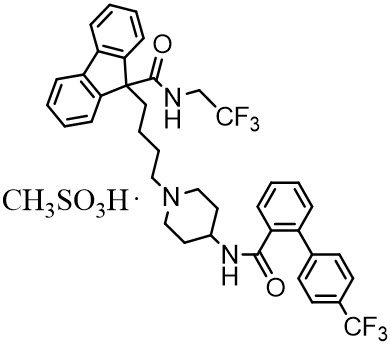
Lomitapide is metabolized extensively by the liver. The metabolic pathways include oxidation, oxidative N-dealkylation, glucuronide conjugation, and piperidine ring opening. Cytochrome P450 (CYP) 3A4 metabolizes lomitapide to its major metabolites, M1 and M3, as detected in plasma. The oxidative N-dealkylation pathway breaks the lomitapide molecule into M1 and M3. M1 is the moiety that retains the piperidine ring, whereas M3 retains the rest of the lomitapide molecule in vitro. CYPs 1A2, 2B6, 2C8, and 2C19 may metabolize lomitapide to a small extent to M1. M1 and M3 do not inhibit activity of microsomal triglyceride transfer protein in vitro.
Excretion
In a mass-balance study, a mean of 59.5% and 33.4% of the dose was excreted in the urine and feces, respectively. In another mass-balance study, a mean of 52.9% and 35.1% of the dose was excreted in the urine and feces, respectively. Lomitapide was not detectable in urine samples. M1 is the major urinary metabolite. Lomitapide is the major component in the feces. The mean lomitapide terminal half-life is 39.7 hours.
Specific Populations
Hepatic Impairment
A single-dose, open-label study was conducted to evaluate the pharmacokinetics of 60 mg lomitapide in healthy volunteers with normal hepatic function compared with patients with mild (Child-Pugh A) and moderate (Child-Pugh B) hepatic impairment. In patients with moderate hepatic impairment, lomitapide AUC and Cmax were 164% and 361% higher, respectively, compared with healthy volunteers. In patients with mild hepatic impairment, lomitapide AUC and Cmax were 47% and 4% higher, respectively, compared with healthy volunteers. Lomitapide has not been studied in patients with severe hepatic impairment (Child-Pugh score 10-15) [see Dosage and Administration (2.6), Contraindications (4), Warnings and Precautions (5.1), and Use in Specific Populations (8.7)].
Renal Impairment
A single-dose, open-label study was conducted to evaluate the pharmacokinetics of 60 mg lomitapide in patients with end-stage renal disease receiving hemodialysis compared with healthy volunteers with normal renal function. Healthy volunteers had estimated creatinine clearance >80 mL/min by the Cockcroft-Gault equation. Compared with healthy volunteers, lomitapide AUC0-inf and Cmax were 40% and 50% higher, respectively, in patients with end-stage renal disease receiving hemodialysis. Effects of mild, moderate, and severe renal impairment as well as end-stage renal disease not yet on dialysis on lomitapide exposure have not been studied [see Dosage and Administration (2.5) and Use in Specific Populations (8.6)].
Drug Interactions
[see Dosage and Administration (2.3), Contraindications (4), Warnings and Precautions (5.6), (5.7), (5.8), and Drug Interactions (7)].
In vitro Assessment of Drug Interactions
Lomitapide does not induce CYPs 1A2, 3A4, or 2B6. Lomitapide inhibits CYP3A4. Lomitapide does not inhibit CYPs 1A2, 2B6, 2C9, 2C19, 2D6, or 2E1. M1 and M3 do not induce CYPs 1A2, 3A4, or 2B6. M1 and M3 do not inhibit CYPs 1A2, 2A6, 2B6, 2C8, 2C9, 2C19, 2D6, 2E1, or 3A4. Lomitapide is not a P-gp substrate. Lomitapide inhibits P-gp but does not inhibit breast cancer resistance protein (BCRP).
Effects of other Drugs on Lomitapide
Table 6 summarizes the effect of coadministered drugs on lomitapide AUC and Cmax.
Table 6: Effect of Coadministered Drugs on Lomitapide Systemic Exposure| COADMINISTERED DRUG | DOSING OF COADMINISTERED DRUG | DOSING OF LOMITAPIDE | RATIO OF LOMITAPIDE EXPOSURE WITH/WITHOUT COADMINISTERED DRUG
NO EFFECT = 1 |
|---|
| AUC | Cmax |
|---|
| BID = twice daily; QD = once daily |
| ↑ = increase |
| Contraindicated with lomitapide [see Contraindications (4) and Warnings and Precautions (5.6)] |
| Ketoconazole | 200 mg BID for 9 days | 60 mg single dose | ↑ 27 | ↑ 15 |
| Adjustment necessary when coadministered with lomitapide [see Dosage and Administration (2.3) and Warnings and Precautions (5.6)] |
| | | AUC | Cmax |
| Atorvastatin | 80 mg QD | 20 mg single dose | ↑2 | ↑2.1 |
| Ethinyl Estradiol (EE) / norgestimate | 0.035 mg EE/ 0.25 mg norgestimate QD | 20 mg single dose | ↑1.3 | ↑1.4 |
Effect of Lomitapide on other Drugs
Table 7 summarizes the effects of lomitapide on the AUC and Cmax of coadministered drugs.
Table 7: Effect of Lomitapide on the Systemic Exposure of Coadministered Drugs| COADMINISTERED DRUG | DOSING OF COADMINISTERED DRUG | DOSING OF LOMITAPIDE | CHANGE OF COADMINISTERED DRUG EXPOSURE WITH / WITHOUT LOMITAPIDE |
|---|
| AUC | Cmax |
|---|
| QD = once daily; INR = international normalized ratio; ↑ = increase; ↓ = decrease |
| Dosage adjustment necessary when coadministered with lomitapide |
| Simvastatin Limit simvastatin dosage to 20 mg daily (or 40 mg daily for patients who have previously tolerated simvastatin 80 mg daily for at least one year without evidence of muscle toxicity). Refer to the simvastatin prescribing information for additional dosing recommendations. | 40 mg single dose | 60 mg QD × 7 days | Simvastatin | ↑ 99% | ↑ 102% |
| | | Simvastatin acid | ↑ 71% | ↑ 57% |
| 20 mg single dose | 10 mg QD × 7 days | Simvastatin | ↑ 62% | ↑65% |
| | | Simvastatin acid | ↑ 39% | ↑ 35% |
| Warfarin Patients taking warfarin should undergo regular monitoring of the INR, especially after any changes in lomitapide dosage. | 10 mg single dose | 60 mg QD × 12 days | R(+) warfarin | ↑ 28% | ↑ 14% |
| | | S(-) warfarin | ↑ 30% | ↑ 15% |
| | | INR | ↑ 7% | ↑ 22% |
| No dosing adjustments required for the following: |
| Atorvastatin | 20 mg single dose | 60 mg QD × 7 days | Atorvastatin acid | ↑ 52% | ↑63% |
| 20 mg single dose | 10 mg QD × 7 days | Atorvastatin acid | ↑ 11% | ↑19% |
| Rosuvastatin | 20 mg single dose | 60 mg QD × 7 days | Rosuvastatin | ↑ 32% | ↑ 4% |
| 20 mg single dose | 10 mg QD × 7 days | Rosuvastatin | ↑ 2% | ↑ 6% |
| Fenofibrate, micronized | 145 mg single dose | 10 mg QD × 7 days | Fenofibric acid | ↓ 10% | ↓29% |
| Ezetimibe | 10 mg single dose | 10 mg QD × 7 days | Total ezetimibe | ↑ 6% | ↑ 3% |
| Extended release niacin | 1000 mg single dose | 10 mg QD × 7 days | Nicotinic acid | ↑ 10% | ↑ 11% |
| | | Nicotinuric acid | ↓ 21% | ↓ 15% |
| Ethinyl estradiol | 0.035 mg QD × 28 days | 50 mg QD × 8 days | Ethinyl estradiol | ↓ 8% | ↓ 8% |
| Norgestimate | 0.25 mg QD × 28 days | 50 mg QD × 8 days | 17-Deacetyl norgestimate | ↑ 6% | ↑ 2% |
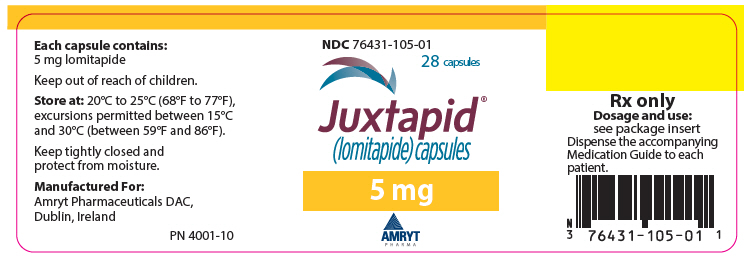
5 mg capsules:
Orange/orange hard gelatin capsule printed with black ink "A733" and "5 mg"
| Bottles of 28 | NDC 76431-105-01 |
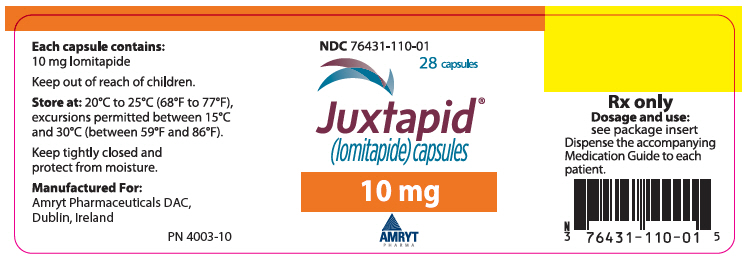
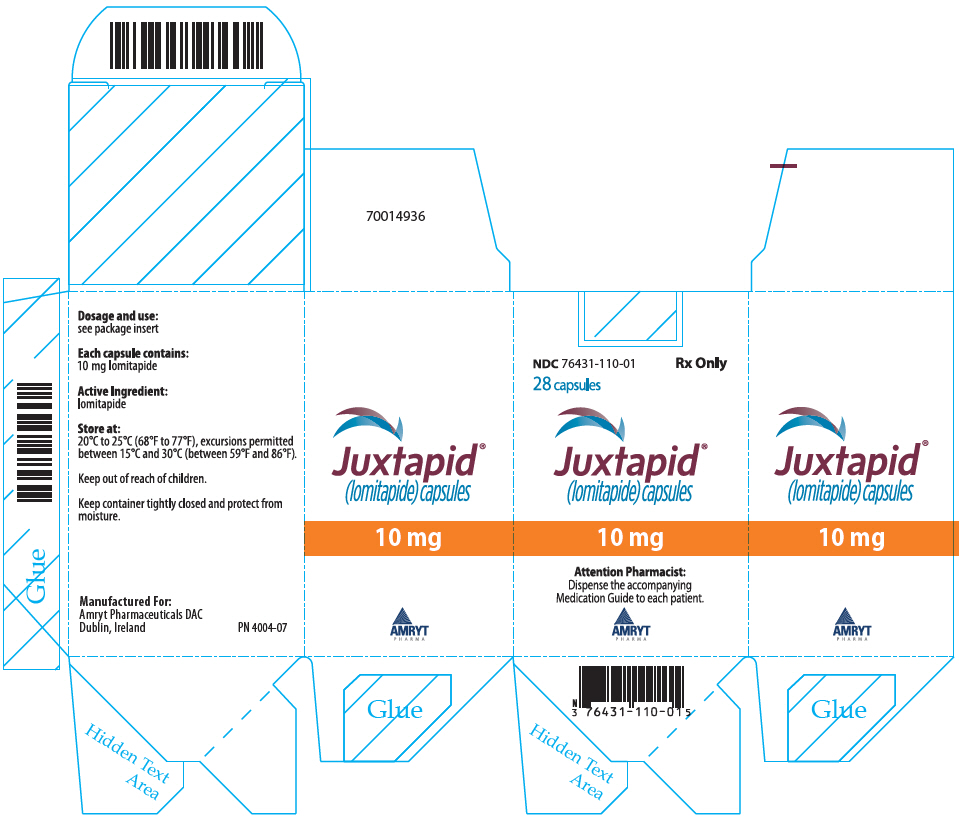
10 mg capsules:
Orange/white hard gelatin capsule printed with black ink "A733" and "10 mg"
| Bottles of 28 | NDC 76431-110-01 |
20 mg capsules:
White/white hard gelatin capsule printed with black ink "A733" and "20 mg"
| Bottles of 28 | NDC 76431-120-01 |
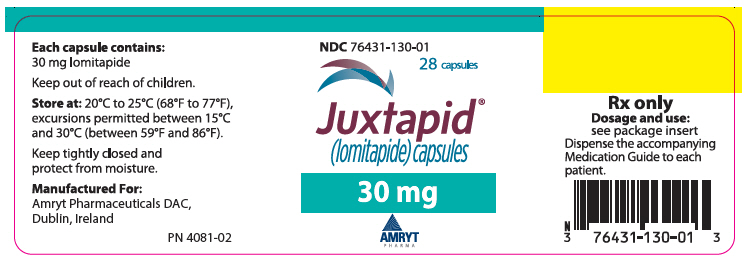
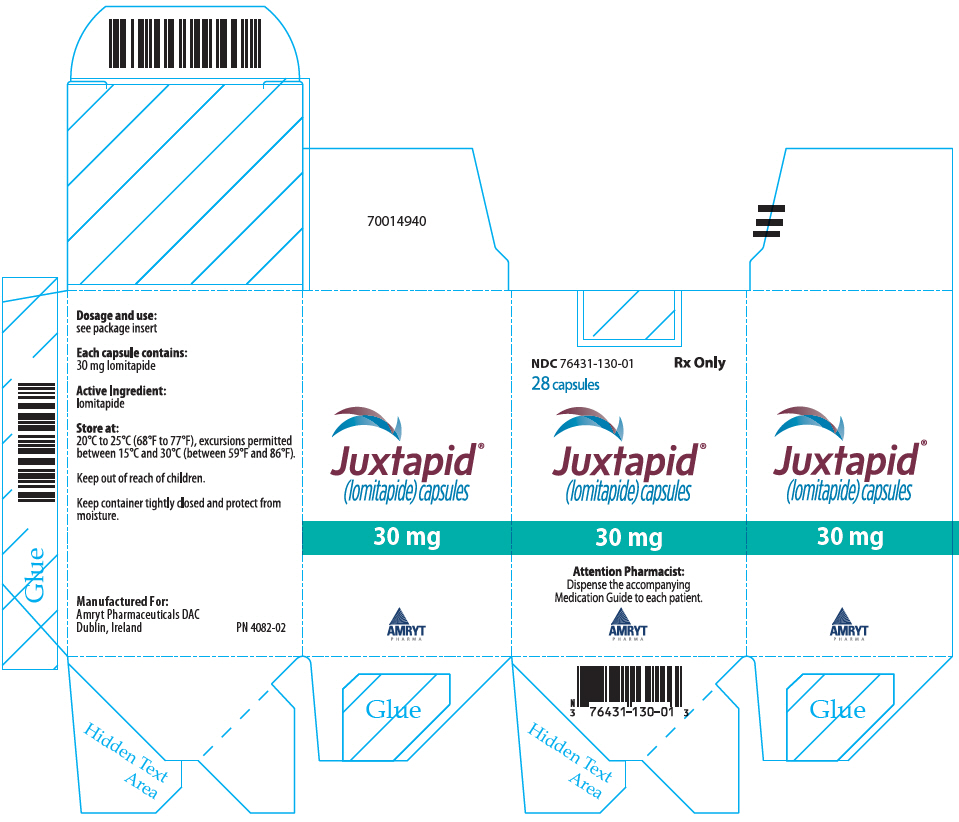
30 mg capsules:
Orange/yellow hard gelatin capsule printed with black ink "A733" and "30 mg"
| Bottles of 28 | NDC 76431-130-01 |
Risk of Hepatotoxicity [see Warnings and Precautions (5.1)]
- JUXTAPID can cause both elevations in transaminases and hepatic steatosis. Discuss with the patient the importance of monitoring of liver-related tests before taking JUXTAPID, prior to each dose escalation, and periodically thereafter.
- Patients should be advised of the potential for increased risk of liver injury if alcohol is consumed while taking JUXTAPID. It is recommended that patients taking JUXTAPID limit consumption to not more than one alcoholic drink per day.
- JUXTAPID is commonly associated with nausea, vomiting, and abdominal pain. Advise patients to promptly report these symptoms if they increase in severity, persist, or change in the character, as they might reflect liver injury. Patients should also report any other symptoms of possible liver injury, including fever, jaundice, lethargy, or flu-like symptoms.
JUXTAPID REMS Program [see Warnings and Precautions (5.2)]
- JUXTAPID is only available through a restricted program called JUXTAPID REMS Program and therefore, JUXTAPID is only available from certified pharmacies that are enrolled in the program.
Embryofetal Toxicity [see Warnings and Precautions (5.3), Drug Interactions (7.2), Use in Specific Populations (8.1, 8.3)]
- JUXTAPID is contraindicated in pregnancy since it may cause fetal harm. Advise females who become pregnant to discontinue JUXTAPID and inform their healthcare provider of a known or suspected pregnancy.
- Advise females of reproductive potential to use effective contraception during treatment with JUXTAPID and for two weeks after the final dose.
- Advise patients who are taking oral contraceptives and experience vomiting or diarrhea while taking JUXTAPID to use an effective alternative contraceptive method until 7 days after resolution of symptoms.
Lactation [see Use in Specific Populations (8.2)]
Advise females not to breastfeed during treatment with JUXTAPID.
Dietary Supplements [see Warnings and Precautions (5.4)]
- Discuss with the patient the importance of taking daily supplements that contain 400 international units vitamin E and at least 200 mg linoleic acid, 210 mg alpha-linolenic acid (ALA), 110 mg eicosapentaenoic acid (EPA), and 80 mg docosahexaenoic acid (DHA).
Gastrointestinal Adverse Reactions [see Warnings and Precautions (5.5)]