Adults and Adolescents 12 Years of Age and Older: The safety results of the 10 trials that were 8 to 12 weeks in duration were pooled because patients with asthma in these studies were previously maintained on bronchodilators and/or inhaled corticosteroids. The safety results of the one 12-week clinical trial in patients with asthma previously treated with oral corticosteroids are presented separately.
In the pooled 8- to 12-week clinical trials, adverse reactions were reported in 70% of patients treated with ASMANEX TWISTHALER (n=1750) compared to 65% of patients taking placebo (n=720). Table 2 displays the common adverse reactions (≥3% in any patient group receiving ASMANEX TWISTHALER) that occurred more frequently in patients treated with ASMANEX TWISTHALER compared to patients treated with placebo.
Table 2: Adverse Reactions with ≥3% Incidence in 10 Controlled Clinical Trials with ASMANEX TWISTHALER in Patients 12 Years of Age and Older Previously on Bronchodilators and/or Inhaled Corticosteroids | (%) of Patients |
|---|
| ASMANEX TWISTHALER | |
|---|
| Adverse Reaction | 220 mcg twice daily
(n=433) | 440 mcg once daily
(n=497) | 220 mcg once daily in the evening
(n=232) | Placebo
(n=720) |
|---|
| Headache | 22 | 17 | 20 | 20 |
| Allergic Rhinitis | 15 | 11 | 14 | 13 |
| Pharyngitis | 11 | 8 | 13 | 7 |
| Upper Respiratory Infection | 10 | 8 | 15 | 7 |
| Sinusitis | 6 | 6 | 5 | 5 |
| Candidiasis, oral | 6 | 4 | 4 | 2 |
| Dysmenorrhea Percentages are based on the number of female patients. | 9 | 4 | 4 | 4 |
| Musculoskeletal Pain | 8 | 4 | 4 | 5 |
| Back Pain | 6 | 3 | 3 | 4 |
| Dyspepsia | 5 | 3 | 3 | 3 |
| Myalgia | 3 | 2 | 3 | 2 |
| Abdominal Pain | 3 | 2 | 3 | 2 |
| Nausea | 3 | 1 | 3 | 2 |
| Average Duration of Exposure (Days) | 81 | 70 | 80 | 62 |
The following other adverse reactions occurred in these clinical trials with an incidence of at least 1% but less than 3% and were more common on ASMANEX TWISTHALER therapy than on placebo:
Body as a Whole: fatigue, flu-like symptoms, pain
Gastrointestinal: gastroenteritis, vomiting, anorexia
Hearing, Vestibular: earache
Resistance Mechanism: infection
Respiratory: dysphonia, epistaxis, nasal irritation, respiratory disorder, throat dry
In the 12-week trial in adult asthmatics who previously required oral corticosteroids, the effects of ASMANEX TWISTHALER therapy administered as two 220-mcg inhalations twice daily (n=46) were compared with those of placebo (n=43). Adverse reactions, whether considered drug-related or not by the investigators, reported in more than 3 patients in the ASMANEX TWISTHALER treatment group, and which occurred more frequently than in placebo were (ASMANEX TWISTHALER % vs. placebo %): musculoskeletal pain (22% vs. 14%), oral candidiasis (22% vs. 9%), sinusitis (22% vs. 19%), allergic rhinitis (20% vs. 5%), upper respiratory infection (15% vs. 14%), arthralgia (13% vs. 7%), fatigue (13% vs. 2%), depression (11% vs. 0%), and sinus congestion (9% vs. 0%). In considering these data, an increased duration of exposure for patients on ASMANEX TWISTHALER treatment (77 days vs. 58 days on placebo) should be taken into account.
Long-Term Clinical Trials Experience - 12 Years of Age and Older: In 3 long-term safety trials, 475 patients with asthma 12 years of age and older were treated with ASMANEX TWISTHALER 220 mcg twice daily (n=60), 220 mcg once daily in the morning (n=41), 220 mcg once daily in the evening (n=40), 440 mcg once daily in the morning (n=44), 440 mcg once daily in the evening (n=41), 440 mcg twice daily (n=62), 880 mcg once daily (n=59), or at variable doses (n=128) for 52 weeks. The safety profile of ASMANEX TWISTHALER in the 52-week trials was similar to the findings in the 8- to 12-week clinical trials. In patients previously on inhaled corticosteroids, cataracts were reported in 3 patients (0.9%) treated with ASMANEX TWISTHALER, compared to 1 patient (1.7%) treated with the active comparator medication. Increased ocular pressure at the end of the study was observed in 2 patients, both on ASMANEX TWISTHALER 880 mcg once daily in the morning. Oral candidiasis, dysphonia, and dysmenorrhea were seen at a higher frequency with long-term administration than in the 8- to 12-week trials.
Pediatric Patients 4 to 11 Years of Age: In the three 12-week clinical trials in pediatric patients 4 to 11 years of age, patients with asthma were previously maintained on bronchodilators and/or inhaled corticosteroids. The safety results from 1 trial are described in Table 3 for ASMANEX TWISTHALER 110 mcg once daily in the evening. The safety results from the other 2 trials showed similar findings.
Overall adverse reactions were reported with approximately the same frequency by patients treated with ASMANEX TWISTHALER and those receiving placebo. Table 3 displays the common adverse reactions (≥2% in any patient group receiving ASMANEX TWISTHALER) that occurred more frequently in patients 4 to 11 years of age treated with ASMANEX TWISTHALER compared with placebo-treated patients.
Table 3: Adverse Reactions with ≥2% Incidence in a 12-Week Study with ASMANEX TWISTHALER in Patients 4 to 11 Years of Age Previously on Bronchodilators and/or Inhaled Corticosteroids | (%) of Patients |
|---|
| ASMANEX TWISTHALER |
|---|
| Adverse Reaction | 110 mcg once daily in the evening
(n=98) | Placebo
(n=99) |
|---|
| Fever | 7 | 5 |
| Allergic Rhinitis | 4 | 3 |
| Abdominal Pain | 6 | 2 |
| Vomiting | 3 | 2 |
| Urinary Tract Infection | 2 | 1 |
| Bruise | 2 | 0 |
| Average Duration of Exposure (Days) | 72 | 68 |
Long-Term Clinical Trials Experience in Children 4 to 11 Years of Age: In a 52-week, active-controlled, long-term safety trial, 152 patients with asthma 4 to 11 years of age were treated with ASMANEX TWISTHALER 110 mcg twice daily (n=74) or 220 mcg once daily (n=78). The safety profile for ASMANEX TWISTHALER in the 52-week trial was similar to the findings in the 12-week clinical trials.
Risk Summary
There are no adequate and well-controlled studies of ASMANEX TWISTHALER in pregnant women. There are clinical considerations with the use of ASMANEX TWISTHALER in pregnant women [see Clinical Considerations]. In animal reproduction studies with pregnant mice, rats, or rabbits, mometasone furoate caused increased fetal malformations and decreased fetal survival and growth following administration of doses that produced exposures approximately 1/3 to 8 times the maximum recommended human dose (MRHD) on a mcg/m2 or AUC basis [see Data]. However, experience with oral corticosteroids suggests that rodents are more prone to teratogenic effects from corticosteroid exposure than humans.
The estimated background risk of major birth defects and miscarriage for the indicated population is unknown. In the U.S. general population, the estimated risk of major birth defects and miscarriage in clinically recognized pregnancies is 2 to 4% and 15 to 20%, respectively.
Clinical Considerations
Disease-associated maternal and/or embryo/fetal risk
In women with poorly or moderately controlled asthma, there is an increased risk of several perinatal adverse outcomes such as preeclampsia in the mother and prematurity, low birth weight, and small for gestational age in the neonate. Pregnant women with asthma should be closely monitored and medication adjusted as necessary to maintain optimal asthma control.
Data
Animal Data
In an embryofetal development study with pregnant mice dosed throughout the period of organogenesis, mometasone furoate produced cleft palate at an exposure approximately 1/3 of the MRHD (on a mcg/m2 basis with maternal subcutaneous doses of 60 mcg/kg and above) and decreased fetal survival at an exposure approximately equivalent to the MRHD (on a mcg/m2 basis with a maternal subcutaneous dose of 180 mcg/kg). No toxicity was observed with a dose that produced an exposure approximately 1/10 of the MRHD (on a mcg/m2 basis with maternal topical dermal doses of 20 mcg/kg and above).
In an embryofetal development study with pregnant rats dosed throughout the period of organogenesis, mometasone furoate produced fetal umbilical hernia at exposures approximately 6 times the MRHD (on a mcg/m2 basis with maternal topical dermal doses of 600 mcg/kg and above) and delays in fetal ossification at exposures approximately 3 times the MRHD (on a mcg/m2 basis with maternal topical dermal doses of 300 mcg/kg and above).
In another reproductive toxicity study, pregnant rats were dosed with mometasone furoate throughout pregnancy or late in gestation. Treated animals had prolonged and difficult labor, fewer live births, lower birth weight, and reduced early pup survival at an exposure that was approximately 6 times the MRHD (on an area under the curve (AUC) basis with a maternal subcutaneous dose of 15 mcg/kg). There were no findings with an exposure approximately 3 times the MRHD (on an AUC basis with a maternal subcutaneous dose of 7.5 mcg/kg).
Embryofetal development studies were conducted with pregnant rabbits dosed with mometasone furoate by either the topical dermal route or oral route throughout the period of organogenesis. In the study using the topical dermal route, mometasone furoate caused multiple malformations in fetuses (e.g., flexed front paws, gallbladder agenesis, umbilical hernia, hydrocephaly) at an exposure approximately 3 times the MRHD (on a mcg/m2 basis with maternal topical dermal doses of 150 mcg/kg and above). In the study using the oral route, mometasone furoate caused increased fetal resorptions and cleft palate and/or head malformations (hydrocephaly and domed head) at an exposure approximately 1/2 of the MRHD (on an AUC basis with a maternal oral dose of 700 mcg/kg). At an exposure approximately 2 times the MRHD (on an AUC basis with a maternal oral dose of 2800 mcg/kg), most litters were aborted or resorbed. No effects were observed at an exposure approximately 1/10 of the MRHD (on an AUC basis with a maternal oral dose of 140 mcg/kg).
Risk Summary
There are no available data on the presence of ASMANEX TWISTHALER in human milk, the effects on the breastfed child, or the effects on milk production. Other inhaled corticosteroids, similar to mometasone furoate, are present in human milk. The developmental and health benefits of breastfeeding should be considered along with the mother's clinical need for ASMANEX TWISTHALER and any potential adverse effects on the breastfed infant from ASMANEX TWISTHALER or from the underlying maternal condition.
Adrenal Function: The effects of ASMANEX TWISTHALER on adrenal function have been evaluated in 2 clinical studies: 1 in adults 18 years of age and older and 1 in pediatric patients 6 to 11 years of age. Both clinical studies were specifically designed to assess the effect of ASMANEX TWISTHALER on adrenal function.
In a 29-day, randomized, double-blind, placebo-controlled study in 64 adult and adolescent patients 18 years of age and older with asthma, ASMANEX TWISTHALER 440 mcg twice daily and 880 mcg twice daily (twice the highest recommended daily dose) were compared to both placebo and prednisone 10 mg once daily as a positive control. The 30-minute post-Cosyntropin stimulation serum cortisol concentration on Day 29 was 23.2 mcg/dL for the ASMANEX 440 mcg twice daily group (n=16) and 20.8 mcg/dL for the ASMANEX 880 mcg twice daily group (n=16), compared to 14.5 mcg/dL for the oral prednisone 10-mg group (n=16) and 25 mcg/dL for the placebo group (n=16). The difference between ASMANEX 880 mcg twice daily (twice the maximum recommended dose) and placebo was statistically significant.
In a 29-day, randomized, double-blind, placebo-controlled, parallel-group clinical trial in 50 pediatric patients 6 to 11 years of age with asthma, ASMANEX TWISTHALER 110 mcg twice daily, 220 mcg twice daily, and 440 mcg twice daily (2-8 times the highest pediatric daily recommended daily dose) were compared to placebo. HPA-axis function was assessed by 12-hour plasma cortisol AUC and 24-hour urinary-free cortisol concentrations. After 29 days of treatment, the mean changes in plasma cortisol AUC0–12h from baseline were -0.11, -19.5, -21.3, and -3.47 mcg•hr/dL for the treatment groups of ASMANEX TWISTHALER 110 mcg twice daily (n=12), 220 mcg twice daily (n=12), 440 mcg twice daily (n=11), and placebo (n=7), respectively. The mean differences from placebo in the groups treated with ASMANEX TWISTHALER 110 mcg twice daily, 220 mcg twice daily, and 440 mcg twice daily were 3.4 mcg•hr/dL (95% CI: -14.0, 20.7), -16.0 mcg•hr/dL (95% CI: -33.9, 1.9), and -17.9 mcg•hr/dL (95% CI: -35.8, 0.0), respectively. For 24-hour urinary-free cortisol, after 29 days of treatment, the mean changes from baseline were -1.53, -1.33, -6.70, and -4.68 mcg/day for the groups treated with ASMANEX TWISTHALER 110 mcg twice daily (n=12), 220 mcg twice daily (n=12), 440 mcg twice daily (n=12), and placebo (n=10), respectively. The mean differences in urinary-free cortisol changes from baseline compared to placebo were 3.1 mcg/day (95% CI: -3.3, 9.6), 3.3 mcg/day (95% CI: -3.0, 9.7), and -2.0 mcg/day (95% CI: -8.6, 4.6) for the groups treated with 110 mcg twice daily, 220 mcg twice daily, and 440 mcg twice daily, respectively.
Absorption: Following a 1000 mcg inhaled dose of tritiated mometasone furoate inhalation powder to 6 healthy human subjects, plasma concentrations of unchanged mometasone furoate were shown to be very low compared to the total radioactivity in plasma. Following an inhaled single 400 mcg dose of ASMANEX TWISTHALER treatment to 24 healthy subjects, plasma concentrations for most subjects were near or below the lower limit of quantitation for the assay (50 pcg/mL). The mean absolute systemic bioavailability of the above single inhaled 400 mcg dose, compared to an intravenous 400 mcg dose of mometasone furoate, was determined to be less than 1%. Following administration of the recommended highest inhaled dose (400 mcg twice daily) to 64 patients for 28 days, concentration-time profiles were discernible, but with large intersubject variability. The coefficient of variation for Cmax and AUC ranged from approximately 50% to 100%. The mean peak plasma concentrations at steady state ranged from approximately 94 to 114 pcg/mL and the mean time to peak levels ranged from approximately 1.0 to 2.5 hours.
Distribution: Based on the study employing a 1000 mcg inhaled dose of tritiated mometasone furoate inhalation powder in humans, no appreciable accumulation of mometasone furoate in the red blood cells was found. Following an intravenous 400 mcg dose of mometasone furoate, the plasma concentrations showed a biphasic decline, with a mean terminal half-life of about 5 hours and the mean steady-state volume of distribution of 152 L. The in vitro protein binding for mometasone furoate was reported to be 98% to 99% (in a concentration range of 5–500 ng/mL).
Elimination:
Metabolism: Studies have shown that mometasone furoate is primarily and extensively metabolized in the liver of all species investigated and undergoes extensive metabolism to multiple metabolites. In vitro studies have confirmed the primary role of CYP3A4 in the metabolism of this compound; however, no major metabolites were identified.
Excretion: Following an intravenous dosing, the terminal half-life was reported to be about 5 hours. Following the inhaled dose of tritiated 1000 mcg mometasone furoate, the radioactivity is excreted mainly in the feces (a mean of 74%), and to a small extent in the urine (a mean of 8%) up to 7 days. No radioactivity was associated with unchanged mometasone furoate in the urine.
Specific Populations:
Pharmacokinetics have not been adequately investigated with ASMANEX TWISTHALER by gender, race or in pediatric patients.
Patients with Hepatic Impairment: Administration of a single inhaled dose of 400 mcg mometasone furoate to subjects with mild (n=4), moderate (n=4), and severe (n=4) hepatic impairment resulted in only 1 or 2 subjects in each group having detectable peak plasma concentrations of mometasone furoate (ranging from 50–105 pcg/mL). The observed peak plasma concentrations appear to increase with severity of hepatic impairment; however, the numbers of detectable levels were few.
Patients with Renal Impairment: The effects of renal impairment on mometasone furoate pharmacokinetics have not been adequately investigated.
Drug Interaction Studies: Inhibitors of Cytochrome P450 3A4: In a drug interaction study, an inhaled dose of mometasone furoate 400 mcg was given to 24 healthy subjects twice daily for 9 days and ketoconazole 200 mg (as well as placebo) were given twice daily concomitantly on Days 4 to 9. Mometasone furoate plasma concentrations were <150 pcg/mL on Day 3 prior to coadministration of ketoconazole or placebo. Following concomitant administration of ketoconazole, 4 out of 12 subjects in the ketoconazole treatment group (n=12) had peak plasma concentrations of mometasone furoate >200 pcg/mL on Day 9 (211–324 pcg/mL).
Reproductive Toxicology Studies: In mice, mometasone furoate caused cleft palate at subcutaneous doses of 60 mcg/kg and above (less than the maximum recommended daily inhalation dose in adults on an mcg/m2 basis). Fetal survival was reduced at 180 mcg/kg (approximately equal to the maximum recommended daily inhalation dose in adults on an mcg/m2 basis). No toxicity was observed at 20 mcg/kg (less than the maximum recommended daily inhalation dose in adults on an mcg/m2 basis).
In rats, mometasone furoate produced umbilical hernia at topical dermal doses of 600 mcg/kg and above (approximately 6 times the maximum recommended daily inhalation dose in adults on an mcg/m2 basis). A dose of 300 mcg/kg (approximately 3 times the maximum recommended daily inhalation dose in adults on an mcg/m2 basis) produced delays in ossification but no malformations.
When rats received subcutaneous doses of mometasone furoate throughout pregnancy or during the later stages of pregnancy, 15 mcg/kg (approximately 6 times the maximum recommended daily inhalation dose in adults on an AUC basis) caused prolonged and difficult labor and reduced the number of live births, birth weight, and early pup survival. Similar effects were not observed at 7.5 mcg/kg (approximately 3 times the maximum recommended daily inhalation dose in adults on an AUC basis).
In rabbits, mometasone furoate caused multiple malformations (e.g., flexed front paws, gallbladder agenesis, umbilical hernia, hydrocephaly) at topical dermal doses of 150 mcg/kg and above (approximately 3 times the maximum recommended daily inhalation dose in adults on an mcg/m2 basis). In an oral study, mometasone furoate increased resorptions and caused cleft palate and/or head malformations (hydrocephaly and domed head) at 700 mcg/kg (less than the maximum recommended daily inhalation dose in adults on an area under the curve [AUC] basis). At 2800 mcg/kg (approximately 2 times the maximum recommended daily inhalation dose in adults on an AUC basis) most litters were aborted or resorbed. No toxicity was observed at 140 mcg/kg (less than the maximum recommended daily inhalation dose in adults on an AUC basis).
Adults and Adolescents 12 Years of Age and Older: The efficacy of ASMANEX TWISTHALER in patients with asthma 12 years and older was evaluated in ten 8- to 12-week, randomized, double-blind, placebo-controlled, parallel-group clinical trials. These trials included 1750 patients ranging from 12 to 83 years of age; 38% male and 62% female; and 83% Caucasian, 8% black, 6% Hispanic, and 3% other race/ethnicity. Patients received ASMANEX TWISTHALER 110 mcg twice daily (n=133), 220 mcg once daily in the morning (n=209), 220 mcg once daily in the evening (n=232), 220 mcg twice daily (n=433), 440 mcg once daily in the morning (n=419), 440 mcg once daily in the evening (n=250), or 440 mcg twice daily (n=74). The results of the clinical trials are presented based upon previous asthma therapy.
Patients ≥12 Years of Age Previously Maintained on Bronchodilators Alone: ASMANEX TWISTHALER was studied in three 12-week, double-blind trials in 737 patients with mild to moderate asthma (mean baseline FEV1≅2.6 L, 72% of predicted normal) who were maintained on short-acting beta2-agonists alone. The first 2 trials evaluated doses of 440 mcg administered as 2 inhalations once daily in the morning and 1 of these studies also evaluated 220 mcg twice daily. In both trials, morning predose FEV1 was significantly improved at endpoint (last observation) following treatment with 440 mcg ASMANEX TWISTHALER once daily in the morning as compared to placebo (14% vs. 2.5%, respectively, in 1 trial and 16% vs. 5.5% in the other). There was also a significant improvement in morning predose FEV1 at endpoint following treatment with ASMANEX TWISTHALER 220 mcg twice daily. Other measures of lung function (morning and evening PEFR) also showed improvement compared to placebo. Patients receiving ASMANEX TWISTHALER treatment had reduced frequency of beta2-agonist rescue medication use compared to those on placebo (mean reductions at endpoint 2.2 and 0.5 puffs per day, respectively, from a baseline of 4.1 puffs/day). Additionally, fewer patients receiving ASMANEX TWISTHALER 440 mcg once daily experienced asthma worsening than did patients receiving placebo.
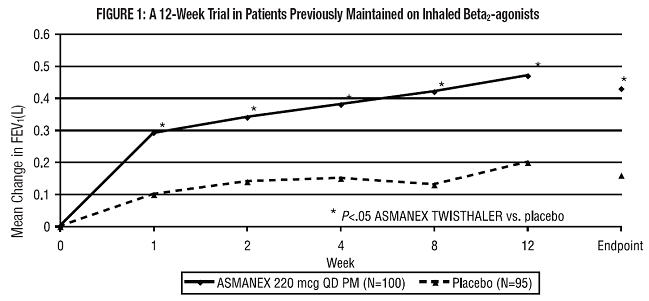
In the third trial, 195 asthmatic patients were treated with ASMANEX TWISTHALER 220 mcg once daily in the evening or placebo. The morning FEV1 at endpoint was significantly improved compared to placebo (mean change at endpoint 0.43 L or 16.8% vs. 0.16 L or 6%, respectively, see Figure 1). Evening PEF increased 24.96 L/min (7%) from baseline in the ASMANEX TWISTHALER group compared to 8.67 L/min (4%) in placebo.
Patients ≥12 Years of Age Previously Maintained on Inhaled Corticosteroids: The efficacy and safety of ASMANEX TWISTHALER in doses ranging from 110 mcg twice daily to 440 mcg twice daily was evaluated in 3 trials in 1072 patients previously maintained on inhaled corticosteroids. In the first 2 trials, asthmatic patients (mean baseline FEV1 ~2.6 L, 76% predicted) were previously on either beclomethasone dipropionate [84–1200 mcg/day], flunisolide [100–2000 mcg/day], fluticasone propionate [110–880 mcg/day], or triamcinolone acetonide [300–2400 mcg/day]. The first trial included 307 patients who were treated in an open-label fashion with ASMANEX TWISTHALER 220 mcg (110 mcg × 2 inhalations) twice daily for 2 weeks followed by 12 weeks of double-blind treatment with ASMANEX TWISTHALER 440 mcg once daily in the morning or placebo. The second trial involved 365 patients who continued on their previous dose of inhaled corticosteroids during a 2-week screening period before being switched to ASMANEX TWISTHALER 440 mcg twice daily, 220 mcg twice daily, 110 mcg twice daily, beclomethasone dipropionate 168 mcg twice daily, or placebo for 12 weeks.
In the first trial, morning predose FEV1 was effectively maintained (-1.4% change from baseline to endpoint) over the 12 weeks in the patients who were randomized to ASMANEX TWISTHALER 440 mcg once daily in the morning, while decreasing 10% at endpoint in those switched to placebo. In addition, fewer patients treated with ASMANEX TWISTHALER experienced worsening of asthma compared to placebo.
In the second trial, morning predose FEV1 was significantly increased at endpoint when patients were switched to ASMANEX TWISTHALER 220 mcg twice daily (7% increase) or 440 mcg twice daily (6.2% increase) as compared to a decrease of 7% when switched to placebo. Additionally, beta2-agonist rescue medication use was decreased for patients who received ASMANEX TWISTHALER treatment relative to those on placebo (mean reduction from baseline to endpoint 1.1 puffs/day vs. increase of 0.7 puffs/day). Fewer patients receiving ASMANEX TWISTHALER treatment experienced asthma worsening than did patients receiving placebo.
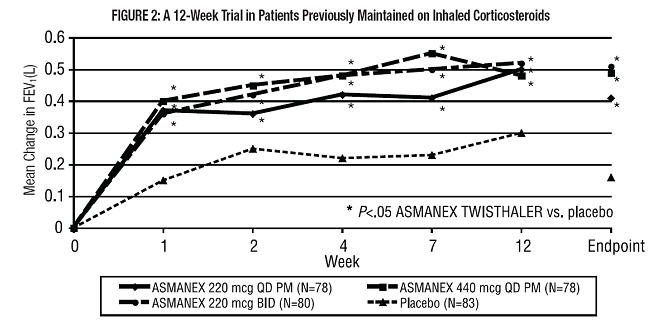
The third trial evaluated the efficacy and safety of ASMANEX TWISTHALER compared to placebo in 400 asthmatic patients (mean FEV1 67% predicted at baseline) previously maintained on beclomethasone dipropionate (hydrofluoroalkane [HFA] or chlorofluorocarbon [CFC]) 168–600 mcg/day, budesonide 200–1200 mcg/day, flunisolide 500–2000 mcg/day, fluticasone propionate 88–880 mcg/day, or triamcinolone acetonide 400–1600 mcg/day. Following a 28-day inhaled corticosteroid dose-reduction phase, patients were randomized to ASMANEX TWISTHALER 440 mcg once daily in the evening, 220 mcg once daily in the evening, 220 mcg twice daily, or placebo. At endpoint, patients who received ASMANEX TWISTHALER 220 mcg once daily in the evening, 440 mcg once daily in the evening, or 220 mcg twice daily had a significant improvement in morning FEV1 [0.41 L (19%), 0.49 L (22%), and 0.51 L (24%) in the 220 mcg once daily in the evening, 440 mcg once daily in the evening, and 220 mcg twice daily treatment group, respectively] compared to placebo [0.16 L (8%)] (see Figure 2). Evening PEF increased 15.65 L/min (4.1%) with the 220 mcg once daily in the evening dose, 39.26 L/min (10.7%) with the 440 mcg once daily in the evening dose, and 36.7 L/min (10.8%) with the 220 mcg twice daily dose, respectively, compared to a 1.4 L/min (1%) increase with placebo. Patients receiving all doses of ASMANEX TWISTHALER treatment had reduced frequency of beta-agonist rescue medication use compared to those on placebo (mean reductions at endpoint of 1.4–1.8 puffs/day from a baseline of more than 3 puffs/day compared to an increase in use by 0.5 puffs/day for placebo). In addition, fewer patients receiving ASMANEX TWISTHALER experienced asthma worsening than did those on placebo.
Patients ≥12 Years of Age Previously Maintained on Oral Corticosteroids: The efficacy of ASMANEX TWISTHALER 440 mcg and 880 mcg twice daily was evaluated in one 12-week, double-blind trial in patients previously maintained on oral corticosteroids. A total of 132 patients requiring oral prednisone (baseline mean daily oral prednisone requirement approximately 12 mg; baseline FEV1 of 1.8 L, 59% of predicted normal), most of whom were also on inhaled corticosteroids (baseline inhaled steroid: beclomethasone dipropionate [168–840 mcg/day], budesonide [800–1600 mcg/day], flunisolide [1000–2000 mcg/day], fluticasone propionate [440–1760 mcg/day], or triamcinolone acetonide [400–2400 mcg/day]) were studied. Patients who received ASMANEX TWISTHALER 440 mcg twice daily had a significant reduction in their oral prednisone (46%) as compared to placebo (164% increase in oral prednisone dose). Additionally, 40% of patients on ASMANEX TWISTHALER 440 mcg twice daily were able to completely discontinue their use of prednisone, whereas 60% of patients on placebo had an increase in daily prednisone use. Patients on ASMANEX TWISTHALER had significant improvement in lung function (14% increase) compared to a 12% decrease in FEV1 in the placebo group. Additionally, mean rescue beta2-agonist use was reduced to approximately 3 puffs/day from a baseline of 4–5 puffs/day with ASMANEX TWISTHALER treatment, compared to an increase of 0.3 puffs/day on placebo. Patients who received ASMANEX TWISTHALER 880 mcg twice daily experienced no additional benefit beyond that seen with 440 mcg twice daily.
Pediatric Patients 4 to 11 Years of Age: The efficacy of ASMANEX TWISTHALER in patients with asthma 4 to 11 years of age was evaluated in three 12-week, randomized, double-blind, placebo-controlled, parallel-group clinical trials. These trials included 630 patients receiving ASMANEX TWISTHALER, ranging from 4 to 11 years of age; 63% male and 37% female; and 67% Caucasian, 13% black, 17% Hispanic, and 3% other race/ethnicity. Patients received ASMANEX TWISTHALER 110 mcg once daily in the evening (n=98), 110 mcg once daily in the morning (n=181), 110 mcg twice daily (n=179), or 220 mcg once daily in the morning (n=172). The results for 1 clinical trial are described below. The other 2 clinical trials support the efficacy of ASMANEX TWISTHALER.
A 12-week, placebo-controlled trial of 296 patients 4 to 11 years of age with asthma of at least 6 months duration (mean % predicted FEV1 at baseline ranging from 77.3%–79.7%) was conducted to demonstrate the efficacy of the ASMANEX TWISTHALER in the treatment of asthma. Patients were treated with ASMANEX TWISTHALER 110 mcg once daily in the evening (n=98) or placebo (n=99) for 12 weeks. Assessment of efficacy was based upon morning predose FEV1. The primary endpoint was the mean change from baseline to endpoint in percent-predicted FEV1. For the primary endpoint, improvement in the ASMANEX TWISTHALER 110 mcg once daily in the evening treatment group (4.73) was statistically significant compared to placebo (-1.77). Figure 3 displays the results for % predicted FEV1 change from baseline at endpoint.
In this study, secondary endpoints of morning and evening peak expiratory flow and rescue medication use were supportive of efficacy of ASMANEX TWISTHALER.
Manufactured for: Organon LLC, a subsidiary of
ORGANON & Co.,
Jersey City, NJ 07302, USA
Manufactured by:
MSD International GmbH (Singapore Branch)
Singapore 638030, Singapore
For patent information: www.organon.com/our-solutions/patent/
The trademarks above are owned by their respective owners.
Copyright © 2021 Organon Global Inc.
All rights reserved.
uspi-og0887-pwih-2106r001
Instructions for Use
ASMANEX® TWISTHALER® (AZ-ma-neks)
(mometasone furoate inhalation powder)
for oral inhalation use only |
It is important that you read this information as the ASMANEX TWISTHALER may work differently from inhalers you have used before.
Read this Instructions for Use before you start using ASMANEX TWISTHALER and each time you get a refill. There may be new information. This information does not take the place of talking to your healthcare provider about your medical condition or treatment.
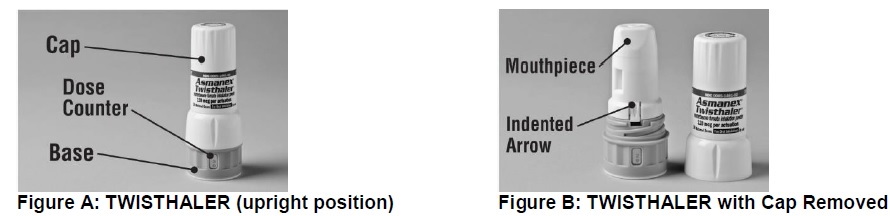
TWISTHALER Parts:
See Figures A and B below to become familiar with the TWISTHALER parts.
- Remove the ASMANEX TWISTHALER from its foil pouch and write the date on the cap label.
- Follow Steps 1 and 2 below each time you inhale a dose from your ASMANEX TWISTHALER.
Step 1: Open TWISTHALER
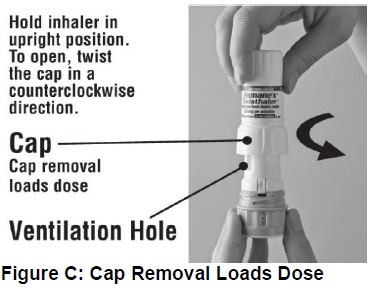
Hold the TWISTHALER straight up (upright position) with the colored portion (the base) on the bottom (see Figure C). It is important that you remove the cap of the TWISTHALER while it is in this upright position to make sure that you get the right amount of medicine with each dose.
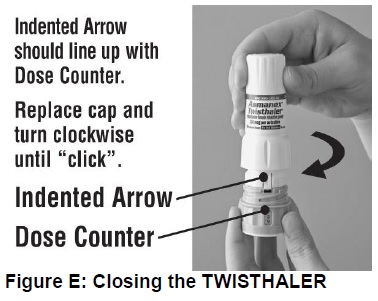
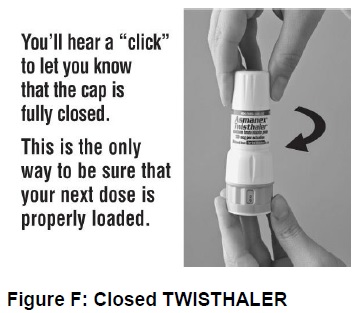
Holding the colored base, twist the cap in a counterclockwise direction to remove it (see Figure C). As you lift off the cap, the dose counter on the base will count down by one. Removing the cap loads the TWISTHALER with the medicine that you are now ready to inhale.
Important: The indented arrow (located on the white portion of the TWISTHALER, directly above the colored base) should now be pointing to the dose counter below. (see Figure C).
Step 2: Inhale dose