Lifemedz Rinse-free Hand Sanitizer
Product Images NDC 78500-101

View Photos of Packaging, Regulatory Labels, and Product Appearance

Product Visual Gallery

This gallery contains 3 technical images submitted to the FDA as part of the official labeling for Lifemedz Rinse-free Hand Sanitizer (NDC 78500-101). Unlike standard consumer photos, these assets often include clinical data figures, molecular chemical structures, and official manufacturer packaging layouts.

As provided by Lifemedz Llc, these visuals offer a comprehensive scientific overview of the product's physical and chemical identity, aiding pharmacists and researchers in product verification and study.

FDA Label Image

Image (78500101 30)

FDA Label Image

Image (78500101 38)

Image (78500101 38)
This is a description of a rinsed-free hand sanitizer named "Lifemedz". It contains 76% Artinoid, and its purpose is to reduce bacteria on the skin to avoid disease. It should be kept away from fire or flame and is for external use only. In case of eye contact, rinse eyes with water. The product comes in a pack size of 3785 mL. It includes several warnings, such as keeping it away from children, and potential poisoning risks. Directions for use include applying enough product to cover hands and rubbing hands until it dries. Inactive ingredients include water, propanedicl, carbomer, and tristhanclamine.*
FDA Label Image

Image (78500101 50)

Image (78500101 50)
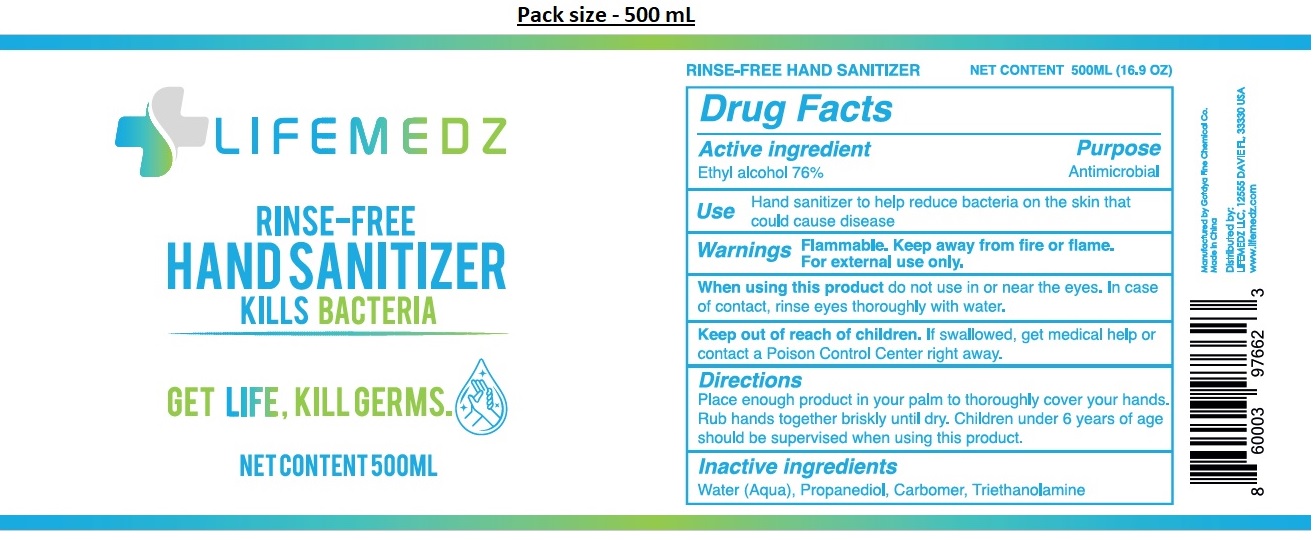
This is a description of a hand sanitizer with a pack size of 500 mL. The hand sanitizer is rinse-free and contains 76% ethyl alcohol, which helps reduce bacteria on the skin that could cause disease. The product should not be used near the eyes, and in case of contact, the eyes should be rinsed thoroughly with water. The product should only be used as directed, and children under 6 years of age should be supervised when using it. The hand sanitizer is distributed by Hormedscom and is made with inactive ingredients including water, Propanediol, Carbomer, and Triethanolamine.*

* These product label images have been analyzed using experimental machine learning. Please verify findings with the primary label text.