Electronic Devices Disinfecting Wipes
Product Images NDC 78985-004
View Photos of Packaging, Regulatory Labels, and Product Appearance
Product Visual Gallery
This gallery contains 5 technical images submitted to the FDA as part of the official labeling for Electronic Devices Disinfecting Wipes (NDC 78985-004). Unlike standard consumer photos, these assets often include clinical data figures, molecular chemical structures, and official manufacturer packaging layouts.
As provided by Generic Specialties Inc., these visuals offer a comprehensive scientific overview of the product's physical and chemical identity, aiding pharmacists and researchers in product verification and study.
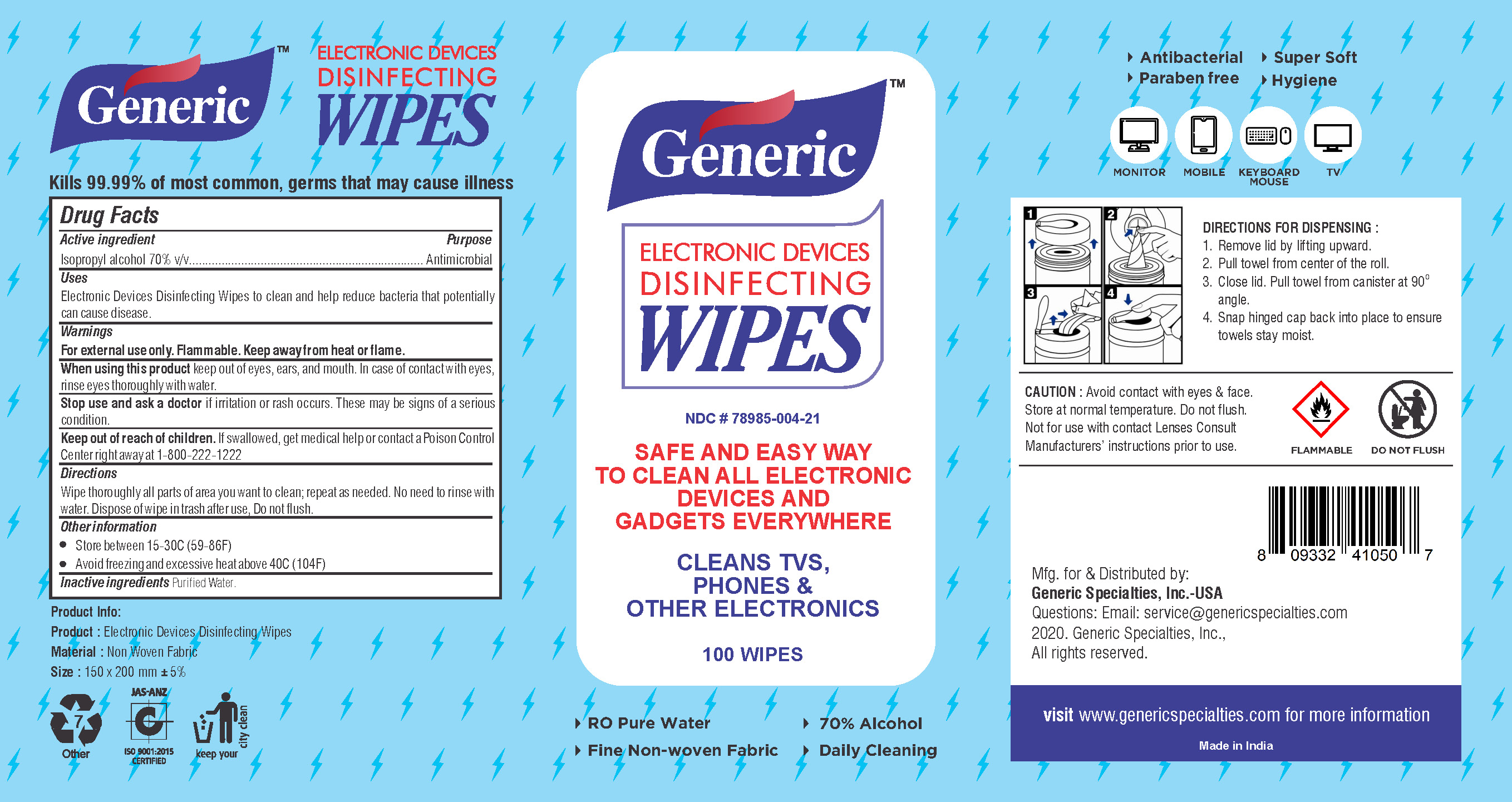
100 (Electronic Device Deisinfecting Wipes 100 Can)
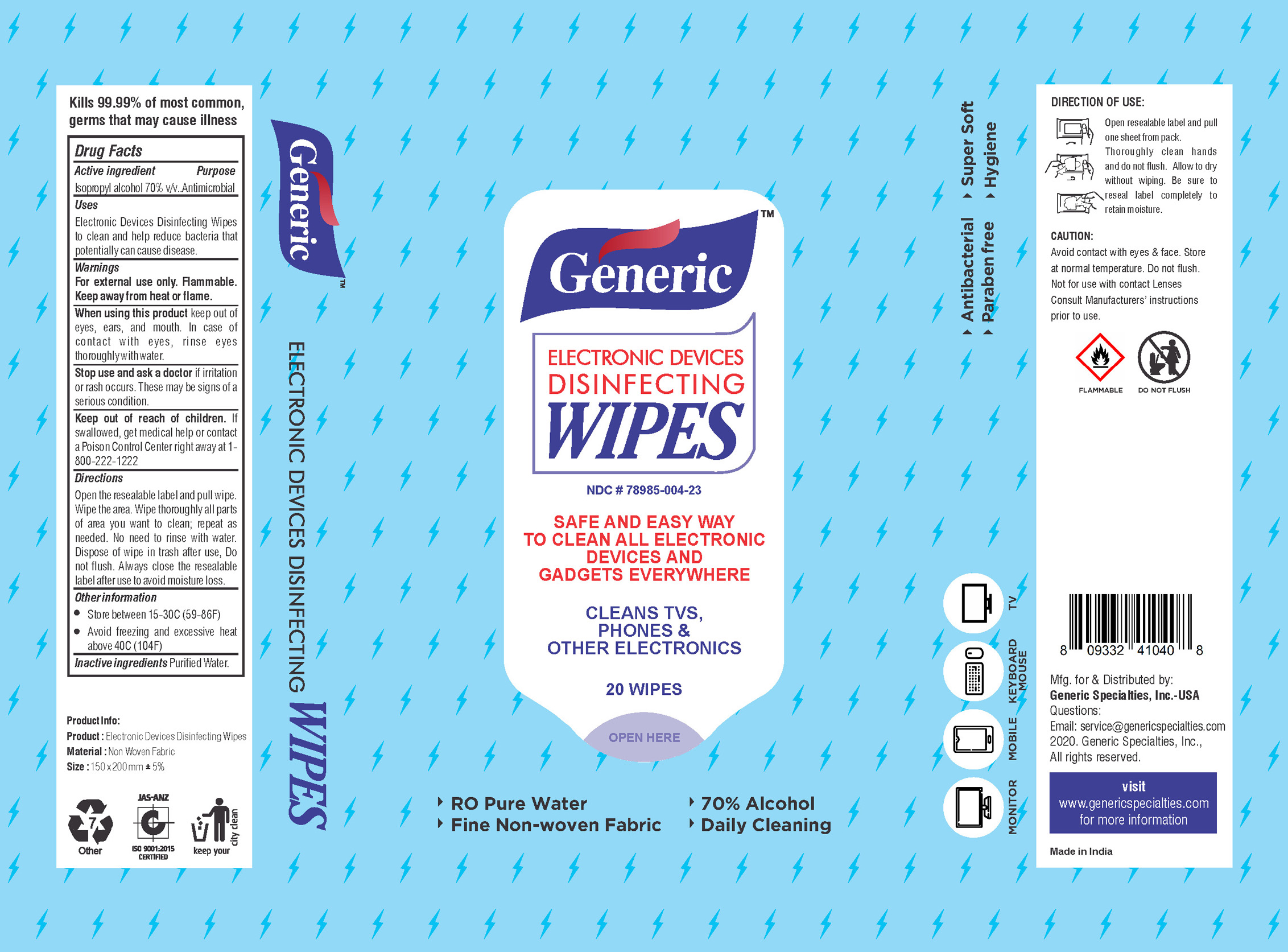
20 (Electronic Device Deisinfecting Wipes 20)
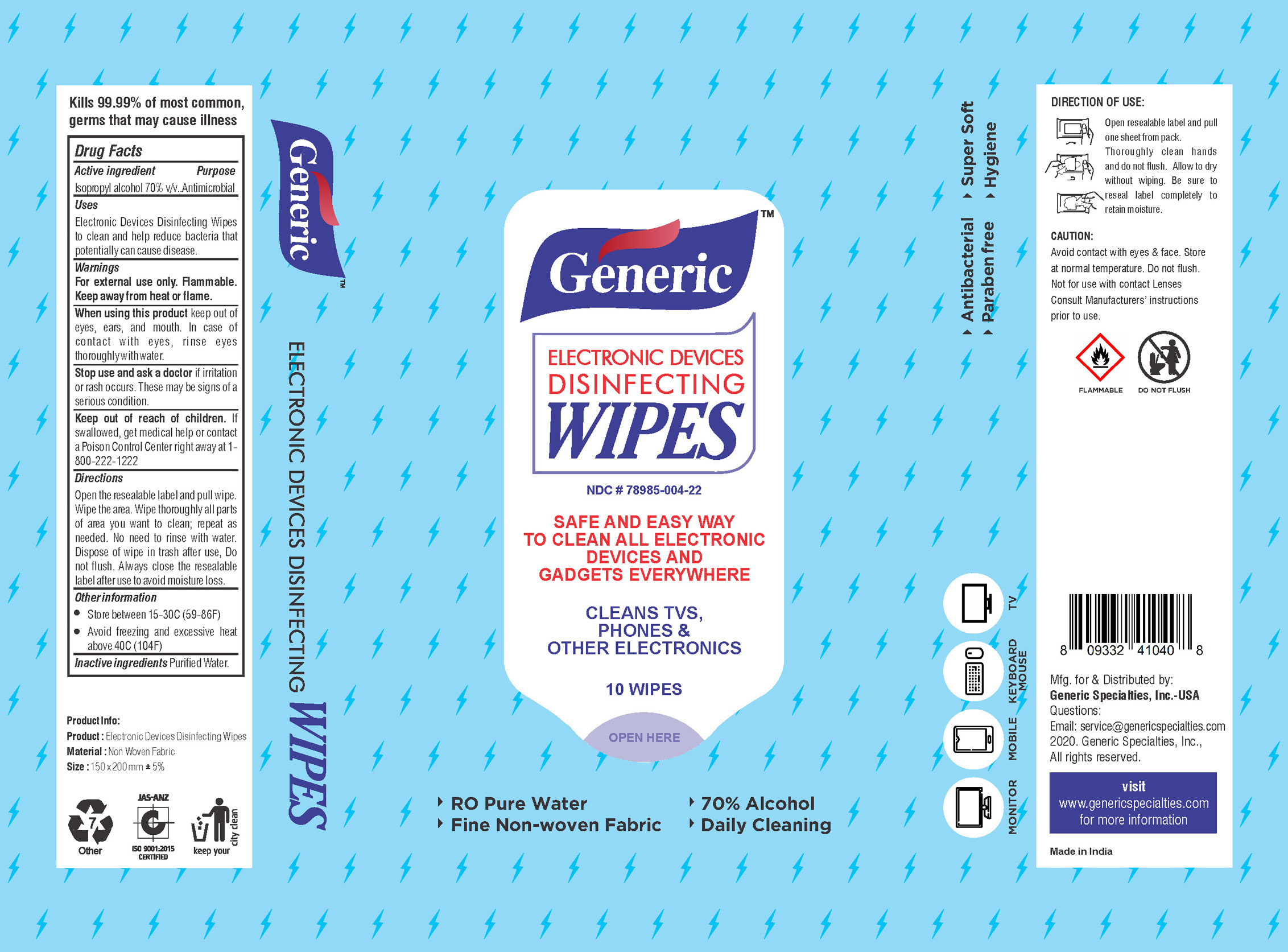
This is a product label for Electronic Devices Disinfecting Wipes that kill 99.99% of germs that may cause illness. The wipes are super soft, antibacterial, and paraben-free. They are for external use only and should be kept away from heat and flame. They are effective for cleaning mobile phones, keyboards, and other electronics. The package contains 20 wipes made of non-woven fabric and should be stored between 15-30C. The product is made in India and distributed by Generic Specialties, Inc., in the USA. No other useful information can be found.*
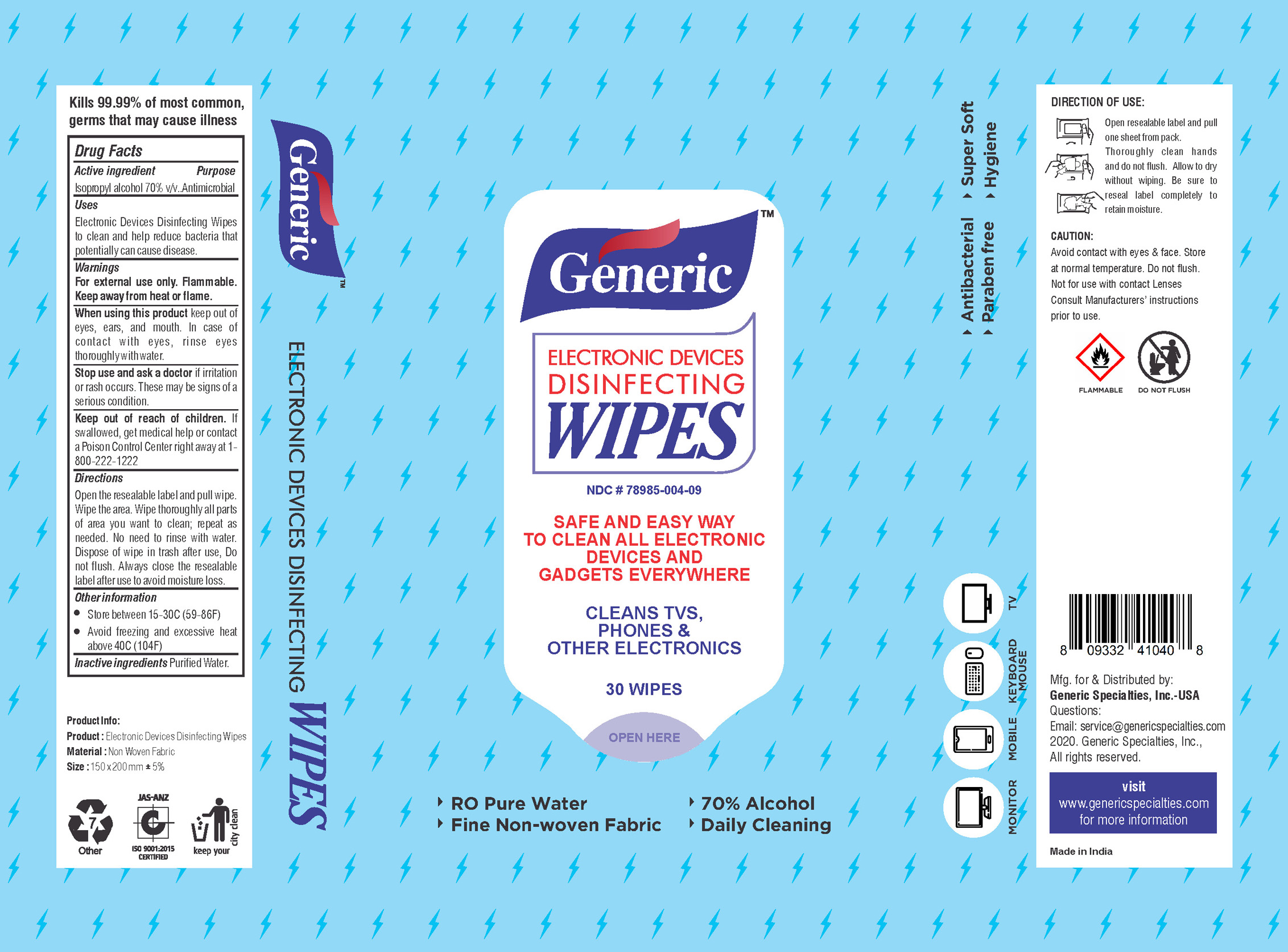
30 (Electronic Device Deisinfecting Wipes 30)
90 (Electronic Device Deisinfecting Wipes 90 Can)
This is a disinfecting wipe product designed for electronic devices. It is made of non-woven fabric, which is saturated with a solution containing 70% isopropyl alcohol. The wipes help to reduce bacteria on devices that could be responsible for causing illness. The product includes directions for use, warnings, and specific instructions for dispensing. It is flammable and should be kept away from heat and flame. The wipes should be used for external use only, and users should avoid contact with their eyes, ears, and mouth. The product is manufactured by Generic Specialties, Inc.*
* These product label images have been analyzed using experimental machine learning. Please verify findings with the primary label text.