Dynamic Hand Sanitizing Wipes
Product Images NDC 79203-001

View Photos of Packaging, Regulatory Labels, and Product Appearance

Product Visual Gallery

This gallery contains 3 technical images submitted to the FDA as part of the official labeling for Dynamic Hand Sanitizing Wipes (NDC 79203-001). Unlike standard consumer photos, these assets often include clinical data figures, molecular chemical structures, and official manufacturer packaging layouts.

As provided by Milky Way International Trading Corp, these visuals offer a comprehensive scientific overview of the product's physical and chemical identity, aiding pharmacists and researchers in product verification and study.

FDA Label Image

3 (79203 001 Bzk 25)
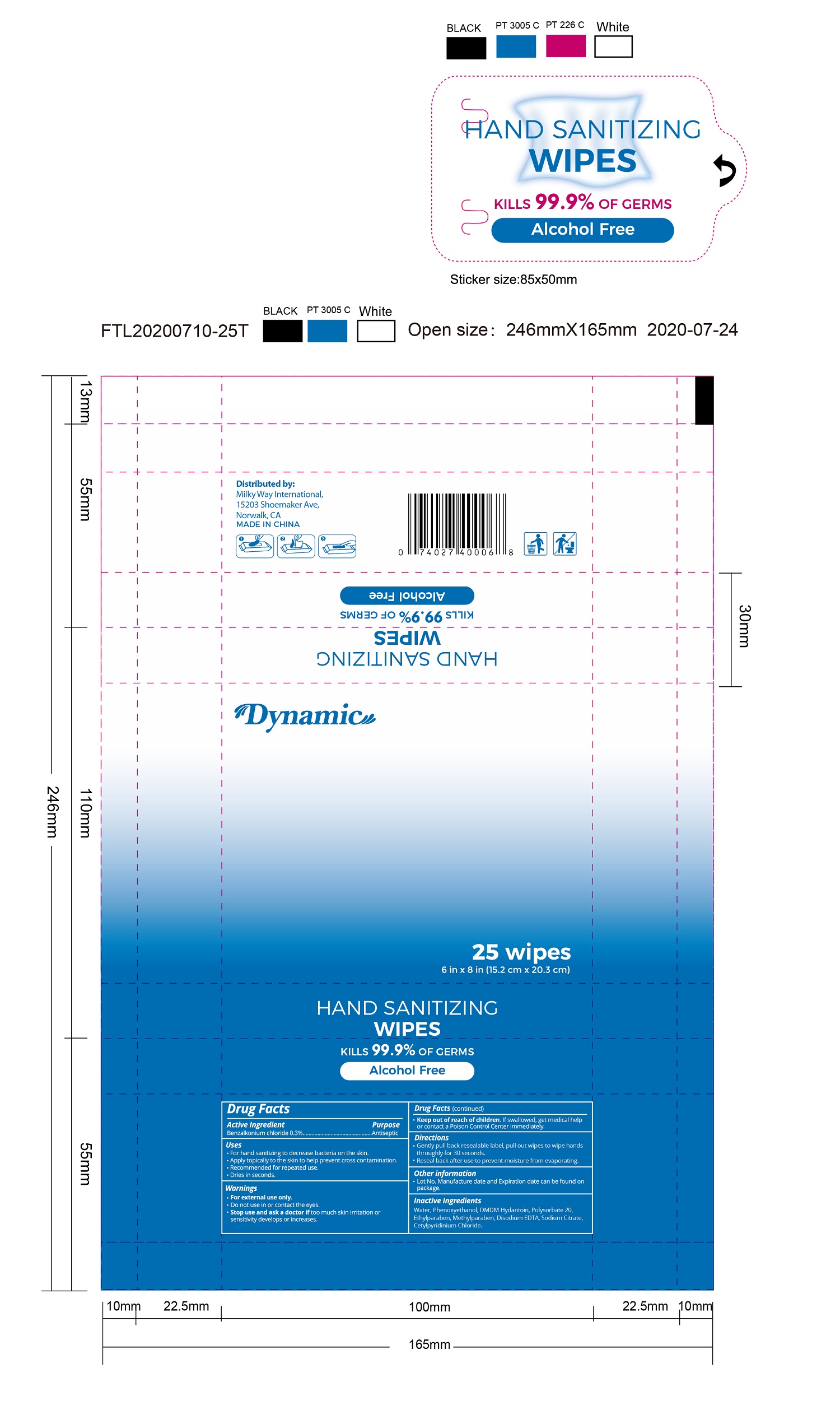
3 (79203 001 Bzk 25)
This appears to be a label of a pack of hand sanitizing wipes. The wipes come in a pack of 25, with each wipe of size 6inx8in (15.2 cm x 20.3 cm). The pack is labeled with the brand name BLACK PT3005C and PT226C, and with a sticker size of 85x50mm. The wipes claim to kill 99.9% of germs, and the drug facts section mentions an active ingredient with an unspecified purpose. At the bottom of the label, there is an FTL number and a reference to MilkyWay International as the distributor.*
FDA Label Image

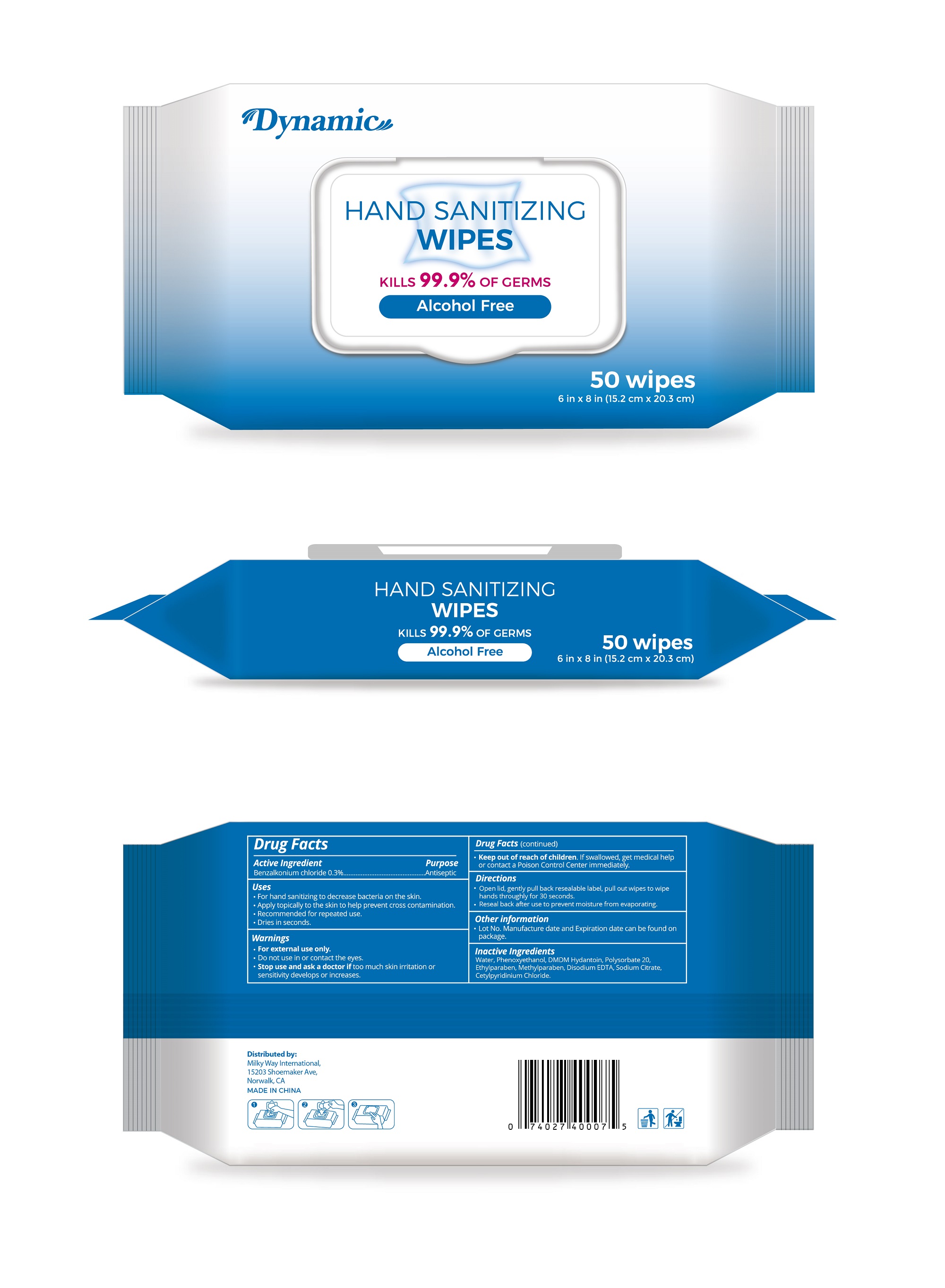
1 (79203 001 Bzk 50)

1 (79203 001 Bzk 50)
This is a description of a product in the form of hand-sanitizing wipes that can kill 99.9% of germs. The wipes contain Benzalkonium chloride 0.3% Antiseptic, which is an active ingredient that prevents cross-contamination. The directions for use are provided, including the requirement to open the lid, gently pull out the wipes to wipe the hands thoroughly for 30 seconds, and resEal the back after use. The wipes are recommended for repeated use and dry quickly in seconds. The package also contains warnings not to use in the eyes and to stop use if there is too much skin irritation. The product is distributed by Milky Way International and made in China.*
FDA Label Image

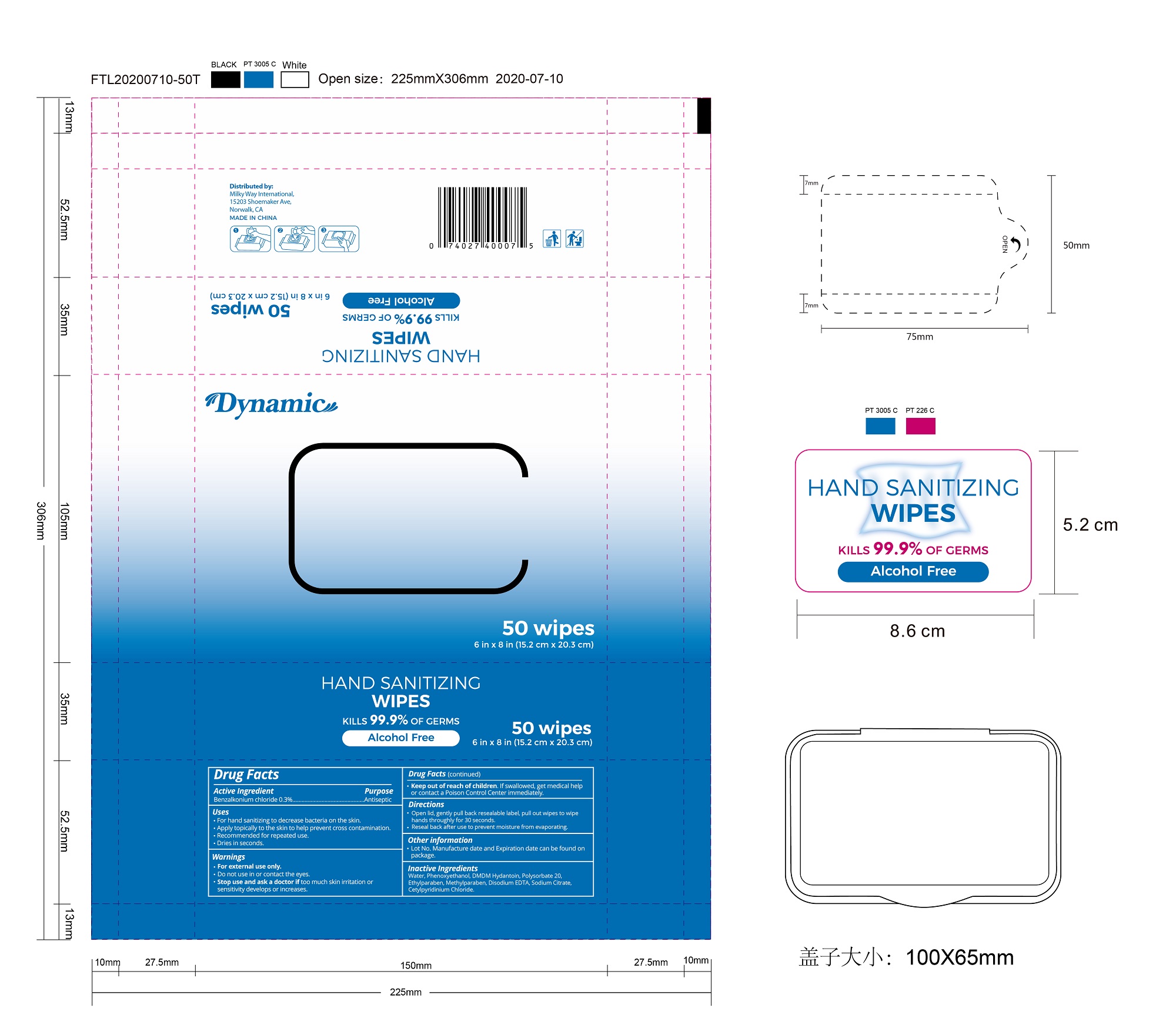
2 (79203 001 Bzk Bzk 50 2)

* These product label images have been analyzed using experimental machine learning. Please verify findings with the primary label text.