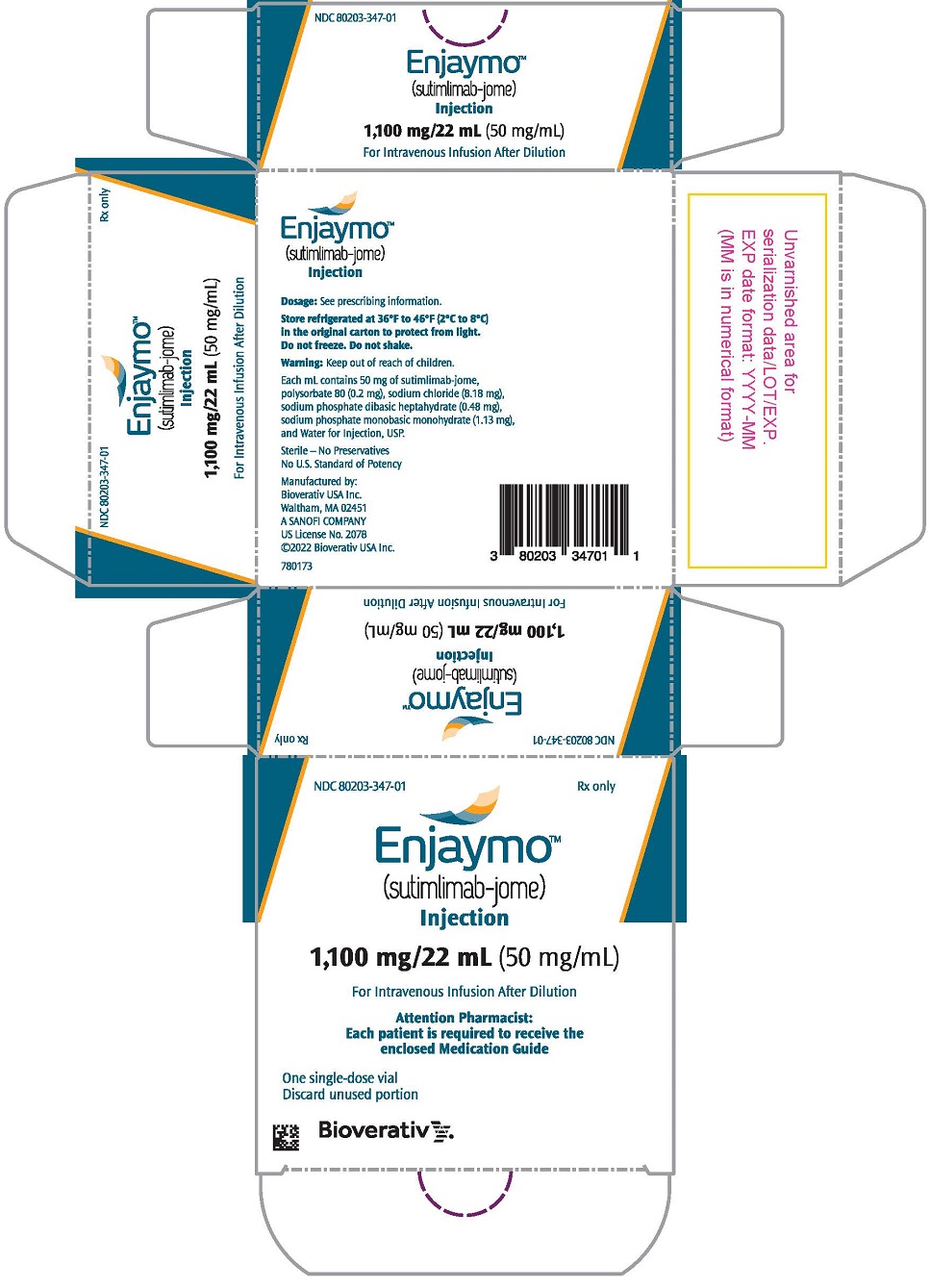
Other
Cold Agglutinin Disease
ENJAYMO (sutimlimab-jome) is indicated to decrease the need for red blood cell (RBC) transfusion due to hemolysis in adults with cold agglutinin disease (CAD).
Risk Summary
There are no available data on ENJAYMO use in pregnant women to evaluate for a drug-associated risk of major birth defects, miscarriage, or adverse maternal or fetal outcomes. Human immunoglobulin G (IgG) antibodies are known to cross the placental barrier; therefore, sutimlimab-jome may be transmitted from the mother to the developing fetus. In animal reproduction studies, intravenous administration of sutimlimab-jome to pregnant monkeys during organogenesis at doses 2 to 3 times the maximum recommended human doses did not result in adverse effects on pregnancy or offspring development (see Data).
The estimated background risk of major birth defects and miscarriage for the indicated population is unknown. All pregnancies have a background risk of birth defect, loss, or other adverse outcomes. In the U.S. general population, the estimated background risk of major birth defects and miscarriage in clinically recognized pregnancies is 2%–4% and 15%–20%, respectively.
Data
Animal data
Pregnant monkeys were administered sutimlimab-jome at doses of 60 and 180 mg/kg/dose via 30-minute intravenous infusion once-weekly from gestation Day 20 to parturition (approximately 21 doses) resulting in exposures 2 to 3 times the human exposures at the maximum recommended doses, based on area under the curve (AUC). Sutimlimab-jome was detectable in infants born to pregnant females exposed to 180 mg/kg/week. No effects on reproductive and developmental parameters were observed in maternal animals and offspring, respectively.
Risk Summary
There are no data on the presence of sutimlimab-jome in human milk, effects on the breastfed child, or the effects on milk production. Maternal IgG is known to be present in human milk. The effects of local gastrointestinal exposure and limited systemic exposure in the breastfed child to sutimlimab-jome are unknown. No conclusions can be drawn regarding whether or not ENJAYMO is safe for use during breastfeeding. The developmental and health benefits of breastfeeding should be considered along with the mother's clinical need for ENJAYMO and any potential adverse effects on the breastfed child from ENJAYMO or from the underlying maternal condition.
Distribution
Sutimlimab-jome binds to C1s in the serum. The volume of distribution at steady state was approximately 5.8 L in patients with CAD.
Elimination
The terminal elimination half-life and clearance varies at different doses due to target-mediated drug disposition at lower sutimlimab-jome concentrations. The terminal elimination half-life (t1/2β) of sutimlimab-jome is 21 days with a clearance (CL) of approximately 0.14 L/day at the approved recommended dosage.
Metabolism
Sutimlimab-jome is a protein. It is generally recognized that antibodies are metabolized by degradation into small peptides and individual amino acids.
Specific Populations
No clinically significant differences in the pharmacokinetics of sutimlimab-jome were observed based on sex, age (19 to 88 years of age), ethnicity (Japanese, non-Japanese), and mild to moderate renal impairment (30 to 89 mL/min/1.73 m2 measured by estimated glomerular filtration rate [eGFR]). The effects of severe renal impairment and hepatic impairment on the pharmacokinetics of sutimlimab-jome are unknown.
Body weight
Population pharmacokinetic analysis shows that sutimlimab-jome exposures decreased up to 59% for a patient weighing 98 kg and increased up to 57% for a patient weighing 50.5 kg as compared with a patient weighing 72 kg. The effect of body weight on pharmacokinetics has been integrated in the recommended dose regimen tiered by body weight.
Serious Infections
Advise patients of the potential increased risk of infections including infections caused by encapsulated bacteria such as Neisseria meningitides, Streptococcus pneumoniae, and Haemophilus influenzae. These infections may be serious or life-threatening. Inform patients that they are required to receive vaccinations against these bacteria according to current medical guidelines prior to initiation of and during treatment with ENJAYMO. Educate patients on the symptoms of infections and advise them to seek immediate medical attention if any new symptoms of infection occur [see Warnings and Precautions (5.1)].
Infusion-Related Reactions
Advise patients that administration of ENJAYMO may result in infusion-related reactions including hypersensitivity reactions. Hypersensitivity reactions may be serious or life-threatening (e.g., anaphylaxis). Educate patients on the symptoms of infusion-related reactions and advise them to seek medical attention if any new symptoms of infusion-related reactions occur [see Contraindications (4) and Warnings and Precautions (5.2)].
Risk of Autoimmune Disease
Educate patients that there may be an increased risk of developing an autoimmune disease such as SLE during ENJAYMO therapy. Advise patients on signs and symptoms of SLE and to report any new symptoms of SLE and seek medical attention [see Warnings and Precautions (5.3)].
Discontinuation
Inform patients with CAD that they may develop hemolysis due to CAD when ENJAYMO is discontinued and that they should be monitored by their healthcare provider following ENJAYMO discontinuation [see Warnings and Precautions (5.4)].
Manufactured by:
Bioverativ USA Inc.
Waltham, MA 02451
A SANOFI COMPANY
US License No. 2078
©2022 Bioverativ USA Inc. All rights reserved.