Duloxetine Hcl
Product Images NDC 80425-0013

View Photos of Packaging, Regulatory Labels, and Product Appearance

Product Visual Gallery

This gallery contains 12 technical images submitted to the FDA as part of the official labeling for Duloxetine Hcl (NDC 80425-0013). Unlike standard consumer photos, these assets often include clinical data figures, molecular chemical structures, and official manufacturer packaging layouts.

As provided by Advanced Rx Of Tennessee, Llc, these visuals offer a comprehensive scientific overview of the product's physical and chemical identity, aiding pharmacists and researchers in product verification and study.

FDA Label Image

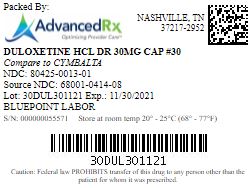
Dulox #30 (Duloxetine HCl Dr 30mg Cap Qty 30 Ndc 80425 0013)
FDA Label Image

Dulox #60 (Duloxetine HCl Dr 30mg Cap Qty 60 Ndc 80425 0013)

Dulox #60 (Duloxetine HCl Dr 30mg Cap Qty 60 Ndc 80425 0013)
This appears to be a label for a medication. The drug name is Duloxetine HCL DR and the capsules have a 60mg dosage. The manufacturer or packager is listed as "AAdvnncnd" (which may be a misspelling of "Advanced"). There is no other information available from the text provided.*
FDA Label Image

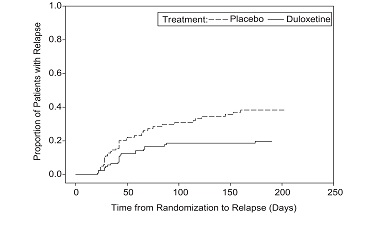
Fig 1 (Fig 1)

FDA Label Image

Fig 10 (Fig 10)

Fig 10 (Fig 10)
This text seems to be a chart or graph. It is not possible to generate a useful description with this text.*
FDA Label Image

Fig 2 (Fig 2)

FDA Label Image

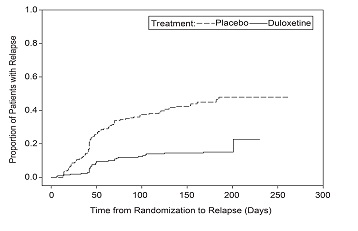
Fig 3 (Fig 3)

FDA Label Image

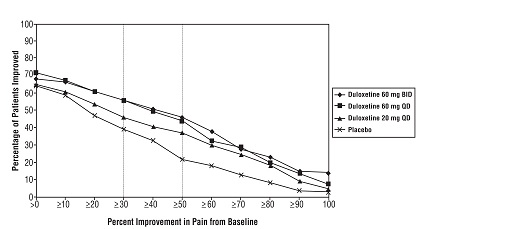
Fig 4 (Fig 4)

Fig 4 (Fig 4)
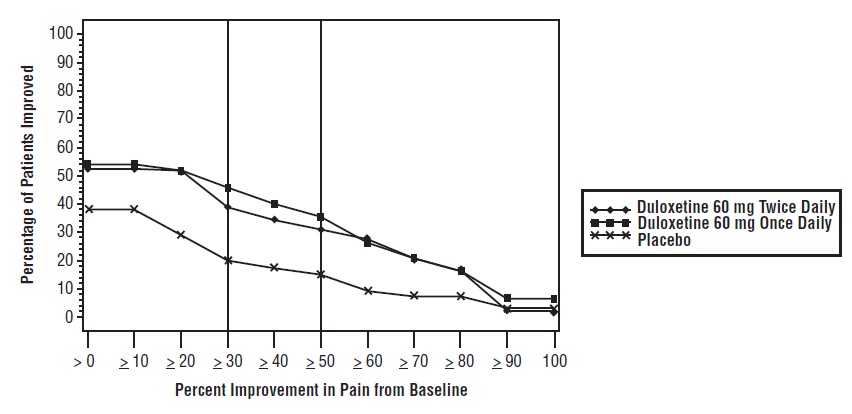
The text appears to be a graph showing the percentage of patients improved in relation to different dosages of Duloxetine and Placebo for pain relief. The x-axis shows the percent improvement in pain from baseline and the y-axis displays the percentage of patients improved. The graph compares the effects of Duloxetine 60 mg BID, Duloxetine 60 mg QD, and Placebo.*
FDA Label Image

Fig 5 (Fig 5)

Fig 5 (Fig 5)
The text is a graph displaying the percentage of patients who have shown improvement in pain from their baseline levels after being administered a medication. The x-axis shows the percentage of pain improvement ranging from 10% to 80%, while the y-axis exhibits the number of patients who experienced improvement. Three different treatments are represented on the graph, including Duloxetine 60 mg twice daily, Duloxetine 60 mg once daily, and a placebo. It's not clear what the units for the improvement in pain are, and there are some formatting issues with the text.*
FDA Label Image

Fig 6 (Fig 6)

Fig 6 (Fig 6)
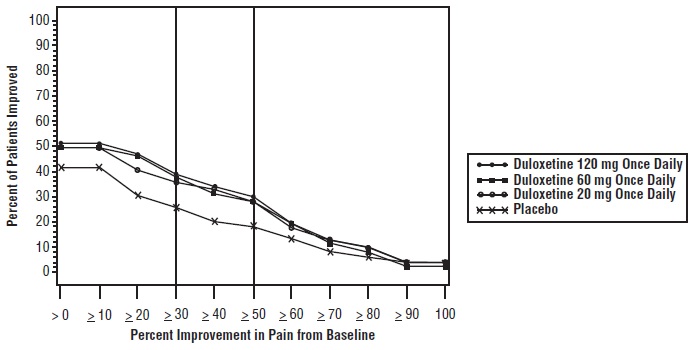
This is a graph depicting the percentage of patients who experienced improvement in pain from baseline while taking Duloxetine at various doses (20mg, 60mg, and 120mg) compared to placebo. The graph ranges from 0% to 100% improvement, with increments of 10%.*
FDA Label Image

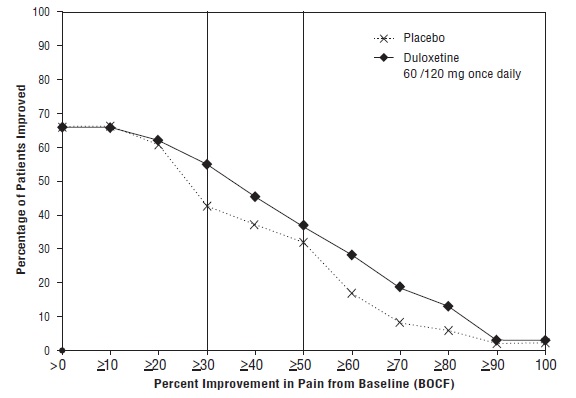
Fig 8 (Fig 8)

Fig 8 (Fig 8)
The graph displays the percentage of patients who have shown improvement in pain after taking Duloetine 60/120 mg once. The improvement is compared to the placebo effect. The X-axis represents the percentage of improvement while the Y-axis represents the number of patients. There are ten data points on the x-axis ranging from 0 to 100. No further information is available.*
FDA Label Image

Fig 9 (Fig 9)

Fig 9 (Fig 9)
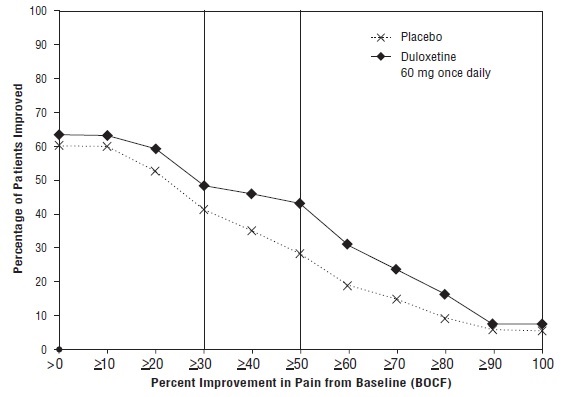
This appears to be a graph showing the percentage of patients that have improved with a certain medication or placebo. The medication being compared is likely Duloxetine, taken at a dose of 60 mg once daily. The x-axis shows the percent improvement in pain from baseline and ranges from 0% to 100%. The y-axis is not readable.*
FDA Label Image

Structure (Structure)

* These product label images have been analyzed using experimental machine learning. Please verify findings with the primary label text.