- C
maxand AUC was increased 15% to 20%
- T
maxwas decreased 15 minutes
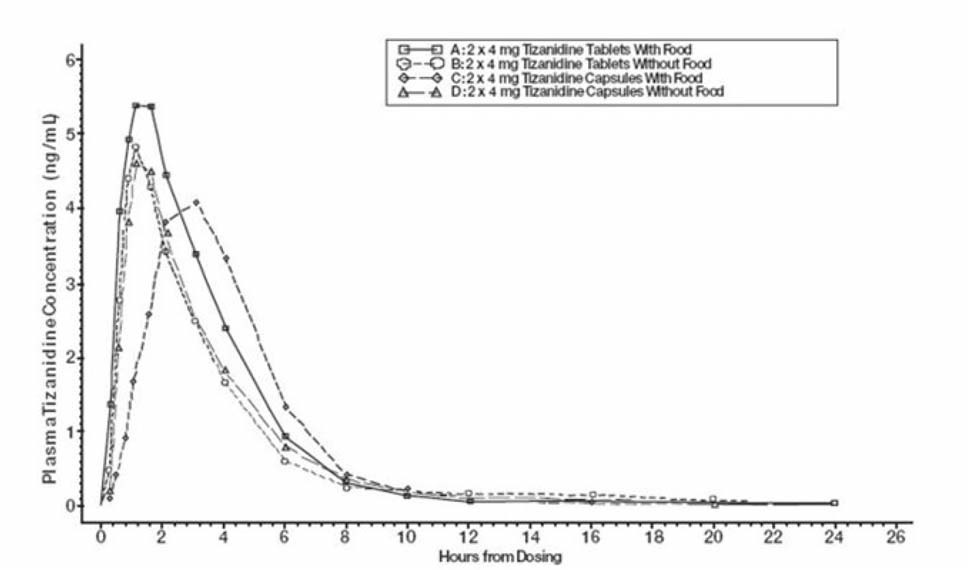
Figure 1: Mean Tizanidine Concentration vs. Time Profiles For Tizanidine Tablets and Tizanidine Capsules (2 mg x 4 mg) Under Fasted and Fed Conditions

Figure (C1813e2d 81a1 4db6 80a3 12c265d1e8f5 02)
Distribution
Tizanidine is extensively distributed throughout the body with a mean steady state volume of distribution of 2.4 L/kg (CV = 21%) following intravenous administration in healthy adult volunteers. Tizanidine is approximately 30% bound to plasma proteins.
Elimination
Metabolism
Tizanidine has a half-life of approximately 2.5 hours (CV=33%). Approximately 95% of an administered dose is metabolized. The primary cytochrome P450 isoenzyme involved in tizanidine metabolism is CYP1A2. Tizanidine metabolites are not known to be active; their half-lives range from 20 to 40 hours.
Excretion
Following single and multiple oral dosing of
14C-tizanidine, an average of 60% and 20% of total radioactivity was recovered in the urine and feces, respectively.
Specific Populations
Geriatric Patients
No specific pharmacokinetic study was conducted to investigate age effects. Cross study comparison of pharmacokinetic data following single dose administration of 6 mg tizanidine showed that younger subjects cleared the drug four times faster than the elderly subjects
[see
Use in Specific Populations (8.5)]
.
Patients with Hepatic Impairment
The influence of hepatic impairment on the pharmacokinetics of tizanidine has not been evaluated. Because tizanidine is extensively metabolized in the liver, hepatic impairment would be expected to have significant effects on pharmacokinetics of tizanidine
[see
Use in Specific Populations (8.7)].
Patients with Renal Impairment
Tizanidine clearance is reduced by more than 50% in elderly patients with renal insufficiency (creatinine clearance < 25 mL/min) compared to healthy elderly subjects; this would be expected to lead to a longer duration of clinical effect
[see
Use in Specific Populations (8.6)].
Gender Effects
No specific pharmacokinetic study was conducted to investigate gender effects. Retrospective analysis of pharmacokinetic data following single and multiple dose administration of 4 mg tizanidine, however, showed that gender had no effect on the pharmacokinetics of tizanidine.
Drug Interactions
CYP1A2 Inhibitors
The effects of coadministration of fluvoxamine or ciprofloxacin, both strong CYP1A2 inhibitors, on the pharmacokinetics of a single 4 mg dose of tizanidine was studied in 10 healthy subjects. The C
max, AUC, and half-life of tizanidine increased by 12-fold, 33-fold, and 3-fold, respectively, with coadministration of fluvoxamine. The C
maxand AUC of tizanidine increased by 7-fold and 10-fold, respectively, with coadministration of ciprofloxacin
[see Contraindications (4)].
There have been no clinical studies evaluating the effects of other CYP1A2 inhibitors on tizanidine
[see
Drug Interactions (7.2)]
.
In vitrostudies of cytochrome P450 isoenzymes using human liver microsomes indicate that neither tizanidine nor the major metabolites are likely to affect the metabolism of other drugs metabolized by cytochrome P450 isoenzymes.
Oral Contraceptives
No specific pharmacokinetic study was conducted to investigate interaction between oral contraceptives and tizanidine. Retrospective analysis of population pharmacokinetic data following single and multiple dose administration of 4 mg tizanidine, however, showed that women concurrently taking oral contraceptives had 50% lower clearance of tizanidine compared to women not on oral contraceptives
[seeDrug Interactions (7.3)].
Acetaminophen
Tizanidine delayed the T
maxof acetaminophen by 16 minutes. Acetaminophen did not affect the pharmacokinetics of tizanidine.
Alcohol
Alcohol increased the AUC and C
maxof tizanidine by approximately 20% and 15%, respectively
[see
Drug Interactions (7.4)]
.