Kimmtrak Injection, Solution, Concentrate
Product Images NDC 80446-401

View Photos of Packaging, Regulatory Labels, and Product Appearance

Product Visual Gallery

This gallery contains 3 technical images submitted to the FDA as part of the official labeling for Kimmtrak (NDC 80446-401). Unlike standard consumer photos, these assets often include clinical data figures, molecular chemical structures, and official manufacturer packaging layouts.

As provided by Immunocore Commercial Llc, these visuals offer a comprehensive scientific overview of the product's physical and chemical identity, aiding pharmacists and researchers in product verification and study.

FDA Label Image

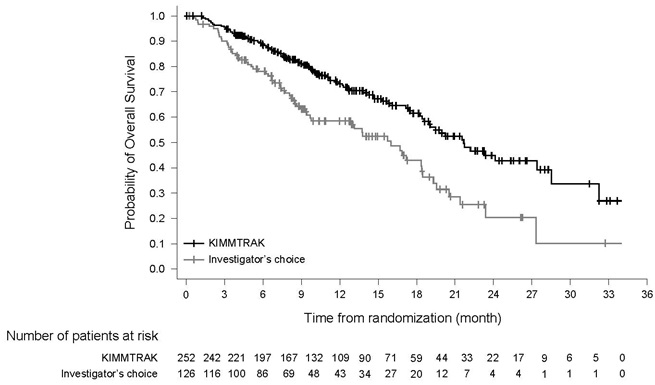
Figure 1 (Tabentafusp 01)
FDA Label Image

80446-401-01 (100 mcg/0.5 mL Carton Label)

80446-401-01 (100 mcg/0.5 mL Carton Label)
CKIMMTRAK is an injection of tebentafusp-tebn for intravenous infusion after dilution. Each single-dose vial contains 100 mcg of the substance along with other additives such as citric acid monohydrate and trehalose. There is no US standard of potency for this product and it must be diluted before use. The vial does not contain natural rubber latex and must be refrigerated at 2°C to 8°C in the original carton to prevent light exposure. The recommended dosage is to be determined as per the prescribing information. The product is manufactured by Immunocore Limited, Denmark for Immunocore Commercial LLC, United States. The text also provides details regarding the product's NDC code and GTIN.*
FDA Label Image

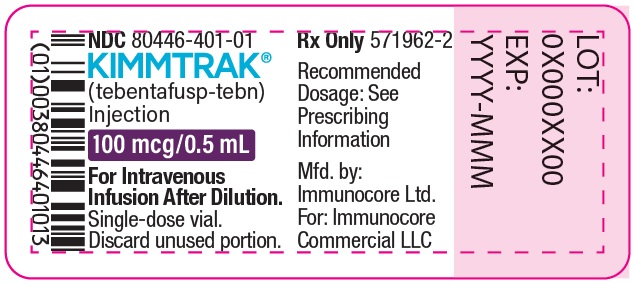
80446-401-01 (100 mcg/0.5 mL Vial Label)

80446-401-01 (100 mcg/0.5 mL Vial Label)
Drug NDC 80446-407-0T with the name KIMMTRAK is Rx only, intended for parenteral administration. The recommended dosage for the drug is not available in the given text. It is available in the form of single-dose vials. The drug is manufactured by Immunocore Ltd. After dilution, it should be used for intravenous infusion. The text also suggests to discard the unused portion of the drug.*

* These product label images have been analyzed using experimental machine learning. Please verify findings with the primary label text.