Hypersensitivity Reactions
During the initial 4-week double-blind placebo-controlled treatment period (part 1), 0.8% of patients experienced an adverse reaction of hypersensitivity (i.e., rash, erythema, allergic edema) on TRYVIO compared to no reports in patients treated with placebo. One patient experienced allergic dermatitis requiring hospitalization while receiving aprocitentan 25 mg.
Laboratory Tests
Initiation of TRYVIO may cause an initial small decrease in estimated glomerular filtration rate (eGFR) that occurs within the first 6 weeks of starting therapy and then stabilizes.
In the initial 4-week double-blind treatment period, TRYVIO 12.5 mg caused a mean decrease of about 0.8 g/dL in hemoglobin compared to no change in the placebo patients.
Risk Summary
Based on animal reproduction studies with other ERAs, TRYVIO can cause embryo-fetal toxicity, including birth defects and fetal death when administered to a pregnant patient and is contraindicated during pregnancy [see Contraindications (4.1)]. Administration of macitentan, where approximately ≥50% of total exposure was to aprocitentan, was teratogenic in rats and rabbits at all doses tested (see Data). Available data from reports of pregnancy in clinical trials with TRYVIO are insufficient to rule out a drug-associated risk of major birth defects, miscarriage or other adverse maternal or fetal outcomes. Advise pregnant patients of the potential risk to a fetus.
The background risk of major birth defects and miscarriage for the indicated population is unknown. All pregnancies have a background risk of birth defect, loss, or other adverse outcomes. In the U.S. general population, the estimated background risk of major birth defects and miscarriage in clinically recognized pregnancies is 2% to 4% and 15% to 20%, respectively.
There is a Pregnancy Safety Study that monitors pregnancy outcomes in women exposed to TRYVIO during pregnancy. Healthcare providers should report any prenatal exposure to TRYVIO by calling 1-866-429-8964.
Data
Animal Data
In embryo-fetal development toxicity studies in pregnant rats and rabbits given macitentan (for which aprocitentan is a major metabolite) during the period of major organogenesis, cardiovascular and mandibular arch fusion malformations were observed at all doses studied. The lowest doses in rats and rabbits produced aprocitentan exposures that were equivalent to and 15-fold, respectively, the clinical exposures at the maximum recommended human dose (MRHD) based on area under the curve (AUC).
In pre- and post-natal development studies, female rats given macitentan (for which aprocitentan is a major metabolite) from late pregnancy through lactation showed reduced pup survival and impairment of the male fertility of the offspring at all doses. The lowest dose produced aprocitentan exposures approximately 2-fold the clinical exposures at the MRHD based on AUC.
Risk Summary
There are no data on the presence of aprocitentan in human milk, the effects on the breastfed infant, or the effect on milk production. In rats, aprocitentan was excreted into milk during lactation (see Data). When a drug is present in animal milk, it is likely that the drug will be present in human milk. Because of the potential for serious adverse reactions in breastfed infants, advise women not to breastfeed during treatment with TRYVIO.
Data
A single 14C-radiolabeled macitentan dose of 3 mg/kg was given orally to lactating Wistar rats. Aprocitentan was consistently observed in milk samples across all collection times after oral administration.
Pregnancy TestingVerify the pregnancy status of patients prior to initiating TRYVIO. Patients who can become pregnant should exclude pregnancy with a negative pregnancy test monthly during treatment, and one month after discontinuation of treatment with TRYVIO. The patient should contact their physician immediately if onset of menses is delayed or pregnancy is suspected. If the pregnancy test is positive, the physician and patient must discuss the risks to the patient, the pregnancy, and the fetus [see Warnings and Precautions (5.1), Dosage and Administration (2.2), Contraindications (4.1)].
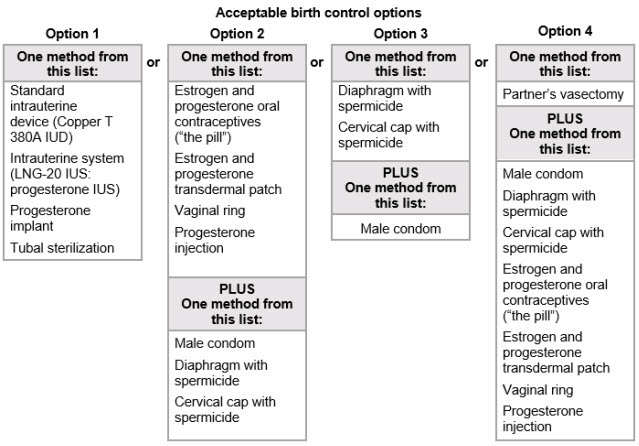
ContraceptionPatients using TRYVIO who can become pregnant should use acceptable contraception prior to initiation of treatment, during treatment, and for one month after discontinuation of treatment with TRYVIO [see Warnings and Precautions (5.1)].
InfertilityOther ERAs have shown an adverse effect on spermatogenesis in humans and/or animals. TRYVIO, like other ERAs, may impair fertility in males of reproductive potential. It is not known whether effects on fertility would be reversible [see Warnings and Precautions (5.6), Nonclinical Toxicology (13.1)].
Cardiac Electrophysiology
At eight times the recommended dose, clinically significant QTc interval prolongation was not observed.
Absorption
The absolute oral bioavailability of aprocitentan is unknown. The time to reach Cmax is between 4 and 5 hours after administration of 25 mg aprocitentan (twice the recommended dose).
Effect of Food
No clinically significant differences in aprocitentan pharmacokinetics were observed following administration of a high-fat, high-calorie meal (approximately 150, 250, and 500–600 calories from protein, carbohydrate, and fat, respectively) in healthy subjects.
Distribution
The apparent volume of distribution of aprocitentan is approximately 20 L. Aprocitentan is >99% bound to plasma proteins, primarily albumin. Protein binding is not affected by renal or hepatic impairment. The aprocitentan blood-to-plasma ratio is 0.63.
Elimination
The aprocitentan effective half-life is approximately 41 hours, and the apparent clearance is approximately 0.3 L/h.
Metabolism
Aprocitentan is primarily metabolized by UGT1A1- and UGT2B7-mediated N-glucosidation and non-enzymatic hydrolysis.
Excretion
After a single dose of radiolabeled aprocitentan, approximately 52% of the dose was eliminated via urine (0.2% unchanged) and 25% via feces (6.8% unchanged).
Specific Populations
No clinically significant differences in the pharmacokinetics of aprocitentan were observed based on age (18–84 years), sex, race/ethnicity, body weight (44–196 kg), between patients and healthy subjects, mild to severe renal impairment (eGFR ≥15 mL/min), or mild to moderate hepatic impairment (Child-Pugh class A to B). The effect of kidney failure (eGFR <15 mL/min), dialysis, or severe hepatic impairment (Child-Pugh class C) on aprocitentan pharmacokinetics is unknown.
Drug Interaction Studies
Clinical Studies and Model-Informed Approaches
No clinically significant differences in the pharmacokinetics of the following drugs were observed when used concomitantly with aprocitentan: midazolam (CYP3A4 substrate) or rosuvastatin (breast cancer resistance protein [BCRP] substrate).
In Vitro Studies
UDP-glucuronosyltransferase (UGT) inducers: Concomitant administration of aprocitentan with UGT inducers may decrease aprocitentan exposure.
CYP450 enzymes: Aprocitentan inhibits CYP3A4 and all members of the CYP2C family, but did not inhibit CYP1A2, CYP2A6, CYP2B6, CYP2D6, and CYP2E1. Aprocitentan is an inducer of CYP3A4 but did not induce CYP1A2 or CYP2C9.
UGT enzymes: Aprocitentan is a substrate and inhibitor of UGT1A1 and UGT2B7.
Transporter systems: Aprocitentan is a substrate of P-glycoprotein (P-gp) and BCRP. However, inhibitors of these transporters are not anticipated to influence the PK of aprocitentan. Aprocitentan is an inhibitor of BCRP, bile salt export pump (BSEP), and sodium taurocholate co-transporting polypeptide (NTCP), but does not inhibit P-gp, organic cationic transporter (OCT)1, OCT2, human multi-drup and toxin compound extrusion (MATE)1, or MATE2K. Aprocitentan does not inhibit organic anion transporter (OAT)1, OAT3, OATP1B1, or OATP1B3 at therapeutic concentrations.
Carcinogenesis
Two-year carcinogenicity studies with macitentan (for which aprocitentan is a major metabolite) did not identify any carcinogenic potential at doses up to 100 mg/kg/day and 250 mg/kg/day in mice and rats, which produced aprocitentan exposures approximately 30-fold and 11-fold, respectively, the clinical aprocitentan exposure at the MRHD based on AUC.
Mutagenesis
Aprocitentan did not induce mutagenicity or genotoxicity in a standard battery of in vitro and in vivo assays that included a bacterial reverse mutation assay, a chromosome aberration test in human lymphocytes, and an in vivo bone marrow micronucleus test in rats.
Impairment of Fertility
In a fertility study in male rats given aprocitentan for 15 weeks at doses up to 250 mg/kg/day, no effect on fertility or spermatogenesis was observed at 52-fold the clinical exposure at the MRHD based on AUC. In repeated dose toxicity studies, treatment with aprocitentan resulted in testicular tubular degeneration/atrophy in male rats and dogs at high doses of 250 mg/kg/day and 25 mg/kg/day, respectively, which represents approximately 41- and 52-fold the clinical exposure at the MRHD, based on AUC, respectively. The testicular toxicity was not evident in male rats and dogs at 50 mg/kg/day and 5 mg/kg/day, respectively, which represents approximately 14- and 10-fold the clinical exposure at the MRHD based on AUC.
In female rats given aprocitentan prior to mating, minimally increased pre-implantation loss was observed at doses ≥50 mg/kg/day, which represent ≥23-fold the clinical exposure at the MRHD based on AUC. No impact on fertility was observed at 10 mg/kg/day, which represents 5-fold the clinical exposure at the MRHD based on AUC.
Embryo-Fetal Toxicity
Counsel patients who can become pregnant to use acceptable methods of contraception before treatment with TRYVIO, during treatment with TRYVIO, and for one month after treatment discontinuation. Patients who can become pregnant should have pregnancy tests prior to initiation of TRYVIO, monthly during treatment, and one month after TRYVIO discontinuation [see Warnings and Precautions (5.1) and Use in Specific Populations (8.1, 8.3)].
TRYVIO REMS
Because of the risk of birth defects, TRYVIO is only available through a restricted distribution program called the TRYVIO REMS. Under the TRYVIO REMS, prescribers and pharmacies must enroll in the REMS [see Warnings and Precautions (5.2)].
Acceptable forms of contraception include, but are not limited to, IUD, contraceptive implants, tubal sterilization, or a combination of methods (either one hormone method with a barrier method or two barrier methods). Alternatively, if a partner's vasectomy is the chosen method of contraception, a hormone or barrier method must be used along with this method.
Patients should be instructed to contact their healthcare provider if they suspect they may be pregnant. Patients should seek additional contraceptive advice from a gynecologist or similar expert as needed.
Educate and counsel patients who can become pregnant on the use of emergency contraception in the event of unprotected sex or contraceptive failure.
Advise pre-pubertal females and/or their guardian(s) to report any changes in their reproductive status immediately to their prescriber.
Review the Medication Guide and REMS educational materials with patients.
Lactation
Advise females not to breastfeed during treatment with TRYVIO [see Use in Specific Populations (8.2)].
Hepatotoxicity
Educate patients on signs of hepatotoxicity. Advise patients that they should contact their healthcare provider if they have unexplained nausea, vomiting, right upper quadrant pain, fatigue, anorexia, jaundice, dark urine, fever, or itching.
Fluid Retention
Educate patients on signs of fluid retention. Advise patients that they should contact their healthcare provider if they have unusual weight increase or swelling of the ankles or legs.
Distributed by:
Idorsia Pharmaceuticals US Inc.
One Radnor Corporate Center, Suite 101
100 Matsonford Rd.
Radnor, PA 19087
IDRSTRPI04022024
Patent: www.idorsia.com/patents