Bonajour Green Tea Water Bomb
Product Images NDC 80706-010

View Photos of Packaging, Regulatory Labels, and Product Appearance

Product Visual Gallery

This gallery contains 2 technical images submitted to the FDA as part of the official labeling for Bonajour Green Tea Water Bomb (NDC 80706-010). Unlike standard consumer photos, these assets often include clinical data figures, molecular chemical structures, and official manufacturer packaging layouts.

As provided by Bonajour, these visuals offer a comprehensive scientific overview of the product's physical and chemical identity, aiding pharmacists and researchers in product verification and study.

FDA Label Image

Image Of Carton (100 Carton)
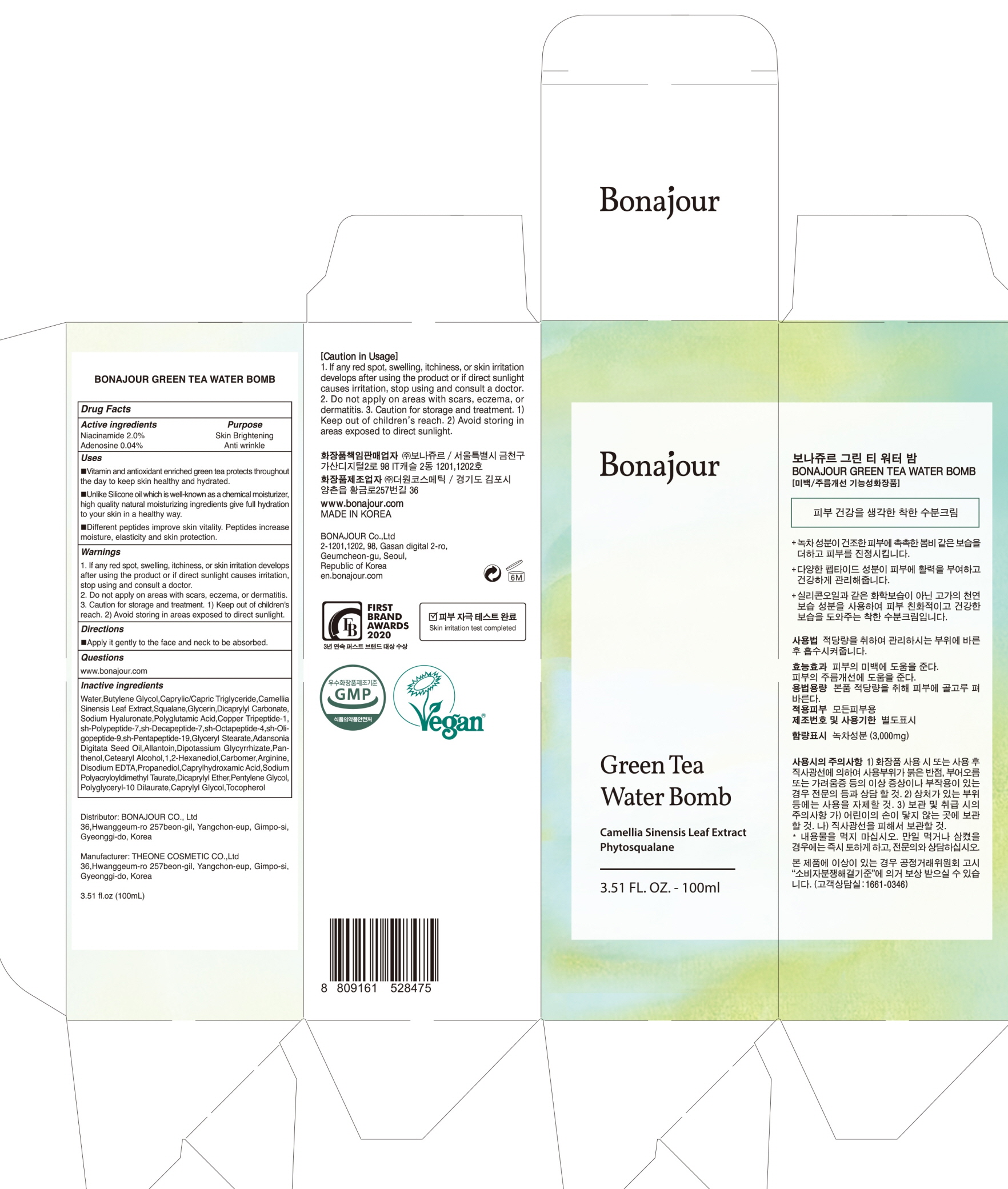
Image Of Carton (100 Carton)
Bonajour Green Tea Water Bomb is a skincare product enriched with niacinamide, green tea extract, and natural moisturizing ingredients. It helps to brighten the skin, reduce wrinkles, and maintain hydration throughout the day. It contains different peptides that improve the skin's elasticity and protects it from external damage. This product comes with a caution to stop usage if any irritation or swelling appears, avoid applying in areas of eczema or dermatitis and keep it out of direct sunlight. The product is made in Korea and is 100 ml in quantity.*
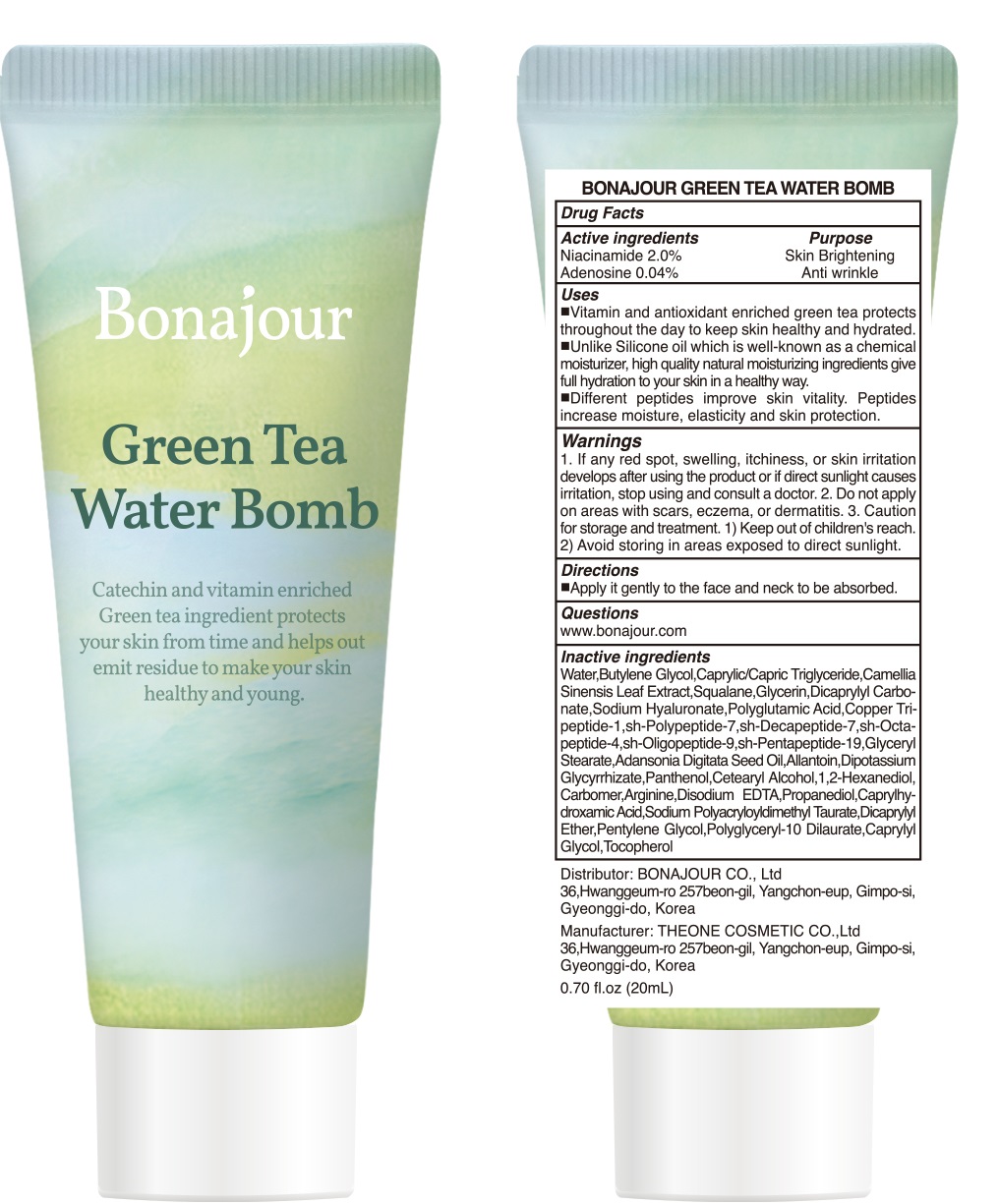
FDA Label Image

Image Of Tube (20 Tube)

Image Of Tube (20 Tube)
The Bonajour Green Tea Water Bomb is a skin care product that is enriched with catechin and vitamins. Its green tea ingredient helps protect the skin from aging and keeps it healthy by removing residue. The product is designed to keep the skin hydrated and improve its elasticity and protection by using different peptides. The active ingredients in the product are Niacinamide and Adenosine. The inactive ingredients include water, butylene glycol, and camellia sinensis leaf extract, among others. The product comes with warnings and directions for use. The distributor is Bonajour CO., Ltd, and the manufacturer is Theone Cosmetic Co. Ltd.*

* These product label images have been analyzed using experimental machine learning. Please verify findings with the primary label text.