Avodart
Product Images NDC 80725-712

View Photos of Packaging, Regulatory Labels, and Product Appearance

Product Visual Gallery

This gallery contains 9 technical images submitted to the FDA as part of the official labeling for Avodart (NDC 80725-712). Unlike standard consumer photos, these assets often include clinical data figures, molecular chemical structures, and official manufacturer packaging layouts.

As provided by Waylis Therapeutics Llc, these visuals offer a comprehensive scientific overview of the product's physical and chemical identity, aiding pharmacists and researchers in product verification and study.

FDA Label Image

Dutasteride Structural Formula (Avodart Spl Image 01)
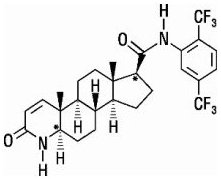
Dutasteride Structural Formula (Avodart Spl Image 01)
Chemical structure of dutasteride, the active ingredient in AVODART. The structure shows a steroid backbone with attached trifluoromethyl-substituted phenyl and amide functional groups, consistent with dutasteride's molecular structure.*
FDA Label Image

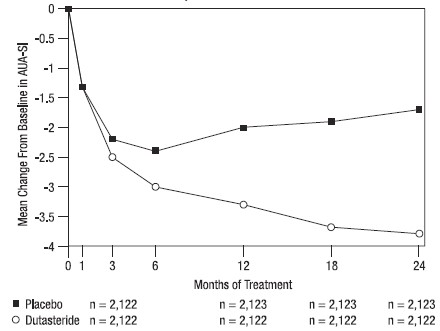
Figure 1. Aua-si Score* Change From Baseline (randomized, Double-blind, Placebo-controlled Studies Pooled) (Avodart Spl Image 02)

Figure 1. Aua-si Score* Change From Baseline (randomized, Double-blind, Placebo-controlled Studies Pooled) (Avodart Spl Image 02)
A line graph showing mean change from baseline in AUA-SI scores over 24 months of treatment, comparing Placebo and Dutasteride groups. The x-axis represents months of treatment, and the y-axis shows mean change values. Placebo data are marked with squares, Dutasteride data with circles, with sample sizes indicated below the axis.*
FDA Label Image

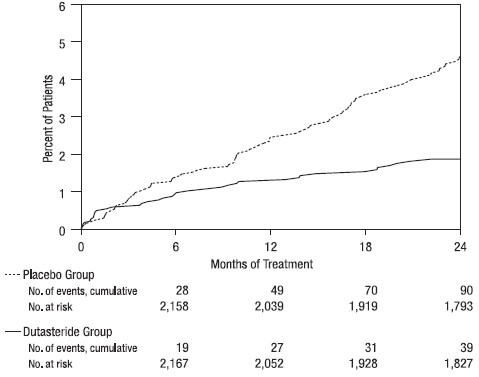
Figure 2. Percent Of Subjects Developing Acute Urinary Retention Over A 24-month Period (randomized, Double-blind, Placebo-controlled Studies Pooled) (Avodart Spl Image 03)

Figure 2. Percent Of Subjects Developing Acute Urinary Retention Over A 24-month Period (randomized, Double-blind, Placebo-controlled Studies Pooled) (Avodart Spl Image 03)
A line graph comparing cumulative percent of patients over 24 months of treatment between a placebo group and a dutasteride group, with the placebo group showing higher percentages throughout. The x-axis represents months of treatment and the y-axis represents percent of patients. The graph includes cumulative event counts and numbers at risk at multiple time points for both groups.*
FDA Label Image

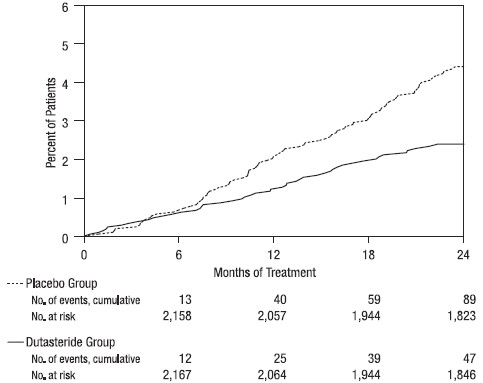
Figure 3. Percent Of Subjects Having Surgery For Benign Prostatic Hyperplasia Over A 24-month Period (randomized, Double-blind, Placebo-controlled Studies Pooled) (Avodart Spl Image 04)

Figure 3. Percent Of Subjects Having Surgery For Benign Prostatic Hyperplasia Over A 24-month Period (randomized, Double-blind, Placebo-controlled Studies Pooled) (Avodart Spl Image 04)
A line graph showing the cumulative percent of patients over 24 months of treatment comparing two groups: Placebo Group (dashed line) and Dutasteride Group (solid line). The x-axis represents months of treatment from 0 to 24, and the y-axis shows percent of patients from 0 to 6. Below the graph are tables of cumulative number of events and patients at risk for each group at 0, 6, 12, 18, and 24 months.*
FDA Label Image

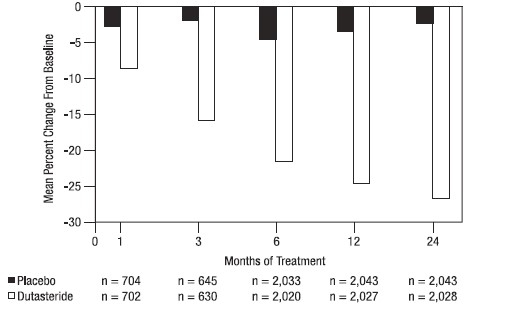
Figure 4. Prostate Volume Percent Change From Baseline (randomized, Double-blind, Placebo-controlled Studies Pooled) (Avodart Spl Image 05)

Figure 4. Prostate Volume Percent Change From Baseline (randomized, Double-blind, Placebo-controlled Studies Pooled) (Avodart Spl Image 05)
A bar chart depicting mean percent change from baseline over treatment months (0, 1, 3, 6, 12, and 24) comparing Placebo with Dutasteride. The chart shows values for each treatment duration with sample sizes (n) listed below for both groups. Dutasteride bars consistently show larger negative mean percent changes compared to Placebo.*
FDA Label Image

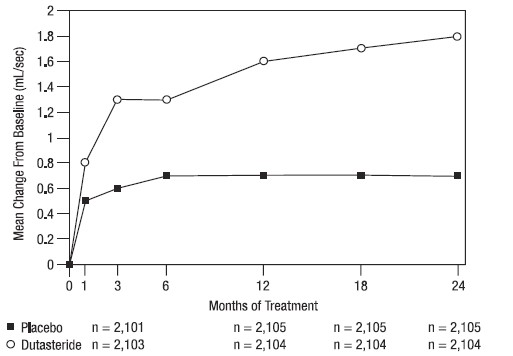
Figure 5. Qmax Change From Baseline (randomized, Double-blind, Placebo-controlled Studies Pooled) (Avodart Spl Image 06)

Figure 5. Qmax Change From Baseline (randomized, Double-blind, Placebo-controlled Studies Pooled) (Avodart Spl Image 06)
A line graph depicting mean change from baseline (mL/sec) over months of treatment for two groups: placebo and dutasteride. The x-axis shows treatment duration from 0 to 24 months, while the y-axis shows mean change from baseline, ranging from 0 to 2 mL/sec. Dutasteride data points (open circles) show a higher increase over time compared to placebo (filled squares). Sample sizes for each group at different time points are indicated.*
FDA Label Image

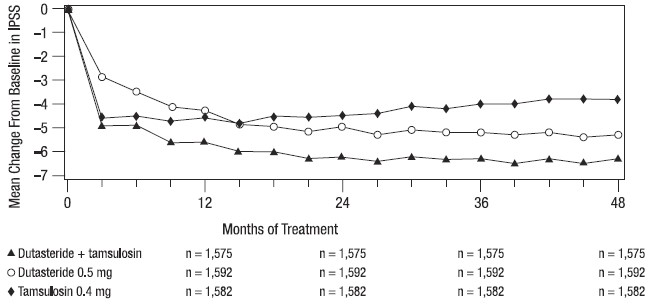
Figure 6. (Avodart Spl Image 07)

Figure 6. (Avodart Spl Image 07)
A line graph depicting mean change from baseline in IPSS (International Prostate Symptom Score) over 48 months of treatment. The chart compares three treatment groups: Dutasteride plus tamsulosin, dutasteride 0.5 mg, and tamsulosin 0.4 mg, showing symptom improvements over time for each group.*
FDA Label Image

Figure 7. Q-max Change Ffrom Baseline Over A 24-month Period (randomized, Double-blind, Parallel Group Study [combat Study]) (Avodart Spl Image 08)

Figure 7. Q-max Change Ffrom Baseline Over A 24-month Period (randomized, Double-blind, Parallel Group Study [combat Study]) (Avodart Spl Image 08)
A line graph depicting mean change from baseline in mL/sec over months of treatment (0, 6, 12, 18, 24) for three groups: Dutasteride + tamsulosin, Dutasteride 0.5 mg, and Tamsulosin 0.4 mg. Dutasteride + tamsulosin shows the greatest increase, followed by Dutasteride 0.5 mg, while Tamsulosin 0.4 mg remains near baseline.*
FDA Label Image

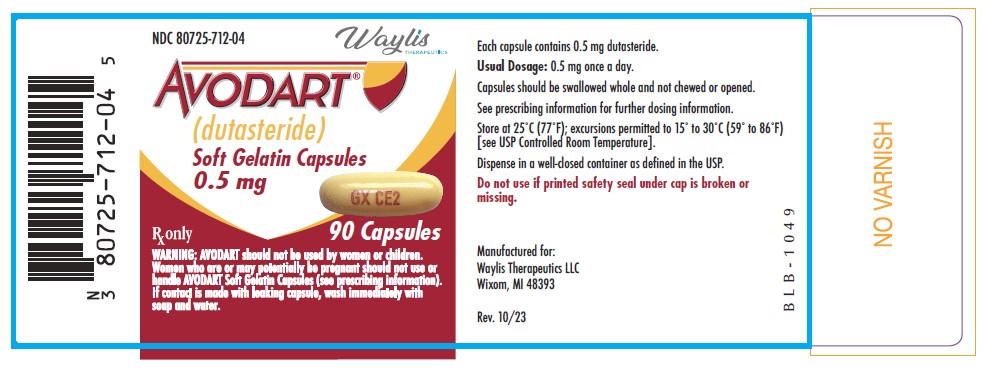
Avodart 0.5 mg 90 Count Label (Avodart Spl Image 09)

Avodart 0.5 mg 90 Count Label (Avodart Spl Image 09)
The image shows a label for AVODART soft gelatin capsules containing 0.5 mg dutasteride, with a quantity of 90 capsules. The label specifies the dosage, storage instructions, safety warnings, and manufacturer, Waylis Therapeutics LLC. The capsule image is embossed with "GX CE2" and the label includes a barcode and lot information.*

* About these descriptions: Image descriptions on this page are generated by automated AI analysis of the product label images from the manufacturer's FDA label submission (SPL). They are provided for reference only and may contain errors or omissions. Always rely on the printed label itself and the official FDA labeling, and consult a pharmacist or healthcare professional with any questions about this product.