Magic Wipes
Product Images NDC 80726-001

View Photos of Packaging, Regulatory Labels, and Product Appearance

Product Visual Gallery

This gallery contains 2 technical images submitted to the FDA as part of the official labeling for Magic Wipes (NDC 80726-001). Unlike standard consumer photos, these assets often include clinical data figures, molecular chemical structures, and official manufacturer packaging layouts.

As provided by Progresstech Endustriyel Muhendislik Limited Sirketi, these visuals offer a comprehensive scientific overview of the product's physical and chemical identity, aiding pharmacists and researchers in product verification and study.

FDA Label Image

B088f791 766e 975b E053 2a95a90ac417
B088f791 766e 975b E053 2a95a90ac417
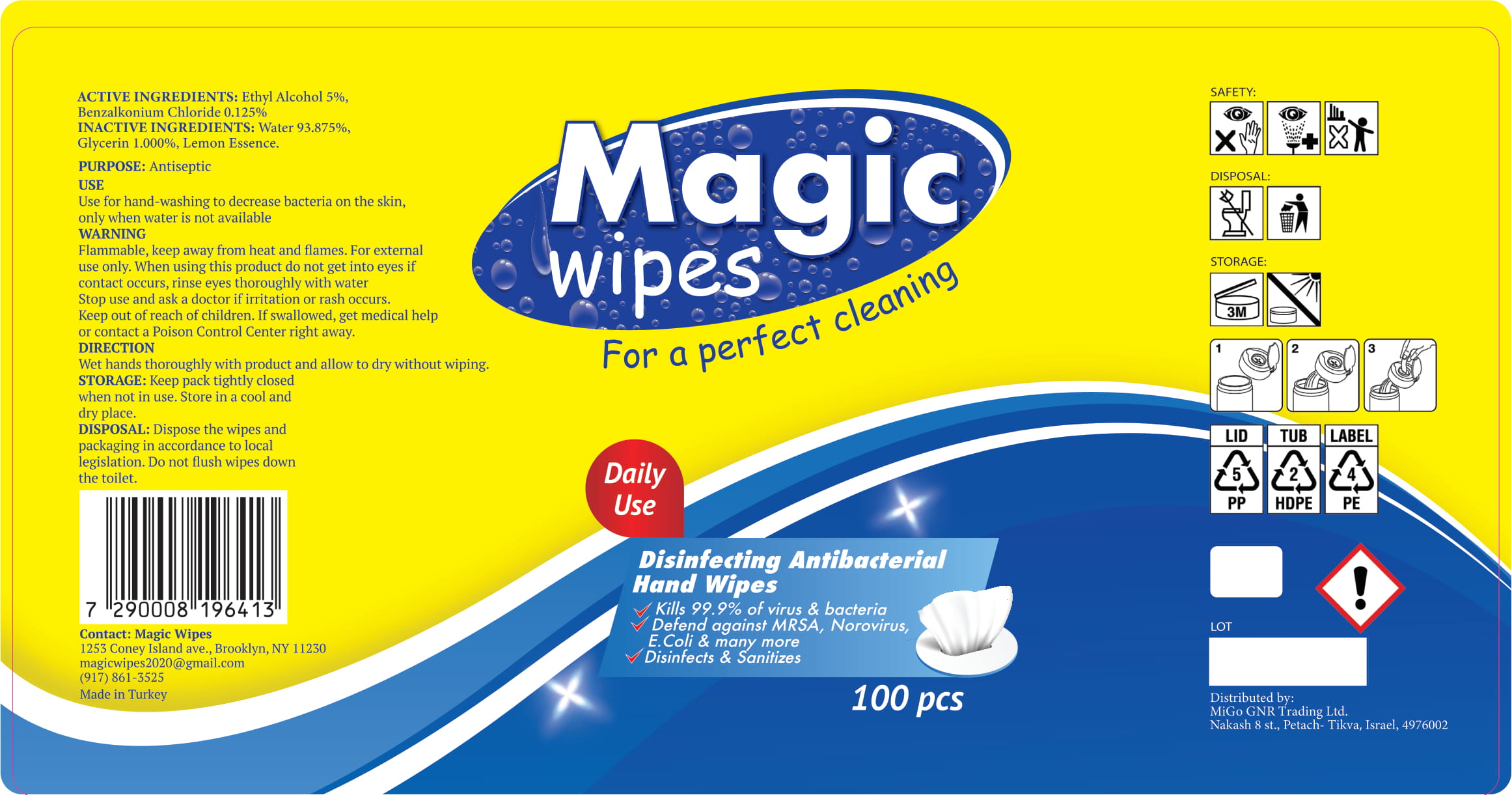
This text describes a disinfectant hand-wipe product that contains Ethyl Alcohol and Benzalkonium Chloride to decrease bacteria on the skin. It can be used for hand-washing when water is not available. The product is flammable and should be kept away from heat and flames. It should only be used externally and if contact with the eyes occurs, the eyes should be rinsed thoroughly with water. The wipes and packaging should be disposed of according to local legislation and should not be flushed down the toilet.*
FDA Label Image

1 (Label Migo)

1 (Label Migo)
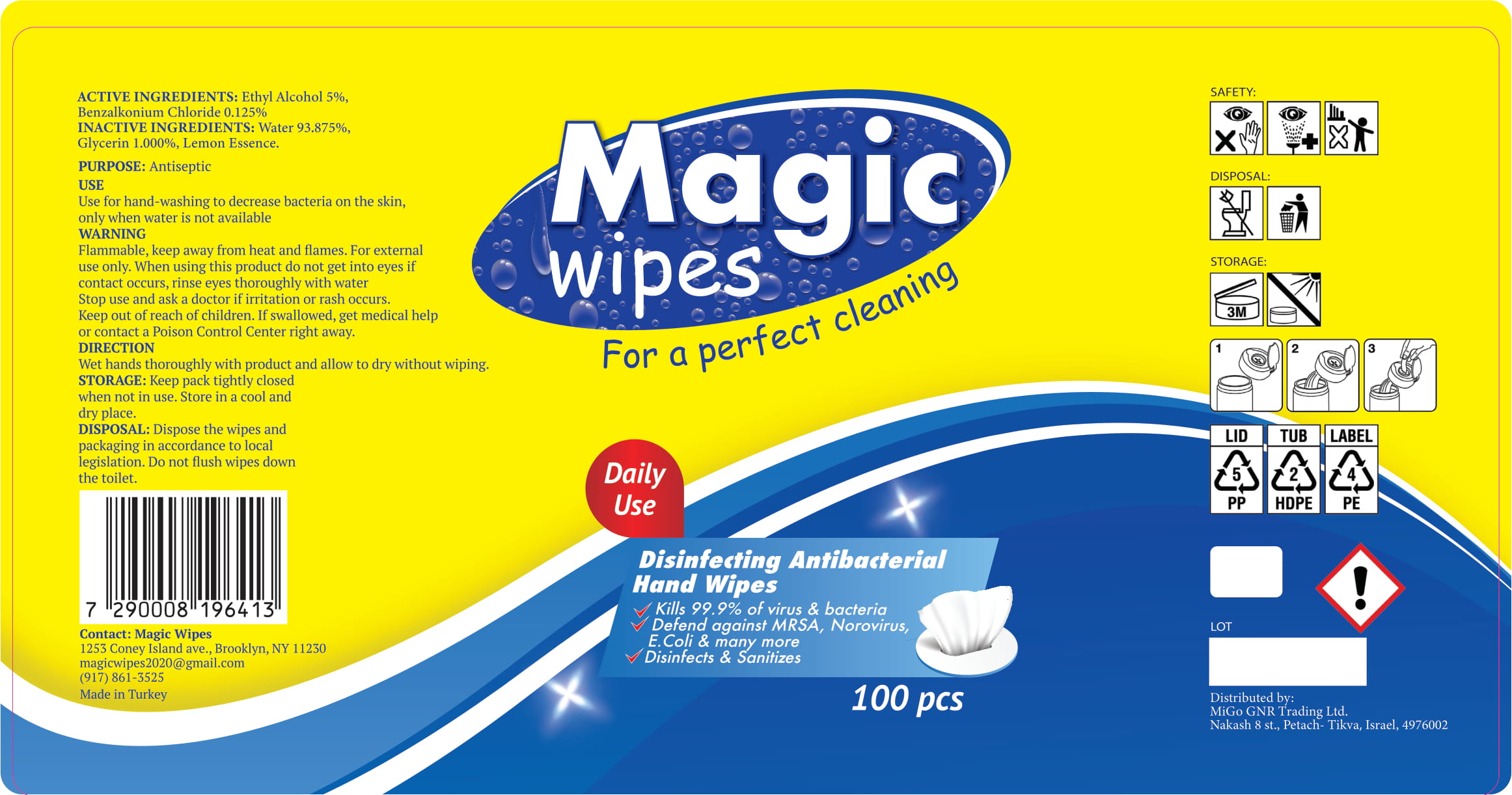
This is a disinfectant hand wipes packaging with 100 pieces of wipes, containing Ethyl Alcohol and Benzalkonium Chloride. It is used for hand-washing to decrease bacteria on the skin, whenever water is not available. The wipes are flammable, so they should be kept away from heat and flames. The users are warned not to get the product in their eyes, and to rinse their eyes thoroughly with water if that happens. It should be kept away from the reach of children and medical help should be sought if irritation or rash occurs. The wipes should be disposed of according to local legislation, and not be flushed down the toilet. The product is made by Magic Wipes and the company is based in Israel.*

* These product label images have been analyzed using experimental machine learning. Please verify findings with the primary label text.