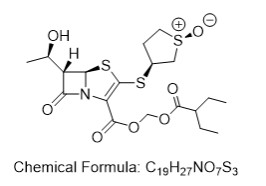
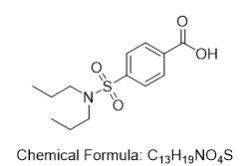
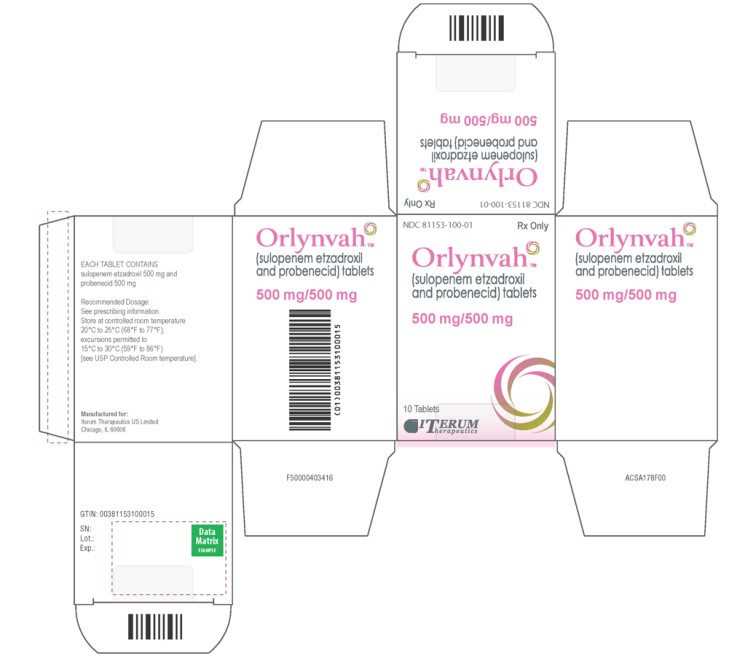
Because clinical trials are conducted under widely varying conditions, adverse reaction rates observed in the clinical trials of a drug cannot be directly compared to rates in the clinical trials of another drug and may not reflect rates observed in practice.
ORLYNVAH was evaluated in two Phase 3 controlled, multinational, randomized, double blind, double dummy clinical trials (Trial 1 and Trial 2) in adult women with uUTI. Therapy with oral ORLYNVAH tablets was administered as one tablet twice daily for 5 days [see Clinical Studies (14)]. The trials included 1932 patients treated with ORLYNVAH and 1929 patients treated with comparator antibacterial drugs (ciprofloxacin or amoxicillin/clavulanate). The median age of patients treated with ORLYNVAH was 50 years, ranging between 18 and 91 years old. Patients treated with ORLYNVAH were all female (100%), predominantly White (83%) and from the United States (83%).
Serious Adverse Reactions and Adverse Reactions Leading to Discontinuation
Serious adverse reactions occurred in 6/1932 (0.3%) of uUTI patients treated with ORLYNVAH and in 2/822 (0.2%) and 5/1107 (0.5%) of patients treated with ciprofloxacin or amoxicillin/clavulanate, respectively. Treatment discontinuation due to an adverse reaction occurred in 21/1932 (1%) of patients treated with ORLYNVAH, 8/822 (1%) of patients treated with ciprofloxacin, and 4/1107 (0.4%) of patients treated with amoxicillin/clavulanate. The most commonly reported adverse reactions leading to discontinuation of ORLYNVAH were nausea (6/1932; 0.3%), diarrhea (5/1932; 0.3%), as well as abdominal pain, gastroesophageal reflux disease, vomiting, and dizziness, each 0.2% (3/1932).
Most Common Adverse Reactions
Adverse reactions occurring at 2% or greater in patients receiving ORLYNVAH were diarrhea, nausea, vulvovaginal mycotic infection, headache, and vomiting.
Table 1 lists adverse reactions reported in ≥ 1% of patients receiving ORLYNVAH in the phase 3 uUTI trials (Trial 1 and Trial 2). The most common adverse reactions in patients treated with ORLYNVAH were diarrhea (10%) and nausea (4%).
Table 1. Adverse Reactions Occurring in ≥ 1% of Patients Receiving ORLYNVAH in the Uncomplicated Urinary Tract Infection Clinical Trials (Trial 1 and Trial 2)| Adverse Reaction | ORLYNVAHa
N=1932
n (%) | Amoxicillin/Clavulanateb
N=1107
n (%) | Ciprofloxacinc
N=822
n (%) |
| Diarrhea1 | 194 (10) | 45 (4) | 21 (3) |
| Nausea | 80 (4) | 32 (3) | 30 (4) |
| Vulvovaginal mycotic infection2 | 46 (2) | 13 (1) | 7 (1) |
| Headache | 42 (2) | 17 (2) | 18 (2) |
| Vomiting | 29 (2) | 4 (0.4) | 11 (1) |
| Abdominal pain3 | 22 (1) | 11 (1) | 9 (1) |
a ORLYNVAH tablets (sulopenem etzadroxil 500mg / probenecid 500mg) 1 tablet twice daily for 5 days; bAmoxicillin/clavulanate tablets (875 mg /125 mg) 1 tablet twice daily for 5 days cCiprofloxacin tablets (250 mg) 1 tablet twice daily for 3 days.
1 Diarrhea includes diarrhea and loose stools.
2 Vulvovaginal mycotic infection includes vulvovaginal mycotic infection, vulvovaginal candidiasis, vaginal infection, fungal infection, genital infection fungal, and yeast infection.
3Abdominal pain includes abdominal pain, abdominal pain lower, abdominal pain upper, and abdominal discomfort.
Other Adverse Reactions of ORLYNVAH
The following selected adverse reactions were reported in the ORLYNVAH-treated patients at a rate of < 1% in the uUTI Trial 1 and Trial 2:
Cardiac disorders: tachycardia
Ear and labyrinth disorders: vertigo
Gastrointestinal disorders: abdominal distension, abnormal feces, constipation, dry mouth, dyspepsia, eructation, feces discolored, feces soft, flatulence, gastroesophageal reflux disease
General disorders: asthenia, fatigue, malaise, peripheral edema, pain, pyrexia
Hepatobiliary disorders: elevated transaminases, hepatomegaly
Infections and infestations: bacterial vaginosis, Candida infection, candiduria
Metabolism and nutrition disorders: polydipsia
Musculoskeletal and connective tissue disorders: arthralgia, back pain, myositis
Nervous system disorders: ageusia, dizziness, dysgeusia, dystonia, migraine, paresthesia, presyncope, somnolence, syncope
Psychiatric disorders: confusion
Renal and urinary disorders: urine odor abnormal
Reproductive system and breast disorders: perineal pain, vaginal discharge, vulvovaginal pruritus
Respiratory disorders: cough, dyspnea
Skin and subcutaneous tissue disorders: angioedema, pruritus, rash
Vascular disorders: flushing, hypertension
Adverse Reactions Occurring with Probenecid (a component of ORLYNVAH)
The following adverse reactions associated with the use of probenecid (a component of ORLYNVAH) were identified in clinical studies or postmarketing reports. Because some of these reactions were reported voluntarily from a population of uncertain size, it is not always possible to reliably estimate their frequency or establish a causal relationship to drug exposure.
Adverse reactions not observed in clinical studies of ORLYNVAH that have been observed with probenecid (a component of ORLYNVAH) include:
Gastrointestinal disorders: hepatic necrosis, anorexia, sore gums
Hematologic: aplastic anemia, leukopenia, and hemolytic anemia which in some patients could be related to genetic deficiency of glucose-6-phosphate dehydrogenase in red blood cells, anemia
Immune system disorders: anaphylaxis, urticaria
Metabolism and nutrition disorders: precipitation of acute gouty arthritis
Renal and urinary disorders: nephrotic syndrome, uric acid stones with or without hematuria, renal colic, costovertebral pain, urinary frequency
Skin and subcutaneous tissue disorders: alopecia