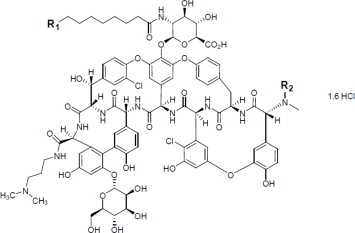
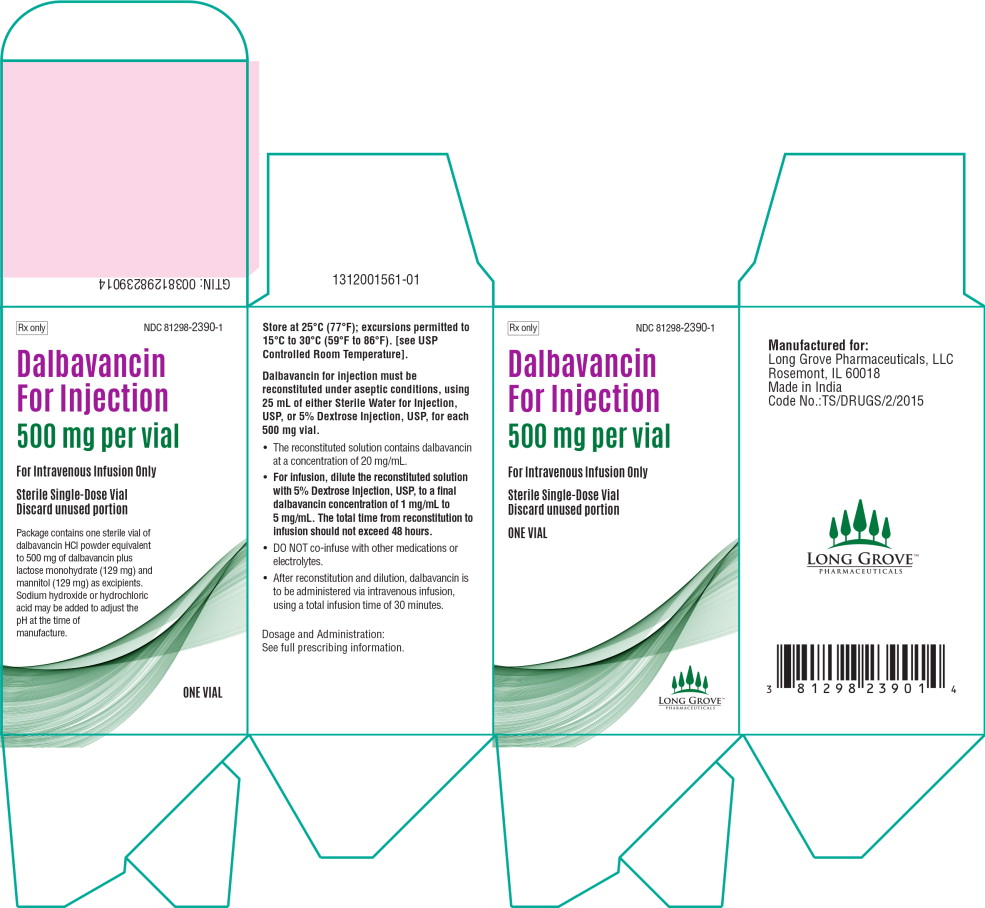
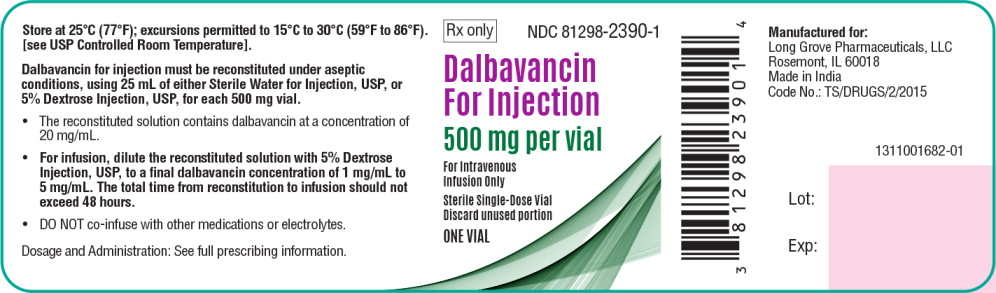
Reconstitution: Dalbavancin for injection must be reconstituted under aseptic conditions, using 25 mL of either Sterile Water for Injection, USP, or 5% Dextrose Injection, USP, for each 500 mg vial. To avoid foaming, alternate between gentle swirling and inversion of the vial until its contents are completely dissolved. Do not shake. The reconstituted vial contains 20 mg/mL dalbavancin as a clear, colorless to yellow solution.
Reconstituted vials may be stored either refrigerated at 2°C to 8°C (36°F to 46°F) or at controlled room temperature 20°C to 25°C (68°F to 77°F). Do not freeze.
Dilution:
Adult Patients: Aseptically transfer the required dose of reconstituted dalbavancin for injection solution from the vial(s) to an intravenous bag or bottle containing 5% Dextrose Injection, USP. The diluted solution must have a final dalbavancin concentration of 1 mg/mL to 5 mg/mL. Discard any unused portion of the reconstituted solution.
Pediatric Patients: For pediatric patients, the dose of dalbavancin for injection will vary according to the age and weight of the child up to a maximum of 1,500 mg [see Dosage and Administration (2.2)]. Aseptically transfer the required dose of reconstituted dalbavancin for injection solution, based on the child's weight, from the vial(s) to an intravenous bag or bottle containing 5% Dextrose Injection, USP. The diluted solution must have a final dalbavancin concentration of 1 mg/mL to 5 mg/mL. Discard any unused portion of the reconstituted solution.
Once diluted into an intravenous bag or bottle as described above, dalbavancin for injection may be stored either refrigerated at 2°C to 8°C (36°F to 46°F) or at a controlled room temperature of 20°C to 25°C (68°F to 77°F). Do not freeze.
The total time from reconstitution to dilution to administration should not exceed 48 hours.
Like all parenteral drug products, diluted dalbavancin for injection should be inspected visually for particulate matter prior to infusion. If particulate matter is identified, do not use.
Administration: After reconstitution and dilution, administer dalbavancin for injection via intravenous infusion, using a total infusion time of 30 minutes.
Do not co-infuse dalbavancin for injection with other medications or electrolytes. Saline-based infusion solutions may cause precipitation and should not be used. The compatibility of reconstituted dalbavancin for injection with intravenous medications, additives, or substances other than 5% Dextrose Injection, USP has not been established.
If a common intravenous line is being used to administer other drugs in addition to dalbavancin for injection, the line should be flushed before and after each dalbavancin for injection infusion with 5% Dextrose Injection, USP.
Clinical Trials Experience in Adult Patients
Adverse reactions were evaluated for 2,473 patients treated with dalbavancin for injection: 1,778 patients were treated with dalbavancin for injection in seven Phase 2/3 trials comparing dalbavancin for injection to comparator antibacterial drugs and 695 patients were treated with dalbavancin for injection in one Phase 3 trial comparing dalbavancin for injection single dose and another dalbavancin dosing regimen. The median age of patients treated with dalbavancin for injection was 48 years, ranging between 16 and 93 years. Patients treated with dalbavancin for injection were predominantly male (59.5%) and White (81.2%).
Serious Adverse Reactions and Adverse Reactions Leading to Discontinuation
Serious adverse reactions occurred in 121/2,473 (4.9%) of patients treated with any regimen of dalbavancin for injection. In the Phase 2/3 trials comparing dalbavancin for injection to comparator, serious adverse reactions occurred in 109/1,778 (6.1%) of patients in the dalbavancin for injection group and 80/1,224 (6.5%) of patients in the comparator group. In a Phase 3 trial comparing dalbavancin for injection single-dose and another dalbavancin dosing regimen, serious adverse reactions occurred in 7/349 (2.0%) of patients in the dalbavancin for injection single dose group and 5/346 (1.4%) of patients in another dalbavancin dosing regimen group. Dalbavancin for injection was discontinued due to an adverse reaction in 64/2,473 (2.6%) patients treated with any regimen of dalbavancin for injection. In the Phase 2/3 trials comparing dalbavancin for injection to comparator, dalbavancin for injection was discontinued due to an adverse reaction in 53/1,778 (3.0%) of patients in the dalbavancin for injection group and 35/1,224 (2.9%) of patients in the comparator group. In a Phase 3 trial comparing dalbavancin for injection single-dose and another dalbavancin dosing regimen, dalbavancin for injection was discontinued due to an adverse reaction in 6/349 (1.7%) of patients in the dalbavancin for injection single-dose group and 5/346 (1.4%) of patients in another dalbavancin dosing regimen group.
Most Common Adverse Reactions
The most common adverse reactions in patients treated with dalbavancin for injection in Phase 2/3 trials were nausea (5.5%), headache (4.7%), and diarrhea (4.4%). The median duration of adverse reactions was 3.0 days in patients treated with dalbavancin for injection. In the Phase 2/3 trials comparing dalbavancin for injection to comparator, the median duration of adverse reactions was 3.0 days for patients in the dalbavancin for injection group and 4.0 days in patients in the comparator group. In a Phase 3 trial comparing dalbavancin for injection single dose and another dalbavancin dosing regimen, the median duration of adverse reactions was 3.0 days for patients in the dalbavancin for injection single dose and another dalbavancin dosing regimen group.
Table 2 lists selected adverse reactions occurring in 2% or more of patients treated with dalbavancin for injection in Phase 2/3 clinical trials.
Table 2. Selected Adverse Reactions Occurring in ≥2% of Patients Receiving Dalbavancin for Injection in Phase 2/3 Trials (Number (%) of Patients)
|
| Adverse Reactions | Dalbavancin for Injection
(N = 1,778) | Comparator
*
(N = 1,224) |
| Nausea
| 98 (5.5)
| 78 (6.4)
|
| Diarrhea
| 79 (4.4)
| 72 (5.9)
|
| Headache
| 83 (4.7)
| 59 (4.8)
|
| Vomiting
| 50 (2.8)
| 37 (3)
|
| Rash
| 48 (2.7)
| 30 (2.4)
|
| Pruritus
| 38 (2.1)
| 41 (3.3)
|
In the Phase 3 trial comparing the single dose and another dalbavancin dosing regimen of dalbavancin for injection, the adverse reaction that occurred in 2% or more of patients treated with dalbavancin for injection was nausea (3.4% in the dalbavancin for injection single dose group and 2% in another dalbavancin dosing regimen group).
The following selected adverse reactions were reported in dalbavancin for injection treated patients at a rate of less than 2% in these clinical trials:
-
Blood and lymphatic system disorders: anemia, hemorrhagic anemia, leucopenia, neutropenia, thrombocytopenia, petechiae, eosinophilia, thrombocytosis
-
Gastrointestinal disorders: gastrointestinal hemorrhage, melena, hematochezia, abdominal pain
-
General disorders and administration site conditions: infusion-related reactions
-
Hepatobiliary disorders: hepatotoxicity
-
Immune system disorders: anaphylactic reaction
-
Infections and infestations: Clostridioides difficile colitis, oral candidiasis, vulvovaginal mycotic infection
-
Investigations: hepatic transaminases increased, blood alkaline phosphatase increased, international normalized ratio increased, blood lactate dehydrogenase increased, gamma-glutamyl transferase increased
-
Metabolism and nutrition disorders: hypoglycemia
-
Nervous system disorders: dizziness
-
Respiratory, thoracic and mediastinal disorders: bronchospasm
-
Skin and subcutaneous tissue disorders: rash, pruritus, urticaria
-
Vascular disorders: flushing, phlebitis, wound hemorrhage, spontaneous hematoma
Alanine Aminotransferase (ALT) Elevations
Among patients with normal baseline ALT levels treated with dalbavancin for injection 17 (0.8%) had post-baseline ALT elevations greater than 3 times the upper limit of normal (ULN) including five subjects with post-baseline ALT values greater than 10 times ULN. Among patients with normal baseline ALT levels treated with non-dalbavancin for injection comparators 2 (0.2%) had post-baseline ALT elevations greater than 3 times the upper limit of normal. Fifteen of the 17 patients treated with dalbavancin for injection and one comparator patient had underlying conditions which could affect liver enzymes, including chronic viral hepatitis, history of alcohol abuse and metabolic syndrome. In addition, one dalbavancin for injection-treated subject in a Phase 1 trial had post-baseline ALT elevations greater than 20 times ULN. ALT elevations were reversible in all subjects with follow-up assessments. No comparator-treated subject with normal baseline transaminases had post-baseline ALT elevation greater than 10 times ULN.
Clinical Trials Experience in Pediatric Patients
Adverse reactions were evaluated in one Phase 3 pediatric clinical trial which included 161 pediatric patients from birth to less than 18 years of age with ABSSSI treated with dalbavancin for injection (83 patients treated with a single dose of dalbavancin for injection and 78 patients treated with another dalbavancin dosing regimen group) and 30 patients treated with comparator agents for a treatment period up to 14 days. The median age of pediatric patients treated with dalbavancin for injection was 9 years, ranging from birth to <18 years. The majority of patients were male (62.3%) and White (89.0%).
The safety findings of dalbavancin for injection in pediatric patients were similar to those observed in adults.
Serious Adverse Reactions and Adverse Reactions Leading to Discontinuation
Serious adverse reactions (SARs) occurred in 3/161 (1.9%) of patients treated with dalbavancin for injection, all in the single-dose arm. There were no adverse reactions leading to dalbavancin for injection discontinuation.
Most Common Adverse Reactions
Most common adverse reaction occurring in more than 1% of pediatric patients 2/161 (1.2%) was pyrexia.
Other Adverse Reactions
The following selected adverse reactions were reported in dalbavancin for injection-treated patients at a rate of less than 1% in this pediatric clinical trial:
Gastrointestinal disorders: diarrhea
Nervous system disorders: dizziness
Skin and subcutaneous tissue disorders: pruritus
Risk Summary
There are no adequate and well-controlled studies with dalbavancin for injection use in pregnant women to evaluate for a drug-associated risk of major birth defects, miscarriage or adverse developmental outcomes.
No treatment-related malformations or embryo-fetal toxicity were observed in pregnant rats or rabbits at clinically relevant exposures of dalbavancin. Treatment of pregnant rats with dalbavancin at 3.5 times the human dose on an exposure basis during early embryonic development and from implantation to the end of lactation resulted in delayed fetal maturation and increased fetal loss, respectively [see Data].
The estimated background risk of major birth defects and miscarriage for the indicated population is unknown. All pregnancies have a background risk of birth defect, loss, or other adverse outcomes. In the U.S. general population, the estimated background risk of major birth defects and miscarriage in clinically recognized pregnancies is 2% to 4% and 15% to 20%, respectively.
Data
Animal Data
No evidence of embryo or fetal toxicity was found in the rat or rabbit at a dose of 15 mg/kg/day (1.2 and 0.7 times the human dose on an exposure basis, respectively). Delayed fetal maturation was observed in the rat at a dose of 45 mg/kg/day (3.5 times the human dose on an exposure basis).
In a rat prenatal and postnatal development study, increased embryo lethality and increased offspring deaths during the first week post-partum were observed at a dose of 45 mg/kg/day (3.5 times the human dose on an exposure basis).
Risk Summary
There are no data on the presence of dalbavancin or its metabolite in human milk, the effects on the breast-fed child, or the effects on milk production. Dalbavancin is excreted in the milk of lactating rats. When a drug is present in animal milk, it is likely that the drug will be present in human milk.
The developmental and health benefits of breastfeeding should be considered along with the mother's clinical need for dalbavancin for injection and any potential adverse effects on the breast-fed child from dalbavancin for injection or from the underlying maternal condition.
Cardiac Electrophysiology
In a randomized, positive-and placebo-controlled, thorough QT/QTc study, 200 healthy subjects received dalbavancin 1,000 mg intravenous, dalbavancin 1,500 mg intravenous, oral moxifloxacin 400 mg, or placebo. Neither dalbavancin 1,000 mg nor dalbavancin 1,500 mg had any clinically relevant adverse effect on cardiac repolarization.
General Pharmacokinetic Properties
Dalbavancin pharmacokinetic parameters have been characterized in healthy subjects, patients, and specific populations. Pharmacokinetic parameters following administration of single intravenous 1,000 mg and 1,500 mg doses were as shown in Table 4. The pharmacokinetics of dalbavancin can be described using a three-compartment model.
Table 4. Dalbavancin Pharmacokinetic Parameters in Healthy Subjects
|
|
|
|
|
|
| Parameter | Single 1,000 mg Dose | Single 1,500 mg Dose |
| Cmax (mg/L)
| 287 (13.9)1 | 423 (13.2)4 |
| AUC0-24 (mg•h/L)
| 3,185 (12.8)1 | 4,837 (13.7)4 |
| AUC0-Day7 (mg•h/L)
| 11,160 (41.1)2 | ND
|
| AUC0-inf (mg•h/L)
| 23,443 (40.9)2 | ND
|
| Terminal t½ (h)
| 346 (16.5)2,3 | ND
|
| CL (L/h)
| 0.0513 (46.8)2 | ND
|
In healthy subjects, dalbavancin AUC0-24h and Cmax both increased proportionally to dose following single intravenous dalbavancin doses ranging from 140 mg to 1,500 mg, indicating linear pharmacokinetics.
No apparent accumulation of dalbavancin was observed following multiple intravenous infusions administered once weekly for up to eight weeks, with 1,000 mg on Day 1 followed by up to seven weekly 500 mg doses, in healthy adults with normal renal function.
Distribution
Dalbavancin is reversibly bound to human plasma proteins, primarily to albumin. The plasma protein binding of dalbavancin is approximately 93% and is not altered as a function of drug concentration, renal impairment, or hepatic impairment. The mean concentrations of dalbavancin achieved in skin blister fluid remain above 30 mg/L up to 7 days (approximately 146 hours) post dose, following 1,000 mg intravenous dalbavancin. The mean ratio of the AUC0-144 hrs in skin blister fluid/AUC0-144 hrs in plasma is 0.60 (range 0.44 to 0.64).
Metabolism
In vitro studies using human microsomal enzymes and hepatocytes indicate that dalbavancin is not a substrate, inhibitor, or inducer of CYP450 isoenzymes. A minor metabolite of dalbavancin (hydroxy-dalbavancin) has been observed in the urine of healthy subjects. Quantifiable concentrations of the hydroxy-dalbavancin metabolite have not been observed in human plasma (lower limit of quantitation = 0.4 μg/mL) [see Drug Interactions (7.2)].
Excretion
Following administration of a single 1,000 mg dose in healthy subjects, 20% of the dose was excreted in feces through 70 days post dose. An average of 33% of the administered dalbavancin dose was excreted in urine as unchanged dalbavancin and approximately 12% of the administered dose was excreted in urine as the metabolite hydroxy-dalbavancin through 42 days post dose.
Specific Populations
Renal Impairment
The pharmacokinetics of dalbavancin were evaluated in 28 subjects with varying degrees of renal impairment and in 15 matched control subjects with normal renal function.
Following a single dose of 500 mg or 1,000 mg dalbavancin, the mean plasma clearance (CLT) was reduced 11%, 35%, and 47% in subjects with CLcr 50 to 79 mL/min, CLcr 30 to 49 mL/min), and CLcr less than 30 mL/min, respectively, compared to subjects with normal renal function. The clinical significance of the decrease in mean plasma CLT, and the associated increase in AUC0-∞ noted in these pharmacokinetic studies of dalbavancin in subjects with CLcr less than 30 mL/min has not been established [see Dosage and Administration (2.3), Use in Specific Populations (8.6)].
Dalbavancin pharmacokinetic parameters in subjects with end-stage renal disease receiving regularly scheduled hemodialysis (three times/week) are similar to those observed in subjects with mild to moderate renal impairment, and less than 6% of an administered dose is removed after three hours of hemodialysis.
Therefore, no dosage adjustment is recommended for patients receiving regularly scheduled hemodialysis, and dalbavancin may be administered without regard to the timing of hemodialysis in such patients [see Dosage and Administration (2.1), Overdosage (10)].
Hepatic Impairment
The pharmacokinetics of dalbavancin were evaluated in 17 subjects with mild, moderate, or severe hepatic impairment (Child-Pugh class A, B or C) and compared to those in nine matched healthy subjects with normal hepatic function. The mean AUC0-336 hrs was unchanged in subjects with mild hepatic impairment compared to subjects with normal hepatic function; however, the mean AUC0-336 hrs decreased 28% and 31% in subjects with moderate and severe hepatic impairment respectively, compared to subjects with normal hepatic function. The clinical significance of the decreased AUC0-336 hrs in subjects with moderate and severe hepatic function is unknown.
No dosage adjustment is recommended for patients with mild hepatic impairment. Caution should be exercised when prescribing dalbavancin to patients with moderate or severe hepatic impairment as no data are available to determine the appropriate dosing.
Gender
Clinically significant gender-related differences in dalbavancin pharmacokinetics have not been observed either in healthy subjects or in patients with infections. No dosage adjustment is recommended based on gender.
Geriatric Patients
Clinically significant age-related differences in dalbavancin pharmacokinetics have not been observed in patients with infections. No dosage adjustment is recommended based solely on age.
Pediatric Patients
The pharmacokinetics of dalbavancin has been evaluated in 211 individual pediatric patients [4 days to 17.9 years of age, including a preterm neonate (gestational age 36 weeks; n=1) and term neonates (gestational age 37 to 40 weeks; n=4)] with CLcr 30 mL/min/1.73 m2 and above. There is insufficient information to assess the exposure of dalbavancin for injection in the pediatric patients with CLcr less than 30 mL/min/1.73 m 2 . No clinically important differences in drug exposure between pediatric age groups (including preterm neonates) and adults are expected following administration of the age-dependent recommended single dose of dalbavancin for injection. The median plasma AUC from 0 to 120 hours (AUC0-120h) of dalbavancin in pediatric patient age groups from term neonates at birth to less than 18 years is expected to be comparable to that in adult patients (AUC0-120h, 10,400 mg*h/L). The expected median plasma AUC0-120h of dalbavancin in preterm neonates at birth (gestational age 26 weeks to <37 weeks) was approximately 62% of that in adult patients. The expected median maximum plasma concentrations of dalbavancin for pediatric patient age groups ranged between approximately 53% to 73% of that in adult patients (Cmax, 412 mg/L). However, in all pediatric age groups, the percentage of patients attaining PK/PD targets related to in vivo drug activity were above 90% or higher for MICs up to 0.25 mg/L..
Drug Interactions
Nonclinical studies demonstrated that dalbavancin is not a substrate, inhibitor, or inducer of CYP450 isoenzymes. In a population pharmacokinetic analysis, dalbavancin pharmacokinetics were not affected by co-administration with known CYP450 substrates, inducers or inhibitors, nor by individual medications including acetaminophen, aztreonam, fentanyl, metronidazole, furosemide, proton pump inhibitors (omeprazole, esomeprazole, pantoprazole, lansoprazole), midazolam, and simvastatin.
Mechanism of Action
Dalbavancin, a semisynthetic lipoglycopeptide, interferes with cell wall synthesis by binding to the D-alanyl-D-alanine terminus of the stem pentapeptide in nascent cell wall peptidoglycan, thus preventing cross-linking. Dalbavancin is bactericidal in vitro against Staphylococcus aureus and Streptococcus pyogenes at concentrations similar to those sustained throughout treatment in humans treated according to the recommended dosage regimen.
Resistance
The development of bacterial isolates resistant to dalbavancin has not been observed, either in vitro, in studies using serial passage, or in animal infection experiments.
Interaction with Other Antimicrobials
When tested in vitro, dalbavancin demonstrated synergistic interactions with oxacillin and did not demonstrate antagonistic or synergistic interactions with any of the following antibacterial agents of various classes: gentamicin, vancomycin, levofloxacin, clindamycin, quinupristin/dalfopristin, linezolid, aztreonam, rifampin or daptomycin. The clinical significance of these in vitro findings is unknown.
Antimicrobial Activity
Dalbavancin has been shown to be active against the following microorganisms, both in vitro and in clinical infections [see Indications and Usage (1)].
Aerobic bacteria
-
Gram-positive bacteria
-
Staphylococcus aureus (including methicillin-resistant isolates)
-
Streptococcus pyogenes
-
Streptococcus agalactiae
-
Streptococcus dysgalactiae
-
Streptococcus anginosus group (including S. anginosus, S. intermedius, S. constellatus)
-
Enterococcus faecalis (vancomycin-susceptible isolates only)
The following in vitro data are available, but their clinical significance is unknown. At least 90 percent of the following bacteria exhibit an in vitro minimum inhibitory concentration (MIC) less than or equal to the susceptible breakpoint for dalbavancin against isolates of similar genus or organism group. However, the efficacy of dalbavancin in treating clinical infections caused by these bacteria has not been established in adequate well-controlled clinical trials.
Aerobic bacteria
-
Gram-positive bacteria
-
Enterococcus faecium (vancomycin-susceptible isolates only)
Susceptibility Testing
For specific information regarding susceptibility test interpretive criteria and associated test methods and quality control standards recognized by FDA for this drug, please see: https://www.fda.gov/STIC.
Carcinogenesis
Long-term studies in animals to determine the carcinogenic potential of dalbavancin have not been conducted.
Mutagenesis
Dalbavancin was not genotoxic in a bacterial reverse mutation (Ames) assay, a mammalian HGPRT gene mutation assay, an in vitro chromosome aberration assay in Chinese Hamster Ovary cells, or an in vivo mouse micronucleus assay.
Impairment of Fertility
Impaired fertility in the rat was not observed at a dose of 15 mg/kg/day (1.2 times the human dose on an exposure basis). Reductions in male and female fertility and increased embryo resorptions occurred at a dose of 45 mg/kg/day (3.5 times the human dose on an exposure basis), at which signs of parental toxicity were also observed.
Clinical Studies of Dalbavancin for Injection in Adult Patients with Acute Bacterial Skin and Skin Structure Infections
Dalbavancin for injection 1,500 mg Single Dose Regimen
Adult patients with ABSSSI were enrolled in a Phase 3, double-blind, clinical trial. The ITT population included 698 patients who were randomized to dalbavancin for injection treatment with either a single 1,500 mg dose or another dalbavancin dosing regimen (Trial 3). Patients with creatinine clearance less than 30 mL/min had their dose adjusted (Section 2.3). Approximately 5% of patients also received a protocol-specified empiric course of treatment with intravenous aztreonam for coverage of Gram-negative pathogens. The specific infections and other patient characteristics in this trial were similar to those described above for previous ABSSSI trials.
The primary endpoint in this ABSSSI trial was the clinical response rate where responders were defined as patients who had at least a 20% decrease from baseline in lesion area 48 to 72 hours after randomization without receiving any rescue antibacterial therapy. The secondary endpoint was the clinical success rate at a follow-up visit occurring between Days 26 and 30, with clinical success defined as having at least a 90% decrease from baseline in lesion size, a temperature of 37.6° C or lower, and meeting pre-specified criteria for local signs: purulent discharge and drainage absent or mild and improved from baseline (for patients with wound infections), heat/warmth and fluctuance absent, swelling/induration and tenderness to palpation absent or mild. Table 9 summarizes results for these two endpoints in the ITT population. Note that there are insufficient historical data to establish the magnitude of drug effect for antibacterial drugs compared with placebo at the follow-up visit. Therefore, comparisons between treatment groups based on clinical success rates at this visit cannot be utilized to establish non-inferiority.
Table 9. Primary and Secondary Efficacy Results in ABSSSI Patients (Trial 3) 1, 2 |
|
|
|
| Dalbavancin for Injection, n/N (%) | |
| Single Dose
(1,500 mg) | Another Dalbavancin Dosing Regimen | Difference (95% CI)3 |
| Clinical Responders at 48-72 Hours (ITT)
| 284/349 (81.4)
| 294/349 (84.2)
| -2.9 (-8.5, 2.8)
|
| Clinical Success at Day 26-30 (ITT)
| 295/349 (84.5)
| 297/349 (85.1)
| -0.6 (-6.0, 4.8)
|
| Clinical Success at Day 26-30 (CE)
| 250/271 (92.3)
| 247/267 (92.5)
| -0.3 (-4.9, 4.4)
|
Table 10 shows outcomes in patients with an identified baseline pathogen from Trial 3 in the microbiological ITT (microITT) population. The outcomes shown in the table are clinical response rates at 48 to 72 hours and clinical success rates at follow-up (Day 26 to 30), as defined above.
Table 10. Outcomes by Baseline Pathogen (Trial 3; MicroITT)
| Early Clinical Response at 48-72 hours | | |
| ≥ 20% reduction in lesion size | Clinical Success at Day 26 to 30 |
| Pathogen | Single dose
(1,500 mg)
n/N (%) | Another Dalbavancin Dosing Regimen
n/N (%) | Single dose
(1,500 mg)
n/N (%) | Another Dalbavancin Dosing Regimen
n/N (%) |
| Staphylococcus aureus
| 123/139 (88.5)
| 133/156 (85.3%)
| 124/139 (89.2)
| 140/156 (89.7)
|
| Methicillin-susceptible
| 92/103 (89.3)
| 89/96 (89.6)
| 93/103 (90.3)
| 86/96 (89.6)
|
| Methicillin-resistant
| 31/36 (86.1)
| 48/61 (78.7)
| 31/36 (86.1)
| 55/61 (90.2)
|
| Streptococcus agalactiae | 6/6(100.0)
| 4/6 (66/7)
| 5/6 (83.3)
| 5/6 (83.3)
|
| Streptococcus anginosus group | 31/33 (93.9)
| 19/19 (100.0)
| 29/33 (87.9)
| 17/19 (89.5)
|
| Streptococcus pyogenes | 14/14 (100.0)
| 18/22 (81.8)
| 13/14 (92.9)
| 19/22 (86.4)
|
| Enterococcus faecalis | 4/4 (100.0)
| 8/10 (80.0)
| 4/4 (100.0)
| 9/10 (90.0)
|
In Trials 1, 2, and 3, all patients had blood cultures obtained at baseline. A total of 40 ABSSSI patients who received dalbavancin for injection had bacteremia at baseline caused by one or more of the following bacteria: 26 S. aureus (21 MSSA and 5 MRSA), 6 S. agalactiae, 7 S. pyogenes, 2 S. anginosus group, and 1 E. faecalis. In patients who received dalbavancin for injection, a total of 34/40 (85%) were clinical responders at 48-72 hours and 32/40 (80%) were clinical successes at Day 26 to 30.
Clinical Studies of Dalbavancin for Injection in Pediatric Patients with Acute Bacterial Skin and Skin Structure Infections
The pediatric trial was a multicenter, open-label, randomized, actively controlled trial (NCT02814916, Trial 4) conducted in pediatric patients 3 months of age to less than 18 years with ABSSSI, not known or expected to be caused exclusively by Gram-negative organisms. Patients were randomized in a 3:3:1 ratio to receive either dalbavancin for injection single-dose regimen, another dalbavancin for injection dosing regimen, or comparator. The comparator regimens included IV vancomycin for methicillin-resistant Gram-positive infections, or IV oxacillin or flucloxacillin for methicillin-susceptible Gram-positive infections. Patients in the comparator arm received IV treatment for a minimum of 72 hours before an optional switch to oral therapy to complete a total of 10-14 days of antibacterial drug therapy. Additional 5 patients from birth to < 3 months of age were enrolled and assigned to the dalbavancin for injection single-dose regimen.
A study population of 191 pediatric patients received study medication (dalbavancin for injection single dose regimen n=83, another dalbavancin for injection dosing regimen n=78, comparator n=30); 62% of the patients were male and 89% were white, and 83% were from Eastern Europe. The pediatric age groups who received dalbavancin for injection were as follows: 12 to < 18 years (n=58), 6 to < 12 years (n=49), 2 to < 6 years (n=35), 3 months to < 2 years (n=14), and birth < 3 months (n=5). Patients had diagnoses of major cutaneous abscess (53%), cellulitis (29%), or surgical site/traumatic wound infection (18%). The predominant pathogen at baseline was Staphylococcus aureus (84%).
The primary objective was to evaluate the safety and tolerability of dalbavancin for injection. The trial was not powered for a comparative inferential efficacy analysis. Efficacy was assessed in the modified intent-to-treat population (n=183) which included all randomized patients who received any dose of study drug and had a diagnosis of ABSSSI caused by Gram-positive organism(s). Patients with ABSSSI only caused by Gram-negative organisms were excluded. The five patients in the age group birth to < 3 months of age were not included in efficacy analyses since they were enrolled with expanded inclusion criteria and only received the single dose dalbavancin for injection regimen. An early clinical response at 48–72 hours was defined as ≥ 20% reduction in lesion size compared to baseline and no receipt of rescue antibacterial therapy. The proportion of patients with early clinical response, was 97.3% (73/75) in the dalbavancin for injection single-dose arm, 93.6% (73/78) in another dalbavancin for injection dosing regimen arm, and 86.7% (26/30) in the comparator arm. The difference in responder rates between the dalbavancin single-dose and comparator arms was 10.7%, with an exact 97.5% confidence interval (CI) of (-1.7%, 31.6%). The difference in responder rates between another dalbavancin dosing regimen and comparator arms was 6.9%, with an exact 97.5% CI of (-6.4%, 27.7%).
Clinical cure was defined as resolution of the clinical signs and symptoms of infection, when compared to baseline, and no additional antibacterial treatment for the disease under study. In patients, 3 months of age or older in the mITT population, the clinical cure rate at the test of cure (TOC) visit (28 ± 2 days) was 94.7% (71/75) in the dalbavancin for injection single-dose arm, 92.3% (72/78) in another dalbavancin for injection dosing regimen arm and 100% (30/30) in the comparator arm. The difference in cure rates between the dalbavancin single-dose and comparator arms was -5.3%, with an exact 97.5% CI of (-15.1%, 10.5%). The difference in cure rates between another dalbavancin dosing regimen and comparator arms was -7.7%, with an exact 97.5% CI (-17.9%, 8.3%).
.
Allergic Reactions
Advise patients that allergic reactions, including serious allergic reactions, could occur with dalbavancin for injection, and that serious allergic reactions require immediate treatment. Patients should inform their healthcare provider about any previous hypersensitivity reactions to dalbavancin for injection, or other glycopeptides [see Warnings and Precautions (5.1)].
Diarrhea
Advise patients that diarrhea is a common problem caused by antibacterial drugs, including dalbavancin for injection and usually resolves when the drug is discontinued. Sometimes, frequent watery or bloody diarrhea may occur and may be a sign of a more serious intestinal infection. If severe watery or bloody diarrhea develops, patients should contact their healthcare provider [see Warnings and Precautions (5.4)].
Development of Drug-Resistant Bacteria
Patients should be counseled that antibacterial drugs including dalbavancin for injection should only be used to treat bacterial infections. They do not treat viral infections (e.g., the common cold). When dalbavancin for injection is prescribed to treat a bacterial infection, patients should be told that although it is common to feel better early in the course of therapy, the medication should be taken exactly as directed. Skipping doses or not completing the full course of therapy may (1) decrease the effectiveness of the immediate treatment, and (2) increase the likelihood that bacteria will develop resistance and will not be treatable by dalbavancin for injection or other antibacterial drugs in the future [see Warnings and Precautions (5.5)].
Manufactured for:
Long Grove Pharmaceuticals, LLC
Rosemont, IL 60018