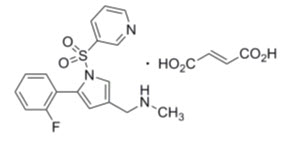
- Triple Therapy: The recommended adult oral dosage is VOQUEZNA 20 mg plus amoxicillin 1,000 mg plus clarithromycin 500 mg, each given twice daily (in the morning and evening, 12 hours apart) for 14 days.
- Dual Therapy: The recommended adult oral dose is VOQUEZNA 20 mg given twice daily (in the morning and evening) plus amoxicillin 1,000 mg three times daily (in the morning, mid-day, and evening) for 14 days.
- Also refer to the amoxicillin and clarithromycin full prescribing information.
Healing of Erosive Esophagitis
The recommended dosage of VOQUEZNA in adult patients with renal impairment is described in Table 1 below [see Use in Specific Populations (8.6) and Clinical Pharmacology (12.3)].
Table 1: Recommended VOQUEZNA Dosage in Patients with Renal Impairment: Healing of Erosive Esophagitis| Estimated glomerular filtration rate (GFR) | Recommended Dosage |
|---|
| 30 mL/minute or greater | 20 mg once daily |
| Less than 30 mL/minute | 10 mg once daily |
Maintenance of Healed Erosive Esophagitis
The recommended dosage of VOQUEZNA in adult patients with renal impairment is the same as for adult patients with normal renal function [see Dosage and Administration (2.1)].
Treatment of H. pylori Infection
The recommended dosage of VOQUEZNA in adult patients with renal impairment is described in Table 2 below [see Use in Specific Populations (8.6) and Clinical Pharmacology (12.3)].
Table 2: Recommended VOQUEZNA Dosage in Patients with Renal Impairment: Treatment of H. pylori InfectionAlso refer to the Dosage and Administration section of the amoxicillin and clarithromycin prescribing information for dosage recommendations in patients with renal impairment.
| Estimated GFR | Recommended Dosage |
|---|
| 30 mL/minute or greater | 20 mg twice daily |
| Less than 30 mL/minute | Use is not recommended |
Healing of Erosive Esophagitis
The recommended dosage of VOQUEZNA in adult patients with hepatic impairment is described in Table 3 below [see Use in Specific Populations (8.7) and Clinical Pharmacology (12.3)].
Table 3: Recommended VOQUEZNA Dosage in Patients with Hepatic Impairment: Healing of Erosive Esophagitis| Classification | Recommended Dosage |
|---|
| Child-Pugh Class A | 20 mg once daily |
| Child-Pugh Class B | 10 mg once daily |
| Child-Pugh Class C | 10 mg once daily |
Maintenance of Healed Erosive Esophagitis
The recommended dosage of VOQUEZNA in adult patients with hepatic impairment is the same as for patients with normal hepatic function [see Dosage and Administration (2.1)].
Treatment of H. pylori Infection
The recommended dosage of VOQUEZNA in adult patients with hepatic impairment is described in Table 4 below [see Use in Specific Populations (8.7) and Clinical Pharmacology (12.3)].
Table 4: Recommended VOQUEZNA Dosage in Patients with Hepatic Impairment: Treatment of H. pylori Infection| Classification | Recommended Dosage |
|---|
| Child-Pugh Class A | 20 mg twice daily |
| Child-Pugh Class B | Use is not recommended |
| Child-Pugh Class C | Use is not recommended |
Healing of Erosive Esophagitis and Maintenance of Healed Erosive Esophagitis
The safety of VOQUEZNA was evaluated in a randomized, active-controlled, double-blind two phase trial for the healing of erosive esophagitis (2 to 8 weeks) and maintenance of healed erosive esophagitis (through 24 weeks) conducted in the United States and Europe [see Clinical Studies (14.1), (14.2)].
Adverse reactions reported in at least 2% of patients in the VOQUEZNA arm in the healing phase are presented in Table 5.
Table 5: Adverse ReactionsReported in at least 2% of patients in the VOQUEZNA arm.
in a Clinical Trial of Adult Patients with All Grades of Erosive EsophagitisThe trial was not designed to support comparative claims for VOQUEZNA for the adverse reactions reported in this table.
(2 to 8 Week Healing Phase)| Adverse Reactions | VOQUEZNA
20 mg Once Daily
N=514
% | Lansoprazole
30 mg Once Daily
N=510
% |
|---|
| Gastritis Represents a grouped term and includes related terms. | 3 | 2 |
| Diarrhea | 2 | 3 |
| Abdominal distension | 2 | 1 |
| Abdominal pain | 2 | 1 |
| Nausea | 2 | 1 |
Adverse reactions reported in at least 3% of patients in the VOQUEZNA arm of the maintenance phase are shown in Table 6.
Table 6: Adverse ReactionsReported in at least 3% of patients in the VOQUEZNA arm.
in a Clinical Trial of Adult Patients with All Grades of Erosive EsophagitisThe trial was not designed to support comparative claims for VOQUEZNA for the adverse reactions reported in this table.
(24 Week Maintenance Phase)| Adverse Reactions | VOQUEZNA
10 mg Once Daily
N=296
% | Lansoprazole
15 mg Once Daily
N=297
% |
|---|
| Gastritis Represents grouped term and includes related terms. | 6 | 3 |
| Abdominal pain | 4 | 2 |
| Dyspepsia | 4 | 3 |
| Hypertension | 3 | 2 |
| Urinary tract infection | 3 | 2 |
COVID-19
COVID-19 was reported in the healing phase in 11 (2%) VOQUEZNA-treated subjects and 9 (2%) lansoprazole-treated subjects; and in the maintenance phase in 18 (6%) VOQUEZNA-treated subjects and 20 (7%) lansoprazole-treated subjects.
Other Clinical Trials of Erosive Esophagitis
Adverse reactions reported in the United States trial were similar to those reported in 4 additional randomized, active-controlled, double-blind studies of vonoprazan compared to lansoprazole conducted outside of the United States (two eight-week trials of healing of erosive esophagitis and two 24-week maintenance of healed erosive esophagitis trials).
Less Common Adverse Reactions
Adverse reactions reported in 1% or less of VOQUEZNA-treated patients in the healing or maintenance phase of the United States trial are:
Blood and lymphatic system disorders: anemia, lymphocytosis
Cardiac disorders: tachycardia
Ear and labyrinth disorders: vertigo
Gastrointestinal disorders: duodenal polyp, dry mouth, dysphagia, eructation, flatulence, gastric polyps, vomiting
General disorders and administrative site conditions: asthenia, peripheral edema
Infections and infestations: upper respiratory infection
Investigations: increased liver function test
Metabolism and nutritional disorders: diabetes mellitus
Musculoskeletal system: bone fracture
Nervous system disorders: dizziness, headache, syncope
Psychiatric disorders: depression, insomnia
Renal and urinary disorders: tubulointerstitial nephritis
Skin and subcutaneous tissue disorders: eczema, rash, urticaria
Treatment of H. pylori Infection
The safety of VOQUEZNA, amoxicillin and clarithromycin was evaluated in 675 adult patients (aged 20 to 82 years) in clinical trials in the United States, Europe and Japan and VOQUEZNA and amoxicillin was evaluated in 348 adult patients (aged 20 to 80 years) in a clinical trial in the United States and Europe. All of the patients were screened and found to be positive for H. pylori infection.
The safety of VOQUEZNA, amoxicillin and clarithromycin (triple therapy) and VOQUEZNA and amoxicillin (dual therapy) was evaluated in a randomized, controlled, double-blind (triple therapy)/open-label (dual therapy) study conducted in the United States and Europe in treatment-naïve H. pylori-positive adult patients [see Clinical Studies (14.3)].
Adverse Reactions Leading to Discontinuation
Treatment discontinuation due to an adverse reaction occurred in 2.3% (8/346) of the patients treated with VOQUEZNA, amoxicillin and clarithromycin, 0.9% (3/348) of the patients treated with VOQUEZNA and amoxicillin, and 1.2% (4/345) of the patients treated with lansoprazole, amoxicillin and clarithromycin. The most common adverse reactions leading to discontinuation of VOQUEZNA, amoxicillin and clarithromycin were diarrhea (0.6%) and hypertension (0.6%) and the most common adverse reaction leading to discontinuation of VOQUEZNA and amoxicillin was rash (0.6%).
Most Common Adverse Reactions
Adverse reactions reported in at least 2% of patients in any treatment arm are described in Table 7.
Table 7: Adverse ReactionsReported in at least 2% of patients in any treatment arm.
in Adult Patients with H. pylori InfectionThese trials were not designed to support comparative claims for VOQUEZNA-containing treatment arms for the adverse reactions reported in this table.
| Adverse Reactions | VOQUEZNA and Amoxicillin | VOQUEZNA, Amoxicillin, and Clarithromycin | Lansoprazole, Amoxicillin, and Clarithromycin |
|---|
| N=348
% | N=346
% | N=345
% |
|---|
| Diarrhea | 5 | 4 | 10 |
| Dysgeusia Represents grouped term and includes related terms. | 1 | 5 | 6 |
| Vulvovaginal candidiasis | 2 | 3 | 1 |
| Abdominal pain | 3 | 2 | 3 |
| Headache | 1 | 3 | 1 |
| Hypertension | 1 | 2 | 1 |
| Nasopharyngitis | 2 | <1 | 1 |
Less Common Adverse Reactions
Other adverse reactions reported in less than 2% of patients treated with VOQUEZNA, amoxicillin, and clarithromycin or VOQUEZNA and amoxicillin are listed below by body system:
Blood and lymphatic system disorders: anemia, leukocytosis, leukopenia, neutropenia
Cardiac disorders: QT prolongation, tachycardia
Eye disorders: orbital edema
Gastrointestinal disorders: abdominal distension, constipation, dry mouth, duodenal polyp, duodenal ulcer, dyspepsia, flatulence, gastric ulcer, gastroesophageal reflux disease, hematochezia, large intestine polyp, rectal polyp, nausea, stomatitis, tongue discomfort, vomiting
General disorders and administration site conditions: fatigue, pyrexia
Immune system disorders: drug hypersensitivity
Infections and infestations: anal fungal infection, gastrointestinal viral infection, oral fungal infection, pneumonia, tongue fungal infection, upper respiratory tract infection, urinary tract infection, viral infection
Investigations: increased liver function test
Metabolism and nutrition disorders: decreased appetite
Musculoskeletal system: bone fracture
Nervous system disorders: ageusia, dizziness, tension headache
Psychiatric disorders: anxiety, depression, insomnia
Renal and urinary disorders: renal hypertrophy, tubulointerstitial nephritis
Reproductive system and breast disorders: vaginal discharge
Respiratory, thoracic and mediastinal disorders: cough, nasal polyps, oropharyngeal pain
Skin and subcutaneous tissue disorders: dermatitis, dry skin, rash
For more information on adverse reactions and laboratory changes with amoxicillin or clarithromycin, refer to Adverse Reactions section of the corresponding prescribing information.
Risk Summary
There are no adequate and well-controlled studies of vonoprazan in pregnant women. Available data from pharmacovigilance reports with vonoprazan-containing products use in pregnant women are not sufficient to evaluate for a drug-associated risk for major birth defects, miscarriage, or other adverse maternal or fetal outcomes.
In pregnant rats, no adverse effects were noted after oral administration of vonoprazan during organogenesis at approximately 27-times the maximum recommended human dose (MRHD) based on AUC exposure comparisons.
In a pre- and postnatal development (PPND) study, pups from dams orally administered vonoprazan during organogenesis and through lactation, exhibited liver discoloration, which in follow-up mechanistic animal studies was associated with necrosis, fibrosis, and hemorrhage at a dose approximately 22-times the MRHD based on AUC comparisons which were likely attributable to exposure during lactation [see Use in Specific Populations (8.2)]. These effects were not observed at the next lower dose in this study, which was approximately equal to the MRHD based on AUC comparison, however they were seen at clinically relevant exposures in dose range finding studies in rats (see Data).
The estimated background risks of major birth defects and miscarriage for the indicated population are unknown. All pregnancies have a background risk of birth defects, loss, or other adverse outcomes. In the United States general population, the estimated background risk of major birth defects and miscarriage in clinically recognized pregnancies is 2% to 4% and 15% to 20%, respectively.
Report pregnancies to the Phathom Pharmaceuticals, Inc. Adverse Event reporting line at 1-888-775-7428.
Data
Animal Data
Pregnant rats were orally administered vonoprazan at doses of 30, 100, or 300 mg/kg/day (7-, 27-, 130-times the MRHD based on AUC comparison at the same doses from unmated female rats from separate studies) during the period of organogenesis from gestation day (GD) 6 to 17. During maternal dosing, one high-dose female died and decreased body weight and food consumption occurred at the middle and highest doses. No embryo-fetal lethality was observed but decreased fetal body weight was observed in the highest dose group. Fetal abnormalities were limited to the 300 mg/kg/day and included ventricular septal defect and mal-positioned subclavian artery in fetuses in a majority (15/19) of litters, as well as tail abnormalities and small anal opening. No adverse embryo-fetal effects were observed at the 100 mg/kg/day.
Pregnant rabbits were orally administered vonoprazan at doses of 3, 10, or 30 mg/kg/day (0.04-, 1.5-, 10-times the MRHD based on AUC comparison) during the period of organogenesis from GD 6 to 18. Two animals aborted at the highest dose and decreased body weight and food consumption occurred at the mid and high doses. No embryo-fetal mortality or toxicity occurred. There were no external, visceral or skeletal abnormalities.
In a PPND study, pregnant female rats were orally administered vonoprazan at doses of 1, 3, 10, or 100 mg/kg/day (0.01-, 0.18-, 1.1-, 22-times the MRHD based on AUC comparison) from GD 6 to lactation day (LD) 21. Decreased body weight gain and food consumption were present in dams at the highest dose during lactation. Decreased body weight gain compared to controls was observed in the offspring from dams in the high dose group. Liver discoloration occurred in offspring from the high dose group at LD 4 but was not present in animals examined after weaning. Similarly, in dose range finding studies in rats and follow-up mechanistic animal studies, the liver discoloration was observed and characterized as necrosis, fibrosis, and hemorrhage at equal to or greater than clinically relevant exposures based on AUC comparisons. The mechanistic studies further demonstrated the effect was likely attributable to vonoprazan exposure during lactation [see Use in Specific Populations (8.2)]. The clinical relevance of the liver findings is uncertain.
Exposure margins from vonoprazan between the animal and clinical studies for vonoprazan, amoxicillin and clarithromycin used in combination may be lower due to increased vonoprazan exposure from concomitant use with clarithromycin in patients [see Clinical Pharmacology (12.3)].
Risk Summary
There are no data regarding the presence of vonoprazan in human milk, the effects on the breastfed infant, or the effects on milk production. Vonoprazan and its metabolites are present in rat milk. Liver injury occurred in offspring from pregnant and lactating rats administered oral vonoprazan at AUC exposures approximately equal to and greater than the MRHD (see Data). When a drug is present in animal milk, it is likely that the drug will be present in human milk. Because of the potential risk of adverse liver effects shown in animal studies with vonoprazan, advise patients not to breastfeed during treatment with VOQUEZNA.
Data
Animal Data
In a PPND study in rats, in which the dams were administered oral vonoprazan during gestation and through lactation at up to 22-times the MRHD (based on AUC comparison), liver discoloration occurred in offspring from the high dose group [see Use in Specific Populations (8.1)].
Liver discoloration associated with necrosis, fibrosis, and hemorrhage in the offspring of dosed rats was also seen in dose-range finding studies and follow-up, mechanistic studies, including offspring in lactation only studies. These effects were reported in pups on LD 4 at doses from 3 to 100 mg/kg/day (approximately 0.2- to 22-fold the MRHD based on AUC values extrapolated from the PPND study) and on LD 14 at doses from 10 to 100 mg/kg/day dose groups (approximately 1- to 22-fold the MRHD based on an extrapolated AUC comparisons). In mechanistic studies, liver effects were observed in offspring treated only during lactation but not in offspring from animals only treated during gestation. In some of these studies, this finding was associated with increased offspring stomach weights that was reversed along with liver discoloration by concomitant treatment with a gastrointestinal prokinetic agent.
Healing of Erosive Esophagitis
No dosage adjustment of VOQUEZNA for the healing of erosive esophagitis is recommended in patients with mild to moderate renal impairment (eGFR 30 to 89 mL/min). Dosage reduction is recommended in patients with severe renal impairment (eGFR < 30 mL/min) [see Dosage and Administration (2.2) and Clinical Pharmacology (12.3)].
Maintenance of Healed Erosive Esophagitis
No dosage adjustment of VOQUEZNA for the maintenance of healed erosive esophagitis is recommended in patients with any degree of renal impairment.
Treatment of H. pylori Infection
Use of VOQUEZNA is not recommended for the treatment of H. pylori infection in patients with severe renal impairment (eGFR < 30 mL/min) [see Dosage and Administration (2.2) and Clinical Pharmacology (12.3)].
Healing of Erosive Esophagitis
No dosage adjustment of VOQUEZNA for the healing of erosive esophagitis is recommended in patients with mild hepatic impairment (Child-Pugh A). Dosage reduction is recommended in patients with moderate to severe hepatic impairment (Child-Pugh Class B and C) [see Dosage and Administration (2.3) and Clinical Pharmacology (12.3)].
Maintenance of Healed Erosive Esophagitis
No dosage adjustment of VOQUEZNA for the maintenance of healed erosive esophagitis is recommended in patients with any degree of hepatic impairment.
Treatment of H. pylori Infection
Use of VOQUEZNA is not recommended for the treatment of H. pylori infection in patients with moderate to severe hepatic impairment (Child-Pugh Class B and C) [see Dosage and Administration (2.3) and Clinical Pharmacology (12.3)].
Antisecretory Activity
Following a single 10 mg or 20 mg dose of vonoprazan, the onset of the antisecretory effect as measured by intragastric pH occurs within 2 to 3 hours. The elevated intragastric pH levels compared to placebo increase with dose and are maintained for over 24 hours after dosing. The inhibitory effect of vonoprazan on acid secretion increases with repeated daily dosing and steady state is achieved by Day 4. The antisecretory effect of vonoprazan decreases following drug discontinuation although intragastric pH remained elevated compared to placebo for 24 to 48 hours following the dose on Day 7.
The effects of vonoprazan 10 mg or 20 mg once daily for 7 days on 24-hour intragastric pH in healthy subjects are shown in Table 10.
Table 10: Effect of VOQUEZNA 10 mg or 20 mg Once Daily on 24-Hour Intragastric pH at Baseline and on Days 1 and 7 in Healthy Subjects| Parameter | VOQUEZNA
10 mg Once Daily
(N=9) | VOQUEZNA
20 mg Once Daily
(N=9) |
|---|
| Baseline | Day 1 | Day 7 | Baseline | Day 1 | Day 7 |
|---|
| Mean Intragastric pH | 2.0 | 3.7 | 4.6 | 1.9 | 4.5 | 5.9 |
| % Time Intragastric pH>4 (hours) | 6.8
(2 h) | 43.1
(10 h) | 60.2
(14 h) | 7.4
(2 h) | 62.7
(15 h) | 85.2
(20 h) |
| % Time Intragastric pH>6 (hours) | 1.3
(<1 h) | 20.7
(5 h) | 34.3
(8 h) | 0.9
(<1 h) | 29.0
(7 h) | 57.8
(14 h) |
Cardiac Electrophysiology
At a single dose of 120 mg (6-times the maximum recommended dose), vonoprazan does not prolong the QT interval to any clinically relevant extent.
Serum Gastrin Effects
The effect of vonoprazan on serum gastrin concentrations was evaluated in 514 patients for up to 8 weeks (healing phase) and in 592 patients for up to 6 months (maintenance phase). During the healing phase, the mean fasting gastrin levels at Week 2 increased from baseline after treatment with VOQUEZNA 20 mg and levels were similar at Week 2 and Week 8. In the 6-month maintenance phase, the mean gastrin levels remained elevated with VOQUEZNA 10 mg and 20 mg and the mean serum gastrin levels returned to normal within 4 weeks of discontinuation of treatment.
Increased gastrin causes enterochromaffin-like cell hyperplasia and increased serum CgA levels. The increased CgA levels may cause false positive results in diagnostic investigations for neuroendocrine tumors [see Warnings and Precautions (5.8) and Drug Interactions (7)].
Enterochromaffin-Like Cell (ECL) Effects
Human gastric biopsy specimens were obtained from 135 patients treated with vonoprazan 10 mg or 20 mg once daily for up to 260 weeks. An increase in the incidence of hyperplasia of the parietal cells and G-cells was observed, which is consistent with the pharmacological action of a potassium-competitive acid blocker. No neoplastic changes were observed [see Nonclinical Toxicology (13.1), (13.2)].
Absorption
Vonoprazan exhibits time independent pharmacokinetics and steady state concentrations are achieved by Day 3 to 4. After multiple doses of vonoprazan ranging from 10 to 40 mg (twice the maximum recommended dose) once daily for 7 days in healthy subjects, Cmax and area under the plasma concentration time curve (AUC) values for vonoprazan increased in an approximately dose-proportional manner.
There is little accumulation in plasma after once daily multiple doses, with an accumulation index ratio of less than 1.2 based on AUC for doses ranging from 10 to 40 mg (twice the maximum recommended dose).
Steady state plasma exposure of vonoprazan following 20 mg twice daily dosing (AUC0-12h = 273 hr*ng/mL, N=10) was approximately 1.8-fold higher compared to the mean estimate from the same subjects on Day 1 (AUC0-12h = 155 hr*ng/mL, N=10).
Effect of Food
In a food effect study in healthy subjects (N=24) who received vonoprazan 20 mg, a high-fat meal resulted in a 5% increase in Cmax, a 15% increase in AUC, and a delay in median Tmax of 2 hours. These changes are not considered to be clinically significant [see Dosage and Administration (2.4)].
Distribution
Plasma protein binding of vonoprazan ranged from 85 to 88% in healthy subjects and was independent of concentration from 0.1 to 10 mcg/mL.
Elimination
Metabolism
Vonoprazan is metabolized to inactive metabolites via multiple pathways by a combination of cytochrome P450 (CYP) isoforms (CYP3A4/5, CYP2B6, CYP2C19, CYP2C9 and CYP2D6) along with sulfo- and glucuronosyl-transferases. CYP2C19 polymorphisms have been evaluated in clinical studies and there were no considerable differences in the pharmacokinetics of vonoprazan based on CYP2C19 metabolizer status.
Excretion
Following oral administration of radiolabeled vonoprazan, approximately 67% of the radiolabeled dose (8% as unchanged vonoprazan) was recovered in urine and 31% (1.4% as unchanged vonoprazan) was recovered in feces.
Specific Populations
Geriatric Patients
No clinically meaningful differences in the pharmacokinetics of vonoprazan are predicted in patients 65 years of age and older compared to younger adult patients.
Sex, Race or Ethnicity
There were no clinically significant differences in the pharmacokinetics of vonoprazan based on sex or race/ethnicity.
Patients with Renal impairment
The pharmacokinetics of vonoprazan administered as a single 20 mg dose in patients with mild [eGFR 60 to <90 mL/min/1.73m2 (N=8)], moderate [eGFR 30 to <60 mL/min/1.73m2 (N=8)], or severe [eGFR 15 to <30 mL/min/1.73m2 (N=8)] renal impairment were compared to those with normal renal function [eGFR ≥90 mL/min/1.73m2 (N=13)]. Compared to subjects with normal renal function, systemic exposure (AUC0-inf) was 1.7-, 1.3-, and 2.4-times greater in patients with mild, moderate, and severe renal impairment, respectively. In subjects requiring dialysis (N=8), AUC0-inf estimates were 1.3-fold greater compared to estimates from subjects with normal renal function [see Dosage and Administration (2.2)]. Protein binding of vonoprazan is not affected by impaired renal function. In patients requiring dialysis, vonoprazan was present in the dialysate and represented 0.94% of the dose administered.
Patients with Hepatic Impairment
The pharmacokinetics of vonoprazan administered as a single 20 mg dose in patients with mild [Child-Pugh Class A (N=8)], moderate [Child-Pugh Class B (N=8)], or severe [Child-Pugh Class C (N=6)] hepatic impairment were compared to those with normal hepatic function (N=12). Compared to subjects with normal hepatic function, systemic exposure (AUC0-inf) of vonoprazan was 1.2-, 2.4-, and 2.6-times greater in patients with mild, moderate, and severe hepatic impairment, respectively [see Dosage and Administration (2.3)]. Protein binding of vonoprazan is not affected by impaired hepatic function.
Drug Interaction Studies
In Vitro Studies
Cytochrome P450 (CYP450) Enzymes
In vitro studies have shown that vonoprazan directly and time-dependently inhibits CYP2B6, CYP2C19, and CYP3A4/5.
Transporter Systems
Vonoprazan inhibits multidrug and toxin extrusion protein 1 (MATE1) and organic cation transporter 1 (OCT1), but only at concentrations higher than clinically relevant.
Clinical Studies
Combination Therapy with Vonoprazan, Amoxicillin, and Clarithromycin
When vonoprazan 20 mg, amoxicillin 750 mg and clarithromycin 400 mg were co-administered twice daily for 7 days (N=11), there was no effect on pharmacokinetics of amoxicillin compared to amoxicillin alone. However, vonoprazan Cmax and AUC0-12h increased by 87% and 85%, respectively, and clarithromycin Cmax and AUC0-12h increased by 64% and 45% respectively, compared to administration of each component alone.
Effect of Vonoprazan on CYP3A4 Substrates
When a single oral dose of midazolam 2 mg was administered following vonoprazan 20 mg twice daily for 7 days (N=20), midazolam AUC0-inf increased 93% compared to administration of midazolam alone.
Effect of CYP3A Inhibitors on Vonoprazan
When a single dose of 40 mg vonoprazan (twice the maximum recommended dose) was administered with clarithromycin 500 mg twice daily for 7 days (N=16), vonoprazan AUC0-inf increased 58% compared to administration of vonoprazan alone.
Coadministration of Vonoprazan with NSAIDs or Low Dose Aspirin
When a single dose of 40 mg vonoprazan (twice the maximum recommended dose) was co-administered with diclofenac 25 mg, meloxicam 10 mg, or aspirin 100 mg, there were no clinically meaningful changes in exposure of vonoprazan, diclofenac, meloxicam, or aspirin compared to administration of each drug alone.
Model-Informed Approaches
Effect of CYP3A Inducers on Vonoprazan
Vonoprazan exposures are predicted to be 80% lower when co-administered with a strong CYP3A4 inducer such as rifampicin and 50% lower when co-administered with a moderate CYP3A4 inducer such as efavirenz.
Antimicrobial Activity
Culture and sensitivity testing of bacteria are not routinely performed to establish the diagnosis of H. pylori infection [see Clinical Studies (14.3)]. The following in vitro data are available, but their clinical significance is unknown. Clarithromycin and amoxicillin are active in vitro against most isolates of H. pylori.
Susceptibility Testing
For specific information regarding susceptibility test interpretive criteria and associated test methods and quality control standards recognized by FDA for this drug, please see: https://www.fda.gov/STIC.
Carcinogenicity
In a 24-month carcinogenicity study in mice, vonoprazan at daily oral doses of 6, 20, 60, and 200 mg/kg/day (approximately 0.4-, 4-, 19-, and 93-times the MRHD based on AUC) produced hyperplasia of neuroendocrine cells, gastropathy and benign and/or malignant neuroendocrine cell tumors (carcinoids) in the stomach at all doses in males and at 60 mg/kg/day and greater in females. In liver, increased incidences of hepatocellular adenoma and carcinomas were observed at doses of 20 mg/kg/day and greater in males and 60 mg/kg/day and greater in females.
In a 24-month carcinogenicity study in Sprague-Dawley rats, vonoprazan at daily oral doses of 5, 15, 50, and 150 mg/kg/day (approximately 0.6-, 4-, 19-, and 65-times the MRHD based on AUC) produced benign and/or malignant neuroendocrine cell tumors in the stomach in both male and female rats at doses of 5 mg/kg/day or more. Increased incidence of hepatocellular adenoma and carcinomas and hepatocholangiocellular adenomas and carcinomas were observed at doses of 50 and 150 mg/kg/day.
In both mice and rats, neuroendocrine tumors in the stomach occurred in association with neuroendocrine hyperplasia and gastropathy in the stomach and increased plasma gastrin concentrations that are consistent with inhibition of gastric acid secretion. Carcinoid tumors have also been observed in rats subjected to fundectomy or long-term treatment with proton pump inhibitors or high doses of H2-receptor antagonists.
Mutagenesis
Vonoprazan was negative for mutagenicity in the in vitro Ames test, in an in vitro clastogenecity assay in Chinese Hamster cells and in vivo in a rat bone marrow micronucleus study.
Impairment of Fertility
Vonoprazan at oral doses up to 300 mg/kg/day in rats (approximately 133-times the MRHD based on AUC from a separate study in nonpregnant animals administered the same dose) was found to have no effect on fertility and reproductive performance. Elongation of the estrous cycle was observed in rats at doses equivalent to 133-times the MRHD based on AUC.
Healing of All Grades of Erosive Esophagitis
The primary endpoint, was endoscopically confirmed complete healing of all grades of erosive esophagitis at Week 2 or Week 8, as shown in Table 12.
Table 12: Rates of Healing of All LA Grades of Erosive Esophagitis at Week 2 or Week 8| Timepoint | Treatment Group | Treatment Difference
(95% Confidence Interval) |
|---|
VOQUEZNA
20 mg Once Daily | Lansoprazole
30 mg Once Daily |
|---|
| N=514
% | N=510
% | |
|---|
| Week 2 or 8 | 93 | 85 | 8 Demonstrated noninferiority to lansoprazole.
(4.5, 12.2) |
| Week 2 | 74 | 68 | |
Healing of Erosive Esophagitis in Subgroups with LA Grade C or D Esophagitis
For the secondary endpoint of complete healing of erosive esophagitis at Week 2, superiority was demonstrated in the subgroup of patients with LA Grade C or D disease, 70% of 177 VOQUEZNA treated patients and 53% of 174 lansoprazole treated patients achieved healing (18% treatment difference; 95% CI 7.4, 27.4).
Complete healing of erosive esophagitis at either Week 2 or Week 8 in the subgroup of patients with LA Grade C or D disease was 92% in patients treated with VOQUEZNA and 72% in patients treated with lansoprazole. This endpoint was not statistically significant under the prespecified multiple testing procedure.
Relief of Heartburn in Patients with Erosive Esophagitis During the Healing Phase
The percentage of 24-hour heartburn-free days through Week 8 was evaluated as a secondary endpoint and results are shown in Table 13.
Table 13: Percentage of 24-Hour Heartburn-Free Days in Patients with Erosive Esophagitis through Week 8| Parameter | Treatment Group | Treatment Difference
(95% Confidence Interval) |
|---|
VOQUEZNA
20 mg Once Daily
N=514
% | Lansoprazole
30 mg Once Daily
N=510
% |
|---|
| Mean ± SD | 67 ± 35
| 64 ± 35
| 3 Demonstrated noninferiority to lansoprazole.
(-1.6, 7.0) |
| Median | 81 | 78 |
|
Other Healing of Erosive Esophagitis Studies
Two additional randomized, active-controlled, double-blind studies conducted outside of the United States, of similar design to the United States trial, also demonstrated non-inferiority of vonoprazan 20 mg once daily compared to lansoprazole 30 mg once daily for the primary endpoint of healing of all grades of erosive esophagitis by Week 8.
Maintenance of Healed Erosive Esophagitis
The primary endpoint was maintenance of healed erosive esophagitis (all grades) through Week 24. A secondary endpoint was maintenance of healed erosive esophagitis in the subgroup of patients with LA Grade C or D disease prior to randomization in the healing phase of the study.
The maintenance rates of healed erosive esophagitis are shown in Table 14.
Table 14: Maintenance Rates of Healed Erosive Esophagitis in Adults through Week 24| Baseline Severity | Treatment Group | Treatment Difference
(95% Confidence Interval) |
|---|
VOQUEZNA
10 mg Once Daily | Lansoprazole
15 mg Once Daily |
|---|
| All LA Grades: | N=293 | N=294 |
|
| Week 24 | 79% | 72% | 7 Demonstrated non-inferiority and superiority to lansoprazole.
(0.2, 14.1) |
| LA Grade C or D: | N=95 | N=96 | |
| Week 24 | 75% | 61% | 13 Demonstrated superiority to lansoprazole.
(0.02, 26.1) |
Relief of Heartburn During Maintenance of Healed Erosive Esophagitis
The percentage of 24-hour heartburn-free days through Week 24 was evaluated for non-inferiority as a secondary endpoint as shown in Table 15.
Table 15: Percentage of 24-Hour Heartburn-Free Days through Week 24| Parameter | Treatment Group | Treatment Difference
(95% Confidence Interval) |
|---|
VOQUEZNA
10 mg Once Daily
N=293
% | Lansoprazole
15 mg Once Daily
N=294
% |
|---|
| Mean ± SD | 81 ± 29 | 79 ± 27 | 2 Demonstrated non-inferiority to lansoprazole.
(-2.3, 6.8) |
| Median | 95 | 89 |
|
Other Maintenance of Healed Erosive Esophagitis Studies
Two additional randomized, active-controlled, double-blind studies conducted outside of the United States, of similar design to the United States trial, also demonstrated non-inferiority of vonoprazan 10 mg once daily compared to lansoprazole 15 mg once daily for the primary endpoint of maintenance of healed erosive esophagitis (all grades) through Week 24.
Acute Tubulointerstitial Nephritis
To call their healthcare provider if they experience signs and/or symptoms associated with acute tubulointerstitial nephritis [see Warnings and Precautions (5.2)].
Clostridioides difficile-Associated Diarrhea
To immediately call their healthcare provider if they experience diarrhea that does not improve [see Warnings and Precautions (5.3)].
Bone Fracture
To report any fractures, especially of the hip, wrist or spine, to their healthcare provider [see Warnings and Precautions (5.4)].
Severe Cutaneous Adverse Reactions
To discontinue VOQUEZNA and report to their healthcare provider at first appearance of a severe cutaneous adverse reaction or other sign of hypersensitivity [see Warnings and Precautions (5.5)].
Vitamin B12 (Cobalamin) Deficiency
To report any clinical symptoms that may be associated with Vitamin B12 deficiency to their healthcare provider, if they have been receiving VOQUEZNA long-term [see Warnings and Precautions (5.6)].
Hypomagnesemia and Mineral Metabolism
To report any clinical symptoms that may be associated with hypomagnesemia, hypocalcemia, and/or hypokalemia to their healthcare provider [see Warnings and Precautions (5.7)].
Drug Interactions
To report to their healthcare provider if they start treatment with rilpivirine-containing products [see Contraindications (4)].
Pregnancy
To contact Phathom Pharmaceuticals, Inc. if exposed to VOQUEZNA during pregnancy [see Use in Specific Populations (8.1)].
Lactation
To not breastfeed during treatment with VOQUEZNA [see Use in Specific Populations (8.2)].
Important Administration Instructions
- VOQUEZNA can be taken with or without food [see Dosage and Administration (2) and Clinical Pharmacology (12.3)].
- Swallow VOQUEZNA tablets whole; do not to chew or crush the tablet.
- Missed doses:
- For the healing or maintenance of healed erosive esophagitis: If a dose is missed, administer VOQUEZNA as soon as possible within 12 hours after the missed dose. If more than 12 hours have passed, skip the missed dose and take your next dose at your regularly scheduled time [see Dosage and Administration (2)].
- For the treatment of H. pylori infection: If a dose is missed, administer VOQUEZNA as soon as possible within 4 hours after the missed dose. If more than 4 hours have passed, skip the missed dose and administer your next dose at the regularly scheduled time. Continue the normal dosing schedule until the treatment is completed [see Dosage and Administration (2)].
VOQUEZNA is manufactured for and distributed by
Phathom Pharmaceuticals, Inc.
Buffalo Grove, IL 60089, U.S.A.
VOQUEZNA, the VOQUEZNA logo, and Phathom Pharmaceuticals are registered trademarks of Phathom Pharmaceuticals, Inc.
© 2023 Phathom Pharmaceuticals, Inc. All rights reserved.
VOQ222 V1