Because clinical trials are conducted under widely varying conditions, adverse reaction rates observed in the clinical trials of a drug cannot be directly compared to rates in the clinical studies of another drug and may not reflect the rates observed in practice.
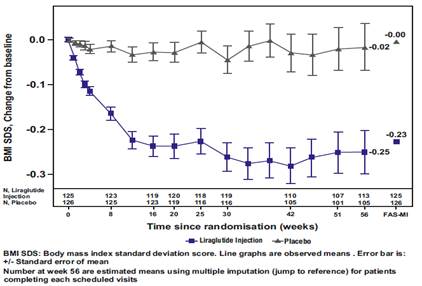
Liraglutide injection was evaluated for safety in 5 double-blind, placebo controlled trials that included 3384 overweight or obese adult patients treated with liraglutide injection for a treatment period up to 56 weeks (3 trials), 52 weeks (1 trial), and 32 weeks (1 trial) and one trial of 56 weeks in 125 pediatric patients with obesity aged 12 years and older [see Clinical Studies (14.1, 14.2)]. All patients received study drug in addition to a reduced-calorie diet and increased physical activity counseling. In the adult trials, patients received liraglutide injection for a mean treatment duration of 46 weeks (median, 56 weeks). Baseline characteristics included a mean age of 47 years, 71% females, 85% white, 39% with hypertension, 15% with type 2 diabetes, 34% with dyslipidemia, 29% with a BMI greater than 40 kg/m2, and 9% with cardiovascular disease. In one of the 56-week trials, a subset of patients (with abnormal glucose measurements at randomization) [see Clinical Studies (14.1)] were enrolled for a placebo-controlled 160-week period instead, followed by a 12-week off-treatment follow-up. For those participating in this 160-week period, patients received liraglutide injection for a mean treatment duration of 110 weeks (median, 159 weeks). For all trials, dosing was initiated and increased weekly to reach the 3 mg dose.
In adult clinical trials, 9.8% of patients treated with liraglutide injection and 4.3% of patients treated with placebo prematurely discontinued treatment as a result of adverse reactions. The most common adverse reactions leading to discontinuation were nausea (2.9% versus 0.2% for liraglutide injection and placebo, respectively), vomiting (1.7% versus less than 0.1%), and diarrhea (1.4% versus 0%).
Adverse reactions reported in greater than or equal to 2% of liraglutide-treated adult patients and more frequently than in placebo-treated patients are shown in Table 2. Adverse reactions reported in greater than or equal to 3% of liraglutide-treated pediatric patients and more frequently than in placebo-treated patients are shown in Table 3.
Table 2. Adverse Reactions Occurring in > 2% of Liraglutide-treated Adult Patients and More Frequently than Placebo |
|
| Placebo
N=1941
%
| Liraglutide
N = 3384
%
|
Nausea
| 13.8
| 39.3
|
Diarrhea
| 9.9
| 20.9
|
Constipation
| 8.5
| 19.4
|
Vomiting
| 3.9
| 15.7
|
Injection Site Reaction1
| 10.5
| 13.9
|
Headache
| 12.6
| 13.6
|
Hypoglycemia in T2DM2
| 6.6
| 12.6
|
Dyspepsia
| 2.7
| 9.6
|
Fatigue
| 4.6
| 7.5
|
Dizziness
| 5
| 6.9
|
Abdominal Pain
| 3.1
| 5.4
|
Increased Lipase
| 2.2
| 5.3
|
Upper Abdominal Pain
| 2.7
| 5.1
|
Gastroenteritis
| 3.2
| 4.7
|
Gastroesophageal Reflux Disease
| 1.7
| 4.7
|
Abdominal Distension
| 3
| 4.5
|
Eructation
| 0.2
| 4.5
|
Urinary Tract Infection
| 3.1
| 4.3
|
Flatulence
| 2.5
| 4.0
|
Viral Gastroenteritis
| 1.6
| 2.8
|
Insomnia
| 1.7
| 2.4
|
Dry Mouth
| 1
| 2.3
|
Asthenia
| 0.8
| 2.1
|
Anxiety
| 1.6
| 2
|
Table 3. Adverse Reactions Occurring in ≥3% of Liraglutide-treated Pediatric Patients and More Frequently than Placebo in a 56 Week Clinical Trial |
| Placebo
N=126
%
| Liraglutide
N=125
%
|
Nausea
| 14.3
| 42.4
|
Vomiting
| 4
| 34.4
|
Diarrhea
| 14.3
| 22.4
|
Hypoglycemia1
| 4
| 15.2
|
Gastroenteritis
| 4.8
| 12.8
|
Dizziness
| 3.2
| 10.4
|
Pyrexia
| 7.1
| 8
|
Abdominal discomfort
| 0.8
| 4.8
|
Constipation
| 2.4
| 4.8
|
Dyslipidemia
| 3.2
| 4.8
|
Fatigue
| 3.2
| 4.8
|
Cough
| 3.2
| 4
|
Depression
| 2.4
| 4
|
Dyspepsia
| 2.4
| 4
|
Pain in extremity
| 2.4
| 4
|
Injection site pain
| 3.2
| 3.2
|
Flatulence
| 0
| 3.2
|
Increased Blood Creatine Kinase
| 2.4
| 3.2
|
Increased Lipase
| 0.8
| 3.2
|
Rash
| 0
| 3.2
|
Hypoglycemia
Adult Patients with Type 2 Diabetes
In a clinical trial in adult patients with type 2 diabetes mellitus and overweight (excess weight) or obesity, severe hypoglycemia (defined as requiring the assistance of another person) occurred in 3 (0.7%) of 422 liraglutide-treated patients (all taking a sulfonylurea) and in none of the 212 placebo-treated patients. In this trial, among patients taking a sulfonylurea, hypoglycemia defined as a plasma glucose less than 54 mg/dL with or without symptoms occurred in 31 (28.2%) of 110 liraglutide-treated patients and 7 (12.7%) of 55 placebo- treated patients. The doses of sulfonylureas were reduced by 50% at the beginning of the trial per protocol. Among patients not taking a sulfonylurea, blood glucose less than 54 mg/dL with or without symptoms occurred in 22 (7.1%) of 312 liraglutide-treated patients and 7 (4.5%) of 157 placebo-treated patients.
In a liraglutide injection clinical trial in adult patients with overweight (excess weight) or obesity with type 2 diabetes mellitus treated with basal insulin and liraglutide injection in combination with a reduced-calorie diet and increased physical activity and up to 2 oral anti-diabetes medications, severe hypoglycemia was reported by 3 (1.5%) of 195 liraglutide-treated patients and 2 (1%) of 197 placebo-treated patients. No meaningful difference in hypoglycemia, defined as blood glucose less than 54 mg/dL with or without symptoms, was reported between groups.
Adult Patients without Type 2 Diabetes
In liraglutide injection clinical trials in adult patients without type 2 diabetes mellitus, there was no systematic capturing or reporting of hypoglycemia; patients were not provided with blood glucose meters or hypoglycemia diaries. Spontaneously reported symptomatic episodes of unconfirmed hypoglycemia were reported by 46 (1.6%) of 2962 liraglutide-treated patients and 19 (1.1%) of 1729 placebo-treated patients. Fasting plasma glucose values obtained at routine clinic visits less than 54 mg/dL, irrespective of hypoglycemic symptoms, occurred in 2 (0.1%) liraglutide-treated patients and 1 (0.1%) placebo-treated patients.
Pediatric Patients without Type 2 Diabetes
In a 56-week placebo-controlled clinical trial of pediatric patients without type 2 diabetes mellitus in which blood glucose meters were provided, 19 (15.2%) of liraglutide-treated patients had hypoglycemia with a blood glucose less than 70 mg/dL with symptoms as compared to 5 (4%) of placebo-treated patients. Four (4) events of hypoglycemia defined as a plasma glucose less than 54 mg/dL occurred in 2 (1.6%) of 125 liraglutide-treated patients and 1 event occurred in 1 (0.8%) of 126 placebo-treated patients. No severe hypoglycemic episodes, defined as requiring assistance of another person to actively administer carbohydrate, glucagon, or other resuscitative actions, occurred in the liraglutide injection treatment group.
Acute Pancreatitis
In liraglutide injection clinical trials in adults, acute pancreatitis was confirmed by adjudication in 9 (0.3%) of 3291 liraglutide-treated patients and 2 (0.1%) of 1843 placebo-treated patients. In addition, there were 2 cases of acute pancreatitis in liraglutide-treated patients who prematurely withdrew from these clinical trials, occurring 74 and 124 days after the last dose. There were 2 additional cases in liraglutide-treated patients, 1 during an off-treatment follow-up period within 2 weeks of discontinuing liraglutide injection, and 1 that occurred in a patient who completed treatment and was off-treatment for 106 days.
In a liraglutide injection pediatric clinical trial, pancreatitis was not independently adjudicated. Pancreatitis was reported in 1 (0.8%) liraglutide-treated patient and resulted in treatment discontinuation.
Gastrointestinal Adverse Reactions
In the adult clinical trials, approximately 68% of liraglutide-treated patients and 39% of placebo-treated patients reported gastrointestinal disorders; the most frequently reported was nausea (39% and 14% of patients treated with liraglutide injection and placebo, respectively). Severe gastrointestinal adverse reactions were reported more frequently among patients receiving liraglutide injection (4.8%) than placebo (1.4 %). There have been reports of gastrointestinal adverse reactions, such as nausea, vomiting, and diarrhea, associated with volume depletion and renal impairment. Most episodes of gastrointestinal events were mild or moderate and did not lead to discontinuation of therapy (6.2% with liraglutide injection versus 0.8% with placebo discontinued treatment as a result of gastrointestinal adverse reactions). The percentage of patients reporting nausea declined as treatment continued. Other common adverse reactions that occurred at a higher incidence among liraglutide-treated patients included diarrhea, constipation, vomiting, dyspepsia, abdominal pain, dry mouth, gastritis, gastroesophageal reflux disease, flatulence, eructation and abdominal distension. There have been reports of gastrointestinal adverse reactions, such as nausea, vomiting, and diarrhea, associated with volume depletion and renal impairment.
In a pediatric clinical trial, 8% of patients treated with liraglutide injection versus no patients who received placebo discontinued treatment as a result of gastrointestinal adverse reactions. Most adverse reactions leading to discontinuation were due to vomiting and nausea (4.8% and 3.2% of liraglutide-treated patients, respectively).
Cardiovascular Safety
Cardiovascular safety was assessed (LEADER, NCT01179048) in 9,340 patients with inadequately controlled type 2 diabetes and cardiovascular disease randomized to liraglutide 1.8 mg or placebo in addition to standard of care treatments for type 2 diabetes for a median duration of 3.5 years. The primary endpoint was the time from randomization to first occurrence of a major adverse cardiovascular event (MACE) defined as: cardiovascular death, non-fatal myocardial infarction, or non-fatal stroke. No increased risk for MACE was observed with liraglutide 1.8 mg. The total number of primary component MACE endpoints was 1,302 [608 (13.0%) with liraglutide 1.8 mg and 694 (14.9%) with placebo]. Liraglutide 1.8 mg (Victoza) is used in the treatment of type 2 diabetes mellitus in adults. The efficacy of liraglutide at doses below 3 mg daily has not been established for weight reduction.
Asthenia, Fatigue, Malaise, Dysgeusia and Dizziness
Events of asthenia, fatigue, malaise, dysgeusia and dizziness were mainly reported within the first 12 weeks of treatment with liraglutide injection and were often co-reported with gastrointestinal events such as nausea, vomiting, and diarrhea.
Immunogenicity
The detection of antibody formation is highly dependent on the sensitivity and specificity of the assay. Additionally, the observed incidence of antibody (including neutralizing antibody) positivity in an assay may be influenced by several factors including assay methodology, sample handling, timing of sample collection, concomitant medications, and underlying disease. For these reasons, the incidence of antibodies to liraglutide injection cannot be directly compared with the incidence of antibodies of other products.
Patients treated with liraglutide injection may develop anti-liraglutide antibodies. Anti-liraglutide antibodies were detected in 42 (2.8%) of 1505 liraglutide-treated adult patients with a post-baseline assessment. Antibodies that had a neutralizing effect on liraglutide in an in vitro assay occurred in 18 (1.2%) of 1505 liraglutide-treated patients. Presence of antibodies may be associated with a higher incidence of injection site reactions and reports of low blood glucose. In clinical trials, these events were usually classified as mild and resolved while patients continued on treatment.
In a pediatric clinical trial, anti-liraglutide antibodies were detected in 14 (12%) of 117 liraglutide-treated patients with a post-baseline assessment; 5 (4.3%) had persistent antibodies as defined by more than 2 antibody visits at least 16 weeks apart. Two patients (1.7%) remained positive throughout the follow-up period; 1 (0.9%) had antibodies cross reactive to native GLP-1. No patients had neutralizing antibodies.
Allergic Reactions
Urticaria was reported in 0.7% of liraglutide-treated patients and 0.5% of placebo-treated patients. Anaphylactic reactions, asthma, bronchial hyperreactivity, bronchospasm, oropharyngeal swelling, facial swelling, angioedema, pharyngeal edema, type IV hypersensitivity reactions have been reported in patients treated with liraglutide in clinical trials. Cases of anaphylactic reactions with additional symptoms such as hypotension, palpitations, dyspnea, and edema have been reported with marketed use of liraglutide. Anaphylactic reactions may potentially be life-threatening.
Breast Cancer
In liraglutide injection clinical trials in adults, breast cancer confirmed by adjudication was reported in 17 (0.7%) of 2379 liraglutide-treated women compared with 3 (0.2%) of 1300 placebo-treated women, including invasive cancer (13 liraglutide- and 2 placebo-treated women) and ductal carcinoma in situ (4 liraglutide- and 1 placebo-treated woman). The majority of cancers were estrogen- and progesterone-receptor positive. There were too few cases to determine whether these cases were related to liraglutide injection. In addition, there are insufficient data to determine whether liraglutide injection has an effect on pre-existing breast neoplasia.
Papillary Thyroid Cancer
In liraglutide injection clinical trials in adults, papillary thyroid carcinoma confirmed by adjudication was reported in 8 (0.2%) of 3291 liraglutide-treated patients compared with no cases among 1843 placebo-treated patients. Four of these papillary thyroid carcinomas were less than 1 cm in greatest diameter and 4 were diagnosed in surgical pathology specimens after thyroidectomy prompted by findings identified prior to treatment.
Colorectal Neoplasms
In liraglutide injection clinical trials in adults, benign colorectal neoplasms (mostly colon adenomas) confirmed by adjudication were reported in 20 (0.6%) of 3291 liraglutide-treated patients compared with 7 (0.4%) of 1843 placebo-treated patients. Six positively adjudicated cases of malignant colorectal neoplasms were reported in 5 liraglutide-treated patients (0.2%, mostly adenocarcinomas) and 1 in a placebo-treated patient (0.1%, neuroendocrine tumor of the rectum).
Cardiac Conduction Disorders
In liraglutide injection clinical trials in adults, 11 (0.3%) of 3384 liraglutide-treated patients compared with none of the 1941 placebo-treated patients had a cardiac conduction disorder, reported as first degree atrioventricular block, right bundle branch block, or left bundle branch block.
Hypotension
Adverse reactions related to hypotension (hypotension, orthostatic hypotension, circulatory collapse, and decreased blood pressure) were reported more frequently with liraglutide injection (1.1%) compared with placebo (0.5%) in liraglutide injection clinical trials in adults. Systolic blood pressure decreases to less than 80 mmHg were observed in 4 (0.1%) liraglutide-treated patients compared with no placebo-treated patients. One of the liraglutide-treated patients had hypotension associated with gastrointestinal adverse reactions and renal failure [see Warnings and Precautions (5.6)].
Laboratory Abnormalities
Liver Enzymes
Increases in alanine aminotransferase (ALT) greater than or equal to 10 times the upper limit of normal were observed in 5 (0.15%) liraglutide-treated patients (two of whom had ALT greater than 20 and 40 times the upper limit of normal) compared with 1 (0.05%) placebo-treated patient during the liraglutide injection clinical trials. Because clinical evaluation to exclude alternative causes of ALT and aspartate aminotransferase (AST) increases was not done in most cases, the relationship to liraglutide injection is uncertain. Some increases in ALT and AST were associated with other confounding factors (such as gallstones).
Serum Calcitonin
Calcitonin, a biological marker of MTC, was measured throughout the clinical development program [see Warnings and Precautions (5.1)]. More patients treated with liraglutide injection in the clinical trials were observed to have high calcitonin values during treatment, compared with placebo. The proportion of patients with calcitonin greater than or equal to 2 times the upper limit of normal at the end of the trial was 1.2% in liraglutide-treated patients and 0.6% in placebo-treated patients. Calcitonin values greater than 20 ng/L at the end of the trial occurred in 0.5% of liraglutide-treated patients and 0.2% of placebo-treated patients; among patients with pre-treatment serum calcitonin less than 20 ng/L, none had calcitonin elevations to greater than 50 ng/L at the end of the trial.
Serum Lipase and Amylase
Serum lipase and amylase were routinely measured in the liraglutide injection clinical trials. Among liraglutide-treated patients, 2.1% had a lipase value at anytime during treatment of greater than or equal to 3 times the upper limit of normal compared with 1.0% of placebo-treated patients. 0.1% of liraglutide-treated patients had an amylase value at anytime in the trial of greater than or equal to 3 times the upper limit of normal versus 0.1% of placebo-treated patients. The clinical significance of elevations in lipase or amylase with liraglutide injection is unknown in the absence of other signs and symptoms of pancreatitis [see Warnings and Precautions (5.2)].