Zitsticka Megashade Sunscreen Serum (spf-50) Liquid
Product Images NDC 81746-183

View Photos of Packaging, Regulatory Labels, and Product Appearance

Product Visual Gallery

This gallery contains 2 technical images submitted to the FDA as part of the official labeling for Zitsticka Megashade Sunscreen Serum (spf-50) (NDC 81746-183). Unlike standard consumer photos, these assets often include clinical data figures, molecular chemical structures, and official manufacturer packaging layouts.

As provided by Zitsticka, Inc, these visuals offer a comprehensive scientific overview of the product's physical and chemical identity, aiding pharmacists and researchers in product verification and study.

Product Images & Figures Index

FDA Label Image

Bottle (Bottle)

Bottle (Bottle)
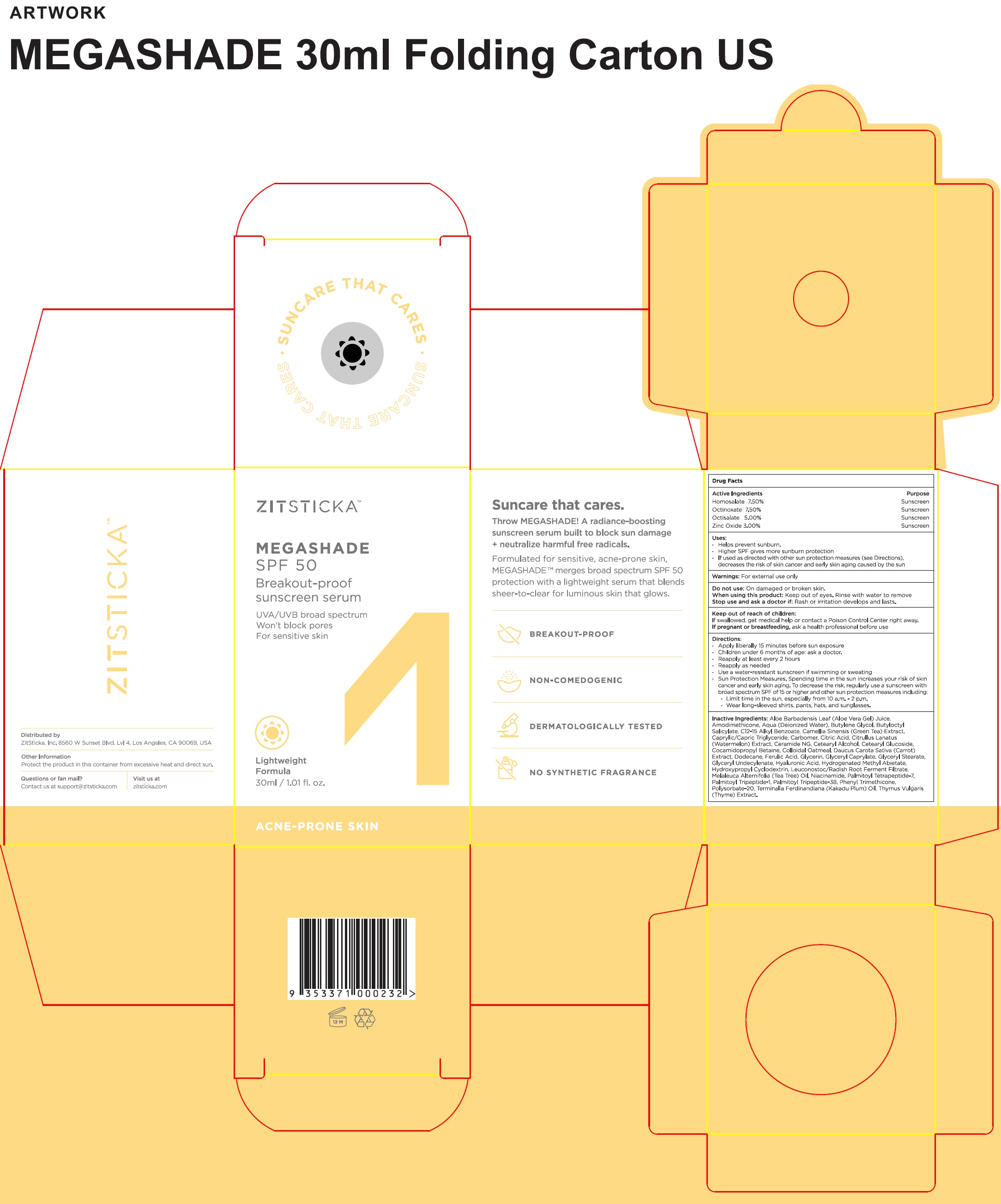
This is a drug facts sheet for a sunscreen product with active ingredients such as Homosalate, Octinoxate, Octisalate, and Zinc Oxide. It helps prevent sunburn and decrease the risk of skin cancer and early skin aging, but should not be used on damaged or broken skin. Other sun protection measures such as staying in shade or wearing protective clothing should also be taken. The sunscreen serum has a broad spectrum SPF 50, is fragrance-free and dermatologically tested, suitable for sensitive, acne-prone skin. It is distributed by ZitSticka, Inc.*
FDA Label Image

Bottle2

Bottle2
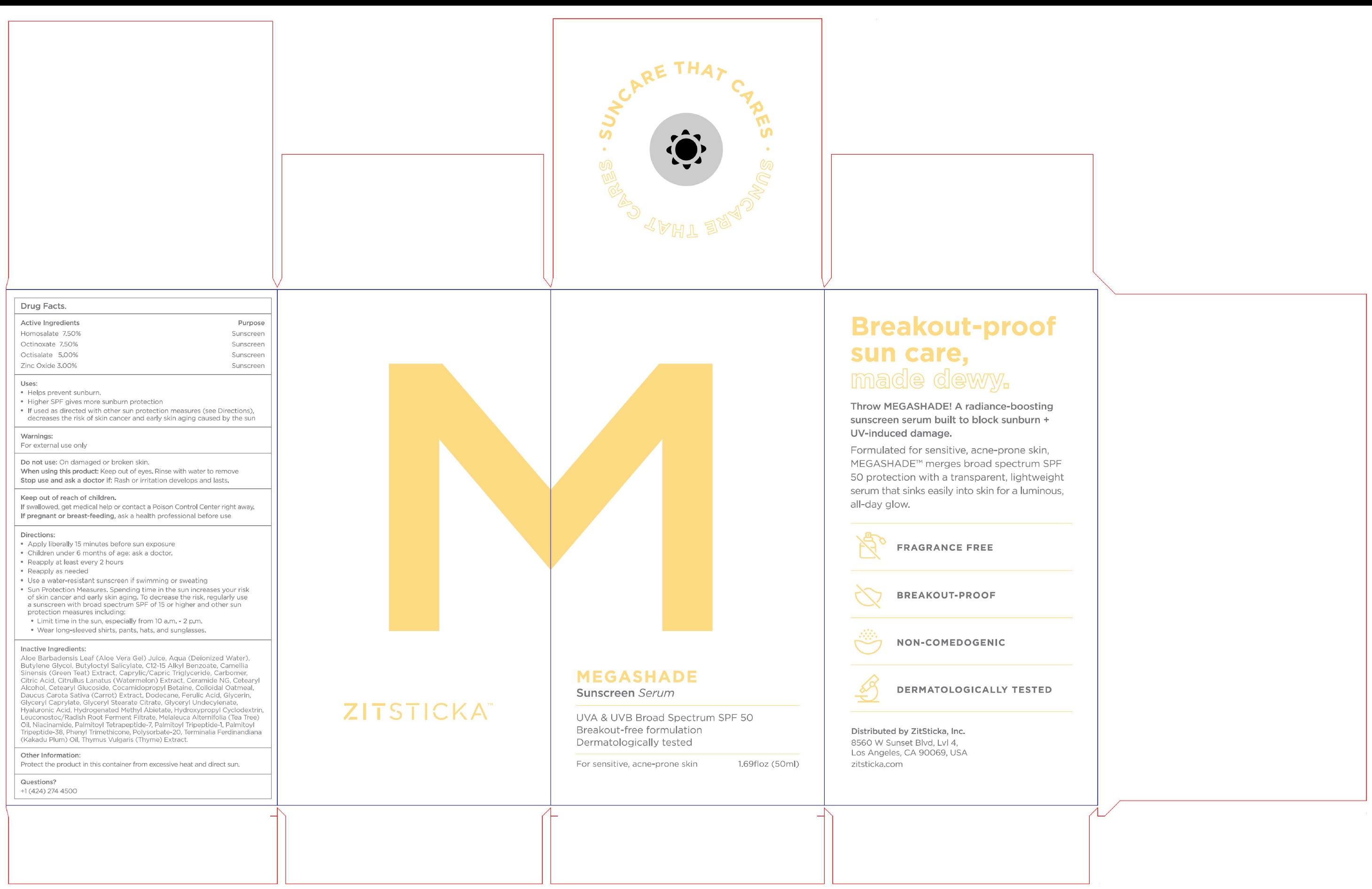
ZITSTICKA Megashade is a sunscreen serum that blocks sun damage and neutralizes free radicals. It merges broad spectrum SPF 50 protection with a lightweight serum that blends sheer-to-clear for luminous skin that glows. It is formulated for sensitive, acne-prone skin and is dermatologically tested, non-comedogenic and wont block pores. The active ingredients include homosalate, octinoxate, octisalate and zinc oxide, while inactive ingredients include Aloe Vera Gel juice, Green Tea extract, Carrot extract, and Thyme extract. It has a drug facts section and directions for use. The container measures 30ml and is distributed by Zitsticka Inc.*

* These product label images have been analyzed using experimental machine learning. Please verify findings with the primary label text.