Vyjuvek Kit
Product Images NDC 82194-510

View Photos of Packaging, Regulatory Labels, and Product Appearance

Product Visual Gallery

This gallery contains 19 technical images submitted to the FDA as part of the official labeling for Vyjuvek (NDC 82194-510). Unlike standard consumer photos, these assets often include clinical data figures, molecular chemical structures, and official manufacturer packaging layouts.

As provided by Krystal Biotech, Inc., these visuals offer a comprehensive scientific overview of the product's physical and chemical identity, aiding pharmacists and researchers in product verification and study.

FDA Label Image

Carton (Carton)

Carton (Carton)
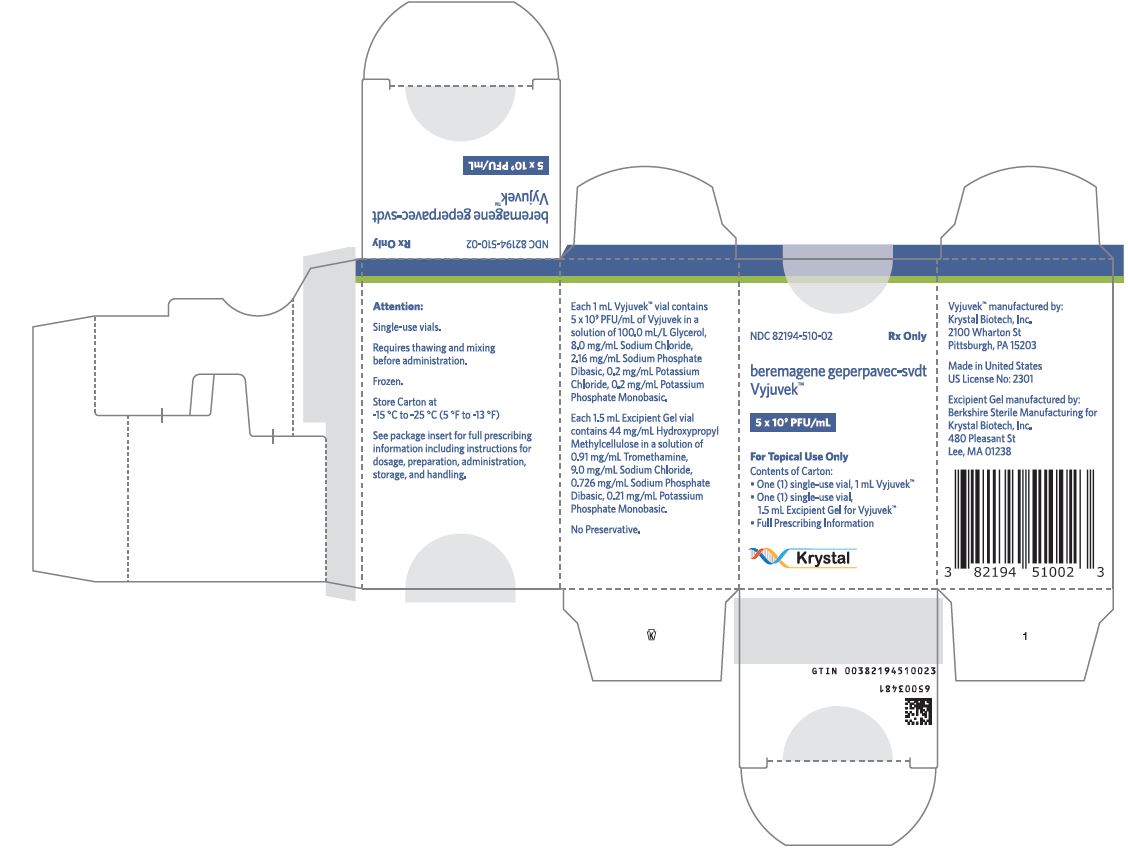
Packaging label for VYJUVEK kit by Krystal Biotech, Inc. The label shows the active ingredient beremagene geperpavec-svdt with concentration 5 x 10^7 PFU/mL. It is labeled for topical use only and includes contents of the carton: one 1 mL single-use vial of VYJUVEK, one single-use vial, and 15 mL excipient gel. Storage instructions and manufacturer information are also present.*
FDA Label Image

Fig1 (Fig1)

Fig1 (Fig1)
Illustration showing a carton containing two vials identified as part of the VYJUVEK kit: one vial labeled VYJUVEK (biological suspension) and another vial labeled Excipient (excipient gel). Arrows indicate the vials being removed from the carton.*
FDA Label Image

Fig10 (Fig10)

Fig10 (Fig10)
An instructional diagram showing the disconnection of the administration syringe containing VYJUVEK gel. The syringe is depicted with an air pocket visible inside, and an arrow indicates the direction to disconnect it from the vial.*
FDA Label Image

Fig11 (Fig11)

Fig11 (Fig11)
An instructional illustration showing how to manipulate the plunger of an administration syringe to remove air pockets. The image depicts a hand adjusting the syringe plunger with an inset close-up highlighting air pockets inside the syringe barrel, indicating their removal as part of the process.*
FDA Label Image

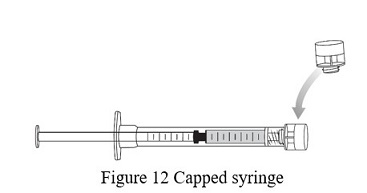
Fig12 (Fig12)

Fig12 (Fig12)
An instructional illustration labeled 'Figure 12 Capped syringe' showing a syringe with volume markings and a cap being placed on or removed from the syringe tip.*
FDA Label Image

Fig13 (Fig13)

Fig13 (Fig13)
An instructional diagram showing how to connect an administration syringe to the needle within the excipient gel vial stopper. The illustration depicts a syringe being inserted into a vial cap assembly with directional arrows indicating the connection process.*
FDA Label Image

Fig14 (Fig14)

Fig14 (Fig14)
Illustration showing the application of VYJUVEK gel to a wound. The image depicts a hand with a wound and a syringe applying gel directly onto the wound site, with a close-up inset highlighting the gel being administered.*
FDA Label Image

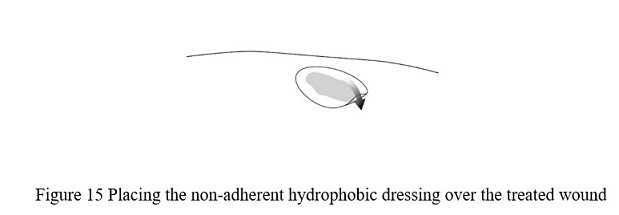
Fig15 (Fig15)

Fig15 (Fig15)
An instructional illustration showing placement of a non-adherent hydrophobic dressing over a treated wound, demonstrating part of a wound care procedure.*
FDA Label Image

Fig16 (Fig16)

Fig16 (Fig16)
An instructional diagram labeled Figure 16 showing placement of a standard dressing over a hydrophobic dressing on a surface, demonstrating the layering technique for wound care.*
FDA Label Image

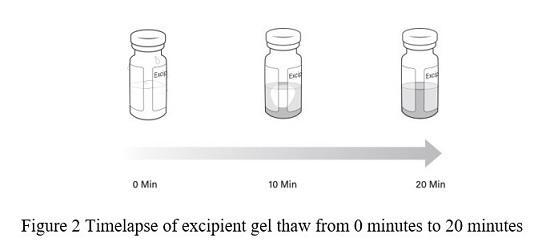
Fig2 (Fig2)

Fig2 (Fig2)
A timelapse illustration showing the thawing of excipient gel in a vial over 0, 10, and 20 minutes. The progression is represented by three vials with increasing levels of gel transparency, accompanied by a horizontal arrow indicating time flow from left to right.*
FDA Label Image

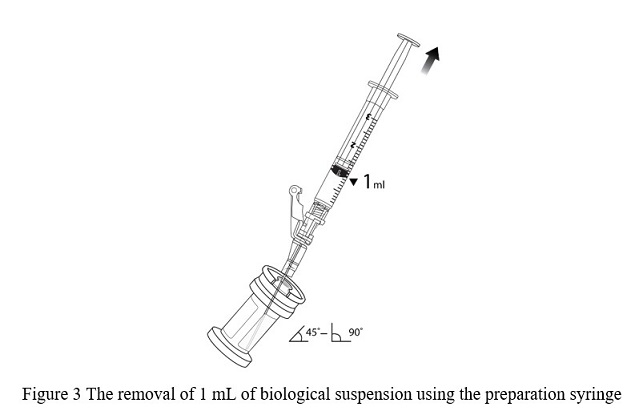
Fig3 (Fig3)

Fig3 (Fig3)
An instructional illustration showing the removal of 1 mL of biological suspension using a preparation syringe. The syringe is angled between 45 to 90 degrees relative to the container during the withdrawal process.*
FDA Label Image

Fig4 (Fig4)

Fig4 (Fig4)
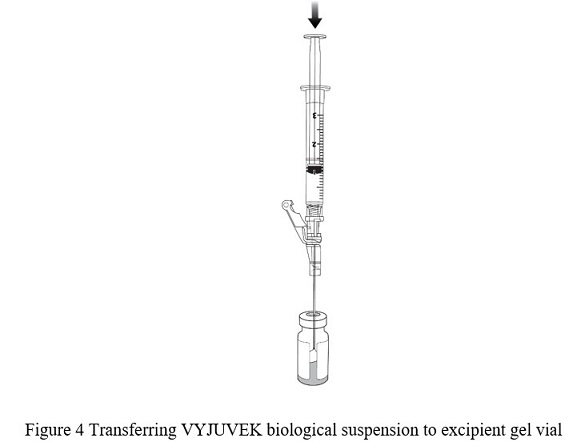
An instructional diagram showing the process of transferring VYJUVEK biological suspension from a vial into an excipient gel vial using a syringe. The syringe is depicted extracting liquid from one vial, illustrating a step in the preparation of the medication kit.*
FDA Label Image

Fig5 (Fig5)

Fig5 (Fig5)
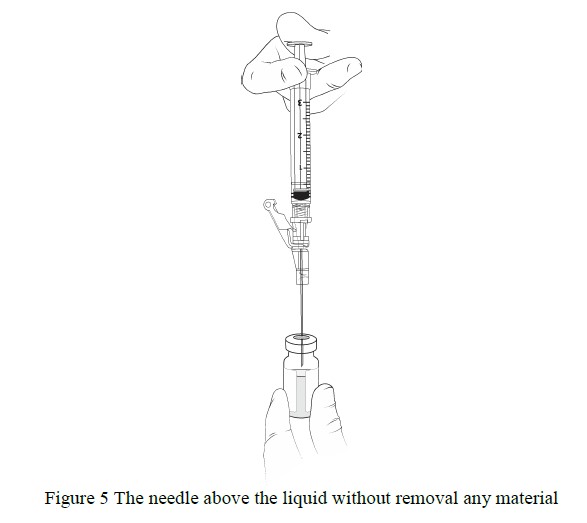
An instructional diagram showing a hand holding a syringe needle positioned just above the liquid surface inside a vial, while another hand stabilizes the vial. The illustration demonstrates correct syringe handling without touching or removing any liquid material from the vial.*
FDA Label Image

Fig6 (Fig6)

Fig6 (Fig6)
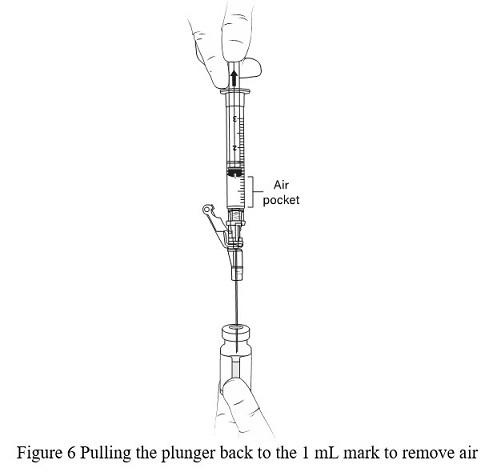
An instructional illustration showing a hand pulling back the plunger of a syringe to the 1 mL mark to remove an air pocket from the syringe. The syringe is positioned over a vial held by another hand. The image includes a labeled air pocket within the syringe barrel.*
FDA Label Image

Fig7 (Fig7)

Fig7 (Fig7)
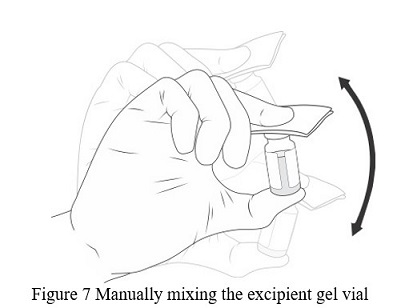
An instructional illustration showing a hand manually mixing an excipient gel vial by moving it back and forth. The image highlights the procedure to prepare the vial contents for use.*
FDA Label Image

Fig8 (Fig8)

Fig8 (Fig8)
Illustration showing a needle inserted into a vial containing VYJUVEK gel, demonstrating the gel prior to withdrawal. The syringe is positioned above the vial, indicating the preparation step for administration.*
FDA Label Image

Fig9 (Fig9)

Fig9 (Fig9)
An instructional diagram showing the administration syringe withdrawing 0.4 mL of VYJUVEK gel, with an air pocket visible inside the syringe. The syringe is positioned at an angle between 45° and 90° relative to the vial.*
FDA Label Image

Vial 001-01 (Vial00101)

Vial 001-01 (Vial00101)
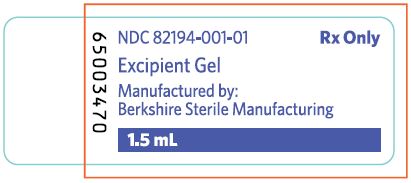
Packaging label for VYJUVEK Excipient Gel, 1.5 mL, manufactured by Berkshire Sterile Manufacturing. The label includes the NDC number 82194-001-01 and indicates the product is Rx only.*
FDA Label Image

Vial 510-01 (Vial51001)

Vial 510-01 (Vial51001)
Label for VYJUVEK kit containing 1 mL of the product. It displays the NDC 82194-501-01 and indicates the active ingredient as beremagene geperpavec-svdt. Manufactured by Krystal Biotech, Inc., the label includes a lot number and expiration date section, and is marked Rx Only.*

* About these descriptions: Image descriptions on this page are generated by automated AI analysis of the product label images from the manufacturer's FDA label submission (SPL). They are provided for reference only and may contain errors or omissions. Always rely on the printed label itself and the official FDA labeling, and consult a pharmacist or healthcare professional with any questions about this product.