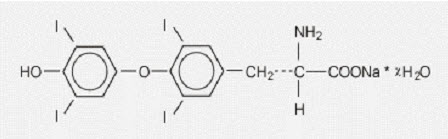
Levothyroxine Sodium capsules are indicated as a replacement therapy in adults and pediatric patients 6 years and older with primary (thyroidal), secondary (pituitary), and tertiary (hypothalamic) congenital or acquired hypothyroidism.
Levothyroxine Sodium capsules are indicated as an adjunct to surgery and radioiodine therapy in the management of adults and pediatric patients 6 years and older with thyrotropin-dependent well-differentiated thyroid cancer.
- Levothyroxine Sodium capsules are not indicated for suppression of benign thyroid nodules and nontoxic diffuse goiter in iodine-sufficient patients as there are no clinical benefits and overtreatment with Levothyroxine Sodium capsules may induce hyperthyroidism
[see
Warnings and Precautions (5.4)].
- Levothyroxine Sodium capsules are not indicated for treatment of transient hypothyroidism during the recovery phase of subacute thyroiditis.
Primary Hypothyroidism in Adults and in Adolescents in Whom Growth and Puberty are Complete
Start Levothyroxine Sodium capsules at the full replacement dose in otherwise healthy, non-elderly individuals who have been hypothyroid for only a short time (such as a few months).The average full replacement dose of Levothyroxine Sodium capsules are approximately 1.6 mcg per kg per day (for example: 100-125 mcg per day for a 70 kg adult).
Adjust the dose by 12.5 to 25 mcg increments every 4 to 6 weeks until the patient is clinically euthyroid and the serum TSH returns to normal. Doses greater than 200 mcg per day are seldom required. An inadequate response to daily doses greater than 300 mcg per day is rare and may indicate poor compliance, malabsorption, drug interactions, or a combination of these factors.
For elderly patients or patients with underlying cardiovascular disease, start with a dose of 12.5 to 25 mcg per day. Increase the dose every 6 to 8 weeks, as needed, until the patient is clinically euthyroid and the serum TSH returns to normal. The full replacement dose of Levothyroxine Sodium capsules may be less than 1 mcg per kg per day in elderly patients.
In patients with severe longstanding hypothyroidism, start with a dose of 12.5 to 25 mcg per day. Adjust the dose in 12.5 to 25 mcg increments every 2 to 4 weeks until the patient is clinically euthyroid and the serum TSH level is normalized.
Secondary or Tertiary Hypothyroidism
Start Levothyroxine Sodium capsules at the full replacement dose in otherwise healthy, non-elderly individuals. Start with a lower dose in elderly patients with underlying cardiovascular disease or patients with severe longstanding hypothyroidism as described above. Serum TSH is not a reliable measure of Levothyroxine Sodium capsules dose adequacy in patients with secondary or tertiary hypothyroidism, and should not be used to monitor therapy. Use the serum free-T4 level to monitor adequacy of therapy in this patient population. Titrate Levothyroxine Sodium capsules dosing per above instructions until the patient is clinically euthyroid and the serum free-T4 level is restored to the upper half of the normal range.
Pediatric Dosage - Congenital or Acquired Hypothyroidism
Only administer Levothyroxine Sodium capsules to pediatric patients 6 years and older who are able to swallow an intact capsule
.
The recommended daily dose of Levothyroxine Sodium capsules in pediatric patients with hypothyroidism is based on body weight and changes with age as described in Table 1. Start Levothyroxine Sodium capsules at the full daily dose in most pediatric patients. Start at a lower dose in children at risk for hyperactivity (see below). Monitor for clinical and laboratory response
[see
Dosage and Administration (2.4)]
.
Table 1: Levothyroxine Sodium Capsules Dosing Guidelines for Pediatric Hypothyroidism| Age | Daily Dose Per Kg Body Weight
The dose should be adjusted based on clinical response and laboratory parameters [see Dosage and Administration (2.4) and Use in Specific Populations (8.4)]. |
|---|
| 6-12 years | 4-5 mcg/kg/day |
| Greater than 12 years but growth and puberty incomplete | 2-3 mcg/kg/day |
| Growth and puberty complete | 1.6 mcg/kg/day |
Children at risk for hyperactivity: To minimize the risk of hyperactivity in children, start at one-fourth the recommended full replacement dose, and increase on a weekly basis by one-fourth the full-recommended replacement dose until the full recommended replacement dose is reached.
Pregnancy
Preexisting Hypothyroidism: Levothyroxine Sodium capsules dose requirements may increase during pregnancy
. Measure serum TSH and free-T4 as soon as pregnancy is confirmed and, at a minimum, during each trimester of pregnancy. In patients with primary hypothyroidism, maintain serum TSH in the trimester-specific reference range. For patients with serum TSH above the normal trimester specific range, increase the dose of Levothyroxine Sodium capsules by 12.5 to 25 mcg per day and measure TSH every four weeks until a stable Levothyroxine Sodium capsules dose is reached and serum TSH is within the normal trimester specific range. Reduce Levothyroxine Sodium capsules dosage to pre-pregnancy levels immediately after delivery and measure serum TSH levels 4 to 8 weeks postpartum to ensure the Levothyroxine Sodium capsules dose is appropriate.
New Onset Hypothyroidism: Normalize thyroid function as rapidly as possible. In patients with moderate to severe signs and symptoms of hypothyroidism, start Levothyroxine Sodium capsules at the full replacement dose (1.6 mcg per kg body weight per day). In patients with mild hypothyroidism (TSH < 10 mIU per Liter), start Levothyroxine Sodium capsules at 1.0 mcg per kg body weight per day. Evaluate serum TSH every 4 weeks and adjust Levothyroxine Sodium capsules dosage until serum TSH is within the normal trimester specific range
[see
Use in Specific Populations (8.1)].
TSH Suppression in Well-Differentiated Thyroid Cancer
Generally, TSH is suppressed to below 0.1 mIU per Liter, and this usually requires a Levothyroxine Sodium capsules dose of greater than 2 mcg per kg per day. However, in patients with high-risk tumors, the target level for TSH suppression may be lower.
Adults
In adult patients with primary hypothyroidism, monitor serum TSH levels after an interval of 6 to 8 weeks after any change in dose. In patients on a stable and appropriate replacement dose, evaluate clinical and biochemical response every 6 to 12 months and whenever there is a change in the patient's clinical status.
Pediatrics
In patients with congenital hypothyroidism, assess the adequacy of replacement therapy by measuring both serum TSH and total or free-T4. Monitor TSH and total or free-T4 in children is as follows: at 2 and 4 weeks after the initiation of treatment 2 weeks after any change in dosage, and then every 3 to 12 months thereafter following dose stabilization until growth is completed. Poor compliance or abnormal values may necessitate more frequent monitoring. Perform routine clinical examination, including assessment of mental and physical growth and development, and bone maturation at regular intervals.
While the general aim of therapy is to normalize the serum TSH level, TSH may not normalize in some patients due to
in utero hypothyroidism causing a resetting of the pituitary-thyroid feedback. Failure of the serum T4 to increase into the upper half of the normal range within 2 weeks of initiation of Levothyroxine Sodium capsules therapy and/or of the serum TSH to decrease below 20 mIU per Liter within 4 weeks may indicate the child is not receiving adequate therapy. Assess compliance, dose of medication administered, and method of administration prior to increasing the dose of Levothyroxine Sodium capsules
[see
Warnings and Precautions (5.4) and
Use in Specific Populations (8.4)]
.
Secondary (Pituitary) and Tertiary (Hypothalamic) Hypothyroidism
Monitor serum free-T4 levels maintain in the upper half of the normal range in these patients.
Adverse Reactions in Children
Pseudotumor cerebri and slipped capital femoral epiphysis have been reported in children receiving levothyroxine therapy. Overtreatment may result in craniosynostosis in infants and premature closure of the epiphyses in children with resultant compromised adult height.
Hypersensitivity Reactions
Hypersensitivity reactions to inactive ingredients have occurred in patients treated with thyroid hormone products. These include urticaria, pruritus, skin rash, flushing, angioedema, various GI symptoms (abdominal pain, nausea, vomiting and diarrhea), fever, arthralgia, serum sickness and wheezing. Hypersensitivity to levothyroxine itself is not known to occur.
Risk Summary
Experience with levothyroxine use in pregnant women, including data from post-marketing studies, have not reported increased rates of major birth defects or miscarriages
[see
Data].
There are risks to the mother and fetus associated with untreated hypothyroidism in pregnancy. Since thyroid-stimulating hormone (TSH) levels may increase during pregnancy, TSH should be monitored and levothyroxine sodium capsules dosage adjusted during pregnancy
[see
Clinical Considerations]
. There are no animal studies conducted with levothyroxine during pregnancy. Levothyroxine sodium capsules should not be discontinued during pregnancy and hypothyroidism diagnosed during pregnancy should be promptly treated.
The estimated background risk of major birth defects and miscarriage for the indicated population is unknown. In the U.S. general population, the estimated background risk of major birth defects and miscarriage in clinically recognized pregnancies is 2 to 4% and 15 to 20%, respectively.
Clinical Considerations
Disease-Associated Maternal and/or Embryo/Fetal Risk
Maternal hypothyroidism during pregnancy is associated with a higher rate of complications, including spontaneous abortion, gestational hypertension, pre-eclampsia, stillbirth, and premature delivery. Untreated maternal hypothyroidism may have an adverse effect on fetal neurocognitive development.
Dose Adjustments During Pregnancy and the Postpartum Period
Pregnancy may increase levothyroxine sodium capsules requirements. Serum TSH level should be monitored and the levothyroxine sodium capsules dosage adjusted during pregnancy. Since postpartum TSH levels are similar to preconception values, the levothyroxine sodium capsules dosage should return to the pre-pregnancy dose immediately after delivery
[see
Dosage and Administration (2.3)].
Data
Human Data
Levothyroxine is approved for use as a replacement therapy for hypothyroidism. There is a long experience of levothyroxine use in pregnant women, including data from post-marketing studies that have not reported increased rates of fetal malformations, miscarriages or other adverse maternal or fetal outcomes associated with levothyroxine use in pregnant women.
Risk Summary
Limited published studies report that levothyroxine is present in human milk. However, there is insufficient information to determine the effects of levothyroxine on the breastfed infant and no available information on the effects of levothyroxine on milk production. Adequate levothyroxine treatment during lactation may normalize milk production in hypothyroid lactating mothers. The developmental and health benefits of breastfeeding should be considered along with the mother's clinical need for Levothyroxine Sodium capsules and any potential adverse effects on the breastfed infant from levothyroxine sodium capsules or from the underlying maternal condition.
Congenital Hypothyroidism [see
Dosage and Administration (2.3,
2.4)]
Rapid restoration of normal serum T4 concentrations is essential for preventing the adverse effects of congenital hypothyroidism on intellectual development as well as on overall physical growth and maturation. Therefore, initiate levothyroxine therapy immediately upon diagnosis. Levothyroxine is generally continued for life in these patients.
Closely monitor children during the first two weeks of Levothyroxine Sodium capsules therapy for cardiac overload and arrhythmias.
Closely monitor patients to avoid undertreatment and overtreatment. Undertreatment may have deleterious effects on intellectual development and linear growth. Overtreatment may adversely affect the tempo of brain maturation and accelerate the bone age with resultant premature closure of the epiphyses and compromised adult stature.
Acquired Hypothyroidism in Pediatric Patients
Closely monitor patients to avoid undertreatment and overtreatment. Undertreatment may result in poor school performance due to impaired concentration and slowed mentation and in reduced adult height. Overtreatment may accelerate the bone age and result in premature epiphyseal closure and compromised adult stature.
Treated children may manifest a period of catch-up growth, which may be adequate in some cases to normalize adult height. In children with severe or prolonged hypothyroidism, catch-up growth may not be adequate to normalize adult height.
Absorption
Absorption of orally administered T
4 from the gastrointestinal (GI) tract ranges from 40% to 80%. The majority of the levothyroxine dose is absorbed from the jejunum and upper ileum. T4 absorption is increased by fasting, and decreased in malabsorption syndromes and by certain foods such as soybeans. Dietary fiber decreases the bioavailability of T4. Absorption may also decrease with age. In addition, many drugs and foods affect T4 absorption.
[see
Drug Interactions (7)]
Distribution
Circulating thyroid hormones are greater than 99% bound to plasma proteins, including thyroxine-binding globulin (TBG), thyroxine-binding prealbumin (TBPA), and thyroxine-binding albumin (TBA), whose capacities and affinities vary for each hormone. The higher affinity of both TBG and TBPA for T4 partially explains the higher serum levels, slower metabolic clearance, and longer half-life of T4 compared to T3. Protein-bound thyroid hormones exist in reverse equilibrium with small amounts of free hormone. Only unbound hormone is metabolically active. Many drugs and physiologic conditions affect the binding of thyroid hormones to serum proteins
[see
Drug Interactions (7)].
Thyroid hormones do not readily cross the placental barrier
[see
Use in Specific Populations (8.1)].
Elimination
Metabolism
T4 is slowly eliminated (see
Table 6)
. The major pathway of thyroid hormone metabolism is through sequential deiodination. Approximately 80% of circulating T3 is derived from peripheral T4 by monodeiodination. The liver is the major site of degradation for both T4 and T3, with T4 deiodination also occurring at a number of additional sites, including the kidney and other tissues. Approximately 80% of the daily dose of T4 is deiodinated to yield equal amounts of T3 and reverse T3 (rT3). T3 and rT3 are further deiodinated to diiodothyronine. Thyroid hormones are also metabolized via conjugation with glucuronides and sulfates and excreted directly into the bile and gut where they undergo enterohepatic recirculation.
Excretion
Thyroid hormones are primarily eliminated by the kidneys. A portion of the conjugated hormone reaches the colon unchanged and is eliminated in the feces. Approximately 20% of T4 is eliminated in the stool. Urinary excretion of T4 decreases with age.
Table 6: Pharmacokinetic Parameters of Thyroid Hormones in Euthyroid Patients| Hormone | Ratio in Thyroglobulin | Biologic Potency | Half-Life (Days) | Protein Binding
(%)
Includes TBG, TBPA and TBA. |
|---|
| Levothyroxine (T4) | 10 – 20 | 1 | 6 – 7
3 – 4 days in hyperthyroidism, 9 – 10 days in hypothyroidism. | 99.96 |
| Liothyronine (T3) | 1 | 4 | ≤ 2 | 99.5 |
Adverse Reactions