Aripiprazole Tablet
Product Images NDC 82804-023

View Photos of Packaging, Regulatory Labels, and Product Appearance

Product Visual Gallery

This gallery contains 9 technical images submitted to the FDA as part of the official labeling for Aripiprazole (NDC 82804-023). Unlike standard consumer photos, these assets often include clinical data figures, molecular chemical structures, and official manufacturer packaging layouts.

As provided by Proficient Rx Lp, these visuals offer a comprehensive scientific overview of the product's physical and chemical identity, aiding pharmacists and researchers in product verification and study.

FDA Label Image

Figure (Aripiprazole Fig1)
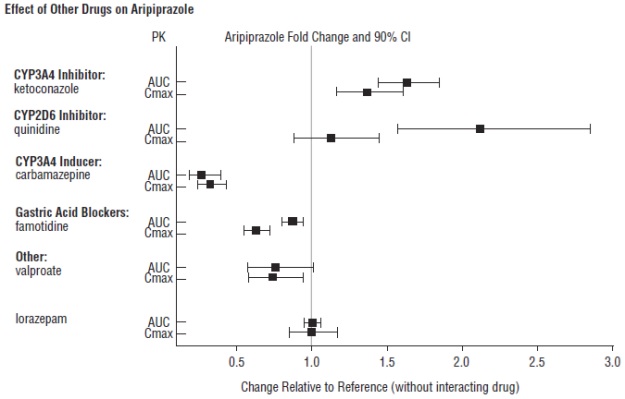
Figure (Aripiprazole Fig1)
A pharmacokinetic chart illustrating the effect of various drugs on Aripiprazole levels. The graph shows fold changes and 90% confidence intervals in AUC and Cmax values relative to a reference without interacting drugs, including CYP3A4 inhibitors (ketoconazole), CYP2D6 inhibitors (quinidine), CYP3A4 inducers (carbamazepine), gastric acid blockers (famotidine), valproate, and lorazepam.*
FDA Label Image

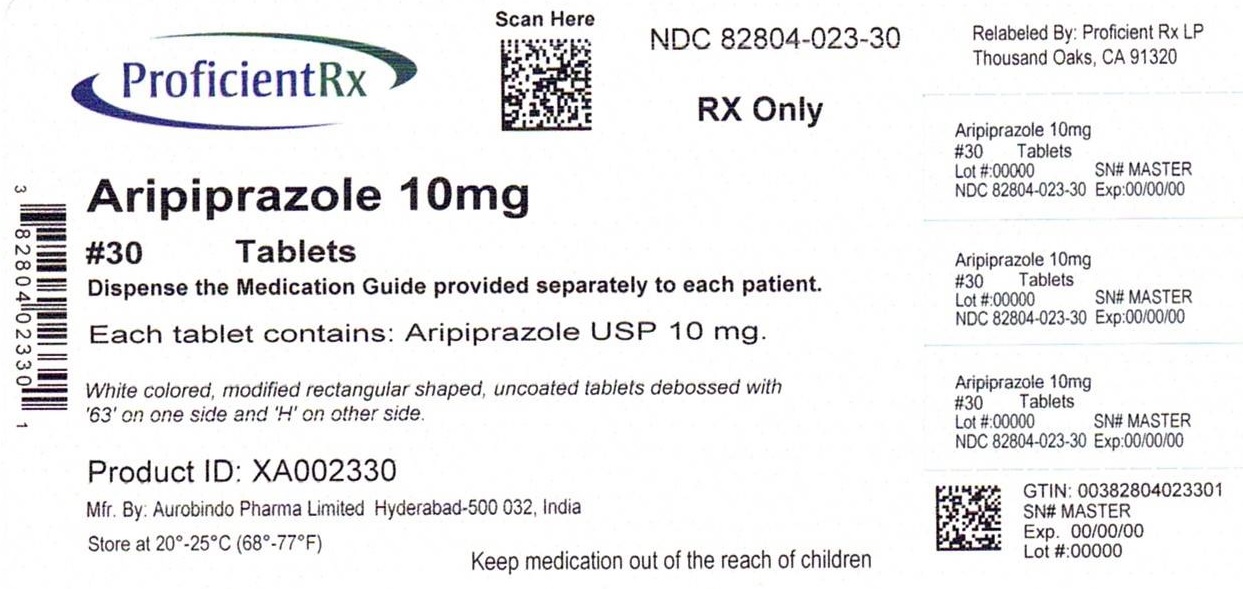
82804-023-30 (Aripiprazole Fig12)

82804-023-30 (Aripiprazole Fig12)
Label for Aripiprazole 10 mg tablets by Proficient Rx LP, NDC 82804-023-30. The label indicates a 30-count package and states that each tablet contains 10 mg Aripiprazole USP. Tablets are described as white, modified rectangular, uncoated with debossed markings. Manufacturer is Aurobindo Pharma Limited, Hyderabad, India, with storage instructions at 20°-25°C. The label includes barcodes and QR codes, lot number placeholders, and an advisory to keep medication out of reach of children.*
FDA Label Image

Figure (Aripiprazole Fig2)

Figure (Aripiprazole Fig2)
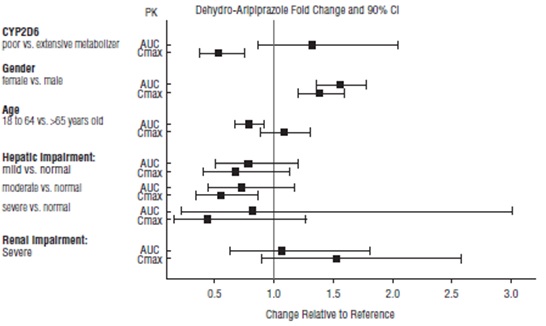
A pharmacokinetic effect chart showing the impact of different drugs on the fold change of dehydro-aripiprazole. The chart compares AUC and Cmax values for inhibitors, inducers, and other interacting drugs relative to a reference without interacting drugs, including ketoconazole, quinidine, carbamazepine, famotidine, valproate, and lorazepam.*
FDA Label Image

Figure (Aripiprazole Fig3)

Figure (Aripiprazole Fig3)
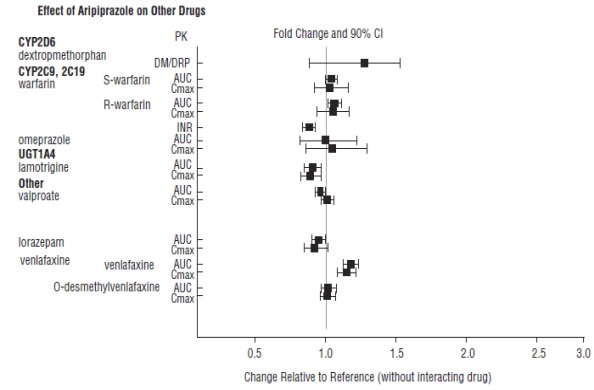
A pharmacokinetic chart depicting the fold change and 90% confidence interval of the effect of Aripiprazole on various other drugs. The horizontal axis shows change relative to reference (without interacting drug) ranging from 0.5 to 3.0. The chart includes drugs metabolized by CYP2D6, CYP2C9, 2C19, UGT1A4, and others, with pharmacokinetic parameters such as AUC and Cmax indicated.*
FDA Label Image

Figure (Aripiprazole Fig4)

Figure (Aripiprazole Fig4)
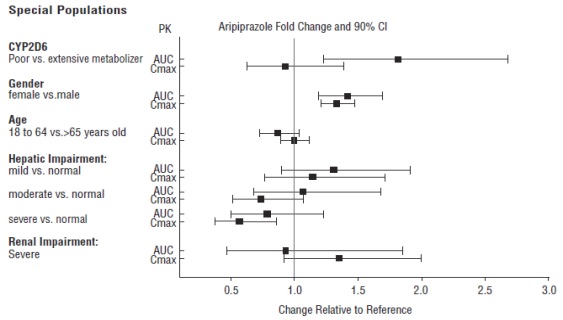
A chart depicting fold change and 90% confidence intervals for aripiprazole pharmacokinetics (PK), including AUC and Cmax, across various special populations such as CYP2D6 metabolizer status, gender, age groups, hepatic impairment levels, and severe renal impairment.*
FDA Label Image

Figure (Aripiprazole Fig5)

Figure (Aripiprazole Fig5)
A pharmacokinetic chart showing fold change and 90% confidence intervals for Aripiprazole across various factors, including CYP2D6 metabolizer status, gender, age groups, and severity of hepatic and renal impairment. The chart plots change relative to a reference on a horizontal axis, comparing parameters such as AUC and Cmax values.*
FDA Label Image

Figure 6: Kaplan-meier Estimation Of Cumulative Proportion Of Patients With Relapse (schizophrenia Study 5) (Aripiprazole Fig6)

Figure 6: Kaplan-meier Estimation Of Cumulative Proportion Of Patients With Relapse (schizophrenia Study 5) (Aripiprazole Fig6)
Kaplan-Meier curve showing the cumulative proportion of patients with relapse over time in a schizophrenia study comparing Aripiprazole 10 mg tablets and placebo. The x-axis represents days from randomization, and the y-axis shows the proportion with relapse. The graph shows a lower relapse proportion in the Aripiprazole group compared to placebo over 182 days.*
FDA Label Image

Figure 9: Least Square Means Of Change From Baseline In Ygtss Tts By Week (tourette’s Disorder Study 1) (Aripiprazole Fig7)

Figure 9: Least Square Means Of Change From Baseline In Ygtss Tts By Week (tourette’s Disorder Study 1) (Aripiprazole Fig7)
A line graph depicting the change in YGTSS total tic score from baseline over 8 weeks of treatment. Three groups are shown: Aripiprazole low dose, Aripiprazole high dose, and placebo. Both Aripiprazole groups show a decreasing mean change in score over time, with the high dose group showing the greatest decrease, while the placebo group shows little change after initial decline.*
FDA Label Image

Aripiprazole Structure (Aripiprazole Str)

Aripiprazole Structure (Aripiprazole Str)
Chemical structure of Aripiprazole, showing the specific arrangement of atoms including chlorine-substituted aromatic rings, piperazine, and quinolinone moieties characteristic to the molecule.*

* About these descriptions: Image descriptions on this page are generated by automated AI analysis of the product label images from the manufacturer's FDA label submission (SPL). They are provided for reference only and may contain errors or omissions. Always rely on the printed label itself and the official FDA labeling, and consult a pharmacist or healthcare professional with any questions about this product.