Microgestin Fe 1.5/30 Kit
Product Images NDC 82804-096

View Photos of Packaging, Regulatory Labels, and Product Appearance

Product Visual Gallery

This gallery contains 13 technical images submitted to the FDA as part of the official labeling for Microgestin Fe 1.5/30 (NDC 82804-096). Unlike standard consumer photos, these assets often include clinical data figures, molecular chemical structures, and official manufacturer packaging layouts.

As provided by Proficient Rx Lp, these visuals offer a comprehensive scientific overview of the product's physical and chemical identity, aiding pharmacists and researchers in product verification and study.

FDA Label Image

1 (Image 01)

FDA Label Image

2 (Image 02)

2 (Image 02)
This table provides information on the lowest expected and typical failure rates during the first year of continuous use of various contraceptive methods. It includes data on methods such as oral contraceptives, diaphragms, spermicides, implants, injections, IUDs, condoms, sponges, cervical caps, periodic abstinence, withdrawal, female and male sterilization. The percentages represent the likelihood of experiencing an accidental pregnancy when using each method consistently and correctly during the first year.*
FDA Label Image

3 (Image 03)

3 (Image 03)
Cigarette smoking is known to increase the risk of severe cardiovascular complications associated with the use of oral contraceptives, especially for women over 35 years old and heavy smokers (15 or more cigarettes per day). It is highly recommended that women using oral contraceptives refrain from smoking to mitigate these risks.*
FDA Label Image

4 (Image 04)

FDA Label Image

5 (Image 05)

5 (Image 05)
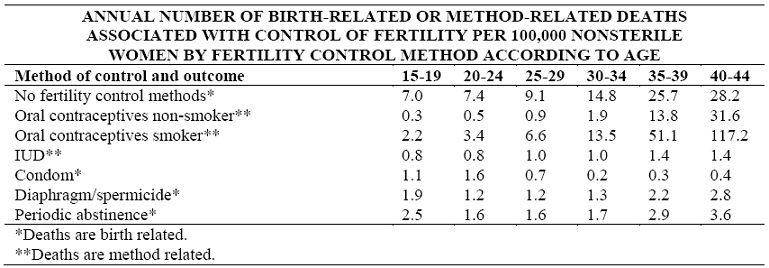
This data showcases the annual number of birth-related or method-related deaths associated with fertility control per 100,000 nonsterile women across different age groups. The table categorizes the statistics based on different methods of fertility control such as oral contraceptives for non-smokers and smokers, intrauterine devices (IUDs), condoms, diaphragm/spermicide, and periodic abstinence. The numbers vary across age groups, providing insights into the relative safety of each method within specific age brackets. This information is useful for evaluating the risks associated with different forms of contraception and can help guide individuals in making informed decisions about their reproductive health.*
FDA Label Image

6 (Image 06)

6 (Image 06)
This text discusses the increased risk of serious cardiovascular side effects from oral contraceptive use when combined with cigarette smoking. It highlights that the risk is higher with age and heavy smoking, particularly in women over 35 years old. The advice for women using oral contraceptives is to avoid smoking due to the associated health risks.*
FDA Label Image

7 (Image 07)

7 (Image 07)
This text provides information about the composition of Microgestin Fe 1.5/30 birth control pills. The pill pack consists of 21 yellow pills for weeks 1, 2, and 3, and brown pills for week 4. It advises starting with the first yellow pill and following the direction from left to right each week. The text also includes instructions on how to take the pills as a daily starter example.*
FDA Label Image

8 (Image 08)

8 (Image 08)
Cigarette smoking significantly raises the chances of severe cardiovascular complications for women using oral contraceptives. This risk escalates with age and heavy smoking habits, especially above 15 cigarettes daily, which is particularly concerning for women above 35 years old. Users of oral contraceptives are strongly recommended against smoking.*
FDA Label Image

9 (Image 09)

9 (Image 09)
Cigarette smoking and oral contraceptive use in women over 35 years old can significantly elevate the risk of serious cardiovascular side effects. The risk escalates with age and heavy smoking (15 or more cigarettes per day). Women taking oral contraceptives are strongly warned against smoking to minimize these risks.*
FDA Label Image

10 (Image 10)

10 (Image 10)
This text provides information on the annual number of birth-related or method-related deaths associated with the control of fertility per 100,000 nonsterile women, categorized by age group and fertility control method. The data includes statistics for various methods such as no fertility control methods, oral contraceptives for non-smokers and smokers, TUD, condoms, diaphragm/spermicide, and periodic abstinence. It also indicates whether the deaths are birth-related or method-related. This information can be used to evaluate the effectiveness and risks of different fertility control methods across different age groups.*
FDA Label Image

11 (Image 11)

11 (Image 11)
This text provides instructions for Microgestin Fe 1.5/30 birth control pills, specifying that it contains 21 yellow pills for weeks 1, 2, and 3, while week 4 consists of only brown pills. It includes guidance on the order in which to take the pills each week, starting from left to right.*
FDA Label Image

12 (Image 12)

FDA Label Image

82804-096-28 (Image 13)

82804-096-28 (Image 13)
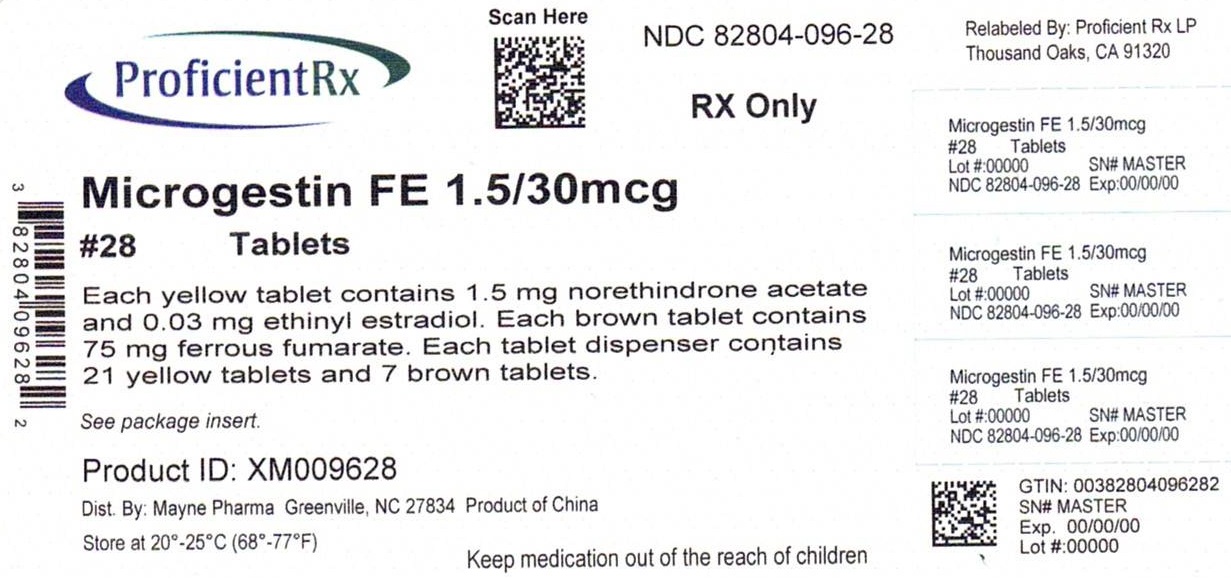
This text provides detailed information about a medication called Microgestin FE 1.5/30mcg. It includes the ingredients of each tablet, dosage instructions, storage recommendations, distributor details, and identification numbers. The medication comes in a package containing 21 yellow tablets and 7 brown tablets. It is important to keep the medication out of the reach of children, and the recommended storage temperature is between 20°C-25°C. The product is distributed by Mayne Pharma and manufactured in China. Additional details about the product, such as the lot number and expiration date, are also provided.*

* These product label images have been analyzed using experimental machine learning. Please verify findings with the primary label text.