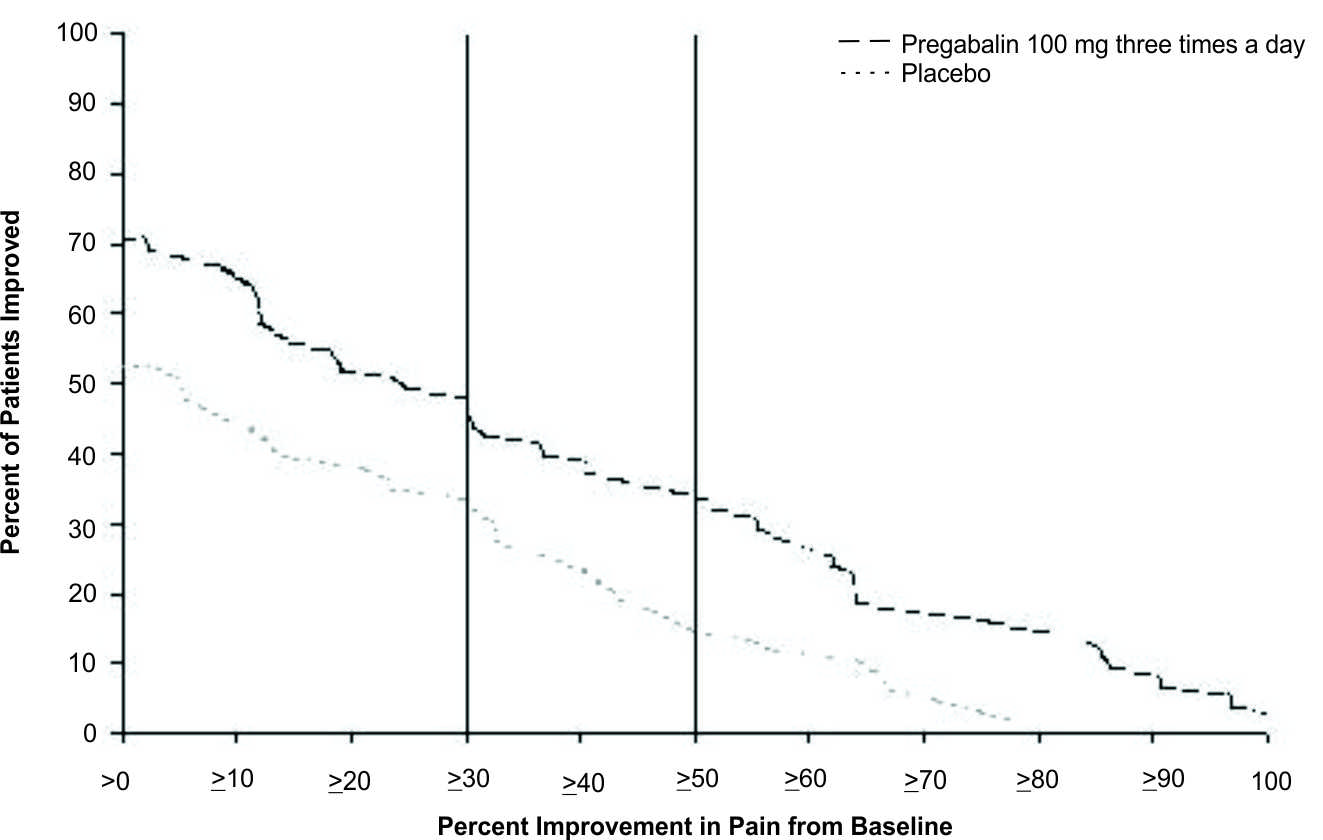
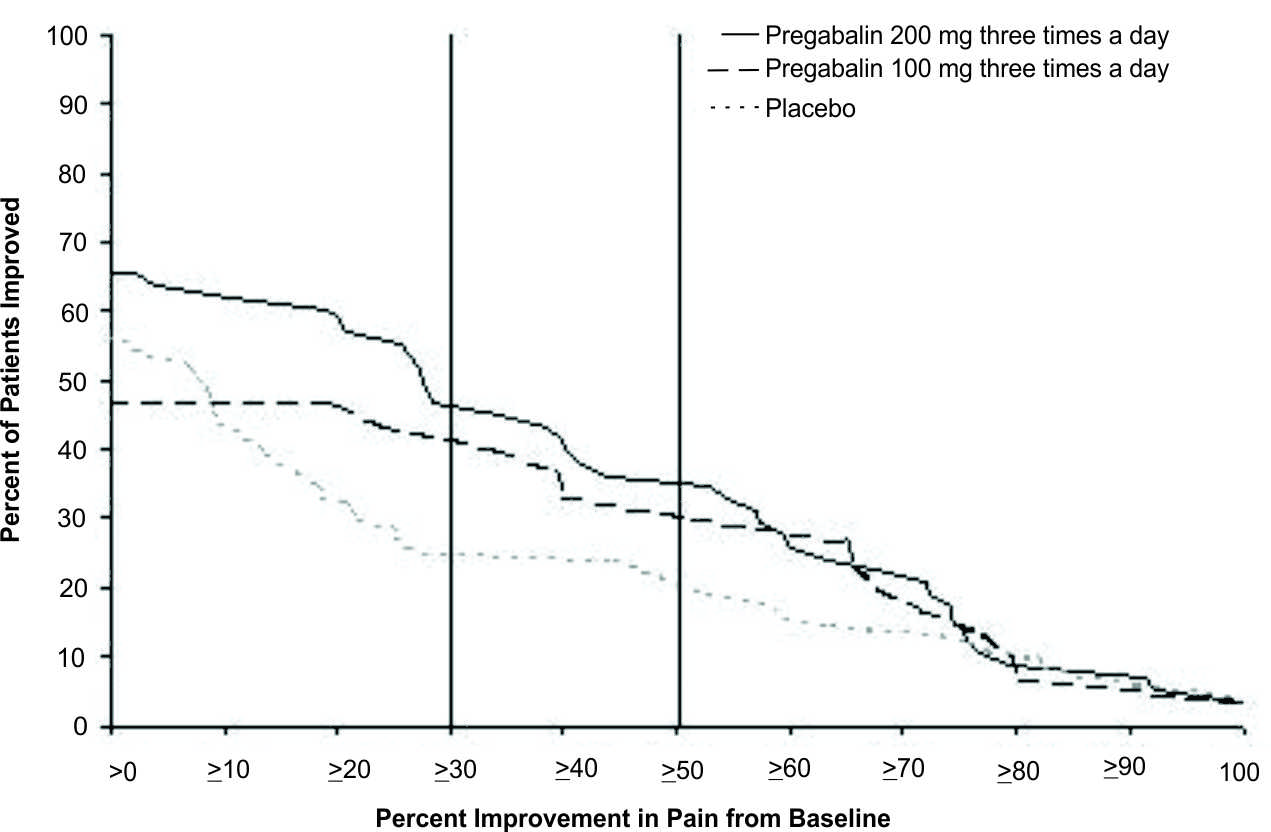
Controlled Studies in Postherpetic Neuralgia
Adverse Reactions Leading to Discontinuation
In clinical trials in adults with postherpetic neuralgia, 14% of patients treated with pregabalin and 7% of patients treated with placebo discontinued prematurely due to adverse reactions. In the pregabalin treatment group, the most common reasons for discontinuation due to adverse reactions were dizziness (4%) and somnolence (3%). In comparison, less than 1% of placebo patients withdrew due to dizziness and somnolence. Other reasons for discontinuation from the trials, occurring in greater frequency in the pregabalin group than in the placebo group, were confusion (2%), as well as peripheral edema, asthenia, ataxia, and abnormal gait (1% each).
Most Common Adverse Reactions
Table 5 lists all adverse reactions, regardless of causality, occurring in greater than or equal to 1% of patients with neuropathic pain associated with postherpetic neuralgia in the combined pregabalin group for which the incidence was greater in this combined pregabalin group than in the placebo group. In addition, an event is included, even if the incidence in the all pregabalin group is not greater than in the placebo group, if the incidence of the event in the 600 mg/day group is more than twice that in the placebo group. A majority of pregabalin-treated patients in clinical studies had adverse reactions with a maximum intensity of "mild" or "moderate”. Overall, 12.4% of all pregabalin-treated patients and 9% of all placebo-treated patients had at least one severe event while 8% of pregabalin-treated patients and 4.3% of placebo-treated patients had at least one severe treatment-related adverse event.
Table 5. Adverse Reaction Incidence in Controlled Trials in Neuropathic Pain Associated with Postherpetic Neuralgia
Body system Preferred term
| 75 mg/d [N=84]
%
| 150 mg/d [N=302]
%
| 300 mg/d [N=312]
%
| 600 mg/d [N=154]
%
| All PGB* [N=852]
%
| Placebo [N=398]
%
|
Body as a whole
|
Infection
| 14
| 8
| 6
| 3
| 7
| 4
|
Headache
| 5
| 9
| 5
| 8
| 7
| 5
|
Pain
| 5
| 4
| 5
| 5
| 5
| 4
|
Accidental injury
| 4
| 3
| 3
| 5
| 3
| 2
|
Flu syndrome
| 1
| 2
| 2
| 1
| 2
| 1
|
Face edema
| 0
| 2
| 1
| 3
| 2
| 1
|
Digestive system
|
Dry mouth
| 7
| 7
| 6
| 15
| 8
| 3
|
Constipation
| 4
| 5
| 5
| 5
| 5
| 2
|
Flatulence
| 2
| 1
| 2
| 3
| 2
| 1
|
Vomiting
| 1
| 1
| 3
| 3
| 2
| 1
|
Metabolic and nutritional disorders
|
Peripheral edema
| 0
| 8
| 16
| 16
| 12
| 4
|
Weight gain
| 1
| 2
| 5
| 7
| 4
| 0
|
Edema
| 0
| 1
| 2
| 6
| 2
| 1
|
Musculoskeletal system
|
Myasthenia
| 1
| 1
| 1
| 1
| 1
| 0
|
Nervous system
|
|
|
|
|
|
|
Dizziness
| 11
| 18
| 31
| 37
| 26
| 9
|
Somnolence
| 8
| 12
| 18
| 25
| 16
| 5
|
Ataxia
| 1
| 2
| 5
| 9
| 5
| 1
|
Abnormal gait
| 0
| 2
| 4
| 8
| 4
| 1
|
Confusion
| 1
| 2
| 3
| 7
| 3
| 0
|
Thinking abnormal†
| 0
| 2
| 1
| 6
| 2
| 2
|
Incoordination
| 2
| 2
| 1
| 3
| 2
| 0
|
Amnesia
| 0
| 1
| 1
| 4
| 2
| 0
|
Speech disorder
| 0
| 0
| 1
| 3
| 1
| 0
|
Respiratory system
|
|
|
|
|
|
|
Bronchitis
| 0
| 1
| 1
| 3
| 1
| 1
|
Special senses
|
|
|
|
|
|
|
Blurry vision‡
| 1
| 5
| 5
| 9
| 5
| 3
|
Diplopia
| 0
| 2
| 2
| 4
| 2
| 0
|
Abnormal vision
| 0
| 1
| 2
| 5
| 2
| 0
|
Eye Disorder
| 0
| 1
| 1
| 2
| 1
| 0
|
Urogenital System
|
|
|
|
|
|
|
Urinary Incontinence
| 0
| 1
| 1
| 2
| 1
| 0
|
* PGB: pregabalin
†Thinking abnormal primarily consists of events related to difficulty with concentration/attention but also includes events related to cognition and language problems and slowed thinking.
‡ Investigator term; summary level term is amblyopia
Controlled Studies of Adjunctive Therapy for Partial-Onset Seizures in Adult Patients
Adverse Reactions Leading to Discontinuation
Approximately 15% of patients receiving pregabalin and 6% of patients receiving placebo in trials of adjunctive therapy for partial-onset seizures discontinued prematurely due to adverse reactions. In the pregabalin treatment group, the adverse reactions most frequently leading to discontinuation were dizziness (6%), ataxia (4%), and somnolence (3%). In comparison, less than 1% of patients in the placebo group withdrew due to each of these events. Other adverse reactions that led to discontinuation of at least 1% of patients in the pregabalin group and at least twice as frequently compared to the placebo group were asthenia, diplopia, blurred vision, thinking abnormal, nausea, tremor, vertigo, headache, and confusion (which each led to withdrawal in 2% or less of patients).
Most Common Adverse Reactions
Table 6 lists all dose-related adverse reactions occurring in at least 2% of all pregabalin-treated patients. Dose-relatedness was defined as the incidence of the adverse event in the 600 mg/day group was at least 2% greater than the rate in both the placebo and 150 mg/day groups. In these studies, 758 patients received pregabalin and 294 patients received placebo for up to 12 weeks. A majority of pregabalin-treated patients in clinical studies had adverse reactions with a maximum intensity of "mild" or "moderate”.
Table 6. Dose-related Adverse Reaction Incidence in Controlled Trials of Adjunctive Therapy for Partial-Onset Seizures in Adult Patients
Body System Preferred Term
| 150 mg/d
[N = 185]
%
| 300 mg/d
[N = 90]
%
| 600 mg/d
[N = 395]
%
| All PGB*
[N = 670]†
%
| Placebo
[N = 294]
%
|
Body as a Whole
| | | | | |
Accidental Injury
| 7
| 11
| 10
| 9
| 5
|
Pain
| 3
| 2
| 5
| 4
| 3
|
Digestive System
| | | | | |
Increased Appetite
| 2
| 3
| 6
| 5
| 1
|
Dry Mouth
| 1
| 2
| 6
| 4
| 1
|
Constipation
| 1
| 1
| 7
| 4
| 2
|
Metabolic and Nutritional Disorders
|
Weight Gain
| 5
| 7
| 16
| 12
| 1
|
Peripheral Edema
| 3
| 3
| 6
| 5
| 2
|
Nervous System
|
|
|
|
|
|
Dizziness
| 18
| 31
| 38
| 32
| 11
|
Somnolence
| 11
| 18
| 28
| 22
| 11
|
Ataxia
| 6
| 10
| 20
| 15
| 4
|
Tremor
| 3
| 7
| 11
| 8
| 4
|
Thinking Abnormal‡
| 4
| 8
| 9
| 8
| 2
|
Amnesia
| 3
| 2
| 6
| 5
| 2
|
Speech Disorder
| 1
| 2
| 7
| 5
| 1
|
Incoordination
| 1
| 3
| 6
| 4
| 1
|
Abnormal Gait
| 1
| 3
| 5
| 4
| 0
|
Twitching
| 0
| 4
| 5
| 4
| 1
|
Confusion
| 1
| 2
| 5
| 4
| 2
|
Myoclonus
| 1
| 0
| 4
| 2
| 0
|
Special Senses
|
|
|
|
|
|
Blurred Vision§
| 5
| 8
| 12
| 10
| 4
|
Diplopia
| 5
| 7
| 12
| 9
| 4
|
Abnormal Vision
| 3
| 1
| 5
| 4
| 1
|
* PGB: pregabalin
† Excludes patients who received the 50 mg dose in Study E1.
‡ Thinking abnormal primarily consists of events related to difficulty with concentration/attention but also includes events related to cognition and language problems and slowed thinking.
§ Investigator term; summary level term is amblyopia
Controlled Study of Adjunctive Therapy for Partial-Onset Seizures in Patients 4 to Less Than 17 Years of Age
Adverse Reactions Leading to Discontinuation
Approximately 2.5% of patients receiving pregabalin and no patients receiving placebo in trials of adjunctive therapy for partial-onset seizures discontinued prematurely due to adverse reactions. In the pregabalin treatment group, the adverse reactions leading to discontinuation were somnolence (3 patients), worsening of epilepsy (1 patient), and hallucination (1 patient).
Most Common Adverse Reactions
Table 7 lists all dose-related adverse reactions occurring in at least 2% of all pregabalin-treated patients. Dose-relatedness was defined as an incidence of the adverse event in the 10 mg/kg/day group that was at least 2% greater than the rate in both the placebo and 2.5 mg/kg/day groups. In this study, 201 patients received pregabalin and 94 patients received placebo for up to 12 weeks. A majority of pregabalin-treated patients in the clinical study had adverse reactions with a maximum intensity of "mild" or "moderate”.
Table 7. Dose-related Adverse Reaction Incidence in a Controlled Trial in Adjunctive Therapy for Partial-Onset Seizures in Patients 4 to Less Than 17 Years of Age
Body System Preferred Term
| 2.5 mg/kg/daya[N=104]
%
| 10 mg/kg/dayb[N=97]
%
| All PGB [N=201]
%
| Placebo [N=94]
%
|
Gastrointestinal disorders
|
Salivary hypersecretion
| 1
| 4
| 2
| 0
|
Investigations
|
Weight increased
| 4
| 13
| 8
| 4
|
Metabolism and nutrition disorders
|
Increased appetite
| 7
| 10
| 8
| 4
|
Nervous system disorders
|
Somnolence
| 17
| 26
| 21
| 14
|
Abbreviations: N=number of patients; PGB = pregabalin.
a. 2.5 mg/kg/day: Maximum dose 150 mg/day. Includes patients less than 30 kg for whom dose was adjusted to 3.5mg/kg/day.
b. 10 mg/kg/day: Maximum dose 600 mg/day. Includes patients less than 30 kg for whom dose was adjusted to 14 mg/kg/day.
Controlled Study of Adjunctive Therapy for Partial-Onset Seizures in Patients 1 Month to Less Than 4 Years of Age
Most Common Adverse Reactions
Table 8 lists all dose-related adverse reactions occurring in at least 2% of all pregabalin -treated patients. Dose-relatedness was defined as an incidence of the adverse event in the 14 mg/kg/day group that was at least 2% greater than the rate in both the placebo and 7 mg/kg/day groups. In this study, 105 patients received pregabalin and 70 patients received placebo for up to 14 days.
Table 8. Dose-related Adverse Reaction Incidence in a Controlled Trial in Adjunctive Therapy for Partial-Onset Seizures in Patients 1 Month to Less Than 4 Years of Age
Body System Preferred Term
| 7 mg/kg/day [N=71]
%
| 14 mg/kg/day [N=34]
%
| All PGB [N=105]
%
| Placebo [N=70]
%
|
Nervous system disorders
|
Somnolence*
| 13
| 21
| 15
| 9
|
Infections and infestations
|
|
Pneumonia
| 1
| 9
| 4
| 0
|
Viral infection
| 3
| 6
| 4
| 3
|
Abbreviations: N=number of patients; PGB=pregabalin.
* includes related terms including lethargy, sluggishness, and hypersomnia.
Controlled Studies with Fibromyalgia
Adverse Reactions Leading to Discontinuation
In clinical trials of patients with fibromyalgia, 19% of patients treated with pregabalin (150 to 600 mg/day) and 10% of patients treated with placebo discontinued prematurely due to adverse reactions. In the pregabalin treatment group, the most common reasons for discontinuation due to adverse reactions were dizziness (6%) and somnolence (3%). In comparison, less than 1% of placebo-treated patients withdrew due to dizziness and somnolence. Other reasons for discontinuation from the trials, occurring with greater frequency in the pregabalin treatment group than in the placebo treatment group, were fatigue, headache, balance disorder, and weight increased. Each of these adverse reactions led to withdrawal in approximately 1% of patients.
Most Common Adverse Reactions
Table 9 lists all adverse reactions, regardless of causality, occurring in greater than or equal to 2% of patients with fibromyalgia in the ‘all pregabalin’ treatment group for which the incidence was greater than in the placebo treatment group. A majority of pregabalin-treated patients in clinical studies experienced adverse reactions with a maximum intensity of "mild" or "moderate".
Table 9. Adverse Reaction Incidence in Controlled Trials in Fibromyalgia
System Organ Class Preferred term
| 150 mg/d [N=132]
%
| 300 mg/d [N=502]
%
| 450 mg/d [N=505]
%
| 600 mg/d [N=378]
%
| All PGB* [N=1517]
%
| Placebo [N=505]
%
|
Ear and Labyrinth Disorders
|
Vertigo
| 2
| 2
| 2
| 1
| 2
| 0
|
Eye Disorders
|
|
|
|
|
|
|
Vision blurred
| 8
| 7
| 7
| 12
| 8
| 1
|
Gastrointestinal Disorders
|
Dry mouth
| 7
| 6
| 9
| 9
| 8
| 2
|
Constipation
| 4
| 4
| 7
| 10
| 7
| 2
|
Vomiting
| 2
| 3
| 3
| 2
| 3
| 2
|
Flatulence
| 1
| 1
| 2
| 2
| 2
| 1
|
Abdominal distension
| 2
| 2
| 2
| 2
| 2
| 1
|
General Disorders and Administrative Site Conditions
|
Fatigue
| 5
| 7
| 6
| 8
| 7
| 4
|
Edema peripheral
| 5
| 5
| 6
| 9
| 6
| 2
|
Chest pain
| 2
| 1
| 1
| 2
| 2
| 1
|
Feeling abnormal
| 1
| 3
| 2
| 2
| 2
| 0
|
Edema
| 1
| 2
| 1
| 2
| 2
| 1
|
Feeling drunk
| 1
| 2
| 1
| 2
| 2
| 0
|
Infections and Infestations
|
Sinusitis
| 4
| 5
| 7
| 5
| 5
| 4
|
Investigations
|
Weight increased
| 8
| 10
| 10
| 14
| 11
| 2
|
Metabolism and Nutrition Disorders
|
Increased appetite
| 4
| 3
| 5
| 7
| 5
| 1
|
Fluid retention
| 2
| 3
| 3
| 2
| 2
| 1
|
Musculoskeletal and Connective Tissue Disorders
|
Arthralgia
| 4
| 3
| 3
| 6
| 4
| 2
|
Muscle spasms
| 2
| 4
| 4
| 4
| 4
| 2
|
Back pain
| 2
| 3
| 4
| 3
| 3
| 3
|
Nervous System Disorders
|
Dizziness
| 23
| 31
| 43
| 45
| 38
| 9
|
Somnolence
| 13
| 18
| 22
| 22
| 20
| 4
|
Headache
| 11
| 12
| 14
| 10
| 12
| 12
|
Disturbance in attention
| 4
| 4
| 6
| 6
| 5
| 1
|
Balance disorder
| 2
| 3
| 6
| 9
| 5
| 0
|
Memory impairment
| 1
| 3
| 4
| 4
| 3
| 0
|
Coordination abnormal
| 2
| 1
| 2
| 2
| 2
| 1
|
Hypoesthesia
| 2
| 2
| 3
| 2
| 2
| 1
|
Lethargy
| 2
| 2
| 1
| 2
| 2
| 0
|
Tremor
| 0
| 1
| 3
| 2
| 2
| 0
|
Psychiatric Disorders
|
Euphoric Mood
| 2
| 5
| 6
| 7
| 6
| 1
|
Confusional state
| 0
| 2
| 3
| 4
| 3
| 0
|
Anxiety
| 2
| 2
| 2
| 2
| 2
| 1
|
Disorientation
| 1
| 0
| 2
| 1
| 2
| 0
|
Depression
| 2
| 2
| 2
| 2
| 2
| 2
|
Respiratory, Thoracic and Mediastinal Disorders
|
Pharyngolaryngeal pain
| 2
| 1
| 3
| 3
| 2
| 2
|
* PGB: pregabalin
Controlled Studies in Neuropathic Pain Associated with Spinal Cord Injury
Adverse Reactions Leading to Discontinuation
In clinical trials of adults with neuropathic pain associated with spinal cord injury, 13% of patients treated with pregabalin and 10% of patients treated with placebo discontinued prematurely due to adverse reactions. In the pregabalin treatment group, the most common reasons for discontinuation due to adverse reactions were somnolence (3%) and edema (2%). In comparison, none of the placebo-treated patients withdrew due to somnolence and edema. Other reasons for discontinuation from the trials, occurring with greater frequency in the pregabalin treatment group than in the placebo treatment group, were fatigue and balance disorder. Each of these adverse reactions led to withdrawal in less than 2% of patients.
Most Common Adverse Reactions
Table 10 lists all adverse reactions, regardless of causality, occurring in greater than or equal to 2% of patients for which the incidence was greater than in the placebo treatment group with neuropathic pain associated with spinal cord injury in the controlled trials. A majority of pregabalin-treated patients in clinical studies experienced adverse reactions with a maximum intensity of "mild" or "moderate".
Table 10. Adverse Reaction Incidence in Controlled Trials in Neuropathic Pain Associated with Spinal Cord Injury
System Organ Class
Preferred term
| PGB* (N=182)
| Placebo (N=174)
|
%
| %
|
Ear and labyrinth disorders
|
Vertigo
| 2.7
| 1.1
|
Eye disorders
|
Vision blurred
| 6.6
| 1.1
|
Gastrointestinal disorders
|
|
|
Dry mouth
| 11.0
| 2.9
|
Constipation
| 8.2
| 5.7
|
Nausea
| 4.9
| 4.0
|
Vomiting
| 2.7
| 1.1
|
General disorders and administration site conditions
|
Fatigue
| 11.0
| 4.0
|
Edema peripheral
| 10.4
| 5.2
|
Edema
| 8.2
| 1.1
|
Pain
| 3.3
| 1.1
|
Infections and infestations
|
Nasopharyngitis
| 8.2
| 4.6
|
Investigations
|
Weight increased
| 3.3
| 1.1
|
Blood creatine phosphokinase increased
| 2.7
| 0
|
Musculoskeletal and connective tissue disorders
|
Muscular weakness
| 4.9
| 1.7
|
Pain in extremity
| 3.3
| 2.3
|
Neck pain
| 2.7
| 1.1
|
Back pain
| 2.2
| 1.7
|
Joint swelling
| 2.2
| 0
|
Nervous system disorders
|
Somnolence
| 35.7
| 11.5
|
Dizziness
| 20.9
| 6.9
|
Disturbance in attention
| 3.8
| 0
|
Memory impairment
| 3.3
| 1.1
|
Paresthesia
| 2.2
| 0.6
|
Psychiatric disorders
|
Insomnia
| 3.8
| 2.9
|
Euphoric mood
| 2.2
| 0.6
|
Renal and urinary disorders
|
Urinary incontinence
| 2.7
| 1.1
|
Skin and subcutaneous tissue disorders
|
Decubitus ulcer
| 2.7
| 1.1
|
Vascular disorders
|
Hypertension
| 2.2
| 1.1
|
Hypotension
| 2.2
| 0
|
* PGB: Pregabalin
Other Adverse Reactions Observed During the Clinical Studies of Pregabalin
Following is a list of treatment-emergent adverse reactions reported by patients treated with pregabalin during all clinical trials. The listing does not include those events already listed in the previous tables or elsewhere in labeling, those events for which a drug cause was remote, those events which were so general as to be uninformative, and those events reported only once which did not have a substantial probability of being acutely life-threatening.
Events are categorized by body system and listed in order of decreasing frequency according to the following definitions: frequent adverse reactions are those occurring on one or more occasions in at least 1/100 patients; infrequent adverse reactions are those occurring in 1/100 to 1/1000 patients; rare reactions are those occurring in fewer than 1/1000 patients. Events of major clinical importance are described in the Warnings and Precautions section (5).
Body as a Whole – Frequent: Abdominal pain, Allergic reaction, Fever, Infrequent: Abscess, Cellulitis, Chills, Malaise, Neck rigidity, Overdose, Pelvic pain, Photosensitivity reaction, Rare: Anaphylactoid reaction, Ascites, Granuloma, Hangover effect, Intentional Injury, Retroperitoneal Fibrosis, Shock
Cardiovascular System – Infrequent: Deep thrombophlebitis, Heart failure, Hypotension, Postural hypotension, Retinal vascular disorder, Syncope; Rare: ST Depressed, Ventricular Fibrillation
Digestive System – Frequent: Gastroenteritis, Increased appetite; Infrequent: Cholecystitis, Cholelithiasis, Colitis, Dysphagia, Esophagitis, Gastritis, Gastrointestinal hemorrhage, Melena, Mouth ulceration, Pancreatitis, Rectal hemorrhage, Tongue edema; Rare: Aphthous stomatitis, Esophageal Ulcer, Periodontal abscess
Hemic and Lymphatic System – Frequent: Ecchymosis; Infrequent: Anemia, Eosinophilia, Hypochromic anemia, Leukocytosis, Leukopenia, Lymphadenopathy, Thrombocytopenia; Rare: Myelofibrosis, Polycythemia, Prothrombin decreased, Purpura, Thrombocythemia, Alanine aminotransferase increased, Aspartate aminotransferase increased
Metabolic and Nutritional Disorders – Rare: Glucose Tolerance Decreased, Urate Crystalluria
Musculoskeletal System – Frequent: Arthralgia, Leg cramps, Myalgia, Myasthenia; Infrequent:
Arthrosis; Rare: Chondrodystrophy, Generalized Spasm
Nervous System – Frequent: Anxiety, Depersonalization, Hypertonia, Hypoesthesia, Libido decreased, Nystagmus, Paresthesia, Sedation, Stupor, Twitching; Infrequent: Abnormal dreams, Agitation, Apathy, Aphasia, Circumoral paresthesia, Dysarthria, Hallucinations, Hostility, Hyperalgesia, Hyperesthesia, Hyperkinesia, Hypokinesia, Hypotonia, Libido increased, Myoclonus, Neuralgia, Rare; Addiction, Cerebellar syndrome, Cogwheel rigidity, Coma, Delirium, Delusions, Dysautonomia, Dyskinesia, Dystonia, Encephalopathy, Extrapyramidal syndrome, Guillain-Barré syndrome, Hypalgesia, Intracranial hypertension, Manic reaction, Paranoid reaction, Peripheral neuritis, Personality disorder, Psychotic depression, Schizophrenic reaction, Sleep disorder, Torticollis, Trismus
Respiratory System – Rare: Apnea, Atelectasis, Bronchiolitis, Hiccup, Laryngismus, Lung edema, Lung fibrosis, Yawn
Skin and Appendages – Frequent: Pruritus, Infrequent: Alopecia, Dry skin, Eczema, Hirsutism, Skin ulcer, Urticaria, Vesiculobullous rash; Rare: Angioedema, Exfoliative dermatitis, Lichenoid dermatitis, Melanosis, Nail Disorder, Petechial rash, Purpuric rash, Pustular rash, Skin atrophy, Skin necrosis, Skin nodule, Stevens-Johnson syndrome, Subcutaneous nodule
Special senses – Frequent: Conjunctivitis, Diplopia, Otitis media, Tinnitus; Infrequent: Abnormality of accommodation, Blepharitis, Dry eyes, Eye hemorrhage, Hyperacusis, Photophobia, Retinal edema, Taste loss, Taste perversion; Rare: Anisocoria, Blindness, Corneal ulcer, Exophthalmos, Extraocular palsy, Iritis, Keratitis, Keratoconjunctivitis, Miosis, Mydriasis, Night blindness, Ophthalmoplegia, Optic atrophy, Papilledema, Parosmia, Ptosis, Uveitis
Urogenital System – Frequent: Anorgasmia, Impotence, Urinary frequency, Urinary incontinence; Infrequent: Abnormal ejaculation, Albuminuria, Amenorrhea, Dysmenorrhea, Dysuria, Hematuria, Kidney calculus, Leukorrhea, Menorrhagia, Metrorrhagia, Nephritis, Oliguria, Urinary retention, Urine abnormality; Rare: Acute kidney failure, Balanitis, Bladder Neoplasm, Cervicitis, Dyspareunia, Epididymitis, Female lactation, Glomerulitis, Ovarian disorder, Pyelonephritis
Comparison of Gender and Race
The overall adverse event profile of pregabalin was similar between women and men. There are insufficient data to support a statement regarding the distribution of adverse experience reports by race.
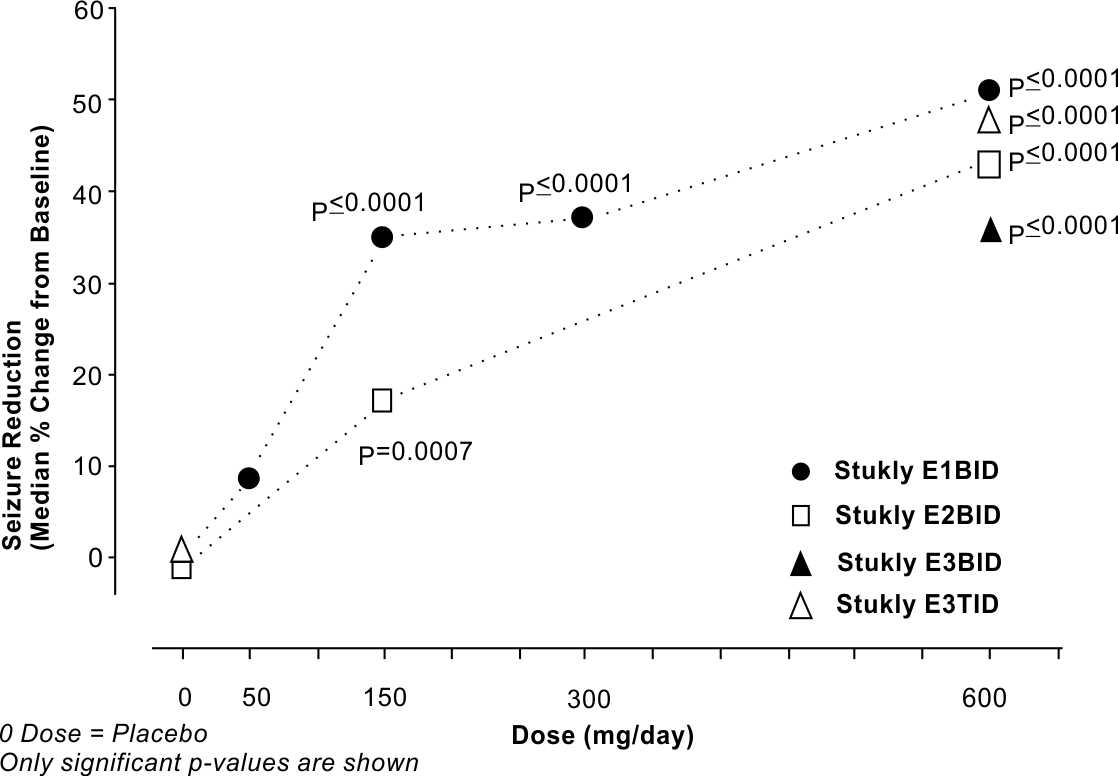
In the first study (E1), there was evidence of a dose-response relationship for total daily doses of pregabalin between 150 and 600 mg/day; a dose of 50 mg/day was not effective. In the first study (E1), each daily dose was divided into two equal doses (twice a day dosing). In the second study (E2), each daily dose was divided into three equal doses (three times a day dosing). In the third study (E3), the same total daily dose was divided into two equal doses for one group (twice a day dosing) and three equal doses for another group (three times a day dosing). While the three times a day dosing group in Study E3 performed numerically better than the twice a day dosing group, this difference was small and not statistically significant.
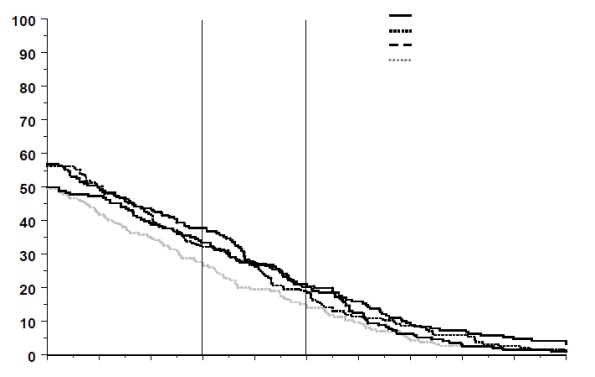
A secondary outcome measure included the responder rate (proportion of patients with greater than or equal to 50% reduction from baseline in partial seizure frequency). The following figure displays responder rate by dose for two of the studies.
Figure 6: Responder Rate by Adjunctive Epilepsy Study
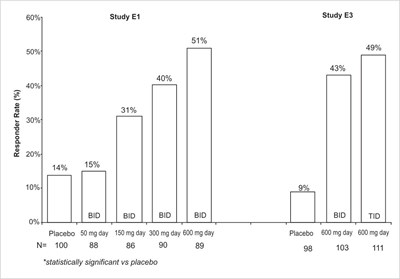
Fig-06 (Pregabalin Figure 06)
Seizure Reduction by Dose (All Partial-Onset Seizures) for Studies E1, E2, and E3
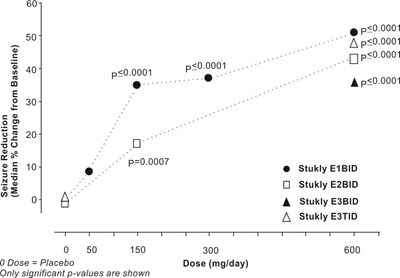
Fig-07 (Pregabalin Figure 07)
Subset evaluations of the antiseizure efficacy of pregabalin showed no clinically important differences as a function of age, gender, or race.
Adjunctive Therapy for Partial-Onset Seizures in Pediatric Patients 4 to Less Than 17 Years of Age
The efficacy of pregabalin as adjunctive therapy in partial-onset seizures was established in a 12-week, randomized, double-blind, placebo-controlled, multicenter study in pediatric patients 4 years to less than 17 years of age with partial-onset seizures with or without secondary generalization. During an 8-week baseline period, patients had to experience at least 6 partial-onset seizures with no seizure-free period exceeding 4 weeks. The mean duration of epilepsy was 6 years and the mean and median baseline seizure frequencies were 57 and 18 seizures per month, respectively. Approximately 74% of the patients were taking 2 to 3 concurrent AEDs at baseline. Among the pregabalin -treated patients, 87% completed the double-blind phase of the study.
In this study, pregabalin 2.5 mg/kg/day (maximum 150 mg/day) and 10 mg/kg/day (maximum 600 mg/day) were compared to placebo. Administration of each daily dose was divided into two equal doses (twice a day dosing). Because of higher weight-normalized clearance in patients with body weight less than 30 kg [see Clinical Pharmacology (12.3)], the pregabalin dose was increased by 40% to 3.5 mg/kg/day for patients weighing less than 30 kg randomized to the 2.5 mg/kg/day group or to 14 mg/kg/day for patients randomized to the 10 mg/kg/day group.
Table 12 shows median baseline seizure rates, median percent change from baseline in seizure rates, and percent difference relative to placebo (derived from the primary analysis model) by dose.
Table 12. Seizure Response in Controlled Adjunctive Partial-Onset Seizure Study in Pediatric Patients 4 to Less Than 17 Years of Age
Daily Dose of Pregabalin
|
N
|
Median Baseline
Seizure Frequency/ 28 days
|
Median %
Change from Baseline
|
% Difference
Relative to Placebo
|
p-value,
versus placebo
|
Placebo
|
93
|
16.5
|
-16.9
|
Not applicable
|
|
2.5 mg/kg/day (BID)a
|
104
|
23.8
|
-27.3
|
-10.5
|
0.2577
|
10 mg/kg/day (BID)b
|
97
|
17.5
|
-37.1
|
-21.0
|
0.0185
|
Abbreviations: BID=twice daily; N=number.
a. 2.5 mg/kg/day: Maximum dose 150 mg/day. Includes patients less than 30 kg for whom dose was adjusted to 3.5 mg/kg/day.
b. 10 mg/kg/day: Maximum dose 600 mg/day. Includes patients less than 30 kg for whom dose was adjusted to 14 mg/kg/day.
There was evidence of a dose-response relationship for total daily doses of pregabalin between 2.5
mg/kg/day and 10 mg/kg/day. A significant improvement in seizure rate was observed for
pregabalin 10 mg/kg/day group compared with placebo. While the 2.5 mg/kg/day group
performed numerically better than placebo, this difference was not statistically significant.
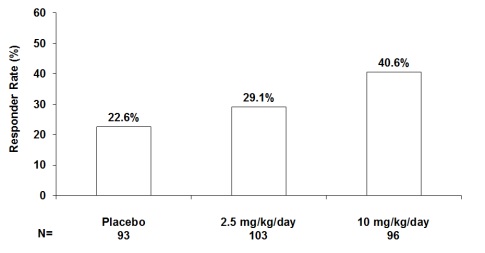
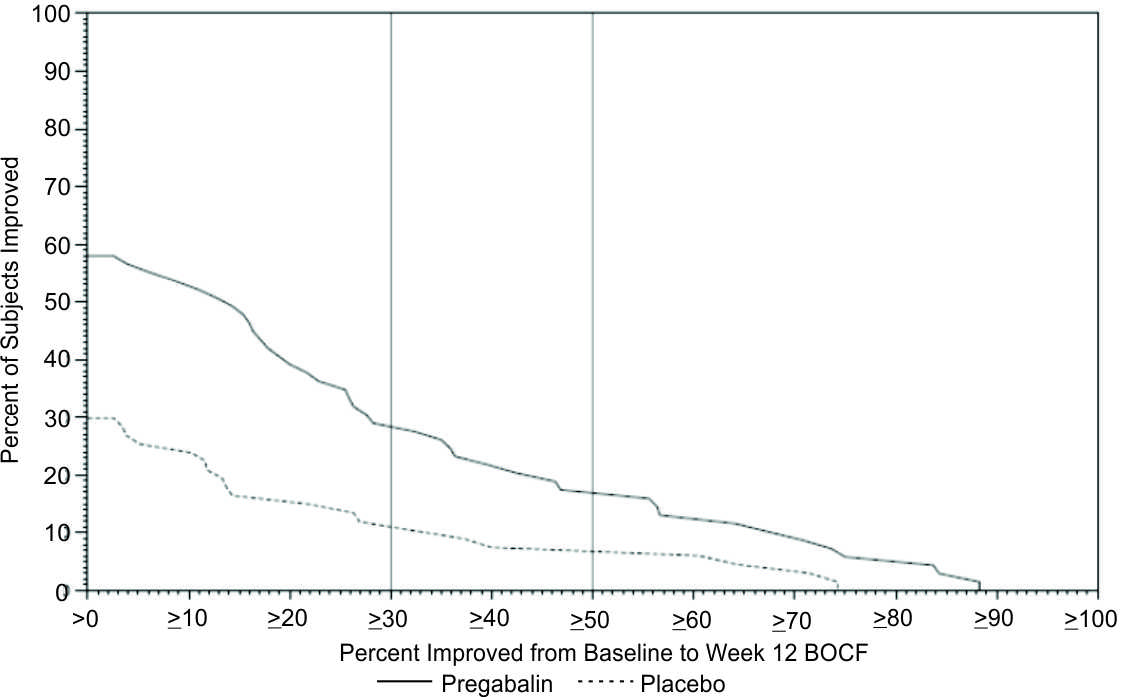
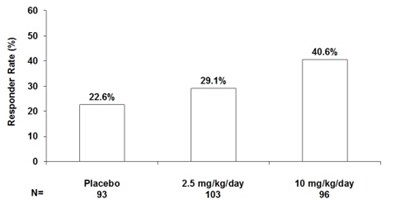
A key secondary efficacy measure, the responder rate (proportion of patients with greater than or
equal to 50% reduction from baseline in partial seizure frequency) showed improvements for
pregabalin groups compared with placebo. The following figure displays responder rate by dose:
Figure 8: Responder Rate (Greater than or Equal to 50% Reduction)
Pregabalin-figure-08 (Pregabalin Figure 08)
Adjunctive Therapy for Partial-Onset Seizures in Pediatric Patients 1 Month to Less Than 4 Years of Age
The efficacy of pregabalin as adjunctive therapy in partial-onset seizures was established in a 14- day, randomized, double-blind, placebo-controlled, multicenter study in children 1 month to less than 4 years of age with partial-onset seizures with or without secondary generalization. The youngest patient evaluated was 3 months of age. During a 48- to 72-hour baseline video electroencephalogram (EEG), patients had to experience at least 2 partial-onset seizures. The mean duration of epilepsy at baseline was 1.6 years and the mean and median baseline seizure frequencies were 12.2 and 4.4 seizures per day, respectively. Approximately 33%, 50%, and 17% of patients were taking 1, 2, or 3 concurrent AEDs at baseline, respectively. Among the pregabalin -treated patients, 97% completed the double-blind phase of the study.
In this study, pregabalin 7 mg/kg/day and 14 mg/kg/day were compared to placebo. Administration of each daily dose was divided into three equal doses (three times a day dosing). The primary endpoint was the 24-hour partial-onset seizure rate based on the comparison of the baseline video EEG to a repeat 48-72 hour video EEG performed at the end of 14 days of double-blind treatment.
Table 13 shows median baseline seizure rates, median percent change from baseline in seizure rates, and percent difference relative to placebo (derived from the primary analysis model) by dose.
Table 13. Seizure Response in Controlled Adjunctive Partial-Onset Seizure Study in Pediatric Patients 1 Month to Less Than 4 Years of Age
Daily Dose of pregabalin
|
N
|
Median Baseline
Seizure Frequency/ 24 hours
|
Median %
Change from Baseline
|
% Difference
Relative to Placebo
|
p-value,
versus placebo
|
Placebo
|
53
|
2.9
|
22.2
|
Not applicable
|
|
7 mg/kg/day
|
59
|
4.7
|
16.8
|
15.1
|
0.4606
|
14 mg/kg/day
|
28
|
5.4
|
70.0
|
-43.9
|
0.0223
|
Abbreviations: N=number of patients
A significant improvement in partial-onset seizure rate was observed for pregabalin 14 mg/kg/day group compared with placebo. Patients treated with pregabalin 7 mg/kg/day did not show improvement relative to placebo.
Responder rates (≥ 50% or greater reduction in partial-onset seizure frequency) were a secondary efficacy parameter; patients treated with pregabalin 14 mg/kg/day showed numerical improvement compared with placebo, while patients treated with pregabalin 7 mg/kg/day did not show improvement relative to placebo: the responder rates were 53.6%, 30.5%, and 41.5% for pregabalin 14 mg/kg/day, pregabalin 7 mg/kg/day, and placebo, respectively.