Lacosamide is effectively removed from plasma by hemodialysis. Following a 4-hour hemodialysis treatment, dosage supplementation of up to 50% should be considered.
- 50 mg: pink, oval, film coated tablets debossed with 'SG' on one side and '192' on the other.
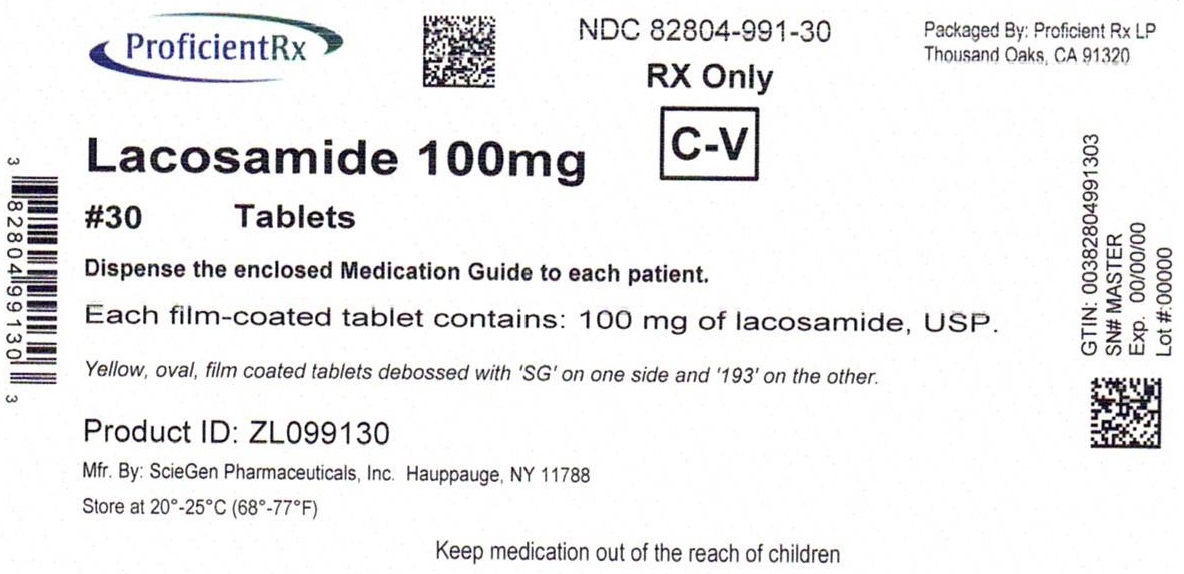
- 100 mg: yellow, oval, film coated tablets debossed with 'SG' on one side and '193'on the other.
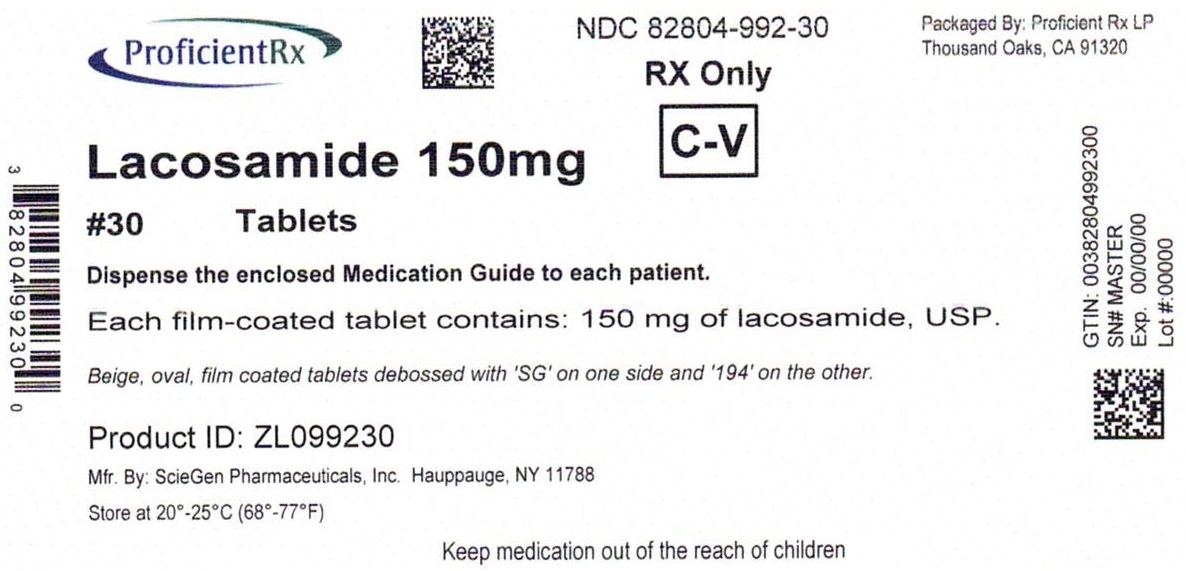
- 150 mg: beige, oval, film coated tablets debossed with 'SG' on one side and '194' on the other.
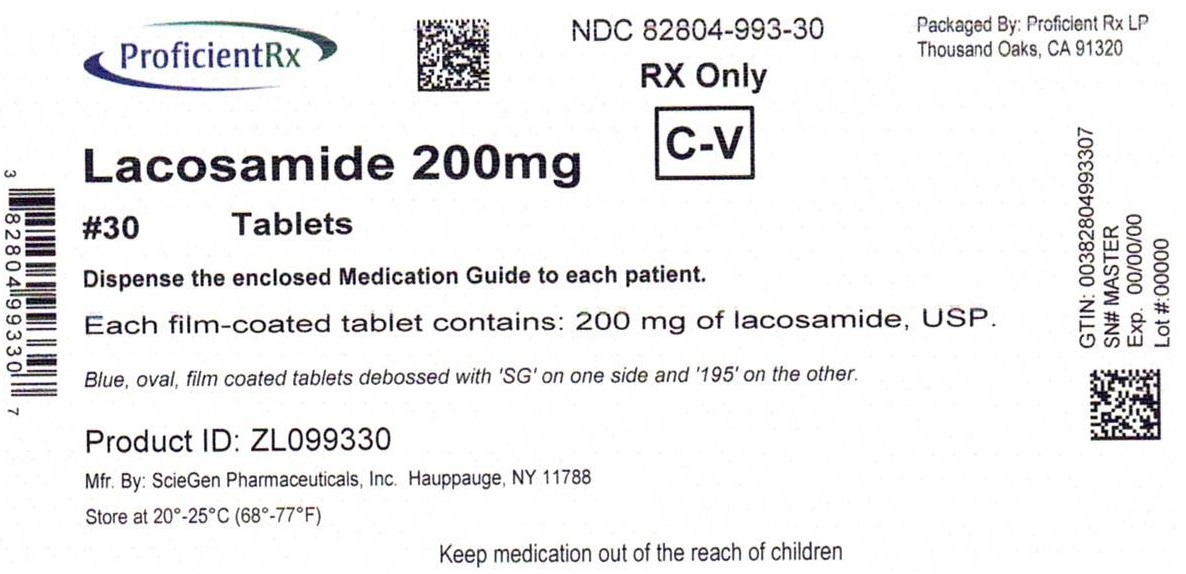
- 200 mg: blue, oval, film coated tablets debossed with 'SG' on one side and '195' on the other.
PR Interval Prolongation, Atrioventricular Block, and Ventricular Tachyarrhythmia
Dose-dependent prolongations in PR interval with lacosamide have been observed in clinical studies in adult patients and in healthy volunteers [see Clinical Pharmacology (12.2)]. In adjunctive clinical trials in adult patients with partial-onset seizures, asymptomatic first-degree atrioventricular (AV) block was observed as an adverse reaction in 0.4% (4/944) of patients randomized to receive lacosamide and 0% (0/364) of patients randomized to receive placebo. One case of profound bradycardia was observed in a patient during a 15-minute infusion of 150 mg lacosamide. When lacosamide is given with other drugs that prolong the PR interval, further PR prolongation is possible.
In the postmarketing setting, there have been reports of cardiac arrhythmias in patients treated with lacosamide, including bradycardia, AV block, and ventricular tachyarrhythmia, which have rarely resulted in asystole, cardiac arrest, and death. Most, although not all, cases have occurred in patients with underlying proarrhythmic conditions, or in those taking concomitant medications that affect cardiac conduction or prolong the PR interval. These events have occurred with both oral and intravenous routes of administration and at prescribed doses as well as in the setting of overdose [see Overdosage (10)]. In all patients for whom a loading dose is clinically indicated, administer the loading dose with medical supervision because of the possibility of increased incidence of adverse reactions, including cardiovascular adverse reactions.
Lacosamide should be used with caution in patients with underlying proarrhythmic conditions such as known cardiac conduction problems (e.g., marked first-degree AV block, second-degree or higher AV block and sick sinus syndrome without pacemaker), severe cardiac disease (such as myocardial ischemia or heart failure, or structural heart disease), and cardiac sodium channelopathies (e.g., Brugada Syndrome). Lacosamide should also be used with caution in patients on concomitant medications that affect cardiac conduction, including sodium channel blockers, beta-blockers, calcium channel blockers, potassium channel blockers, and medications that prolong the PR interval [see Drug Interactions (7.2)]. In such patients, obtaining an ECG before beginning lacosamide, and after lacosamide is titrated to steady-state maintenance dose, is recommended. In addition, these patients should be closely monitored if they are administered lacosamide through the intravenous route [see Adverse Reactions (6.1) and Drug Interactions (7.2)].
Atrial Fibrillation and Atrial Flutter
In the short-term investigational trials of lacosamide in adult patients with partial-onset seizures there were no cases of atrial fibrillation or flutter. Both atrial fibrillation and atrial flutter have been reported in open label partial-onset seizure trials and in postmarketing experience. In adult patients with diabetic neuropathy, for which lacosamide is not indicated, 0.5% of patients treated with lacosamide experienced an adverse reaction of atrial fibrillation or atrial flutter, compared to 0% of placebo-treated patients. Lacosamide administration may predispose to atrial arrhythmias (atrial fibrillation or flutter), especially in patients with diabetic neuropathy and/or cardiovascular disease.
Lacosamide Tablet in Adults
In the premarketing development of adjunctive therapy for partial-onset seizures, 1,327 adult patients received lacosamide tablets in controlled and uncontrolled trials, of whom 1,000 were treated for longer than 6 months, and 852 for longer than 12 months. The monotherapy development program for partial-onset seizures included 425 adult patients, 310 of whom were treated for longer than 6 months, and 254 for longer than 12 months.
Partial-Onset Seizures
Monotherapy Historical-Control Trial (Study 1)
In the monotherapy trial for partial-onset seizures, 16% of patients randomized to receive lacosamide at the recommended doses of 300 mg/day and 400 mg/day discontinued from the trial as a result of an adverse reaction. The adverse reaction most commonly (≥1% on lacosamide) leading to discontinuation was dizziness.
Adverse reactions that occurred in this study were generally similar to those that occurred in adjunctive placebo-controlled studies. One adverse reaction, insomnia, occurred at a rate of ≥2% and was not reported at a similar rate in previous studies. This adverse reaction has also been observed in postmarketing experience [see Adverse Reactions (6.2)]. Because this study did not include a placebo control group, causality could not be established.
Dizziness, headache, nausea, somnolence, and fatigue all occurred at lower incidences during the AED Withdrawal Phase and Monotherapy Phase, compared with the Titration Phase [see Clinical Studies (14.1)].
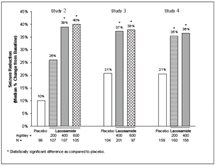
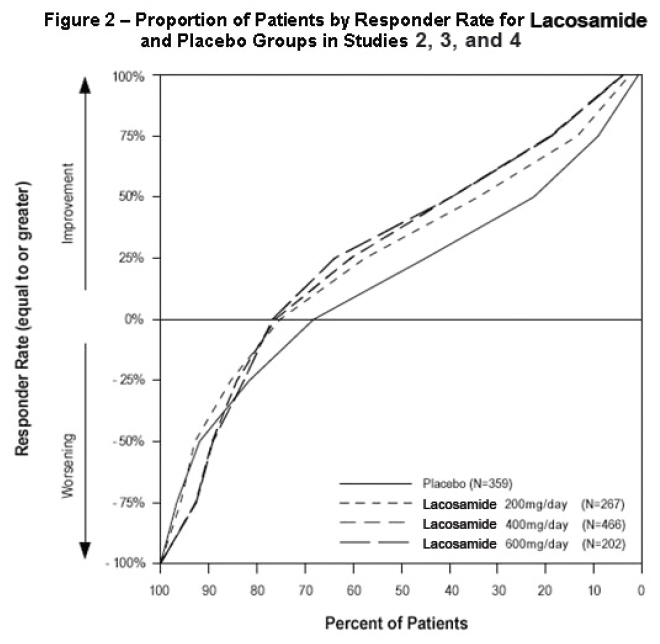
Adjunctive Therapy Controlled Trials (Studies 2, 3, and 4)
In adjunctive therapy controlled clinical trials for partial-onset seizures, the rate of discontinuation as a result of an adverse reaction was 8% and 17% in patients randomized to receive lacosamide at the recommended doses of 200 mg/day and 400 mg/day, respectively, 29% at 600 mg/day (1.5 times greater than the maximum recommended dose), and 5% in patients randomized to receive placebo. The adverse reactions most commonly (>1% on lacosamide and greater than placebo) leading to discontinuation were dizziness, ataxia, vomiting, diplopia, nausea, vertigo, and blurred vision.
Table 4 gives the incidence of adverse reactions that occurred in ≥2% of adult patients with partial-onset seizures in the lacosamide total group and for which the incidence was greater than placebo.
Table 4: Adverse Reactions Incidence in Adjunctive Therapy Pooled, Placebo-Controlled Trials in Adult Patients with Partial-Onset Seizures (Studies 2, 3, and 4)| Adverse Reaction | Placebo
N=364
% | Lacosamide
200 mg/day
N=270
% | Lacosamide
400 mg/day
N=471
% | Lacosamide
600 mg/day600 mg dose is 1.5 times greater than the maximum recommended dose.
N=203
% | Lacosamide
Total
N=944
% |
|---|
Ear and labyrinth disorder |
Vertigo | 1 | 5 | 3 | 4 | 4 |
Eye disorders |
Diplopia | 2 | 6 | 10 | 16 | 11 |
Blurred Vision | 3 | 2 | 9 | 16 | 8 |
Gastrointestinal disorders |
Nausea | 4 | 7 | 11 | 17 | 11 |
Vomiting | 3 | 6 | 9 | 16 | 9 |
Diarrhea | 3 | 3 | 5 | 4 | 4 |
General disorders and administration site conditions |
Fatigue | 6 | 7 | 7 | 15 | 9 |
Gait disturbance | <1 | <1 | 2 | 4 | 2 |
Asthenia | 1 | 2 | 2 | 4 | 2 |
Injury, poisoning and procedural complications |
Contusion | 3 | 3 | 4 | 2 | 3 |
Skin laceration | 2 | 2 | 3 | 3 | 3 |
Nervous system disorders |
Dizziness | 8 | 16 | 30 | 53 | 31 |
Headache | 9 | 11 | 14 | 12 | 13 |
Ataxia | 2 | 4 | 7 | 15 | 8 |
Somnolence | 5 | 5 | 8 | 8 | 7 |
Tremor | 4 | 4 | 6 | 12 | 7 |
Nystagmus | 4 | 2 | 5 | 10 | 5 |
Balance disorder | 0 | 1 | 5 | 6 | 4 |
Memory impairment | 2 | 1 | 2 | 6 | 2 |
Psychiatric disorders |
Depression | 1 | 2 | 2 | 2 | 2 |
Skin and subcutaneous disorders |
Pruritus | 1 | 3 | 2 | 3 | 2 |
The overall adverse reaction rate was similar in male and female patients. Although there were few non-Caucasian patients, no differences in the incidences of adverse reactions compared to Caucasian patients were observed.
Lacosamide Tablet in Pediatric Patients
Safety of lacosamide tablets was evaluated in clinical studies of pediatric patients 4 to less than 17 years of age for the treatment of partial-onset seizures. Across studies in pediatric patients with partial-onset seizures, 328 patients 4 to less than 17 years of age received lacosamide oral solution or tablet, of whom 148 received lacosamide for at least 1 year. Adverse reactions reported in clinical studies of pediatric patients 4 to less than 17 years of age were similar to those seen in adult patients.
Laboratory Abnormalities
Abnormalities in liver function tests have occurred in controlled trials with lacosamide in adult patients with partial-onset seizures who were taking 1 to 3 concomitant anti-epileptic drugs. Elevations of ALT to ≥3× ULN occurred in 0.7% (7/935) of lacosamide patients and 0% (0/356) of placebo patients. One case of hepatitis with transaminases >20× ULN occurred in one healthy subject 10 days after lacosamide treatment completion, along with nephritis (proteinuria and urine casts). Serologic studies were negative for viral hepatitis. Transaminases returned to normal within one month without specific treatment. At the time of this event, bilirubin was normal. The hepatitis/nephritis was interpreted as a delayed hypersensitivity reaction to lacosamide.
Other Adverse Reactions
The following is a list of adverse reactions reported by patients treated with lacosamide in all clinical trials in adult patients, including controlled trials and long-term open-label extension trials. Adverse reactions addressed in other tables or sections are not listed here.
Blood and lymphatic system disorders: neutropenia, anemia
Cardiac disorders: palpitations
Ear and labyrinth disorders: tinnitus
Gastrointestinal disorders: constipation, dyspepsia, dry mouth, oral hypoaesthesia
General disorders and administration site conditions: irritability, pyrexia, feeling drunk
Injury, poisoning, and procedural complications: fall
Musculoskeletal and connective tissue disorders: muscle spasms
Nervous system disorders: paresthesia, cognitive disorder, hypoaesthesia, dysarthria, disturbance in attention, cerebellar syndrome
Psychiatric disorders: confusional state, mood altered, depressed mood
Additional pediatric use information is approved for UCB, Inc.'s VIMPAT® (lacosamide) tablets. However, due to UCB, Inc.'s marketing exclusivity rights, this drug product is not labeled with that pediatric information.
Pregnancy Exposure Registry
There is a pregnancy exposure registry that monitors pregnancy outcomes in women exposed to antiepileptic drugs (AEDs), such as lacosamide, during pregnancy. Encourage women who are taking lacosamide during pregnancy to enroll in the North American Antiepileptic Drug (NAAED) pregnancy registry by calling 1-888-233-2334 or visiting http://www.aedpregnancyregistry.org/.
Risk Summary
Available data from the North American Antiepileptic Drug (NAAED) pregnancy registry, a prospective cohort study, case reports, and a case series with lacosamide use in pregnant women are insufficient to identify a drug associated risk of major birth defects, miscarriage or other adverse maternal or fetal outcomes. Lacosamide produced developmental toxicity (increased embryofetal and perinatal mortality, growth deficit) in rats following administration during pregnancy. Developmental neurotoxicity was observed in rats following administration during a period of postnatal development corresponding to the third trimester of human pregnancy. These effects were observed at doses associated with clinically relevant plasma exposures (See Data).
The background risk of major birth defects and miscarriage for the indicated population is unknown. All pregnancies have a background risk of birth defect, loss, or other adverse outcomes. In the U.S. general population the estimated background risk of major birth defects and miscarriage in clinically recognized pregnancies is 2% to 4% and 15% to 20%, respectively.
Data
Animal Data
Oral administration of lacosamide to pregnant rats (20 mg/kg/day, 75 mg/kg/day, or 200 mg/kg/day) and rabbits (6.25 mg/kg/ day, 12.5 mg/kg/day, or 25 mg/kg/day) during the period of organogenesis did not produce any effects on the incidences of fetal structural abnormalities. However, the maximum doses evaluated were limited by maternal toxicity in both species and embryofetal death in rats. These doses were associated with maternal plasma lacosamide exposures (AUC) approximately 2 and 1 times (rat and rabbit, respectively) that in humans at the maximum recommended human dose (MRHD) of 400 mg/day.
In two studies in which lacosamide (25 mg/kg/day, 70 mg/kg/day, or 200 mg/kg/day and 50 mg/kg/day, 100 mg/kg/day, or 200 mg/kg/day) was orally administered to rats throughout pregnancy and lactation, increased perinatal mortality and decreased body weights in the offspring were observed at the highest dose tested. The no-effect dose for pre- and postnatal developmental toxicity in rats (70 mg/kg/day) was associated with a maternal plasma lacosamide AUC similar to that in humans at the MRHD.
Oral administration of lacosamide (30 mg/kg/day, 90 mg/kg/day, or 180 mg/kg/day) to rats during the neonatal and juvenile periods of development resulted in decreased brain weights and long-term neurobehavioral changes (altered open field performance, deficits in learning and memory). The early postnatal period in rats is generally thought to correspond to late pregnancy in humans in terms of brain development. The no-effect dose for developmental neurotoxicity in rats was associated with a plasma lacosamide AUC less than that in humans at the MRHD.
In Vitro Data
Lacosamide has been shown in vitro to interfere with the activity of collapsin response mediator protein-2 (CRMP-2), a protein involved in neuronal differentiation and control of axonal outgrowth. Potential adverse effects on CNS development related to this activity cannot be ruled out.
Risk Summary
There are no data on the presence of lacosamide in human milk, the effects on the breastfed infant, or the effects on milk production. Studies in lactating rats have shown excretion of lacosamide and/or its metabolites in milk.
The developmental and health benefits of breastfeeding should be considered along with the mother's clinical need for lacosamide and any potential adverse effects on the breastfed infant from lacosamide or from the underlying maternal condition.
Clinical Considerations
Monitor infants exposed to lacosamide through breastmilk for excess sedation.
Partial-Onset Seizures
Safety and effectiveness of lacosamide for the treatment of partial-onset seizures have been established in pediatric patients 4 years to less than 17 years of age. Use of lacosamide in this age group is supported by evidence from adequate and well-controlled studies of lacosamide in adults with partial-onset seizures, pharmacokinetic data from adult and pediatric patients, and safety data in 328 pediatric patients 4 years to less than 17 years of age [see Adverse Reactions (6.1), Clinical Pharmacology (12.3), and Clinical Studies (14.1, 14.2)].
Safety and effectiveness in pediatric patients below 1 month of age have not been established.
Animal Data
Lacosamide has been shown in vitro to interfere with the activity of collapsin response mediator protein-2 (CRMP-2), a protein involved in neuronal differentiation and control of axonal outgrowth. Potential related adverse effects on CNS development cannot be ruled out. Administration of lacosamide to rats during the neonatal and juvenile periods of postnatal development (approximately equivalent to neonatal through adolescent development in humans) resulted in decreased brain weights and long-term neurobehavioral changes (altered open field performance, deficits in learning and memory). The no-effect dose for developmental neurotoxicity in rats was associated with a plasma lacosamide exposure (AUC) less than that in humans at the maximum recommended human dose of 400 mg/day.
Additional pediatric use information is approved for UCB, Inc.'s VIMPAT® (lacosamide) tablets. However, due to UCB, Inc.'s marketing exclusivity rights, this drug product is not labeled with that pediatric information.
Cardiac Electrophysiology
Electrocardiographic effects of lacosamide were determined in a double-blind, randomized clinical pharmacology trial of 247 healthy subjects. Chronic oral doses of 400 mg/day and 800 mg/day (equal to and two times the maximum daily recommended dose, respectively) were compared with placebo and a positive control (400 mg moxifloxacin). Lacosamide did not prolong QTc interval and did not have a dose-related or clinically important effect on QRS duration. Lacosamide produced a small, dose-related increase in mean PR interval. At steady-state, the time of the maximum observed mean PR interval corresponded with tmax. The placebo-subtracted maximum increase in PR interval (at tmax) was 7.3 ms for the 400 mg/day group and 11.9 ms for the 800 mg/day group. For patients who participated in the controlled trials, the placebo-subtracted mean maximum increase in PR interval for a 400 mg/day lacosamide dose was 3.1 ms in patients with partial-onset seizures and 9.4 ms for patients with diabetic neuropathy.
Absorption and Bioavailability
Lacosamide is completely absorbed after oral administration. The oral bioavailability of lacosamide tablets is approximately 100%. Food does not affect the rate and extent of absorption.
After intravenous administration, Cmax is reached at the end of infusion. The 30- and 60-minute intravenous infusions are bioequivalent to the oral tablet. For the 15-minute intravenous infusion, bioequivalence was met for AUC(0-tz) but not for Cmax. The point estimate of Cmax was 20% higher than Cmax for oral tablet and the 90% CI for Cmax exceeded the upper boundary of the bioequivalence range.
In a trial comparing the oral tablet with an oral solution containing 10 mg/mL lacosamide, bioequivalence between both formulations was shown.
A single loading dose of 200 mg approximates steady-state concentrations comparable to the 100 mg twice daily oral administration.
Distribution
The volume of distribution is approximately 0.6 L/kg and thus close to the volume of total body water. Lacosamide is less than 15% bound to plasma proteins.
Metabolism and Elimination
Lacosamide is primarily eliminated from the systemic circulation by renal excretion and biotransformation.
After oral administration of 100 mg [14C]-lacosamide approximately 95% of radioactivity administered was recovered in the urine and less than 0.5% in the feces. The major compounds excreted were unchanged lacosamide (approximately 40% of the dose), its O-desmethyl metabolite (approximately 30%), and a structurally unknown polar fraction (~20%). The plasma exposure of the major human metabolite, O-desmethyl-lacosamide, is approximately 10% of that of lacosamide. This metabolite has no known pharmacological activity.
The CYP isoforms mainly responsible for the formation of the major metabolite (O-desmethyl) are CYP3A4, CYP2C9, and CYP2C19. The elimination half-life of the unchanged drug is approximately 13 hours and is not altered by different doses, multiple dosing or intravenous administration.
There is no enantiomeric interconversion of lacosamide.
Specific Populations
Renal Impairment
Lacosamide and its major metabolite are eliminated from the systemic circulation primarily by renal excretion.
The AUC of lacosamide was increased approximately 25% in mildly (CLCR 50 mL/min to 80 mL/min) and moderately (CLCR 30 mL/min to 50 mL/min) and 60% in severely (CLCR≤30 mL/min) renally impaired patients compared to subjects with normal renal function (CLCR>80 mL/min), whereas Cmax was unaffected. Lacosamide is effectively removed from plasma by hemodialysis. Following a 4-hour hemodialysis treatment, AUC of lacosamide is reduced by approximately 50% [see Dosage and Administration (2.4)].
Hepatic Impairment
Lacosamide undergoes metabolism. Subjects with moderate hepatic impairment (Child-Pugh B) showed higher plasma concentrations of lacosamide (approximately 50% to 60% higher AUC compared to healthy subjects). The pharmacokinetics of lacosamide have not been evaluated in severe hepatic impairment [see Dosage and Administration (2.5)].
Pediatric Patients (4 years to less than 17 Years of Age)
The pediatric pharmacokinetic profile of lacosamide was determined in a population pharmacokinetic analysis using sparse plasma concentration data obtained in two open-label studies in 79 pediatric patients with epilepsy aged 4 years to less than 17 years who received oral solution or oral tablet formulations.
A weight based dosing regimen is necessary to achieve lacosamide exposures in pediatric patients 4 years to less than 17 years of age similar to those observed in adults treated at effective doses of lacosamide [see Dosage and Administration (2.1)]. For patients weighing 11 kg, 28.9 kg (the mean population body weight), and 70 kg, the typical plasma half-life (t½) is 7.4 hours, 10.6 hours, and 14.8 hours, respectively. Steady state plasma concentrations are achieved after 3 days of twice daily repeated administration.
The pharmacokinetics of lacosamide in pediatric patients are similar when used as monotherapy or as adjunctive therapy for the treatment of partial-onset seizures.
Additional pediatric use information is approved for UCB, Inc.'s VIMPAT® (lacosamide) tablets. However, due to UCB, Inc.'s marketing exclusivity rights, this drug product is not labeled with that pediatric information.
Geriatric Patients
In the elderly (>65 years), dose and body-weight normalized AUC and Cmax is about 20% increased compared to young subjects (18 to 64 years). This may be related to body weight and decreased renal function in elderly subjects.
Gender
Lacosamide clinical trials indicate that gender does not have a clinically relevant influence on the pharmacokinetics of lacosamide.
Race
There are no clinically relevant differences in the pharmacokinetics of lacosamide between Asian, Black, and Caucasian subjects.
CYP2C19 Polymorphism
There are no clinically relevant differences in the pharmacokinetics of lacosamide between CYP2C19 poor metabolizers and extensive metabolizers. Results from a trial in poor metabolizers (PM) (N=4) and extensive metabolizers (EM) (N=8) of cytochrome P450 (CYP) 2C19 showed that lacosamide plasma concentrations were similar in PMs and EMs, but plasma concentrations and the amount excreted into urine of the O-desmethyl metabolite were about 70% reduced in PMs compared to EMs.
Drug Interactions
In Vitro Assessment of Drug Interactions
In vitro metabolism studies indicate that lacosamide does not induce the enzyme activity of drug metabolizing cytochrome P450 isoforms CYP1A2, 2B6, 2C9, 2C19 and 3A4. Lacosamide did not inhibit CYP 1A1, 1A2, 2A6, 2B6, 2C8, 2C9, 2D6, 2E1, 3A4/5 at plasma concentrations observed in clinical studies.
In vitro data suggest that lacosamide has the potential to inhibit CYP2C19 at therapeutic concentrations. However, an in vivo study with omeprazole did not show an inhibitory effect on omeprazole pharmacokinetics.
Lacosamide was not a substrate or inhibitor for P-glycoprotein.
Lacosamide is a substrate of CYP3A4, CYP2C9, and CYP2C19. Patients with renal or hepatic impairment who are taking strong inhibitors of CYP3A4 and CYP2C9 may have increased exposure to lacosamide.
Since <15% of lacosamide is bound to plasma proteins, a clinically relevant interaction with other drugs through competition for protein binding sites is unlikely.
In Vivo Assessment of Drug Interactions
- Drug interaction studies with AEDs
- oEffect of lacosamide on concomitant AEDs
Lacosamide 400 mg/day had no influence on the pharmacokinetics of 600 mg/day valproic acid and 400 mg/day carbamazepine in healthy subjects.
The placebo-controlled clinical studies in patients with partial-onset seizures showed that steady-state plasma concentrations of levetiracetam, carbamazepine, carbamazepine epoxide, lamotrigine, topiramate, oxcarbazepine monohydroxy derivative (MHD), phenytoin, valproic acid, phenobarbital, gabapentin, clonazepam, and zonisamide were not affected by concomitant intake of lacosamide at any dose. - oEffect of concomitant AEDs on Lacosamide
Drug-drug interaction studies in healthy subjects showed that 600 mg/day valproic acid had no influence on the pharmacokinetics of 400 mg/day lacosamide. Likewise, 400 mg/day carbamazepine had no influence on the pharmacokinetics of lacosamide in a healthy subject study. Population pharmacokinetics results in patients with partial-onset seizures showed small reductions (15% to 20% lower) in lacosamide plasma concentrations when lacosamide was coadministered with carbamazepine, phenobarbital or phenytoin.
- Drug-drug interaction studies with other drugs
- oDigoxin
There was no effect of lacosamide (400 mg/day) on the pharmacokinetics of digoxin (0.5 mg once daily) in a study in healthy subjects. - oMetformin
There were no clinically relevant changes in metformin levels following coadministration of lacosamide (400 mg/day). Metformin (500 mg three times a day) had no effect on the pharmacokinetics of lacosamide (400 mg/day). - oOmeprazole
Omeprazole is a CYP2C19 substrate and inhibitor.
There was no effect of lacosamide (600 mg/day) on the pharmacokinetics of omeprazole (40 mg single dose) in healthy subjects. The data indicated that lacosamide had little in vivo inhibitory or inducing effect on CYP2C19.
Omeprazole at a dose of 40 mg once daily had no effect on the pharmacokinetics of lacosamide (300 mg single dose).
However, plasma levels of the O-desmethyl metabolite were reduced about 60% in the presence of omeprazole. - oMidazolam
Midazolam is a 3A4 substrate.
There was no effect of lacosamide (200 mg single dose or repeat doses of 400 mg/day given as 200 mg BID) on the pharmacokinetics of midazolam (single dose, 7.5 mg), indicating no inhibitory or inducing effects on CYP3A4. - oOral Contraceptives
There was no influence of lacosamide (400 mg/day) on the pharmacodynamics and pharmacokinetics of an oral contraceptive containing 0.03 mg ethinylestradiol and 0.15 mg levonorgestrel in healthy subjects, except that a 20% increase in ethinylestradiol Cmax was observed. - oWarfarin
Co-administration of lacosamide (400 mg/day) with warfarin (25 mg single dose) did not result in a clinically relevant change in the pharmacokinetic and pharmacodynamic effects of warfarin in a study in healthy male subjects.
Carcinogenesis
There was no evidence of drug related carcinogenicity in mice or rats. Mice and rats received lacosamide once daily by oral administration for 104 weeks at doses producing plasma exposures (AUC) up to approximately 1 and 3 times, respectively, the plasma AUC in humans at the maximum recommended human dose (MRHD) of 400 mg/day.
Mutagenesis
Lacosamide was negative in an in vitro Ames test and an in vivo mouse micronucleus assay. Lacosamide induced a positive response in the in vitro mouse lymphoma assay.
Fertility
No adverse effects on male or female fertility or reproduction were observed in rats at doses producing plasma exposures (AUC) up to approximately 2 times the plasma AUC in humans at the MRHD.
Lacosamide Tablets, USP
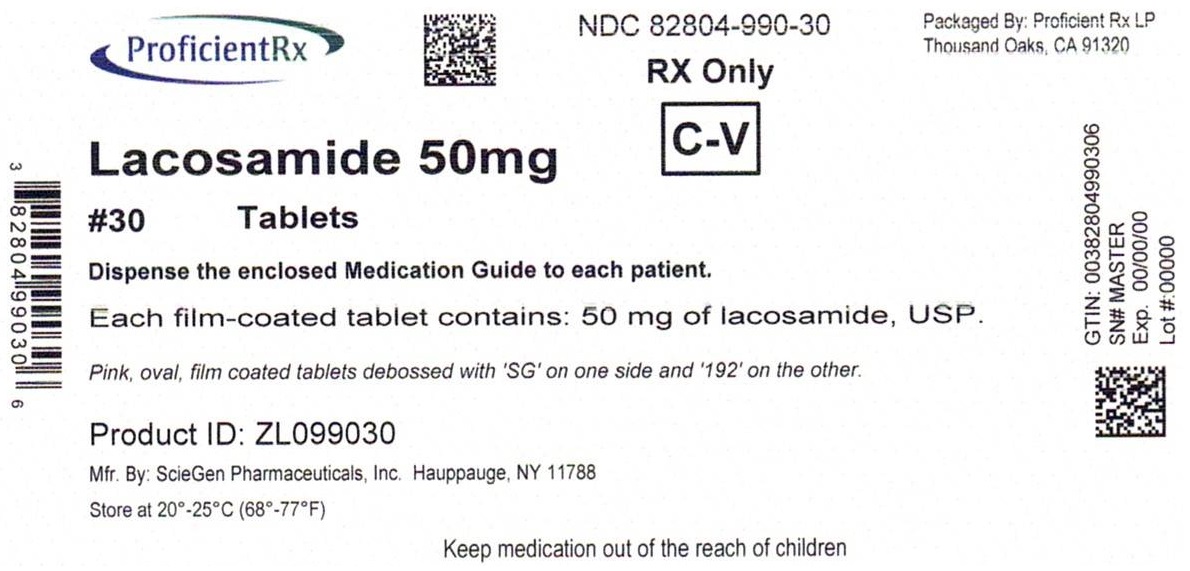
- Lacosamide Tablets, USP 50 mg are pink, oval, film coated tablets debossed with 'SG' on one side and '192' on the other. They are supplied as follows:
Bottles of 30 | NDC 82804-990-30 |
Bottles of 60 | NDC 82804-990-60 |
Bottles of 90 | NDC 82804-990-90 |
Bottles of 100 | NDC 82804-990-00 |
Bottles of 120 | NDC 82804-990-72 |
Bottles of 180 | NDC 82804-990-78 |
Bottles of 240 | NDC 82804-990-64 |
Bottles of 500 | NDC 82804-990-55 |
Bottles of 1000 | NDC 82804-990-11 |
- Lacosamide Tablets, USP 100 mg are yellow, oval, film coated tablets debossed with 'SG' on one side and '193' on the other. They are supplied as follows:
Bottles of 30 | NDC 82804-991-30 |
Bottles of 60 | NDC 82804-991-60 |
Bottles of 90 | NDC 82804-991-90 |
Bottles of 100 | NDC 82804-991-00 |
Bottles of 120 | NDC 82804-991-72 |
Bottles of 180 | NDC 82804-991-78 |
Bottles of 240 | NDC 82804-991-64 |
Bottles of 500 | NDC 82804-991-55 |
Bottles of 1000 | NDC 82804-991-11 |
- Lacosamide Tablets, USP 150 mg are beige, oval, film coated tablets debossed with 'SG' on one side and '194' on the other. They are supplied as follows:
Bottles of 30 | NDC 82804-992-30 |
Bottles of 60 | NDC 82804-992-60 |
Bottles of 90 | NDC 82804-992-90 |
Bottles of 100 | NDC 82804-992-00 |
Bottles of 120 | NDC 82804-992-72 |
Bottles of 180 | NDC 82804-992-78 |
Bottles of 240 | NDC 82804-992-64 |
Bottles of 500 | NDC 82804-992-55 |
Bottles of 1000 | NDC 82804-992-11 |
- Lacosamide Tablets, USP 200 mg are blue, oval, film coated tablets debossed with 'SG' on one side and '195' on the other. They are supplied as follows:
Bottles of 30 | NDC 82804-993-30 |
Bottles of 60 | NDC 82804-993-60 |
Bottles of 90 | NDC 82804-993-90 |
Bottles of 100 | NDC 82804-993-00 |
Bottles of 120 | NDC 82804-993-72 |
Bottles of 180 | NDC 82804-993-78 |
Bottles of 240 | NDC 82804-993-64 |
Bottles of 500 | NDC 82804-993-55 |
Bottles of 1000 | NDC 82804-993-11 |
Suicidal Thinking and Behavior
Patients, their caregivers, and families should be counseled that AEDs, including lacosamide, may increase the risk of suicidal thoughts and behavior and should be advised of the need to be alert for the emergence or worsening of symptoms of depression, any unusual changes in mood or behavior, or the emergence of suicidal thoughts, behavior, or thoughts about self-harm. Behaviors of concern should be reported immediately to healthcare providers [see Warnings and Precautions (5.1)].
Dizziness and Ataxia
Patients should be counseled that lacosamide use may cause dizziness, double vision, abnormal coordination and balance, and somnolence. Patients taking lacosamide should be advised not to drive, operate complex machinery, or engage in other hazardous activities until they have become accustomed to any such effects associated with lacosamide [see Warnings and Precautions (5.2)].
Cardiac Rhythm and Conduction Abnormalities
Patients should be counseled that lacosamide is associated with electrocardiographic changes that may predispose to irregular heart beat and syncope. Cardiac arrest has been reported. This risk is increased in patients with underlying cardiovascular disease, with heart conduction problems, or who are taking other medications that affect the heart. Patients should be made aware of and report cardiac signs or symptoms to their healthcare provider right away. Patients who develop syncope should lay down with raised legs and contact their health care provider [see Warnings and Precautions (5.3)].
Drug Reaction with Eosinophilia and Systemic Symptoms (DRESS)/Multi-Organ Hypersensitivity
Patients should be aware that lacosamide may cause serious hypersensitivity reactions affecting multiple organs such as the liver and kidney. Lacosamide should be discontinued if a serious hypersensitivity reaction is suspected. Patients should also be instructed to report promptly to their physicians any symptoms of liver toxicity (e.g., fatigue, jaundice, dark urine) [see Warnings and Precautions (5.6)].
Pregnancy Registry
Advise patients to notify their healthcare provider if they become pregnant or intend to become pregnant during lacosamide therapy. Encourage patients to enroll in the North American Antiepileptic Drug (NAAED) pregnancy registry if they become pregnant. This registry is collecting information about the safety of AEDs during pregnancy [see Use in Specific Populations (8.1)].
Lactation
Advise breastfeeding women using lacosamide to monitor infants for excess sleepiness and to seek medical care if they notice this sign [see Use in Specific Populations (8.2)].
Manufactured by:
ScieGen Pharmaceuticals, Inc.
Hauppauge, New York 11788, USA
Manufacture for:
Westminster Pharmaceuticals, LLC
Nashville, TN 37217
Repackaged and Relabeled by:
Proficient Rx LP
Thousand Oaks, CA 91320
Rev: 6/2023