12.1 Mechanism of Action
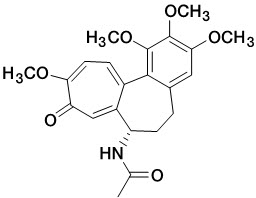
The mechanism of action of colchicine in the prevention of major cardiovascular events is not understood. However, it is known that colchicine disrupts cytoskeletal functions through inhibition of β-tubulin polymerization into microtubules and consequently prevents the activation, degranulation, and migration of neutrophils. Colchicine may also interfere with the intracellular assembly of the inflammasome complex in neutrophils and monocytes that mediates activation of interleukin-1β. These anti-inflammatory effects are consistent with clinical data demonstrating that colchicine reduces high sensitivity C- reactive protein (hs-CRP).
12.2 Pharmacodynamics
The pharmacodynamics of colchicine in the intended indication is not completely understood.
12.3 Pharmacokinetics
In healthy adults, colchicine exhibits linear pharmacokinetics within a dose range of 0.5 to 1.5 mg.
Mean pharmacokinetic parameter values of LODOCO in healthy adults are shown in table 2.
Table 2: Summary of LODOCO Pharmacokinetic Parameters in Healthy Adults under Fasting and Fed Conditions
BE studies | C
max ng/ml | T
max*
hours | t
½ hours | AUC
0-t ng·h/ml |
Single dose of 0.5 mg (fasting) | 2.1± 1.0 | 1.0 (Range 0.5-2.3) | 31.9 | 18.6± 7.0 |
Single dose of 0.5 mg (fed) | 1.8± 0.4 | 1.7 (Range 0.7- 3.5) | 31.0 | 16.4 ± 4.4 |
*Median and range are presented
Absorption
Oral colchicine intake undergoes an entero-hepatic recirculation. In healthy adults, LODOCO is absorbed when given orally, reaching a mean Cmax 2.1 ng/ml in approximately 1 hour after a single dose administered under fasting conditions.
The mean absolute bioavailability of colchicine is reported to be approximately 45%.
Effect of food
When LODOCO was administered with or following a high-fat, high-calorie meal in a bioavailability study, the results showed a lack of a significant food effect, see Table 2, above.
LODOCO may be administered with or without food.
The mean peak plasma concentration of LODOCO under fed conditions was found to be 1.8 ng/ml in approximately 1.75 hour.
Distribution
The mean apparent volume of distribution in healthy volunteers is approximately 1300 L.
Colchicine binding to serum protein is 39 ± 5%, primarily to albumin regardless of concentration. After reabsorption, is rapidly removed from the plasma and distributed to various tissues.
Colchicine is found in high concentrations in leucocytes, kidneys, the liver, and spleen.
Colchicine crosses the placenta. Colchicine also distributes into breast milk. Colchicine can also cross the blood-brain barrier and accumulate within the brain, which contains large amount of tubulin [see Use in Specific Populations (8.1, 8.2)].
Elimination
Metabolism
Colchicine is demethylated to two primary metabolites, 2-O-demethylcolchicine and 3-O-demethylcolchicine (2- and 3-DMC, respectively) and one minor metabolite, 10-O-demethylcolchicine (also known as colchiceine). In vitro studies using human liver microsomes have shown that CYP3A4 is involved in the metabolism of colchicine to 2- and 3-DMC. Plasma levels of these metabolites are (less than 5% of parent drug).
Excretion
In healthy volunteers (n=12), 40 to 65% of 1 mg orally administered colchicine was recovered unchanged in urine. Enterohepatic recirculation and biliary excretion are also postulated to play a role in colchicine elimination. Following single oral dose of 0.5 mg daily, the mean effective half-life in healthy volunteers is 19 hours. Colchicine is a substrate of P-gp.
Colchicine is not removed by hemodialysis.
Specific Populations
Geriatric Patients
The pharmacokinetic studies of LODOCO were not conducted in elderly patients. In a study, conducted to compare the relative bioavailability in between 18 elderly subjects and 20 young subjects, the following pharmacokinetic parameter values (mean ± SD) were observed for colchicine in the young and elderly subjects, respectively: AUC (ng/.hr/mL) 22.4 ± 7.0 and 25.0 ± 6.9; Cmax (ng/mL) 2.6 ± 0.7 and 2.6 ± 1.0; Tmax (h) 1.4 ± 0.4 and 1.3 ± 0.4; apparent elimination half-life (h) 24.9 ± 5.3 and 30.1 ± 10.8. No statistical difference in the pharmacokinetic parameters were found between the groups and it was concluded that no dosing adjustments were required in elderly patients.
Another study illustrated that after IV administration of 0.5 mg colchicine to six healthy male adults and 1mg colchicine to four elderly group the absorption is similar in healthy volunteers and elderly subjects. However, a 31 percent decrease in volume of distribution at steady state (2.9 vs 4.2 L/kg) and 48 percent decrease in total body clearance (5.5 vs 10.5 L/h) was seen in elderly
patients when compared to healthy volunteers.
Pediatric Patients
The sponsor did not conduct any pharmacokinetic studies in pediatric patients. No literature was found in the database on pharmacokinetics of colchicine in pediatric patients with the intended indication.
Patients with Renal Impairment
The exposure of colchicine was similar for normal renal function and mild impairment (24.7–27.2 ng.h/mL) but doubled in subjects with moderate or severe renal impairment (48.9 and 48.0 ng.h/mL, respectively). The same study showed an unexpected result that subjects with ESRD, prior to and during hemodialysis, only have a modest increase in exposure to colchicine (30.6 – 31.7 ng.h/mL) compared to healthy control. The reason for this is not clear. A small amount of the colchicine dose (mean of 5.2 %) was recovered in dialysate
[see Use in Specific Population (8.6)].
In another study, subjects with end-stage renal disease requiring dialysis had 75% lower colchicine clearance (0.17 vs 0.73 L/hr/kg) and prolonged plasma elimination half-life (18.8 vs 4.4 hours) as compared to subjects with normal renal function.
Patients with Hepatic Impairment
From the published literature, in some subjects with mild to moderate cirrhosis, healthy subjects had a mean clearance of 10.7 ml/min.kg, whereas cirrhotic patients had a mean clearance of 4.2 ml/min.kg. The mean half-life was about 57 minutes in control subjects vs. about 114 minutes in cirrhotic patients. Volume of distribution was not different in the two groups (0.7 ± 0.1 L/kg in control subjects; 0.7 ± 0.2 L/kg in cirrhotic patients). The study concluded that cirrhosis impairs colchicine clearance. No pharmacokinetic data are available for patients with severe hepatic impairment
[see Use in Specific Population (8.7)].
Drug Interaction Studies
In vitro drug interactions:
In vitro studies in human liver microsomes have shown that colchicine is not an inhibitor or inducer of CYP1A2, CYP2A6, CYP2B6, CYP2C8, CYP2C9, CYP2C19, CYP2D6, CYP2E1, or CYP3A4 activity.
In vivo drug interactions:
The effects of co-administration of other drugs with LODOCO on Cmax, AUC, and Cmin are summarized in Table 3 (effect of other drugs on colchicine). For information regarding clinical recommendations, see Table 1
[see Drug interactions (7)].
Table 3: Effect of other drugs on colchicine pharmacokinetics
Co-administered drug | Dose of Co-administered drug | Dose of Colchicine | Mean pharmacokinetic parameters (%CV) substrate drug | % Change in Colchicine Concentrations from Baseline (Range: Min - Max) |
C
max (ng/ml)
| AUC
0-t (ng/ hour/ ml) | T
1/2 (hours)
| Cl/F (L/ hour) | C
max | AUC
0-t |
Cyclosporine | 100 mg OD | 0.6 mg, single dose | 2.7 | 12.6 | 6.8 | 48.2 | 270 (62 to 606.9) | 259 (75.8 to 511.9) |
Clarithromycin | 250 mg BID | 0.6 mg, single dose | 2.8 | 12.4 | 8.9 | 46.8 | 227.2 (65.7 to 591.1) | 281.5 (88.7 to 851.6) |
Ketoconazole | 200 mg BID | 0.6 mg, single dose | 2.8 | 12.0 | 6.3 | 49.3 | 101.7 (19.6 to 219) | 212.2 (76.7 to 419.6) |
Ritonavir | 100 mg BID | 0.6 mg, single dose | 1.9 | 8.4 | 5.2 | 67.9 | 184.4 (79.2 to 447.4) | 296 (53.8 to 924.4) |
Verapamil | 240 mg OD | 0.6 mg, single dose | 3.0 | 13.1 | 4.3 | 43.9 | 40.1 (-47.1 to 149.5) | 103.3 (-9.8 to 217.2) |
Diltiazem | 240 mg OD | 0.6 mg, single dose | 2.2 | 10.0 | 5.5 | 58.9 | 44.2 (-46 to 318.3) | 93.4 (-30.2 to 338.6) |
Azithromycin | 500 mg OD | 0.6 mg, single dose | 2.7 | 12.0 | 6.1 | 50.2 | 21.6 (-41.7 to 222) | 57.1 (-24.3 to 241.1) |
Atorvastatin | 40 mg OD | 0.6 mg, single dose | 2.5 | 10.7 | 4.3 | 58.6 | 130.60 (111.1-153.5) | 127.3 (109.1–148.7) |
Grapefruit juice | 240 mL twice daily, 4 days | 0.6 mg, single dose | - | - | - | - | -2.6 (-53.4 to 55.0) | -2.4 (-4.6 to 62.2) |
Estrogen-containing oral contraceptives: In healthy female volunteers given ethinyl estradiol and norethindrone (Ortho-Novum 1/35) co-administered with colchicine 0.6 mg b.i.d. × 14 days, hormone concentrations are not affected.