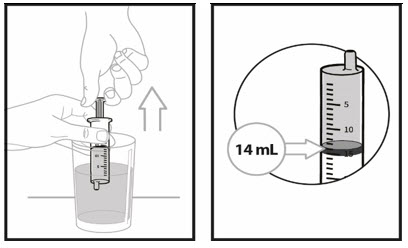
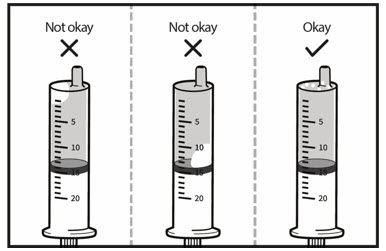
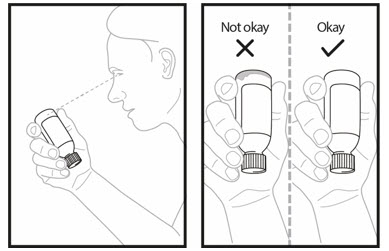
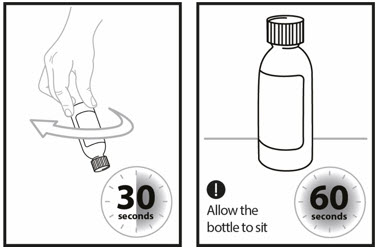
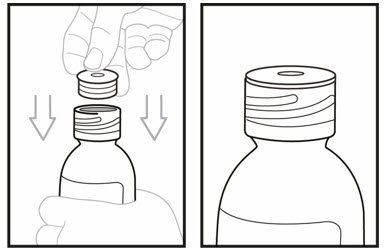
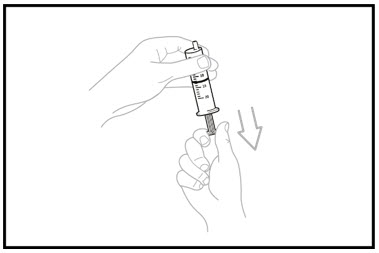
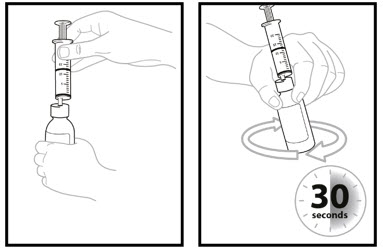
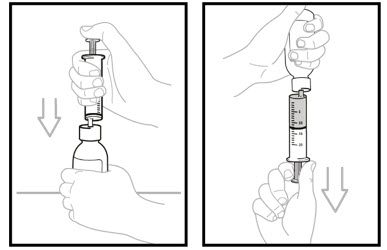
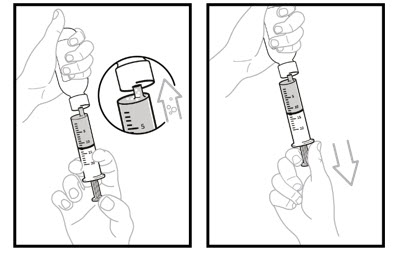
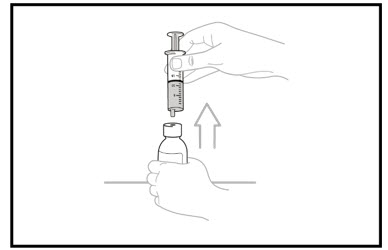
- Reconstitute the powder in each supplied bottle with exactly 14 mL of room temperature water to form the OJEMDA for oral suspension. After reconstitution each mL contains 25 mg of tovorafenib. Product foaming after reconstitution reduces the deliverable volume.
- Each bottle delivers 300 mg of tovorafenib in 12 mL. For doses greater than 300 mg, reconstitute two bottles to achieve the dose. Split the dose as equally as possible between the two bottles (e.g., 6 mL and 7 mL for a 325 mg dose).
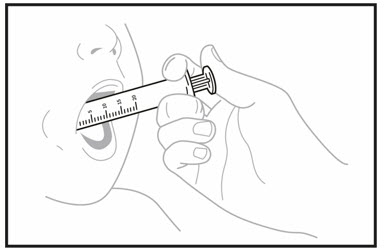
- Administer OJEMDA for oral suspension using the supplied oral dosing syringe or feeding tube (minimum 12 French) immediately after preparation.
- If the OJEMDA for oral suspension is not administered within 15 minutes after preparation, instruct the patient to discard it.
Photosensitivity
In the pooled safety population [see Adverse Reactions (6.1)], photosensitivity occurred in 12% of patients treated with OJEMDA, including Grade 3 events in 0.6% of patients (n=1). Advise patients to use precautionary measures against ultraviolet exposure such as use of sunscreen, sunglasses, and/or protective clothing during treatment with OJEMDA. Withhold, reduce the dose, or permanently discontinue OJEMDA based on severity of adverse reaction [see Dosage and Administration (2.5)].
Pediatric Low-grade Glioma
The safety of OJEMDA was evaluated in 137 patients with relapsed or refractory pediatric LGG harboring a BRAF alteration in FIREFLY-1 (Arms 1 and 2) [see Clinical Studies (14)]. Patients received OJEMDA at a dose based on body surface area [see Dosage and Administration (2.3] orally once weekly until disease progression or intolerable toxicity.
The median age of patients was 9 years (range 1 to 24 years); 53% male; 58% White, 7% Asian, 2% Black or African American, 6% other races, 25% race was not reported; 2.9% were Hispanic or Latino; and 90% Karnofsky/Lansky performance status of 80 to 100.
Serious adverse reactions occurred in 45% of patients who received OJEMDA. Serious adverse reactions in >2% of patients included viral infection (9%), pneumonia (4%), and sepsis (4%). A fatal adverse reaction of tumor hemorrhage occurred in 1 patient (1%).
Permanent discontinuation of OJEMDA due to an adverse reaction occurred in 7% of patients. Adverse reactions which resulted in permanent discontinuation of OJEMDA in more than one patient were tumor hemorrhage and reduction in growth velocity.
Dosage interruptions of OJEMDA due to an adverse reaction occurred in 57% of patients. Adverse reactions which required dose interruption in ≥5% of patients included rash, pyrexia, vomiting, and hemorrhage.
Dosage reductions of OJEMDA due to an adverse reaction occurred in 24% of patients. Adverse reactions which required dose reduction in ≥2% of patients included rash, and fatigue.
The most common adverse reactions (≥30%) were rash, hair color changes, fatigue, viral infection, vomiting, headache, hemorrhage, pyrexia, dry skin, constipation, nausea, dermatitis acneiform, and upper respiratory tract infection.
The most common Grade 3 or 4 laboratory abnormalities (≥2%) were decreased phosphate, decreased hemoglobin, increased creatinine phosphokinase, increased alanine aminotransferase, decreased albumin, decreased lymphocytes, decreased leukocytes, increased aspartate transferase, decreased potassium, and decreased sodium.
Table 6 and Table 7 present adverse reactions and laboratory abnormalities, respectively, identified in FIREFLY-1 (Arms 1 and 2).
Table 6 Adverse Reactions (≥20%) in Patients with Pediatric LGG Who Received OJEMDA in FIREFLY-1 (Arms 1 and 2)| Adverse Reaction | OJEMDA
(N=137) |
|---|
| All Grades (%) | Grade 3 or 4 (%) |
|---|
| Skin and Subcutaneous Tissue Disorders |
| Rash Includes terms erythema multiforme, eczema, rash erythematous, rash macular, rash follicular, rash pruritic, rash maculopapular, rash, rash popular, rash pustular, skin exfoliation, drug eruption, dermatitis, dermatitis bullous. | 77 | 12 |
| Hair color changes | 76 | 0 |
| Dry skin | 36 | 0 |
| Dermatitis acneiform | 31 | 1 |
| Pruritus | 26 | 1 |
| General Disorders |
| Fatigue | 55 | 4 |
| Pyrexia | 39 | 4 |
| Edema Includes terms lip edema, periorbital edema, edema peripheral, localized edema, face edema, vulval edema. | 26 | 0 |
| Infections and Infestations |
| Viral infection Includes terms viral infection, rhinovirus infection, enterovirus infection, viral upper respiratory tract infection, enterocolitis viral, oral herpes, gastroenteritis viral, influenza, influenza like illness, respiratory syncytial virus infection, enterovirus infection, coronavirus infection, COVID-19, SARS-COV-2 test positive, herpes simplex, parainfluenza virus infection, adenoviral upper respiratory infection, viraemia, adenovirus infection, conjunctivitis viral, eye infection viral, metapneumovirus infection, parvovirus infection, respiratory syncytial virus bronchiolitis, respiratory tract infection viral, viral pharyngitis, viral rhinitis, viral tonsillitis. | 55 | 7 |
| Upper respiratory tract infection | 31 | 1.5 |
| Paronychia | 26 | 1.5 |
| Gastrointestinal Disorders |
| Vomiting Includes terms retching, hematemesis. | 50 | 4 |
| Constipation | 33 | 0 |
| Nausea | 33 | 0 |
| Abdominal pain | 28 | 0 |
| Diarrhea Includes terms colitis, enterocolitis. | 22 | 1.5 |
| Stomatitis Includes terms mouth ulceration, mucosal inflammation, aphthous ulcer, cheilitis. | 20 | 0 |
| Nervous system disorders |
| Headache | 45 | 1 |
| Vascular Disorders |
| Hemorrhage Includes terms tumor hemorrhage, gastrointestinal hemorrhage, subdural hemorrhage, epistaxis, intracranial tumor hemorrhage, upper gastrointestinal hemorrhage, lower gastrointestinal hemorrhage, vaginal hemorrhage, gingival bleeding, post procedural hemorrhage, hemoptysis, anal hemorrhage. | 42 | 5 Includes one Grade 5 event. |
Other clinically important adverse reactions observed in less than 20% of patients treated with OJEMDA were reductions in growth velocity [see Warnings and Precautions (5.4)] and photosensitivity [see Warnings and Precautions (5.2)].
Table 7 Select Laboratory Abnormalities (≥20%) that Worsened from Baseline in Patients with Pediatric LGG Who Received OJEMDA in FIREFLY-1 (Arms 1 and 2)| Laboratory Abnormality Severity as defined by National Cancer Institute CTCAE v5.0 | OJEMDA The denominator for each laboratory parameter is based on the number of patients with a baseline and post-treatment laboratory value available which ranged from 67 to 137 patients. |
|---|
| All Grades (%) | Grade 3 or 4 (%) |
|---|
| Hematology |
| Decreased hemoglobin | 90 | 15 |
| Decreased lymphocytes | 50 | 2 |
| Decreased leukocytes | 31 | 2 |
| Increased lymphocytes | 23 | 0 |
| Chemistry |
| Decreased phosphate | 87 | 25 |
| Increased AST | 83 | 2 |
| Increased creatine phosphokinase | 83 | 11 |
| Increased LDH | 73 | 0 |
| Decreased potassium | 51 | 2 |
| Increased ALT | 50 | 5 |
| Increased bilirubin | 22 | 1 |
| Decreased albumin | 24 | 5 |
| Decreased sodium | 20 | 2 |
Increased creatinine phosphokinase was a clinically important laboratory abnormality that worsened from baseline in patients treated with OJEMDA.
Risk Summary
Based on findings from animal studies and its mechanism of action [see Clinical Pharmacology (12.1)], OJEMDA can cause fetal harm when administered to a pregnant woman. There are no available data on the use of OJEMDA in pregnant women. Oral administration of tovorafenib to pregnant rats during the period of organogenesis resulted in embryo lethality at exposures 0.8 times the human exposure at the recommended dose based on AUC (see Data). Advise pregnant women of the potential risk to a fetus. In the U.S. general population, the estimated background risk of major birth defects and miscarriage in clinically recognized pregnancies is 2% to 4% and 15% to 20%, respectively.
Data
Animal Data
In an embryo-fetal development study, once daily oral administration of tovorafenib to pregnant rats during the period of organogenesis from gestation days 7 through 17 at doses of 37.5, 75, and 150 mg/kg resulted in early resorptions and total litter loss at all doses. The dose of 37.5 mg/kg/day is approximately 0.8-fold the human exposure at the recommended dose based on AUC.
Risk Summary
There are no data on the presence of tovorafenib or its metabolites in human milk, their effects on the breastfed child, or on milk production. Due to the potential for serious adverse reactions in breastfed children from OJEMDA, advise lactating women not to breastfeed during treatment with OJEMDA and for 2 weeks following the last dose.
Pregnancy Testing
Verify pregnancy status in females of reproductive potential prior to initiating OJEMDA [see Use in Specific Populations (8.1)].
Contraception
Females
Advise females of reproductive potential to use effective non-hormonal contraception during treatment with OJEMDA and for 28 days after the last dose. OJEMDA can render hormonal contraceptives ineffective [see Drug Interactions (7.2)].
Males
Advise male patients with female partners of reproductive potential to use effective nonhormonal contraception during treatment with OJEMDA and for 2 weeks after the last dose.
Infertility
Based on findings in animals, OJEMDA may impact fertility in males and females of reproductive potential. The effects on male fertility were reversible. The effects on female fertility were not reversible [see Nonclinical Toxicology (13.1)].
Effect on Growth
Patients with pediatric LGG treated with OJEMDA for up to 24 months showed reductions from baseline in Z-scores for height compared to age and sex-matched normative data. Among 19 patients who experienced reductions in growth velocity who had hand radiographs taken to assess bone age, there was no evidence of premature closure of the epiphyseal growth plates or advancement of bone age. Patients followed after interruption of treatment with OJEMDA showed recovery of growth and increase in Z-scores. Monitor growth routinely during treatment [see Warnings and Precautions (5.4)].
Exposure Response Relationships
Tovorafenib exposure is associated with reduction in height-for-age z-scores in pediatric patients. Reduced height-for-age risk persists during treatment with tovorafenib.
Higher tovorafenib exposure is associated with increased risk of skin rash, elevated liver enzymes (AST and ALT), and elevated creatinine phosphokinase.
The exposure-response relationship for overall response rate based on RAPNO-LGG (Response Assessment in Pediatric Neuro-Oncology), and RANO-LGG (Response Assessment in Neuro-Oncology) were not clinically significant over the dosage range of 290 to 476 mg/m2 (0.76-1.25 times the approved recommended dosage) [see Dosage and Administration (2.3) and Clinical Studies (14)].
Cardiac Electrophysiology
At the recommended OJEMDA dosage of 380 mg/m2 orally once weekly (not to exceed 600 mg), a mean increase in the QT interval >20 milliseconds was not observed.
Absorption
Tovorafenib median (minimum, maximum) time to achieve peak plasma concentration (Tmax) is 3 hours (1.5, 4 hours), following a single dose with tablets or oral suspension.
Effect of Food
No clinically significant differences in tovorafenib Cmax and AUC were observed following administration of tablets with a high-fat meal (approximately 859 total calories, 54% fat) compared to fasted conditions, but the Tmax was delayed to 6.5 hours.
Distribution
Tovorafenib apparent volume of distribution is 60 L/m2 (23%). Tovorafenib is 97.5% bound to human plasma proteins in vitro.
Elimination
Tovorafenib terminal half-life is approximately 56 hours (33%) and the apparent clearance is 0.7 L/h/m2 (31%).
Metabolism
Tovorafenib is primarily metabolized by aldehyde oxidase and CYP2C8 in vitro. CYP3A, CYP2C9, and CYP2C19 metabolize tovorafenib to a minor extent.
Excretion
Following a single oral dose of radiolabeled tovorafenib, 65% of the total radiolabeled dose was recovered in the feces (8.6% unchanged) and 27% of the dose was recovered in the urine (0.2% unchanged).
Specific Populations
No clinically significant differences of tovorafenib were observed based on age (range: 1 to 94 years), sex, race (White, Black, Asian), mild hepatic impairment [bilirubin ≤ upper limit of normal (ULN) and AST > ULN or bilirubin > 1 to 1.5× ULN and any AST], and mild-to-moderate renal impairment (eGFR) ≥ 30 mL/min/1.73 m2 calculated by Schwartz equation or MDRD equation.
Drug Interaction Studies
Clinical Studies and Model-Informed Approaches
CYP3A Substrates: Midazolam (CYP3A4 substrate) steady-state Cmax and AUC are predicted to decrease by at least 20% following coadministration with tovorafenib.
In Vitro Studies
CYP450 Enzymes: Tovorafenib inhibits CYP2C8, CYP2C9, CYP2C19 and CYP3A, but does not inhibit CYP1A2, CYP2B6, and CYP2D6 at clinically relevant concentrations.
Tovorafenib induces CYP3A, CYP2C8, CYP1A2, CYP2B6, CYP2C9 and CYP2C19 at clinically relevant concentrations.
Transporter Systems: Tovorafenib is not a substrate of BCRP, P-glycoprotein (P-gp), OATP1B1 and OATP1B3. Tovorafenib has not been evaluated as a substrate of OAT1, OAT3, MATE1, MATE2-K and OCT2. Tovorafenib inhibits BCRP at clinically relevant concentrations.
OJEMDA tablets:
100 mg: orange, film-coated, oval tablets debossed with "100" on one side and "D101" on the opposite side and supplied as follows:
4 blister cards (4 tablets each) per box, NDC 82950-001-16.
5 blister cards (4 tablets each) per box, NDC 82950-001-20.
4 blister cards (6 tablets each) per box, NDC 82950-001-24.
Store at 20°C to 25°C (68°F to 77°F); excursions permitted between 15°C to 30°C (59°F to 86°F) [see USP Controlled Room Temperature].
Dispense product in the original package. Tablets should not be removed from blisters until immediately before use.
Hemorrhage
Advise patients that OJEMDA can cause bleeding and to contact their healthcare provider for signs or symptoms of bleeding [see Warnings and Precautions (5.1)].
Skin Toxicities
Advise patients that OJEMDA can cause skin toxicities and to contact their healthcare provider for worsening or intolerable rash [see Warnings and Precautions (5.2)].
Photosensitivity
Advise patients that OJEMDA can cause photosensitivity. Advise patients to limit direct ultraviolet exposure during treatment with OJEMDA. Recommend that patients use precautionary measures such as use of sunscreen, sunglasses, and/or protective clothing during treatment with OJEMDA [see Warnings and Precautions (5.2)].
Hepatotoxicity
Advise patients that OJEMDA can cause liver toxicity and to contact their healthcare provider for signs or symptoms of liver dysfunction. Advise patients that serial testing of serum liver tests (ALT, AST, bilirubin) is recommended during treatment with OJEMDA [see Warnings and Precautions (5.3)].
Effect on Growth
Advise patients and caregivers that treatment with OJEMDA may cause a reduction in growth velocity, and that growth will be monitored during treatment with OJEMDA [see Warnings and Precautions (5.4)].
Embryo-Fetal Toxicity
- Advise pregnant women and females of reproductive potential of the potential risk to a fetus [see Warnings and Precautions (5.5), Use in Specific Populations (8.1, 8.3)].
- Advise females to inform their healthcare provider of a known or suspected pregnancy during treatment with OJEMDA.
- Advise females of reproductive potential to use effective non-hormonal contraception during treatment and for 28 days after discontinuation of treatment with OJEMDA.
- Advise male patients with female partners of reproductive potential to use effective nonhormonal contraception during treatment with OJEMDA and for 2 weeks after the last dose.
Lactation
Advise women not to breastfeed during treatment with OJEMDA and for 2 weeks after the last dose of OJEMDA [see Use in Specific Populations (8.2)].
Infertility
Advise males and females of reproductive potential of the potential risk for impaired fertility with OJEMDA [see Nonclinical Toxicology (13.1)].
Dosing and Administration
Inform patients and caregivers on how to take OJEMDA and what to do for missed or vomited doses [see Dosage and Administration (2.4)].
Prior to use of the oral suspension, ensure patients or caregivers receive training on proper dosing, preparation, and administration [see Dosage and Administration (2.4) and Instructions for Use].
Storage
Advise patients not to take the OJEMDA tablets out of the blister pack until ready to use.
Discard the bottle (including any unused portion) and syringe after dosing.
OJEMDA is a trademark of Day One Biopharmaceuticals Inc.
© 2024 Day One Biopharmaceuticals, Inc. All rights reserved.
Manufactured for:
Day One Biopharmaceuticals, Inc.
2000 Sierra Point Parkway, Suite 501
Brisbane CA 94005
Manufactured by (tablets):
Quotient Sciences – Philadelphia LLC
3 Chelsea Parkway, Suite 305
Boothwyn PA 19061
Manufactured by (oral suspension):
Quotient Sciences – Philadelphia LLC
3080 McCann Farm Dr.
Garnet Valley, PA 19060