Monitoring
Monitor serum potassium and adjust dosages accordingly. For treatment of hypokalemia, monitor potassium levels daily or more often depending on the severity of hypokalemia until they return to normal. Monitor potassium levels monthly to biannually for maintenance or prophylaxis.
The treatment of potassium depletion, particularly in the presence of cardiac disease, renal disease, or acidosis requires careful attention to acid-base balance, volume status, electrolytes, including magnesium, sodium, chloride, phosphate, and calcium, electrocardiograms and the clinical status of the patient. Correct volume status, acid-base balance and electrolyte deficits as appropriate.
Administration
Dilute the potassium chloride solution with at least 4 ounces of cold water [see Warnings and Precautions (5.1)] .
Take with meals or immediately after eating.
If serum potassium concentration is <2.5 mEq/L, use intravenous potassium instead of oral supplementation.
Treatment of hypokalemia
Daily dose range from 40 to 100 mEq. Give in 2 to 5 divided doses; limit doses to 40 mEq per dose. The total daily dose should not exceed 200 mEq in a 24 hour period.
Maintenance or Prophylaxis
Typical dose is 20 mEq per day. Individualize dose based upon serum potassium levels.
Studies support the use of potassium replacement in digitalis toxicity. When alkalosis is present, normokalemia and hyperkalemia may obscure a total potassium deficit. The advisability of use of potassium replacement in the setting of hyperkalemia is uncertain.
Treatment of hypokalemia
Pediatric patients aged birth to 16 years old: The initial dose is 2 to 4 mEq/kg/day in divided doses; do not exceed as a single dose 1 mEq/kg or 40 mEq, whichever is lower; maximum daily doses should not exceed 100 mEq. If deficits are severe or ongoing losses are great, consider intravenous therapy.
Maintenance or Prophylaxis
Pediatric patients aged birth to 16 years old: Typical dose is 1 mEq/kg/day. Do not exceed 3 mEq/kg/day.
Risk Summary
The normal potassium ion content of human milk is about 13 mEq per liter. Since potassium from oral supplements such as Potassium Chloride becomes part of the body potassium pool, as long as body potassium is not excessive, the contribution of potassium chloride supplementation should have little or no effect on the level in human milk.
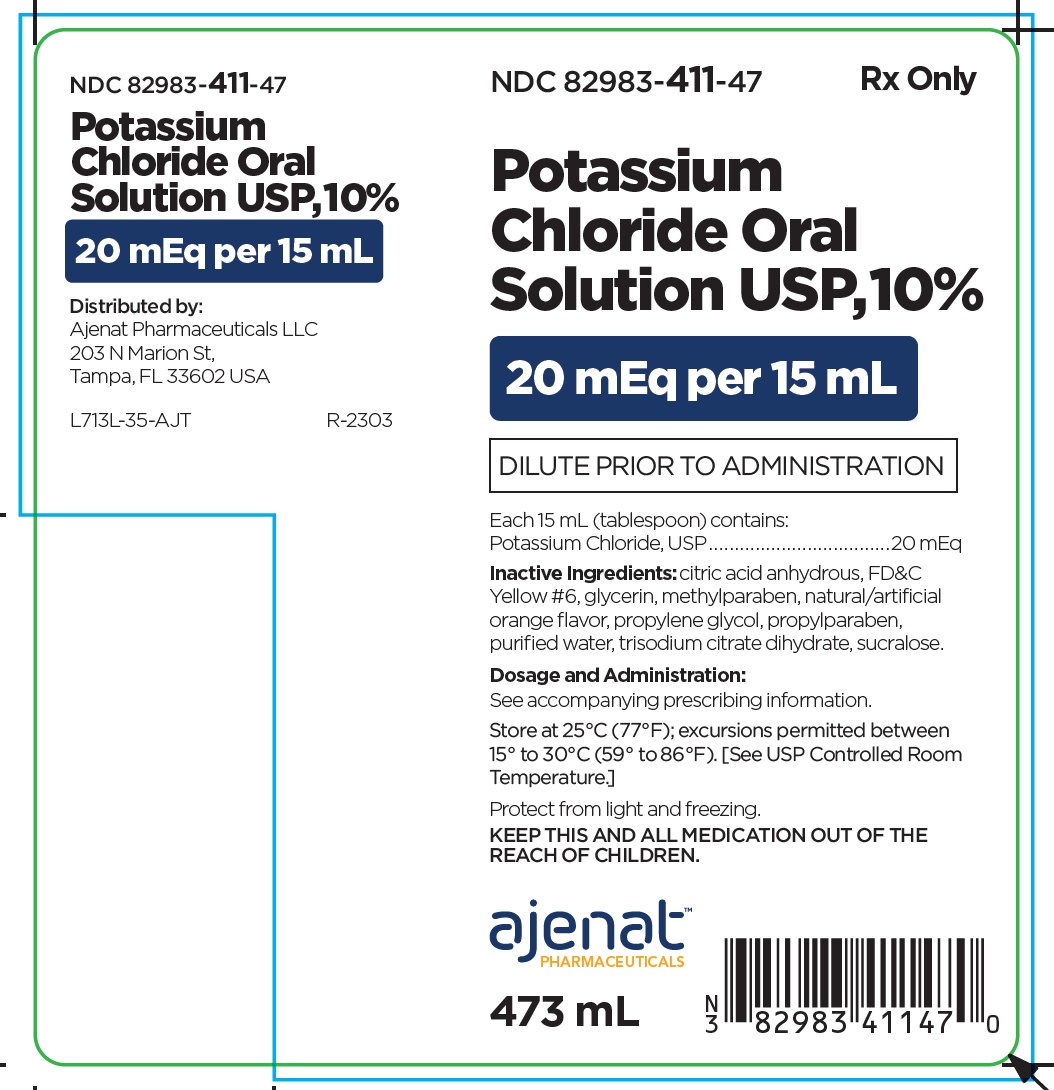
Oral Solution: 10%: Each 15 mL of solution contains 1.5 g of potassium chloride, USP and the following inactive ingredients: citric acid anhydrous, FD&C Yellow #6, glycerin, methylparaben, natural/artificial orange flavor, propylene glycol, propylparaben, purified water, sucralose, trisodium citrate dihydrate.
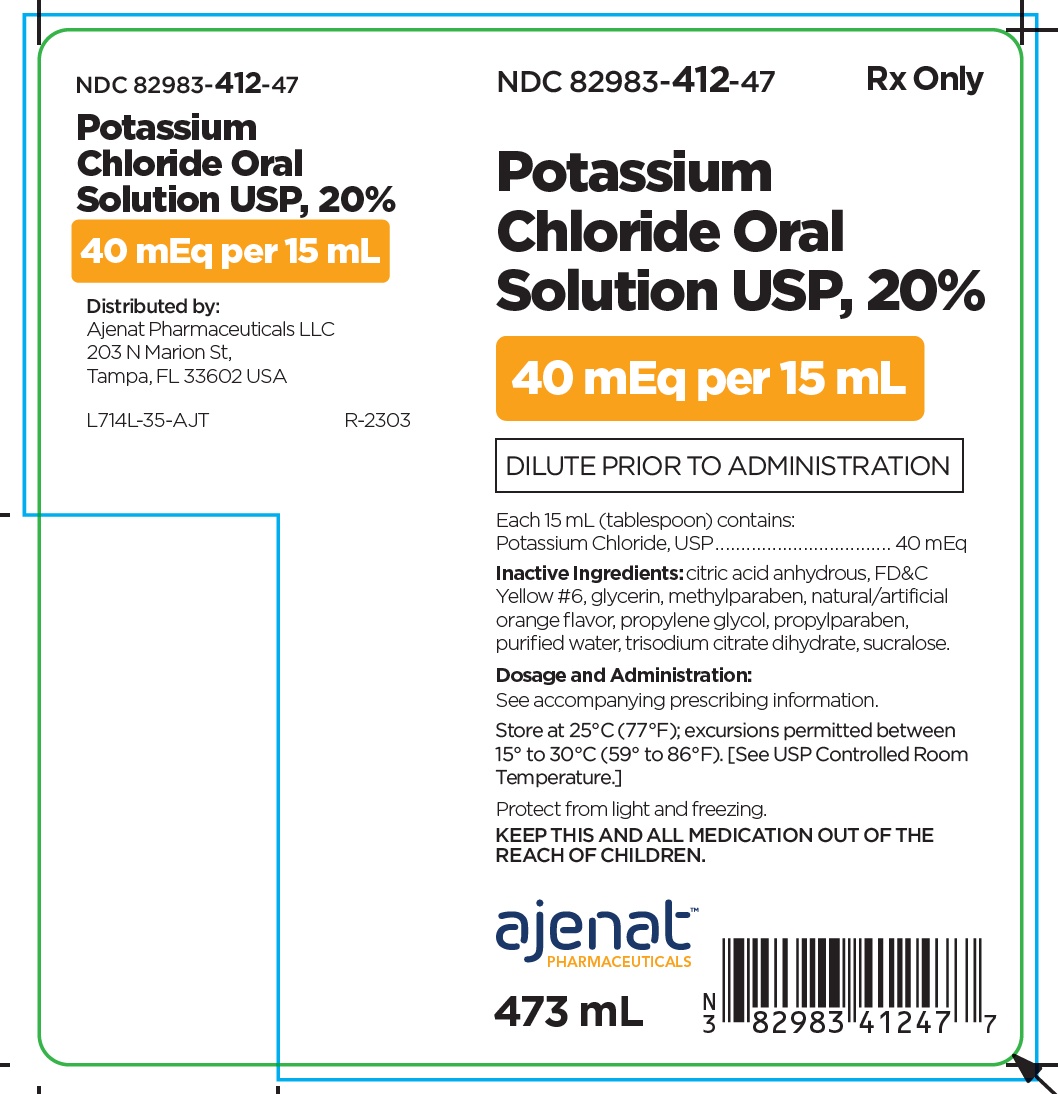
Oral Solution 20%: Each 15 mL of solution contains 3.0 g of potassium chloride, USP and the following inactive ingredients: citric acid anhydrous, FD&C Yellow #6, glycerin, natural/artificial orange flavor, purified water, sodium benzoate, trisodium citrate dihydrate, sucralose.
Rx only
Manufactured for:
Ajenat Pharmaceuticals LLC
203 N Marion St,
Tampa, FL 33602 USA
L73I-AJT R-2303
Revision 11/22