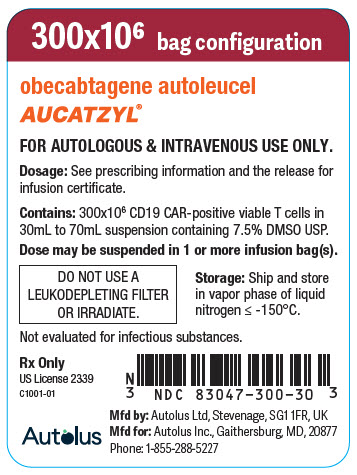
AUCATZYL contains human blood cells that are genetically modified with replication-incompetent lentiviral vector. Follow universal precautions and local biosafety guidelines for handling and disposal of AUCATZYL to avoid potential transmission of infectious diseases.
- Monitor patients for signs and symptoms of CRS, neurologic toxicities/ICANS and other acute toxicities daily for at least 14 days at the healthcare facility following the first infusion.
- Continue to monitor patients for at least 4 weeks following each infusion.
- Instruct patients to remain within proximity of a healthcare facility for at least 4 weeks following the first infusion.
- Instruct patients to refrain from driving or hazardous activities for at least 8 weeks following infusion.
Immune Effector Cell-associated Neurotoxicity Syndrome (ICANS)
ICANS events occurred in 24% (24/100) of patients, including Grade ≥ 3 in 7% (7/100) of patients. Of the 24 patients who experienced ICANS, 33% (8/24) experienced an onset after the first infusion, but prior to the second infusion of AUCATZYL.
The median time to onset for ICANS events after the first infusion was 8 days (range: 1 to 10 days) and 6.5 days (range: 2 to 22 days) after the second infusion, with a median duration of 8.5 days (range: 1 to 53 days).
Eighty-eight percent (21/24) of patients received treatment for ICANS. All treated patients received high-dose corticosteroids and 42% (10/24) of patients received anti-epileptics prophylactically. Prior to administering AUCATZYL, ensure that healthcare providers have immediate access to medications and resuscitative equipment to manage ICANS.
During and following AUCATZYL administration, closely monitor patients for signs and symptoms of Neurologic Toxicity/ICANS. Following treatment with AUCATZYL, monitor patients daily for at least 14 days at the healthcare facility. Continue to monitor patients for at least 4 weeks following treatment with AUCATZYL.
Counsel patients to seek medical attention should signs or symptoms of neurologic toxicity/ ICANS occur. At the first sign of Neurologic Toxicity /ICANS, immediately evaluate patients for hospitalization and institute treatment with supportive care based on severity and consider further management per current practice guidelines [see Dosage and Administration (2.1)].
Effect on Ability to Drive and Use Machines
Due to the potential for neurologic events, including altered mental status or seizures, patients receiving AUCATZYL are at risk for altered or decreased consciousness or coordination in the eight weeks following AUCATZYL infusion or until resolution of the neurological event by the treating physician. Advise patients to refrain from driving and engaging in hazardous occupations or activities, such as operating heavy or potentially dangerous machinery, during this initial period.
Risk Summary
There is limited available data with AUCATZYL use in pregnant women. In the FELIX study, one patient became pregnant 6 months following treatment with AUCATZYL. The patient had a premature delivery at 30 weeks of pregnancy.
No animal reproductive and developmental toxicity studies have been conducted with AUCATZYL to assess whether AUCATZYL can cause fetal harm when administered to a pregnant woman.
It is not known if AUCATZYL has the potential to be transferred to the fetus and cause fetal toxicity. Based on the mechanism of action of AUCATZYL, if the transduced cells cross the placenta, they may cause fetal toxicity, including B-cell lymphocytopenia and hypogammaglobinemia. Therefore, AUCATZYL is not recommended for women who are pregnant. Pregnancy after AUCATZYL infusion should be discussed with the treating physician.
In the U.S. general population, the estimated background risk of major birth defects is 2% to 4% and of miscarriage is 15% to 20% of clinically recognized pregnancies.
Risk Summary
There is no information regarding the presence of AUCATZYL in human milk, the effect on the breastfed infant, and the effects on milk production. The developmental and health benefits of breastfeeding should be considered along with the mother's clinical need for AUCATZYL and any potential adverse effects on the breastfed infant from AUCATZYL or from the underlying maternal condition.
Pregnancy Testing
Pregnancy status of females with reproductive potential should be verified. Sexually active females of reproductive potential should have a negative pregnancy test before starting treatment with AUCATZYL.
Contraception
See the prescribing information for fludarabine and cyclophosphamide for information on the need for effective contraception in patients who receive lymphodepleting chemotherapy treatment.
There are insufficient exposure data to provide a recommendation concerning duration of contraception following treatment with AUCATZYL.
Infertility
There are no data on the effect of AUCATZYL on fertility.
Specific populations
Sex did not have a significant impact on the PK of AUCATZYL (Cmax, AUC0-28d or persistency).
Hepatic and renal impairment studies of AUCATZYL were not conducted.