Oze Sun Reef Safe Sunscreen Spf50 Cream
Product Images NDC 83252-130

View Photos of Packaging, Regulatory Labels, and Product Appearance

Product Visual Gallery

This gallery contains 2 technical images submitted to the FDA as part of the official labeling for Oze Sun Reef Safe Sunscreen Spf50 (NDC 83252-130). Unlike standard consumer photos, these assets often include clinical data figures, molecular chemical structures, and official manufacturer packaging layouts.

As provided by Veganic Skn Limited, these visuals offer a comprehensive scientific overview of the product's physical and chemical identity, aiding pharmacists and researchers in product verification and study.

FDA Label Image

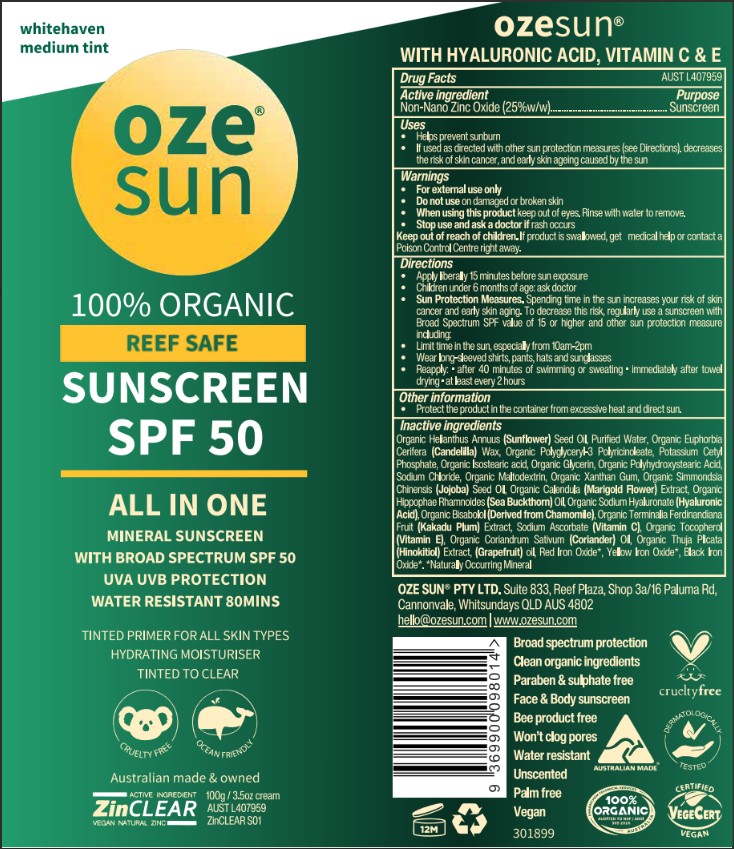
Label (100g)

Label (100g)
This is a description for a Whitehaven Medium Tint Reef Safe Sunscreen SPF 50 by Ozesun®. The sunscreen is 100% organic and offers broad-spectrum UVA and UVB protection. It is a tinted primer suitable for all skin types and acts as a hydrating moisturizer. The product is water-resistant for 80 minutes. It contains active ingredient nano zinc oxide and is made in Australia. The sunscreen also includes hyaluronic acid, vitamin C & E. The product is paraben & sulfate-free, cruelty-free, and made with clean organic ingredients. It can be used on both face and body.*
FDA Label Image

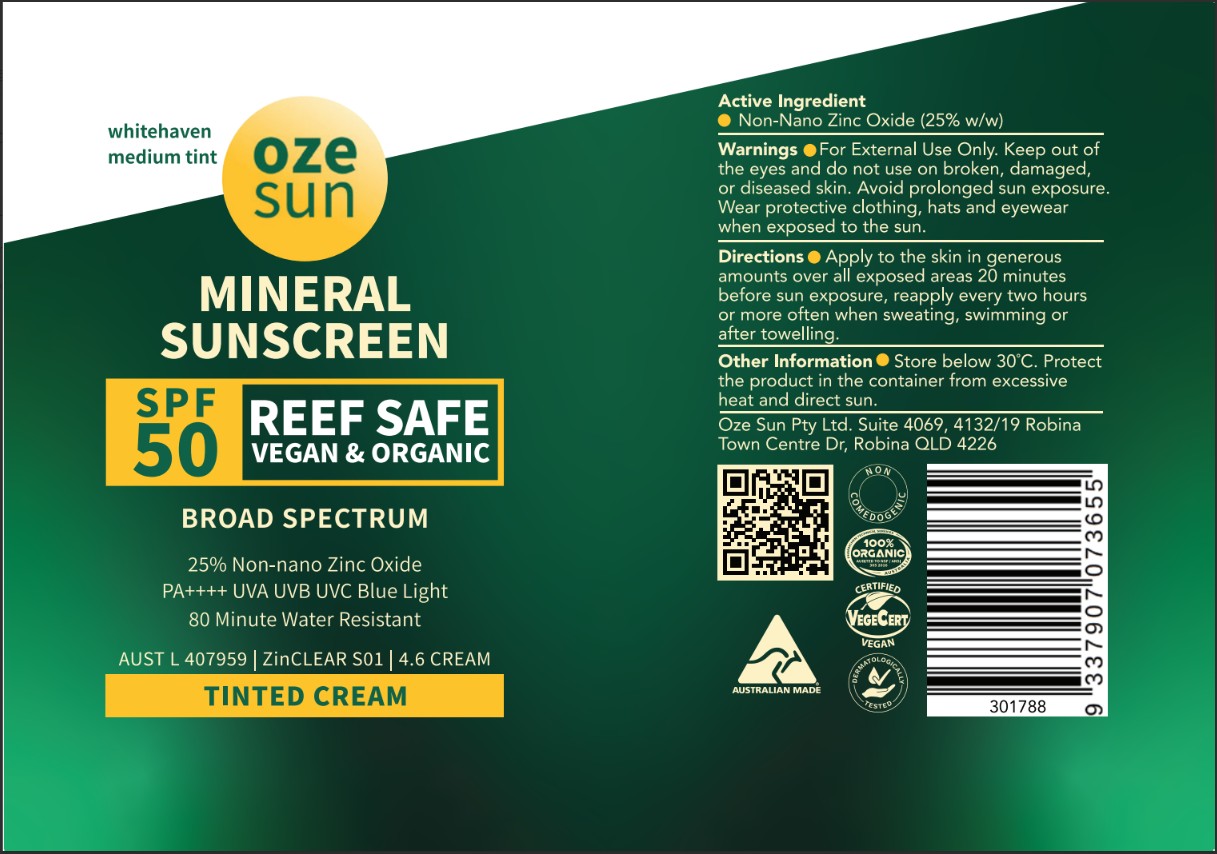
Sachet Artwork (Oze Sun 4.6g)

Sachet Artwork (Oze Sun 4.6g)
This product is a mineral sunscreen containing 25% Non-Nano Zinc Oxide. It provides broad-spectrum protection against UVA, UVB, UVC, and Blue Light. The sunscreen is white in color and offers medium tint. It is recommended for external use only and should not be used on broken or damaged skin. For best results, apply generously on all exposed areas at least 20 minutes before sun exposure or more frequently during activities like sweating or swimming. The formula offers 80 minutes of water resistance. Store the product below 30°C. The sunscreen is vegan and organic, and it is identified with the code AUSt L 407959 | ZinCLEAR SO01 | 4.6 CREAM A.*

* These product label images have been analyzed using experimental machine learning. Please verify findings with the primary label text.