Insulin Glargine Injection, Solution
Product Images NDC 83257-014

View Photos of Packaging, Regulatory Labels, and Product Appearance

Product Visual Gallery

This gallery contains 34 technical images submitted to the FDA as part of the official labeling for Insulin Glargine (NDC 83257-014). Unlike standard consumer photos, these assets often include clinical data figures, molecular chemical structures, and official manufacturer packaging layouts.

As provided by Biocon Biologics Inc., these visuals offer a comprehensive scientific overview of the product's physical and chemical identity, aiding pharmacists and researchers in product verification and study.

FDA Label Image

Glucose-lowering Effect Over 24 Hours In Patients With Type 1 Diabetes (Image 01)

Glucose-lowering Effect Over 24 Hours In Patients With Type 1 Diabetes (Image 01)
A line graph comparing glucose infusion rate (mg/kg/min) over time (hours) after subcutaneous injection of Insulin Glargine-yfgn and NPH insulin. The chart shows glucose infusion rates for both products in a controlled observation period, with Insulin Glargine-yfgn depicted as a solid line and NPH insulin as a dashed line. The end of the observation period is marked.*
FDA Label Image

Step 1 (Image 02)

Step 1 (Image 02)
An instructional illustration showing hands opening a vial by removing a metal cap. This image likely demonstrates preparation steps for using an insulin injection solution.*
FDA Label Image

Step 2 (Image 03)

Step 2 (Image 03)
An instructional black and white line drawing showing two hands applying or removing a rectangular label or adhesive patch to the top of a small vial or bottle. The vial is held upright between the fingers of one hand while the other hand places the label on the vial cap or stopper.*
FDA Label Image

Step 3 (Image 04)

Step 3 (Image 04)
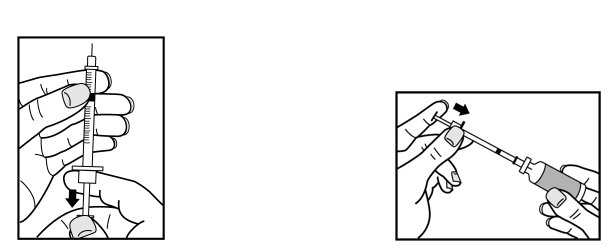
An instructional illustration showing two steps of preparing an insulin injection. The first step depicts a hand holding a syringe with a cap being removed or adjusted on the needle. The second step shows another hand holding the syringe while the other hand is pulling the plunger back to draw insulin from a vial or cartridge.*
FDA Label Image

Step 4 (Image 05)

Step 4 (Image 05)
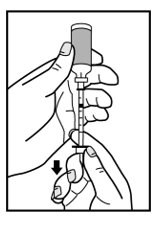
An instructional illustration showing the preparation of an injection solution. It depicts a hand holding a vial upside down and a syringe drawing liquid from the vial, with an arrow indicating the downward motion of the plunger. This is a step commonly used in subcutaneous injection preparation.*
FDA Label Image

Step 5 (Image 06)

Step 5 (Image 06)
An instructional illustration showing a hand holding a vial and a syringe, indicating the process of drawing insulin solution from the vial into the syringe. The arrow shows the motion of pulling the syringe plunger to aspirate the liquid.*
FDA Label Image

Step 7 (Image 07)

Step 7 (Image 07)
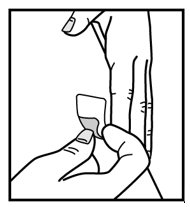
An instructional illustration showing a hand applying or holding a small adhesive patch or device on the side of a finger, likely related to the administration or use of a subcutaneous injection product such as Insulin Glargine.*
FDA Label Image

Step 8 (Image 08)

Step 8 (Image 08)
An instructional illustration showing a hand holding an insulin syringe and preparing to inject. The image depicts the syringe being positioned with an arrow indicating the direction of adjustment or action.*
FDA Label Image

Places To Inject (Image 09)

Places To Inject (Image 09)
Illustration showing recommended injection sites for subcutaneous administration of Insulin Glargine. The areas highlighted include the upper arms, abdomen around the navel, and front and side of the thighs on a human figure.*
FDA Label Image

Get To Know Your Pen (Image 10)

Get To Know Your Pen (Image 10)
Illustration diagram of an Insulin Glargine-yfgn 100 units/mL injection pen showing labeled components including the pen cap, cartridge holder, rubber seal, cartridge, pen body with expiration date and insulin type label, dose window selector, dose pointer, and injection button. Below, components of the pen needle assembly are displayed but not included with the pen: outer cap, inner cap, needle, and protective seal.*
FDA Label Image

Figure A (Image 11)

Figure A (Image 11)
Insulin Glargine-yfgn Injection pen showing 100 units/mL strength for subcutaneous use. The image displays the pen device labeled with the proprietary and generic names, strength, and indication for single-patient use by Biocon Biologics Inc.*
FDA Label Image

Figure B (Image 12)

Figure B (Image 12)
Image of an insulin glargine injection pen labeled with the proprietary name Insulin Glargine and strength 100 IU/mL. The pen is grey with a white cap on one end and includes a magnified view showing a lot number and expiration date placeholder (LOT and EXP YYYY MMM). The labeler is Biocon Biologics Inc. The product is intended for subcutaneous use and prescription only.*
FDA Label Image

Figure C (Image 13)

Figure C (Image 13)
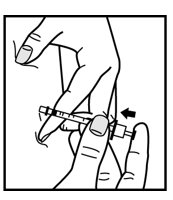
An instructional diagram showing a hand holding a cap, pulling it away from the tip of a syringe prefilled with a clear injection solution. The syringe is marked with measurement gradations, illustrating the step to remove the cap before use.*
FDA Label Image

Figure D (Image 14)

Figure D (Image 14)
Insulin Glargine-y injection solution, 100 units/mL, in a prefilled syringe for subcutaneous use. The label includes the product name, strength, and indicates single-patient use. The product is labeled by Biocon Biologics Inc. The image highlights syringe markings for dose measurement.*
FDA Label Image

Figure E (Image 15)

Figure E (Image 15)
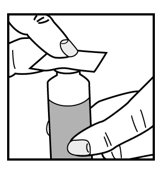
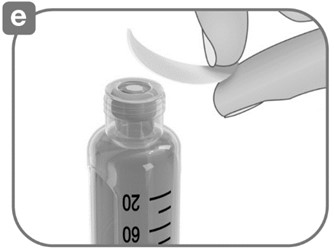
An instructional illustration showing a close-up of a vial with measurement markings up to 60. A hand is peeling off a protective cap from the top of the vial, demonstrating how to remove the seal before use.*
FDA Label Image

Figure F (Image 16)

Figure F (Image 16)
An instructional diagram showing a close-up of hands removing the cap from a syringe or injection pen before use. The image emphasizes the action of lifting the cap upwards, likely indicating preparation steps for subcutaneous injection of Insulin Glargine solution.*
FDA Label Image

Figure G (Image 17)

Figure G (Image 17)
An instructional illustration showing hands preparing a syringe for injection. One hand holds a syringe, and the other hand twists the cap off the needle. A magnified circular inset shows the needle cap being removed carefully.*
FDA Label Image

Figure H (Image 18)

Figure H (Image 18)
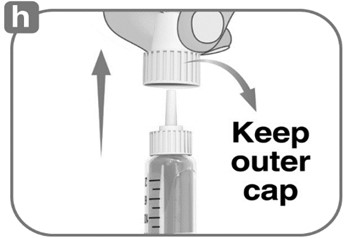
An instructional diagram showing how to handle the outer cap of a syringe or pen injector. It includes an arrow pointing upward from the syringe with the instruction 'Keep outer cap' and a curved arrow indicating movement of the cap for removal or replacement.*
FDA Label Image

Figure I (Image 19)

Figure I (Image 19)
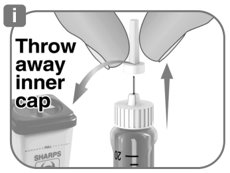
An instructional illustration showing a hand removing the inner cap from the tip of a vial or cartridge, with an arrow indicating the cap's removal direction, likely related to preparing an injection device for use.*
FDA Label Image

Figure J (Image 20)

Figure J (Image 20)
An illustration showing a close-up view of a dose selector dial on an insulin pen injector. The dial displays dose increments marked with numbers, likely indicating units of insulin to be administered subcutaneously.*
FDA Label Image

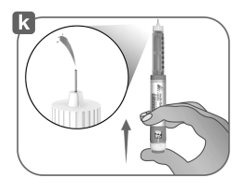
Figure K (Image 21)

Figure K (Image 21)
An instructional diagram showing hand holding a syringe with a needle cap removed. An inset magnifies the needle tip, indicating the needle's open end. The illustration suggests preparation steps for injecting Insulin Glargine injection, solution subcutaneously.*
FDA Label Image

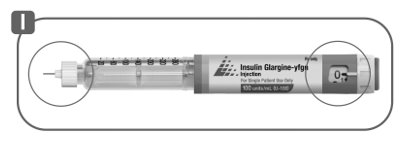
Figure L (Image 22)

Figure L (Image 22)
Insulin Glargine-yfgn Injection, 100 units/mL, shown in a prefilled syringe for subcutaneous use. The syringe barrel is marked with measurement graduations and labeled by Biocon Biologics Inc. The image highlights the syringe tip and dose knob ends.*
FDA Label Image

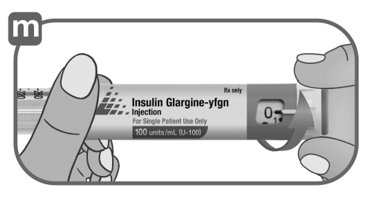
Figure M (Image 23)

Figure M (Image 23)
An instructional illustration showing a person holding an insulin glargine-yfgn injection pen. The label on the pen indicates the product name, injection form, single patient use, and strength of 100 units/mL (U-100). The image depicts how to hold the pen for subcutaneous injection.*
FDA Label Image

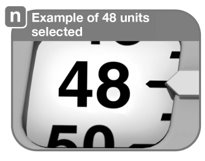
Figure N (Image 24)

Figure N (Image 24)
An illustration showing a close-up view of a dosing dial on a pen device used for subcutaneous injection. The dial is set to 48 units, demonstrating dose selection for administering insulin glargine injection solution.*
FDA Label Image

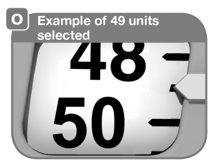
Figure O (Image 25)

Figure O (Image 25)
An instructional diagram showing a close-up of a dosing dial with numbers 48 and 50 visible and a marker indicating a setting of 49 units selected. The top left corner has a label reading 'Example of 49 units selected.' This relates to dose measurement for an injection device.*
FDA Label Image

Figure P (Image 26)

Figure P (Image 26)
An instructional illustration showing a hand holding a syringe labeled Insulin Glargine 100 units/mL, positioned for subcutaneous injection into the abdominal area. An arrow indicates the direction of injection into the skin.*
FDA Label Image

Figure Q (Image 27)

Figure Q (Image 27)
An instructional illustration showing a hand holding an insulin glargine injection pen with two inset details. The insets show correct and incorrect positioning of the dose knob on the pen, emphasizing proper dosage setting technique for subcutaneous injection.*
FDA Label Image

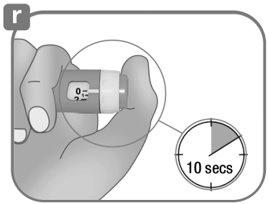
Figure R (Image 28)

Figure R (Image 28)
An instructional illustration showing a hand holding a small vial, labeled with dosage markings starting at 0 and 5. There is an inset timer graphic indicating to wait or count 10 seconds, suggesting a step in administration or preparation of the injection.*
FDA Label Image

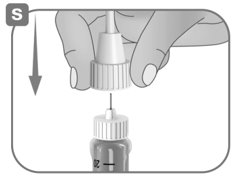
Figure S (Image 29)

Figure S (Image 29)
An instructional illustration showing hands holding and aligning an injection pen cap with the pen body, indicating the cap is being pulled straight off. The pen contains a solution of Insulin Glargine, 100 IU/mL, for subcutaneous injection.*
FDA Label Image

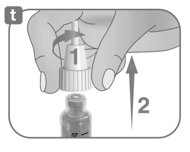
Figure T (Image 30)

Figure T (Image 30)
An instructional illustration showing a hand twisting the cap off a vial labeled with the number '1' and an upward arrow labeled '2' indicating the direction to pull or remove the cap. The vial is partially visible at the bottom of the image.*
FDA Label Image

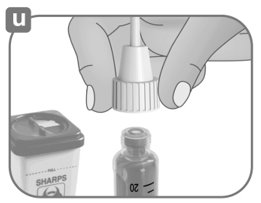
Figure U (Image 31)

Figure U (Image 31)
An instructional illustration showing a hand twisting the cap on or off a small vial, labeled with a visible number 20, next to a sharps disposal container. The image depicts proper vial handling likely related to insulin glargine injection preparation.*
FDA Label Image

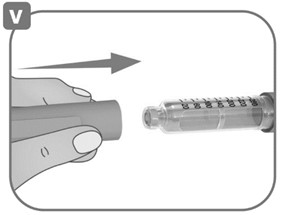
Figure V (Image 32)

Figure V (Image 32)
An instructional illustration showing a hand removing the cap from a syringe. The syringe is clear with visible measurement markings indicating dosage volume. The image demonstrates how to prepare the syringe for use of an injectable solution.*
FDA Label Image

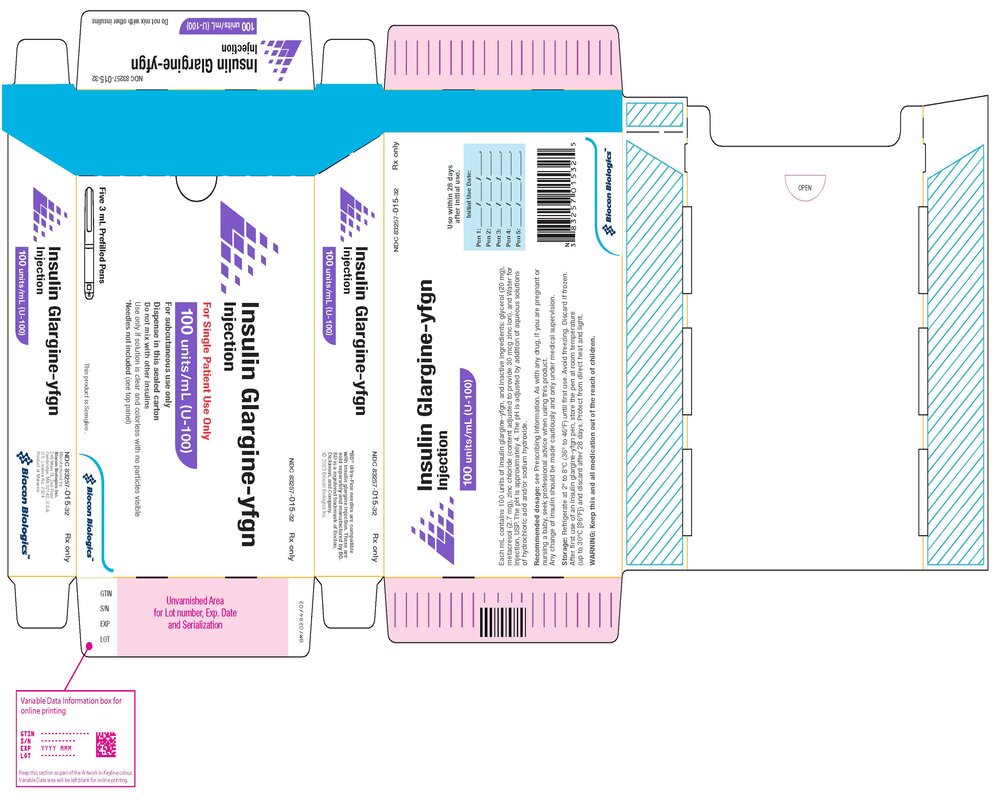
Insulin Glargine-yfgn Injection, 100 Units/ml (u-100) (Pen)

Insulin Glargine-yfgn Injection, 100 Units/ml (u-100) (Pen)
Packaging label for Insulin Glargine-yfgn Injection, 100 units/mL (U-100), manufactured by Biocon Biologics Inc. The label indicates it is a subcutaneous injection for single patient use, provided as five 3 mL prefilled pens. The carton includes storage and usage instructions and barcode details.*
FDA Label Image

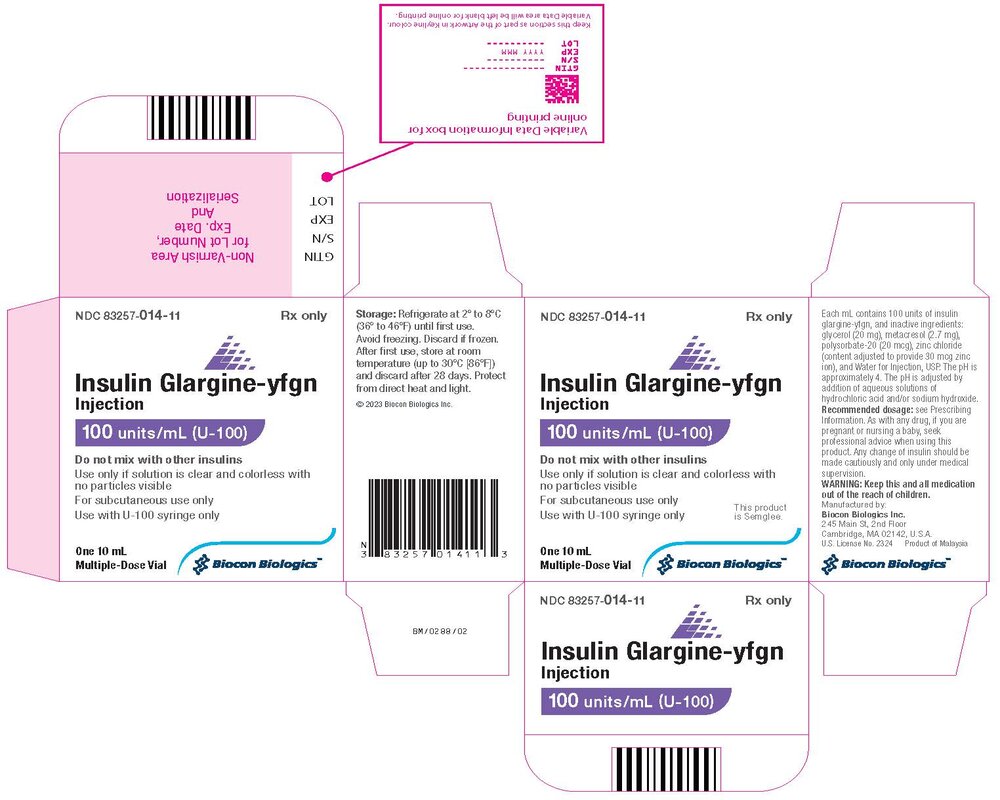
Insulin Glargine-yfgn Injection, 100 Units/ml (u-100) (Vial)

Insulin Glargine-yfgn Injection, 100 Units/ml (u-100) (Vial)
Packaging label for Insulin Glargine-yfgn Injection, 100 units/mL (U-100), multiple-dose vial. The label includes storage instructions to refrigerate at 2° to 8°C before first use and discard after 28 days at room temperature. It specifies use for subcutaneous injection with U-100 syringe only. The labeler is Biocon Biologics Inc., with a 10 mL vial size.*

* About these descriptions: Image descriptions on this page are generated by automated AI analysis of the product label images from the manufacturer's FDA label submission (SPL). They are provided for reference only and may contain errors or omissions. Always rely on the printed label itself and the official FDA labeling, and consult a pharmacist or healthcare professional with any questions about this product.