Reconstitute piperacillin and tazobactam for injection vials with a compatible reconstitution diluent from the list provided below.
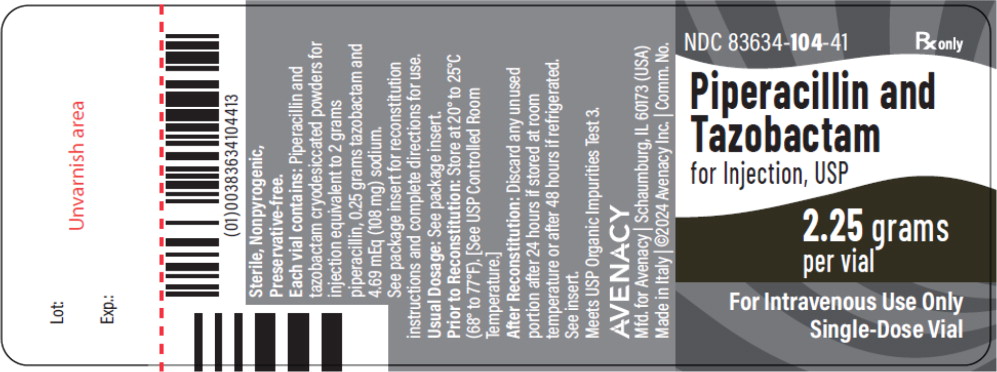
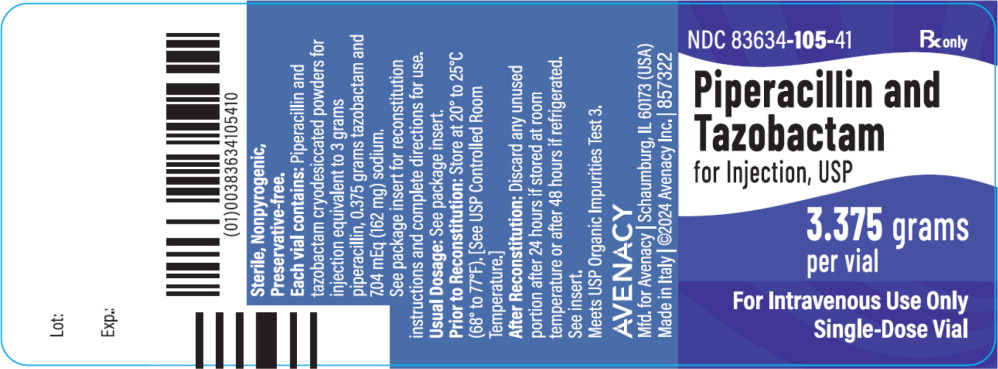
2.25 gram, 3.375 gram, and 4.5 gram piperacillin and tazobactam for injection should be reconstituted with 10 mL, 15 mL, and 20 mL, respectively. Swirl until dissolved. After reconstitution, the single-dose vials will have a concentration of 202.5 mg/mL (180 mg/mL of piperacillin and 22.5 mg/mL of tazobactam).
Reconstituted piperacillin and tazobactam for injection solutions for single-dose vials should be further diluted (recommended volume per dose of 50 mL to 150 mL) in a compatible intravenous solution listed below. Administer by infusion over a period of at least 30 minutes. During the infusion it is desirable to discontinue the primary infusion solution.
Sterile water for injection (Maximum recommended volume per dose of sterile water for injection is 50 mL)
Piperacillin and tazobactam for injection should not be mixed with other drugs in a syringe or infusion bottle since compatibility has not been established.
Piperacillin and tazobactam for injection is not chemically stable in solutions that contain only sodium bicarbonate and solutions that significantly alter the pH.
Piperacillin and tazobactam for injection should not be added to blood products or albumin hydrolysates. Parenteral drug products should be inspected visually for particulate matter or discoloration prior to administration, whenever solution and container permit.
The volume of reconstituted solution required to deliver the dose of piperacillin and tazobactam for injection is dependent on the weight of the child [see Dosage and Administration (2.4)]. Reconstituted piperacillin and tazobactam for injection solutions for single-dose vials should be further diluted in a compatible intravenous solution listed above.
- Calculate patient dose as described in Table 2 above [see Dosage and Administration (2.4)].
- Reconstitute vial with a compatible reconstitution diluent, as listed above under the subheading “Compatible Reconstitution Diluents for Single-Dose Vials,” using the appropriate volume of diluent, as listed in Table 3 below. Following the addition of the diluent, swirl the single-dose vial until the powder is completely dissolved.
Table 3: Reconstitution of Single-Dose Vials and Resulting Concentration
| Strength per Single-Dose Vial | Volume of Diluent to be Added to the Vial | Concentration of the Reconstituted Product |
2.25 g (2 g piperacillin
and 0.25 g tazobactam)
| 10 mL
| 202.5 mg/mL
(180 mg/mL piperacillin and
22.5 mg/mL tazobactam)
|
3.375 g (3 g piperacillin
and 0.375 g tazobactam)
| 15 mL
|
4.5 g (4 g piperacillin
and 0.5 g tazobactam)
| 20 mL
|
- Calculate the required volume (mL) of reconstituted piperacillin and tazobactam for injection solution based on the required dose.
- Aseptically withdraw the required volume of reconstituted piperacillin and tazobactam for injection solution from single-dose vial. It should be further diluted to a final piperacillin concentration of between 20 mg/mL to 80 mg/mL (tazobactam between 2.5 mg/mL to 10 mg/mL) in a compatible intravenous solution (as listed above) in an appropriately sized syringe or IV bag.
- Administer the diluted piperacillin and tazobactam for injection solution by infusion over a period of at least 30 minutes (a programmable syringe or infusion pump is recommended). During the infusion it is desirable to discontinue the primary infusion solution.
Stability of Piperacillin and Tazobactam for Injection Following Reconstitution and Dilution
Piperacillin and tazobactam for injection reconstituted from single-dose vials is stable in glass and plastic containers (plastic syringes, IV bags and tubing) when used with compatible diluents. The single-dose vials should NOT be frozen after reconstitution.
Single-dose vials should be used immediately after reconstitution. Discard any unused portion after storage for 24 hours at room temperature (20°C to 25°C [68°F to 77°F]), or after storage for 48 hours at refrigerated temperature (2°C to 8°C [36°F to 46°F]).
Stability studies in the IV bags have demonstrated chemical stability (potency, pH of reconstituted solution and clarity of solution) for up to 24 hours at room temperature and up to one week at refrigerated temperature. Piperacillin and tazobactam for injection contains no preservatives. Appropriate consideration of aseptic technique should be used.
Piperacillin and tazobactam for injection reconstituted from single-dose vials can be used in ambulatory intravenous infusion pumps. Stability of piperacillin and tazobactam for injection in an ambulatory intravenous infusion pump has been demonstrated for a period of 12 hours at room temperature. Each dose was reconstituted and diluted to a volume of 37.5 mL or 25 mL. One-day supply of dosing solution were aseptically transferred into the medication reservoir (IV bags or cartridge). The reservoir was fitted to a preprogrammed ambulatory intravenous infusion pump per the manufacturer's instructions. Stability of piperacillin and tazobactam for injection is not affected when administered using an ambulatory intravenous infusion pump.
Clinical Trials in Adult Patients
During the initial clinical investigations, 2621 patients worldwide were treated with piperacillin and tazobactam for injection in phase 3 trials. In the key North American monotherapy clinical trials (n=830 patients), 90% of the adverse events reported were mild to moderate in severity and transient in nature. However, in 3.2% of the patients treated worldwide, piperacillin and tazobactam for injection was discontinued because of adverse events primarily involving the skin (1.3%), including rash and pruritus; the gastrointestinal system (0.9%), including diarrhea, nausea, and vomiting; and allergic reactions (0.5%).
Table 5: Adverse Reactions from Piperacillin and Tazobactam for Injection Monotherapy Clinical Trials
System Organ Class
Adverse Reaction
|
Gastrointestinal disorders
Diarrhea (11.3%)
Constipation (7.7%)
Nausea (6.9%)
Vomiting (3.3%)
Dyspepsia (3.3%)
Abdominal pain (1.3%)
|
General disorders and administration site conditions
Fever (2.4%)
Injection site reaction (≤1%)
Rigors (≤1%)
|
Immune system disorders
Anaphylaxis (≤1%)
|
Infections and infestations
Candidiasis (1.6%)
Pseudomembranous colitis (≤1%)
|
Metabolism and nutrition disorders
Hypoglycemia (≤1%)
|
Musculoskeletal and connective tissue disorders
Myalgia (≤1%)
Arthralgia (≤1%)
|
Nervous system disorders
Headache (7.7%)
|
Psychiatric disorders
Insomnia (6.6%)
|
Skin and subcutaneous tissue disorders
Rash (4.2%, including maculopapular, bullous, and urticarial)
Pruritus (3.1%)
Purpura (≤1%)
|
Vascular disorders
Phlebitis (1.3%)
Thrombophlebitis (≤1%)
Hypotension (≤1%)
Flushing (≤1%)
|
Respiratory, thoracic and mediastinal disorders
Epistaxis (≤1%)
|
Nosocomial Pneumonia Trials
Two trials of nosocomial lower respiratory tract infections were conducted. In one study, 222 patients were treated with piperacillin and tazobactam for injection in a dosing regimen of 4.5 g every 6 hours in combination with an aminoglycoside and 215 patients were treated with imipenem/cilastatin (500 mg/500 mg every 6 hours) in combination with an aminoglycoside. In this trial, treatment-emergent adverse events were reported by 402 patients, 204 (91.9%) in the piperacillin and tazobactam group and 198 (92.1%) in the imipenem/cilastatin group. Twenty-five (11%) patients in the piperacillin and tazobactam group and 14 (6.5%) in the imipenem/cilastatin group (p > 0.05) discontinued treatment due to an adverse event.
The second trial used a dosing regimen of 3.375 g given every 4 hours with an aminoglycoside.
Table 6: Adverse Reactions from Piperacillin and Tazobactam for Injection Plus Aminoglycoside Clinical Trialsa |
System Organ Class
Adverse Reaction
|
Blood and lymphatic system disorders
Thrombocythemia (1.4%)
Anemia (≤1%)
Thrombocytopenia (≤1%)
Eosinophilia (≤1%)
|
Gastrointestinal disorders
Diarrhea (20%)
Constipation (8.4%)
Nausea (5.8%)
Vomiting (2.7%)
Dyspepsia (1.9%)
Abdominal pain (1.8%)
Stomatitis (≤1%)
|
General disorders and administration site conditions
Fever (3.2%)
Injection site reaction (≤1%)
|
Infections and infestations
Oral candidiasis (3.9%)
Candidiasis (1.8%)
|
Investigations
BUN increased (1.8%)
Blood creatinine increased (1.8%)
Liver function test abnormal (1.4%)
Alkaline phosphatase increased (≤1%)
Aspartate aminotransferase increased (≤1%)
Alanine aminotransferase increased (≤1%)
|
Metabolism and nutrition disorders
Hypoglycemia (≤1%)
Hypokalemia (≤1%)
|
Nervous system disorders
Headache (4.5%)
|
Psychiatric disorders
Insomnia (4.5%)
|
Renal and urinary disorders
Renal failure (≤1%)
|
Skin and subcutaneous tissue disorders
Rash (3.9%)
Pruritus (3.2%)
|
Vascular disorders
Thrombophlebitis (1.3%)
Hypotension (1.3%)
|
Other Trials - Nephrotoxicity
In a randomized, multicenter, controlled trial in 1200 adult critically ill patients, piperacillin and tazobactam was found to be a risk factor for renal failure (odds ratio 1.7, 95% CI 1.18 to 2.43), and associated with delayed recovery of renal function as compared to other beta-lactam antibacterial drugs1
[see Warnings and Precautions (5.7)].
Adverse Laboratory Events (Seen During Clinical Trials)
Of the trials reported, including that of nosocomial lower respiratory tract infections in which a higher dose of piperacillin and tazobactam for injection was used in combination with an aminoglycoside, changes in laboratory parameters include:
Hematologic—decreases in hemoglobin and hematocrit, thrombocytopenia, increases in platelet count, eosinophilia, leukopenia, neutropenia. These patients were withdrawn from therapy; some had accompanying systemic symptoms (e.g., fever, rigors, chills)
Coagulation—positive direct Coombs' test, prolonged prothrombin time, prolonged partial thromboplastin time
Hepatic—transient elevations of AST (SGOT), ALT (SGPT), alkaline phosphatase, bilirubin
Renal—increases in serum creatinine, blood urea nitrogen
Additional laboratory events include abnormalities in electrolytes (i.e., increases and decreases in sodium, potassium, and calcium), hyperglycemia, decreases in total protein or albumin, blood glucose decreased, gamma-glutamyltransferase increased, hypokalemia, and bleeding time prolonged.
Clinical Trials in Pediatric Patients
Clinical studies of piperacillin and tazobactam for injection in pediatric patients suggest a similar safety profile to that seen in adults.
In a prospective, randomized, comparative, open-label clinical trial of pediatric patients, 2 to 12 years of age, with intra-abdominal infections (including appendicitis and/or peritonitis), 273 patients were treated with piperacillin and tazobactam for injection 112.5 mg/kg given IV every 8 hours and 269 patients were treated with cefotaxime (50 mg/kg) plus metronidazole (7.5 mg/kg) every 8 hours. In this trial, treatment-emergent adverse events were reported by 146 patients, 73 (26.7%) in the piperacillin and tazobactam for injection group and 73 (27.1%) in the cefotaxime/metronidazole group. Six patients (2.2%) in the piperacillin and tazobactam for injection group and 5 patients (1.9%) in the cefotaxime/metronidazole group discontinued due to an adverse event.
In a retrospective, cohort study, 140 pediatric patients 2 months to less than 18 years of age with nosocomial pneumonia were treated with piperacillin and tazobactam for injection and 267 patients were treated with comparators (which included ticarcillin-clavulanate, carbapenems, ceftazidime, cefepime, or ciprofloxacin). The rates of serious adverse reactions were generally similar between the piperacillin and tazobactam for injection and comparator groups, including patients aged 2 months to 9 months treated with piperacillin and tazobactam for injection 90 mg/kg IV every 6 hours and patients older than 9 months and less than 18 years of age treated with piperacillin and tazobactam for injection 112.5 mg/kg IV every 6 hours.
In vivo
inactivation:
When aminoglycosides are administered in conjunction with piperacillin to patients with end-stage renal disease requiring hemodialysis, the concentrations of the aminoglycosides (especially tobramycin) may be significantly reduced and should be monitored.
Sequential administration of piperacillin and tazobactam for injection and tobramycin to patients with either normal renal function or mild to moderate renal impairment has been shown to modestly decrease serum concentrations of tobramycin but no dosage adjustment is considered necessary.
In vitro
inactivation:
Due to the in vitro inactivation of aminoglycosides by piperacillin, piperacillin and tazobactam for injection and aminoglycosides are recommended for separate administration. Piperacillin and tazobactam for injection and aminoglycosides should be reconstituted, diluted, and administered separately when concomitant therapy with aminoglycosides is indicated. Piperacillin and tazobactam for injection is compatible with amikacin and gentamicin for simultaneous Y-site infusion in certain diluents and at specific concentrations. Piperacillin and tazobactam for injection is not compatible with tobramycin for simultaneous Y-site infusion [see Dosage and Administration (2.6)].
Risk Summary
Piperacillin and tazobactam cross the placenta in humans. However, there are insufficient data with piperacillin and/or tazobactam in pregnant women to inform a drug-associated risk for major birth defects and miscarriage. No fetal structural abnormalities were observed in rats or mice when piperacillin and tazobactam was administered intravenously during organogenesis at doses 1 to 2 times and 2 to 3 times the human dose of piperacillin and tazobactam, respectively, based on body-surface area (mg/m2). However, fetotoxicity in the presence of maternal toxicity was observed in developmental toxicity and peri/postnatal studies conducted in rats (intraperitoneal administration prior to mating and throughout gestation or from gestation day 17 through lactation day 21) at doses less than the maximum recommended human daily dose based on body-surface area (mg/m2) [see Data].
The background risk of major birth defects and miscarriage for the indicated population is unknown. In the U.S. general population, the estimated background risk of major birth defects and miscarriage in clinically recognized pregnancies is 2 to 4% and 15 to 20%, respectively.
Data
Animal Data
In embryo-fetal development studies in mice and rats, pregnant animals received intravenous doses of piperacillin and tazobactam up to 3000/750 mg/kg/day during the period of organogenesis. There was no evidence of teratogenicity up to the highest dose evaluated, which is 1 to 2 times and 2 to 3 times the human dose of piperacillin and tazobactam, in mice and rats respectively, based on body-surface area (mg/m2). Fetal body weights were reduced in rats at maternally toxic doses at or above 500/62.5 mg/kg/day, minimally representing 0.4 times the human dose of both piperacillin and tazobactam based on body-surface area (mg/m2).
A fertility and general reproduction study in rats using intraperitoneal administration of tazobactam or the combination piperacillin and tazobactam prior to mating and through the end of gestation, reported a decrease in litter size in the presence of maternal toxicity at 640 mg/kg/day tazobactam (4 times the human dose of tazobactam based on body-surface area), and decreased litter size and an increase in fetuses with ossification delays and variations of ribs, concurrent with maternal toxicity at ≥640/160 mg/kg/day piperacillin and tazobactam (0.5 times and 1 times the human dose of piperacillin and tazobactam, respectively, based on body-surface area).
Peri/postnatal development in rats was impaired with reduced pup weights, increased stillbirths, and increased pup mortality concurrent with maternal toxicity after intraperitoneal administration of tazobactam alone at doses ≥ 320 mg/kg/day (2 times the human dose based on body surface area) or of the combination piperacillin and tazobactam at doses ≥ 640/160 mg/kg/day (0.5 times and 1 times the human dose of piperacillin and tazobactam, respectively, based on body-surface area) from gestation day 17 through lactation day 21.
Risk Summary
Piperacillin is excreted in human milk; tazobactam concentrations in human milk have not been studied. No information is available on the effects of piperacillin and tazobactam on the breast-fed child or on milk production. The developmental and health benefits of breastfeeding should be considered along with the mother's clinical need for piperacillin and tazobactam for injection and any potential adverse effects on the breastfed child from piperacillin and tazobactam for injection or from the underlying maternal condition.
Distribution
Both piperacillin and tazobactam are approximately 30% bound to plasma proteins. The protein binding of either piperacillin or tazobactam is unaffected by the presence of the other compound. Protein binding of the tazobactam metabolite is negligible.
Piperacillin and tazobactam are widely distributed into tissues and body fluids including intestinal mucosa, gallbladder, lung, female reproductive tissues (uterus, ovary, and fallopian tube), interstitial fluid, and bile. Mean tissue concentrations are generally 50% to 100% of those in plasma. Distribution of piperacillin and tazobactam into cerebrospinal fluid is low in subjects with non-inflamed meninges, as with other penicillins (see Table 8).
Table 8: Piperacillin and Tazobactam Concentrations in Selected Tissues and Fluids after Single 4 g/0.5 g 30-min IV Infusion of Piperacillin and Tazobactam for Injection
|
|
| Tissue or Fluid
| Na | Sampling periodb
(h)
| Mean PIP Concentration Range
(mg/L)
| Tissue:
Plasma Range
| Tazo
Concentration Range
(mg/L)
| Tazo Tissue: Plasma Range
|
| Skin
| 35
| 0.5 to 4.5
| 34.8 to 94.2
| 0.60 to 1.1
| 4.0 to 7.7
| 0.49 to 0.93
|
| Fatty Tissue
| 37
| 0.5 to 4.5
| 4.0 to 10.1
| 0.097 to 0.115
| 0.7 to 1.5
| 0.10 to 0.13
|
| Muscle
| 36
| 0.5 to 4.5
| 9.4 to 23.3
| 0.29 to 0.18
| 1.4 to 2.7
| 0.18 to 0.30
|
| Proximal Intestinal Mucosa
| 7
| 1.5 to 2.5
| 31.4
| 0.55
| 10.3
| 1.15
|
| Distal Intestinal Mucosa
| 7
| 1.5 to 2.5
| 31.2
| 0.59
| 14.5
| 2.1
|
| Appendix
| 22
| 0.5 to 2.5
| 26.5 to 64.1
| 0.43 to 0.53
| 9.1 to 18.6
| 0.80 to 1.35
|
Metabolism
Piperacillin is metabolized to a minor microbiologically active desethyl metabolite. Tazobactam is metabolized to a single metabolite that lacks pharmacological and antibacterial activities.
Excretion
Following single or multiple piperacillin and tazobactam for injection doses to healthy subjects, the plasma half-life of piperacillin and of tazobactam ranged from 0.7 to 1.2 hours and was unaffected by dose or duration of infusion.
Both piperacillin and tazobactam are eliminated via the kidney by glomerular filtration and tubular secretion. Piperacillin is excreted rapidly as unchanged drug with 68% of the administered dose excreted in the urine. Tazobactam and its metabolite are eliminated primarily by renal excretion with 80% of the administered dose excreted as unchanged drug and the remainder as the single metabolite. Piperacillin, tazobactam and desethyl piperacillin are also secreted into the bile.
Specific Populations
Renal Impairment
After the administration of single doses of piperacillin and tazobactam to subjects with renal impairment, the half-life of piperacillin and of tazobactam increases with decreasing creatinine clearance. At creatinine clearance below 20 mL/min, the increase in half-life is twofold for piperacillin and fourfold for tazobactam compared to subjects with normal renal function. Dosage adjustments for piperacillin and tazobactam for injection are recommended when creatinine clearance is below 40 mL/min in patients receiving the usual recommended daily dose of piperacillin and tazobactam for injection. See Dosage and Administration (2) for specific recommendations for the treatment of patients with renal impairment.
Hemodialysis removes 30% to 40% of a piperacillin and tazobactam dose with an additional 5% of the tazobactam dose removed as the tazobactam metabolite. Peritoneal dialysis removes approximately 6% and 21% of the piperacillin and tazobactam doses, respectively, with up to 16% of the tazobactam dose removed as the tazobactam metabolite. For dosage recommendations for patients undergoing hemodialysis [see Dosage and Administration (2)].
Hepatic Impairment
The half-life of piperacillin and of tazobactam increases by approximately 25% and 18%, respectively, in patients with hepatic cirrhosis compared to healthy subjects. However, this difference does not warrant dosage adjustment of piperacillin and tazobactam for injection due to hepatic cirrhosis.
Pediatrics
Piperacillin and tazobactam pharmacokinetics were studied in pediatric patients 2 months of age and older. The clearance of both compounds is slower in the younger patients compared to older children and adults.
In a population PK analysis, estimated clearance for 9 month-old to 12 year-old patients was comparable to adults, with a population mean (SE) value of 5.64 (0.34) mL/min/kg. The piperacillin clearance estimate is 80% of this value for pediatric patients 2 to 9 months old. In patients younger than 2 months of age, clearance of piperacillin is slower compared to older children; however, it is not adequately characterized for dosing recommendations. The population mean (SE) for piperacillin volume of distribution is 0.243 (0.011) L/kg and is independent of age.
Geriatrics
The impact of age on the pharmacokinetics of piperacillin and tazobactam was evaluated in healthy male subjects, aged 18 to 35 years (n=6) and aged 65 to 80 years (n=12). Mean half-life for piperacillin and tazobactam was 32% and 55% higher, respectively, in the elderly compared to the younger subjects. This difference may be due to age-related changes in creatinine clearance.
Race
The effect of race on piperacillin and tazobactam was evaluated in healthy male volunteers. No difference in piperacillin or tazobactam pharmacokinetics was observed between Asian (n=9) and Caucasian (n=9) healthy volunteers who received single 4/0.5 g doses.
Drug Interactions
The potential for pharmacokinetic drug interactions between piperacillin and tazobactam for injection and aminoglycosides, probenecid, vancomycin, heparin, vecuronium, and methotrexate has been evaluated [see Drug Interactions (7)].
Mechanism of Action
Piperacillin sodium exerts bactericidal activity by inhibiting septum formation and cell wall synthesis of susceptible bacteria. In vitro, piperacillin is active against a variety of Gram-positive and Gram-negative aerobic and anaerobic bacteria. Tazobactam sodium has little clinically relevant in vitro activity against bacteria due to its reduced affinity to penicillin-binding proteins. It is, however, a beta-lactamase inhibitor of the Molecular class A enzymes, including Richmond-Sykes class III (Bush class 2b & 2b') penicillinases and cephalosporinases. It varies in its ability to inhibit class II and IV (2a & 4) penicillinases. Tazobactam does not induce chromosomally-mediated beta-lactamases at tazobactam concentrations achieved with the recommended dosage regimen.
Antimicrobial Activity
Piperacillin and tazobactam has been shown to be active against most isolates of the following microorganisms, both in vitro and in clinical infections [see Indications and Usage (1)].
Aerobic bacteria
-
Gram-positive bacteria
-
Staphylococcus aureus (methicillin susceptible isolates only)
-
-
Gram-negative bacteria
-
Acinetobacter baumannii
-
Escherichia coli
-
Haemophilus influenzae (excluding beta-lactamase negative, ampicillin-resistant isolates)
-
Klebsiella pneumoniae
-
Pseudomonas aeruginosa (given in combination with an aminoglycoside to which the isolate is susceptible)
Anaerobic bacteria
-
Bacteroides fragilis group (B. fragilis, B. ovatus, B. thetaiotaomicron, and B. vulgatus)
The following in vitro data are available, but their clinical significance is unknown.
At least 90 percent of the following bacteria exhibit an in vitro minimum inhibitory concentration (MIC) less than or equal to the susceptible breakpoint for piperacillin and tazobactam against isolates of similar genus or organism group. However, the efficacy of piperacillin and tazobactam for injection in treating clinical infections caused by these bacteria has not been established in adequate and well-controlled clinical trials.
Aerobic bacteria
-
Gram-positive bacteria
-
Enterococcus faecalis (ampicillin or penicillin-susceptible isolates only)
-
Staphylococcus epidermidis (methicillin susceptible isolates only)
-
Streptococcus agalactiae†
-
Streptococcus pneumoniae† (penicillin-susceptible isolates only)
-
Streptococcus pyogenes†
-
Viridans group streptococci†
-
-
Gram-negative bacteria
-
Citrobacter koseri
-
Moraxella catarrhalis
-
Morganella morganii
-
Neisseria gonorrhoeae
-
Proteus mirabilis
-
Proteus vulgaris
-
Serratia marcescens
-
Providencia stuartii
-
Providencia rettgeri
-
Salmonella enterica
Anaerobic bacteria
-
Clostridium perfringens
-
Bacteroides distasonis
-
Prevotella melaninogenica
†These are not beta-lactamase producing bacteria and, therefore, are susceptible to piperacillin alone.
Susceptibility Testing
For specific information regarding susceptibility test interpretive criteria and associated test methods and quality control standards recognized by FDA for this drug, please see: https://www.fda.gov/STIC.
Carcinogenesis
Long-term carcinogenicity studies in animals have not been conducted with piperacillin and tazobactam, piperacillin, or tazobactam.
Mutagenesis
Piperacillin and tazobactam was negative in microbial mutagenicity assays, the unscheduled DNA synthesis (UDS) test, a mammalian point mutation (Chinese hamster ovary cell HPRT) assay, and a mammalian cell (BALB/c-3T3) transformation assay. In vivo, piperacillin and tazobactam did not induce chromosomal aberrations in rats.
Fertility
Reproduction studies have been performed in rats and have revealed no evidence of impaired fertility when piperacillin and tazobactam is administered intravenously up to a dose of 1280/320 mg/kg piperacillin and tazobactam, which is similar to the maximum recommended human daily dose based on body-surface area (mg/m2).
Serious Hypersensitivity Reactions
Advise patients, their families, or caregivers that serious hypersensitivity reactions, including serious allergic cutaneous reactions, could occur with use of piperacillin and tazobactam for injection that require immediate treatment. Ask them about any previous hypersensitivity reactions to piperacillin and tazobactam for injection, other beta-lactams (including cephalosporins), or other allergens [see Warnings and Precautions (5.2)].
Hemophagocytic Lymphohistiocytosis
Prior to initiation of treatment with piperacillin and tazobactam for injection, inform patients that excessive immune activation may occur with piperacillin and tazobactam for injection and that they should report signs or symptoms such as fever, rash, or lymphadenopathy to a healthcare provider immediately [see Warnings and Precautions (5.3)].
Diarrhea
Advise patients, their families, or caregivers that diarrhea is a common problem caused by antibacterial drugs, including piperacillin and tazobactam for injection, which usually ends when the drug is discontinued. Sometimes after starting treatment with antibacterial drugs, patients can develop watery and bloody stools (with or without stomach cramps and fever) even as late as two or more months after having taken the last dose of the drug. If this occurs, patients should contact their physician as soon as possible [see Warnings and Precautions (5.9)].
Antibacterial Resistance
Patients should be counseled that antibacterial drugs including piperacillin and tazobactam for injection should only be used to treat bacterial infections. They do not treat viral infections (e.g., the common cold). When piperacillin and tazobactam for injection is prescribed to treat a bacterial infection, patients should be told that although it is common to feel better early in the course of therapy, the medication should be taken exactly as directed. Skipping doses or not completing the full course of therapy may (1) decrease the effectiveness of the immediate treatment and (2) increase the likelihood that bacteria will develop resistance and will not be treatable by piperacillin and tazobactam for injection or other antibacterial drugs in the future.
Pregnancy and Lactation
Patients should be counseled that piperacillin and tazobactam for injection can cross the placenta in humans and is excreted in human milk [see Use in Specific Populations (8.1, 8.2)].
Brands listed are the trademarks of their respective owners.
AVENACY
Mfd. for Avenacy
Schaumburg, IL 60173 (USA)
Made in Italy
©2024 Avenacy Inc.
October 2024