- Prepare the sweetening agent separately from the reconstituted Vancomycin hydrochloride solution in a plastic container following one of the preparation options below:
- Mix sucrose and sterile water for injection in a 1:2 ratio (e.g., 10 g sucrose and 20 mL sterile water for injection)
OR
- Mix agave nectar with an equal volume of sterile water for injection
- Mix the sweetening agent with the reconstituted Vancomycin hydrochloride solution in a 3:1 ratio (e.g., 30 mL sweetening agent with 10 mL vancomycin solution) to obtain a sweetened solution containing 25 mg/mL of vancomycin that is suitable for oral administration.
The diluted solution may be administered orally or via a nasogastric tube [see Dosage and Administration (2.3)].
Intravenous Administration:
Administer the compounded mixtures within 4 hours after preparation when storing at room temperature and 6 days when stored refrigerated (14 days for solutions made with 0.9% sodium chloride and 5% dextrose).
Oral Administration:
Store the diluted solution for oral use in a plastic container refrigerated at 2 oC to 8 oC (36°F to 46°F) for up to 10 days.
Adverse Reactions in Patients Receiving Intravenously and Orally Administered Vancomycin
The following adverse reactions associated with the use of intravenously and orally administered vancomycin were identified in clinical trials:
Renal and urinary disorders: Acute kidney injury and interstitial nephritis [see Warnings and Precautions (5.1)]
Ear and labyrinth disorders: Tinnitus, hearing loss, vertigo [see Warnings and Precautions (5.2)]
Skin and subcutaneous tissue disorders: Erythema (especially of the face, neck and upper torso) and pruritus which are manifestations of rashes including exfoliative dermatitis, toxic epidermal necrolysis (TEN), Stevens-Johnson syndrome (SJS), Linear IgA bullous dermatosis (LABD) [see Warnings and Precautions (5.3)].
Blood and lymphatic system disorders: Agranulocytosis, neutropenia, pancytopenia, leukopenia, thrombocytopenia, eosinophilia [see Warnings and Precautions (5.4)]
Immune system disorders: Hypersensitivity reactions including anaphylaxis and vancomycin infusion reaction [see Warnings and Precautions (5.5)]
General disorders and administration site conditions: General discomfort, fever, chills, phlebitis, injection site irritation, injection site pain and necrosis following intramuscular injection, chemical peritonitis following intraperitoneal administration. Vancomycin Hydrochloride for Injection is not approved for intramuscular and intraperitoneal administration [see Warnings and Precautions (5.6)]
Gastrointestinal disorders: Pseudomembranous colitis [see Warnings and Precautions (5.7)]
Cardiac disorders: Cardiac arrest, chest pain
Laboratory abnormalities: Elevated blood urea nitrogen, elevated serum creatinine
Musculoskeletal and connective tissue disorders: Muscle pain
Nervous system disorders: Dizziness
Respiratory, thoracic and mediastinal disorders: Wheezing, dyspnea
Vascular disorders: Hypotension, shock, vasculitis
Adverse Reactions in Patients Receiving Oral Administration of Vancomycin Hydrochloride Capsules
The data described below reflect exposure to vancomycin hydrochloride capsules in 260 adult subjects in two Phase 3 clinical trials for the treatment of diarrhea associated with C. difficile. In both trials, subjects received vancomycin hydrochloride capsules 125 mg orally four times daily. The mean duration of treatment was 9.4 days. The median age of patients was 67, ranging between 19 and 96 years of age. Patients were predominantly Caucasian (93%) and 52% were male.
Adverse reactions occurring in ≥5% of vancomycin hydrochloride capsules-treated subjects are shown in Table 2. The most common adverse reactions associated with vancomycin hydrochloride capsules (≥10%) were nausea, abdominal pain, and hypokalemia.
Table 2: Common (≥5%) Adverse Reactionsa for Vancomycin Hydrochloride Capsules Reported in Clinical Trials for Treatment of Diarrhea Associated with C. difficile
|
| System/Organ Class | Adverse Reaction | Vancomycin Hydrochloride Capsule % (N=260) |
| Gastrointestinal disorders | Nausea
Abdominal pain
Vomiting
Diarrhea
Flatulence
| 17
15
9
9
8
|
| General disorders and administration site conditions | Pyrexia
Edema peripheral
Fatigue
| 9
6
5
|
| Infections and infestations | Urinary tract infection
| 8
|
| Metabolism and nutrition disorders | Hypokalemia
| 13
|
| Musculoskeletal and connective tissue disorders | Back pain
| 6
|
| Nervous system disorders | Headache
| 7
|
Nephrotoxicity (e.g., reports of renal failure, renal impairment, blood creatinine increased) occurred in 5% of subjects treated with vancomycin hydrochloride capsules. Nephrotoxicity following vancomycin hydrochloride capsules typically first occurred within one week after completion of treatment (median day of onset was Day 16). Nephrotoxicity following vancomycin hydrochloride capsules occurred in 6% of subjects >65 years of age and 3% of subjects ≤65 years of age.
The incidences of hypokalemia, urinary tract infection, peripheral edema, insomnia, constipation, anemia, depression, vomiting, and hypotension were higher among subjects >65 years of age than in subjects ≤65 years of age.
Discontinuation of study drug due to adverse events occurred in 7% of subjects treated with vancomycin hydrochloride capsules. The most common adverse events leading to discontinuation of vancomycin hydrochloride capsules were C. difficile colitis (<1%), nausea (<1%), and vomiting (<1%).
Risk Summary
There are no available data on vancomycin use in pregnant women to inform a drug associated risk of major birth defects or miscarriage. Available published data on vancomycin use in pregnancy during the second and third trimesters have not shown an association with adverse pregnancy related outcomes (see Data). Vancomycin did not show adverse developmental effects when administered intravenously to pregnant rats and rabbits during organogenesis at doses less than or equal to the recommended maximum human dose (see Data). Systemic absorption of vancomycin is low following oral administration of vancomycin hydrochloride capsules; however, absorption may vary depending on various factors [see Clinical Pharmacology (12.3)].
The estimated background risk of major birth defects and miscarriage for the indicated population(s) is unknown. All pregnancies have a background risk of birth defect, loss, or other adverse outcomes. In the U.S. general population, the estimated background risk of major birth defects and miscarriage in clinically recognized pregnancies is 2% to 4% and 15% to 20%, respectively.
Data
Human Data
A published study evaluated hearing loss and nephrotoxicity in infants of 10 pregnant intravenous drug users treated with intravenously administered vancomycin for suspected or documented methicillin-resistant Staphylococcus-aureus (MRSA) infections in the second or third trimester. The comparison groups were 10 non-intravenous drug-dependent patients who received no treatment, and 10 untreated intravenous drug-dependent patients who served as substance abuse controls. No infant in the vancomycin exposed group had abnormal sensorineural hearing at 3 months of age or nephrotoxicity.
A published prospective study assessed outcomes in 55 pregnant women with a positive Group B streptococcus (GBS) culture and a high-risk penicillin allergy with resistance to clindamycin or unknown sensitivity who were administered vancomycin intravenously at the time of delivery. Vancomycin dosing ranged from the standard 1 g intravenously every 12 hours to 20 mg/kg intravenous every 8 hours (maximum individual dose 2 g). No major adverse reactions were recorded either in the mothers or their newborns. None of the newborns had sensorineural hearing loss. Neonatal renal function was not examined, but all of the newborns were discharged in good condition.
Animal Data
Vancomycin did not cause fetal malformations when administered during organogenesis to pregnant rats (gestation days 6 to 15) and rabbits (gestation days 6 to 18) at the equivalent recommended maximum human dose (based on body surface area comparisons) of 200 mg/kg/day IV to rats or 120 mg/kg/day IV to rabbits1. No effects on fetal weight or development were seen in rats at the highest dose tested or in rabbits given 80 mg/kg/day (approximately 1 and 0.8 times the recommended maximum human dose based on body surface area, respectively). Maternal toxicity was observed in rats (at doses 120 mg/kg and above) and rabbits (at 80 mg/kg and above). There were no oral embryo-fetal toxicity studies conducted in animals with this Vancomycin Injection product.
Risk Summary
Vancomycin is present in human milk following intravenous administration, however, there are insufficient data to inform the levels. There are no available data on vancomycin presence in milk following oral administration. Systemic absorption of vancomycin is low following oral administration of vancomycin hydrochloride capsules; however, absorption may vary depending on various factors [see Clinical Pharmacology (12.3)]. There are no data on the effects of vancomycin on the breastfed infant or milk production. The developmental and health benefits of breastfeeding should be considered along with the mother's clinical need for Vancomycin Hydrochloride for Injection and any potential adverse effects on the breastfed infant from Vancomycin Hydrochloride for Injection or from the underlying maternal condition.
General Pharmacokinetics
In subjects with normal kidney function, multiple intravenous dosing of 1 g of vancomycin (15 mg/kg) infused over 60 minutes produces mean plasma concentrations of approximately 63 mcg/mL immediately after the completion of infusion, mean plasma concentrations of approximately 23 mcg/mL 2 hours after infusion, and mean plasma concentrations of approximately 8 mcg/mL 11 hours after the end of the infusion. Multiple dosing of 500 mg infused over 30 minutes produces mean plasma concentrations of about 49 mcg/mL at the completion of infusion, mean plasma concentrations of about 19 mcg/mL 2 hours after infusion, and mean plasma concentrations of about 10 mcg/mL 6 hours after infusion. The plasma concentrations during multiple dosing are like those after a single dose.
Absorption
Vancomycin is poorly absorbed after oral administration. During multiple dosing of 250 mg every 8 hours for 7 doses, fecal concentrations of vancomycin in volunteers exceeded 100 mg/kg in the majority of samples. No blood concentrations were detected, and urinary recovery did not exceed 0.76%. In anephric subjects with no inflammatory bowel disease who received vancomycin oral solution 2 g for 16 days, blood concentrations of vancomycin were less than or equal to 0.66 mcg/mL in 2 of 5 subjects. No measurable blood concentrations were attained in the other 3 subjects. Following doses of 2 g daily, concentrations of drug were >3100 mg/kg in the feces and <1 mcg/mL in the serum of subjects with normal renal function who had C. difficile-associated diarrhea. After multiple-dose oral administration of vancomycin, measurable serum concentrations may occur in patients with active C. difficile-associated diarrhea, and, in the presence of renal impairment, the possibility of accumulation exists. It should be noted that the total systemic and renal clearances of vancomycin are reduced in the elderly [see Use in Specific Populations (8.5)].
Distribution
The volume of distribution ranges from 0.3 to 0.43 L/kg after intravenous administration. Vancomycin is approximately 55% serum protein bound as measured by ultrafiltration at vancomycin serum concentrations of 10 to 100 mcg/mL. After intravenous administration of vancomycin, inhibitory concentrations are present in pleural, pericardial, ascitic, and synovial fluids; in urine; in peritoneal dialysis fluid; and in atrial appendage tissue. Vancomycin does not readily diffuse across normal meninges into the spinal fluid; but, when the meninges are inflamed, penetration into the spinal fluid occurs.
Elimination
Mean plasma clearance is about 0.058 L/kg/h, and mean renal clearance is about 0.048 L/kg/h. The mean elimination half-life of vancomycin from plasma is 4 to 6 hours in subjects with normal renal function. In anephric patients, the mean elimination half-life is 7.5 days. Total body and renal clearance of vancomycin may be reduced in the elderly.
Metabolism
There is no apparent metabolism of vancomycin.
Excretion
In the first 24 hours after intravenous administration, about 75% of an administered dose of vancomycin is excreted in urine by glomerular filtration. Renal impairment slows excretion of vancomycin.
Mechanism of Action
The bactericidal action of vancomycin results primarily from inhibition of cell-wall biosynthesis. In addition, vancomycin alters bacterial-cell-membrane permeability and RNA synthesis.
Resistance
Vancomycin is not active in vitro against gram-negative bacilli, mycobacteria, or fungi. There is no cross-resistance between vancomycin and other antibacterials.
C. difficile
Isolates of C. difficile generally have vancomycin minimal inhibitory concentrations (MICs) of <1 mcg/mL; however, vancomycin MICs ranging from 4 mcg/mL to 16 mcg/mL have been reported. The mechanism which mediates C. difficile's decreased susceptibility to vancomycin has not been fully elucidated.
S. aureus
S. aureus isolates with vancomycin MICs as high as 1024 mcg/mL have been reported. The exact mechanism of this resistance is not clear but is believed to be due to cell wall thickening and potentially the transfer of genetic material.
Interaction with Other Antimicrobials
The combination of vancomycin and an aminoglycoside acts synergistically in vitro against many isolates of Staphylococcus aureus, Streptococcus gallolyticus (previously known as Streptococcus bovis), Enterococcus species, and the viridans group streptococci.
Antimicrobial Activity
Vancomycin has been shown to be active against most isolates of the following microorganisms, both in vitro and in clinical infections [see Indications and Usage (1)].
Aerobic bacteria
Gram-positive bacteria
Corynebacterium species
Enterococcus species (including Enterococcus faecalis)
Staphylococcus aureus (including methicillin-resistant and methicillin-susceptible isolates)
Coagulase negative staphylococci (including S. epidermidis and methicillin-resistant isolates)
Streptococcus gallolyticus (previously known as Streptococcus bovis)
Viridans group streptococci
Anaerobic bacteria
Gram-positive bacteria
Clostridioides difficile isolates associated with C. difficile associated diarrhea.
The following in vitro data are available, but their clinical significance is unknown. At least 90 percent of the following bacteria exhibit an in vitro minimum inhibitory concentration (MIC) less than or equal to the susceptible breakpoint for vancomycin against isolates of similar genus or organism group. However, the efficacy of vancomycin in treating clinical infections caused by these bacteria has not been established in adequate and well-controlled clinical trials.
Aerobic bacteria
Gram-positive bacteria
Listeria monocytogenes
Streptococcus pyogenes
Streptococcus pneumoniae
Streptococcus agalactiae
Anaerobic bacteria
Gram-positive bacteria
Actinomyces species
Lactobacillus species
Susceptibility Testing
For specific information regarding susceptibility test interpretive criteria and associated test methods and quality control standards recognized by FDA for this drug, please see: https://www.fda.gov/STIC.
How Supplied
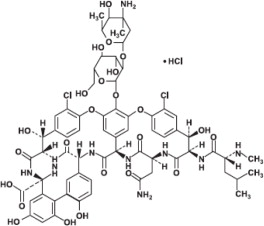
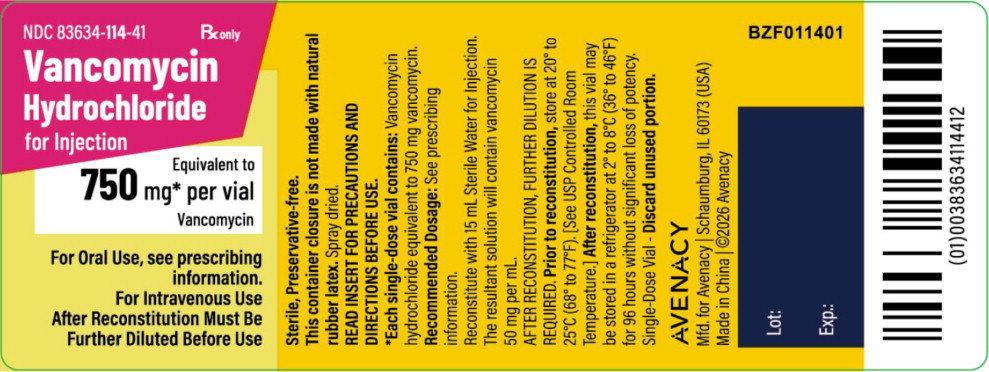
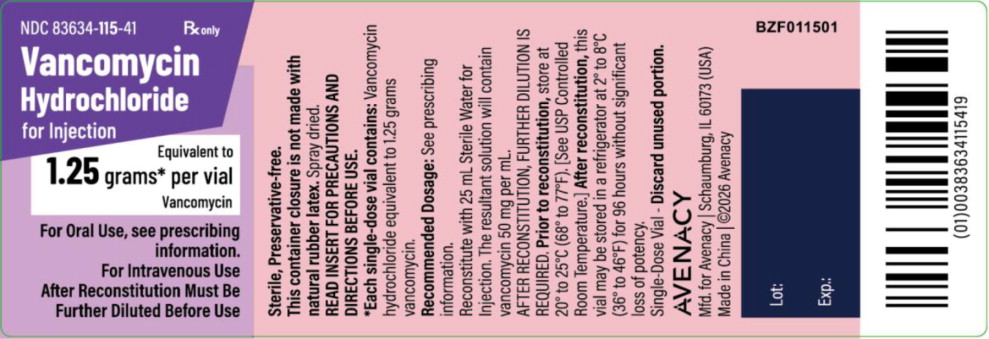
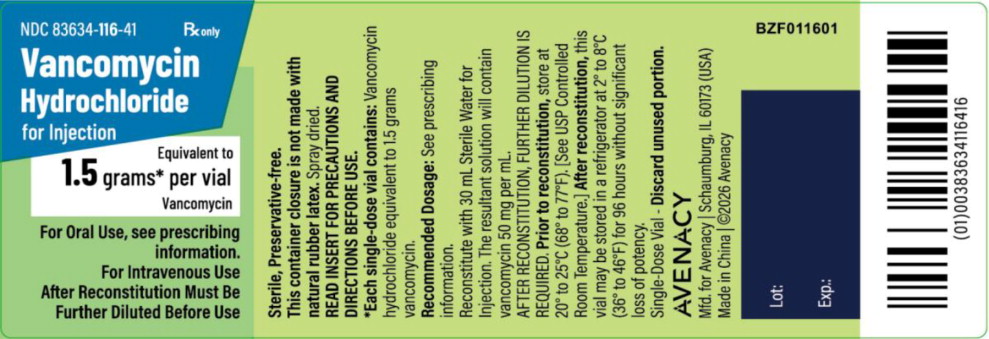
Vancomycin Hydrochloride for Injection is a white, almost white to tan to brown, sterile spray-dried powder in single-dose flip-top vials each containing vancomycin hydrochloride equivalent to 750 mg, 1.25 grams or 1.5 grams of vancomycin base, supplied as follows:
| NDC | Vancomycin Hydrochloride for Injection | Package Factor |
| 83634-114-20
| 750 mg Single-Dose Vial
| 10 vials per carton
|
| 83634-115-30
| 1.25 gram Single-Dose Vial
| 10 vials per carton
|
| 83634-116-30
| 1.5 gram Single-Dose Vial
| 10 vials per carton
|
Acute Kidney Injury
Advise patients that Vancomycin Hydrochloride for Injection can result in kidney damage and that blood tests are required to monitor vancomycin blood levels and kidney function during therapy [see Warnings and Precautions (5.1)].
Hearing Loss or Balance Problems
Advise patients that Vancomycin Hydrochloride for Injection may result in decreased hearing and to report hearing loss or balance problems to their health care provider [see Warnings and Precautions (5.2)].
Severe Dermatologic Reactions
Advise patients about the signs and symptoms of serious skin manifestations. Instruct patients to stop Vancomycin Hydrochloride for Injection immediately and promptly seek medical attention at the first signs or symptoms of skin rash, mucosal lesions or blisters [see Warnings and Precautions (5.3)].
Infusion Reactions During or After Intravenous Use
Advise patients that generalized skin redness, skin rash, itching, flushing, muscle pain, chest pain, shortness of breath, wheezing, or dizziness may occur during Vancomycin Hydrochloride for Injection infusion [see Warnings and Precautions (5.5)].
Diarrhea
Diarrhea is a common problem caused by antibacterial drugs, including vancomycin, which usually ends when the antibacterial drug is discontinued. Sometimes after starting treatment with antibacterial drugs, patients can develop watery and bloody stools (with or without stomach cramps and fever) even as late as two or more months after having taken the last dose of the antibacterial drug. If this occurs during treatment with Vancomycin Hydrochloride for Injection, patients should contact their physician as soon as possible [see Warnings and Precautions (5.7)].
Antibacterial Resistance
Patients should be counseled that antibacterial drugs including Vancomycin Hydrochloride for Injection should only be used to treat bacterial infections. They do not treat viral infections (e.g., the common cold). When Vancomycin Hydrochloride for Injection is prescribed to treat a bacterial infection, patients should be told that although it is common to feel better early in the course of therapy, the medication should be taken exactly as directed. Skipping doses or not completing the full course of therapy may (1) decrease the effectiveness of the immediate treatment and (2) increase the likelihood that bacteria will develop resistance and will not be treatable by Vancomycin Hydrochloride for Injection or other antibacterial drugs in the future.
AVENACY
Mfd. for Avenacy
Schaumburg, IL 60173 (USA)
Made in China
©2026 Avenacy
April 2026