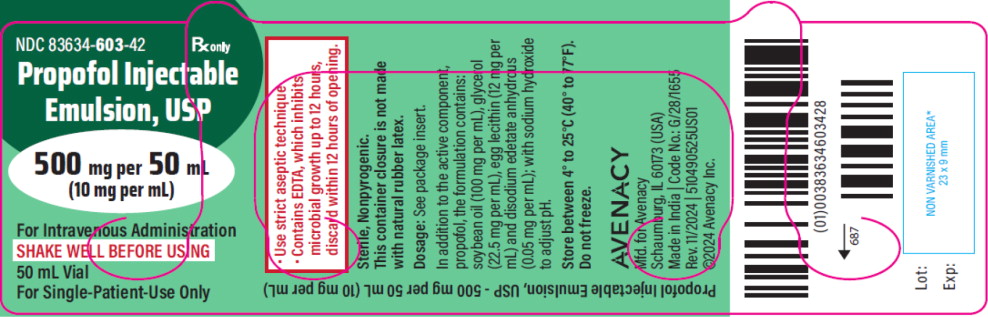
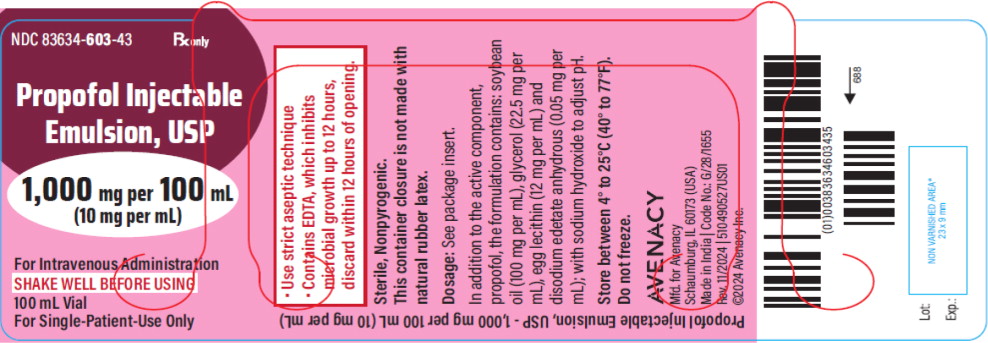
Propofol injectable emulsion must be prepared for use just prior to initiation of each individual anesthetic/sedative procedure. The vial rubber stopper should be disinfected using 70% isopropyl alcohol. Propofol injectable emulsion should be drawn into a sterile syringe immediately after a vial is opened. When withdrawing propofol injectable emulsion from vials, a sterile vent spike should be used. The syringe should be labelled with appropriate information including the date and time the vial was opened. Administration should commence promptly and be completed within 12 hours after the vial has been opened.
Propofol injectable emulsion must be prepared for single dose only. Any unused propofol injectable emulsion drug product, reservoirs, dedicated administration tubing and/or solutions containing propofol injectable emulsion must be discarded at the end of the anesthetic procedure or at 12 hours, whichever occurs sooner. The intravenous line should be flushed every 12 hours and at the end of the anesthetic procedure to remove residual propofol injectable emulsion [see Warnings and Precautions (5.2)].
Propofol injectable emulsion must be prepared for single dose only. Strict aseptic techniques must be followed. The vial rubber stopper should be disinfected using 70% isopropyl alcohol. A sterile vent spike and sterile tubing must be used for administration of propofol injectable emulsion. As with other lipid emulsions, the number of intravenous line manipulations should be minimized. Administration should commence promptly and must be completed within 12 hours after the vial has been spiked. The tubing and any unused propofol injectable emulsion drug product must be discarded after 12 hours.
If propofol injectable emulsion is transferred to a syringe prior to administration, it should be drawn into a sterile syringe immediately after a vial is opened. When withdrawing propofol injectable emulsion from a vial, a sterile vent spike should be used. The syringe should be labelled with appropriate information including the date and time the vial was opened. Administration should commence promptly and be completed within 12 hours after the vial has been opened. Propofol injectable emulsion should be discarded and administration lines changed after 12 hours [see Warnings and Precautions (5.2)].
If lidocaine is to be administered to minimize pain on injection of propofol injectable emulsion, it is recommended that it be administered prior to propofol injectable emulsion administration or that it be added to propofol injectable emulsion immediately before administration and in quantities not exceeding 20 mg lidocaine/200 mg propofol injectable emulsion [see Warnings and Precautions (5.13)].
Propofol injectable emulsion should not be mixed with other therapeutic agents prior to administration.
Propofol injectable emulsion is provided as a ready-to-use formulation. However, should dilution be necessary, it should only be diluted with 5% Dextrose Injection, USP, and it should not be diluted to a concentration less than 2 mg/mL because it is an emulsion. In diluted form it has been shown to be more stable when in contact with glass than with plastic (95% potency after 2 hours of running infusion in plastic).
Compatibility of propofol injectable emulsion with the coadministration of blood/serum/plasma has not been established [see Warnings and Precautions (5.15)].
When administered using a y-type infusion set, propofol injectable emulsion has been shown to be compatible with the following intravenous fluids:
- 5% Dextrose Injection, USP
- Lactated Ringers Injection, USP
- Lactated Ringers and 5% Dextrose Injection
- 5% Dextrose and 0.45% Sodium Chloride Injection, USP
- 5% Dextrose and 0.2% Sodium Chloride Injection, USP
Administration with Pumps
When administering propofol injectable emulsion by infusion, syringe or volumetric pumps are recommended to provide controlled infusion rates. When infusing propofol injectable emulsion to patients undergoing magnetic resonance imaging, metered control devices may be utilized if mechanical pumps are impractical.
Administration with Filters
Clinical experience with the use of in-line filters and propofol injectable emulsion during anesthesia or ICU/MAC sedation is limited. Propofol injectable emulsion should only be administered through a filter with a pore size of 5 micron or greater unless it has been demonstrated that the filter does not restrict the flow of propofol injectable emulsion and/or cause the breakdown of the emulsion. Filters should be used with caution and where clinically appropriate. Continuous monitoring is necessary due to the potential for restricted flow and/or breakdown of the emulsion.
Adult Patients
Most adult patients under 65 years of age and classified as ASA-PS I or II require 2 mg/kg to 2.5 mg/kg of propofol injectable emulsion. For induction, whether administered by infusion or intravenous injection the dose of propofol injectable emulsion to the patient should be titrated against the response of the patient and until there are clinical signs consistent with the onset of anesthesia. As with other sedative-hypnotic agents, the amount of intravenous opioid and/or benzodiazepine premedication may impact the dose of propofol injectable emulsion required for induction of general anesthesia.
Elderly, Debilitated, or ASA-PS III or IV Patients
Due to the reduced clearance and higher blood concentrations, most elderly, debilitated, or ASA-PS III or IV patients require approximately 1 mg/kg to 1.5 mg/kg of propofol injectable emulsion for induction of anesthesia. For induction, whether administered by infusion or intravenous injection the dose administration of propofol injectable emulsion to the patient should be titrated against the response of the patient and until there are clinical signs consistent with the onset of anesthesia. A rapid bolus may increase the likelihood of undesirable cardiorespiratory depression [see Warnings and Precautions (5.12)].
Pediatric Patients
Most patients aged 3 years through 16 years and classified ASA-PS I or II require 2.5 mg/kg to 3.5 mg/kg of propofol injectable emulsion for induction. Within this dosage range, younger pediatric patients may require higher induction doses than older pediatric patients. As with other sedative-hypnotic agents, the amount of intravenous opioid and/or benzodiazepine premedication may impact the dose of propofol injectable emulsion required for induction of general anesthesia. A lower dosage is recommended for pediatric patients classified as ASA-PS III or IV. Boluses of propofol injectable emulsion may be administered via small veins if pretreated with lidocaine or via antecubital or larger veins [see Dosage and Administration (2.7)].
Neurosurgical Patients
Most adult neurosurgical patients require 1 mg/kg to 2 mg/kg of propofol injectable emulsion. Slower induction is recommended to allow for titration to achieve an adequate clinical response [see Warnings and Precautions (5.6)]. Whether administered by infusion or an intravenous injection, the dose of propofol injectable emulsion to the patient should be titrated against the response of the patient and until there are clinical signs consistent with the onset of anesthesia.
Cardiac Anesthesia
Most adult cardiac patients require 0.5 mg/kg to 1.5 mg/kg of propofol injectable emulsion. Slower induction is recommended to allow for titration to clinical response and to prevent hemodynamic instability. Whether administered by infusion or intravenous injection, the dose of propofol injectable emulsion to the patient should be titrated against the response of the patient until the clinical signs show the onset of anesthesia. Other agents used in addition to propofol injectable emulsion for induction and maintenance of anesthesia may require propofol injectable emulsion doses to be titrated to ensure adequate sedation level.
Propofol injectable emulsion has been well-studied in patients with coronary artery disease and in patients with hemodynamically significant valvular or congenital heart disease. No significant safety issues or changes to the induction of anesthesia is generally required for these patient groups. Dosing should be titrated based on depth of anesthesia.
As with other anesthetic and sedative-hypnotic agents, propofol injectable emulsion in healthy patients causes a decrease in blood pressure that is secondary to decreases in preload (ventricular filling volume at the end of the diastole) and afterload (arterial resistance at the beginning of the systole). The magnitude of these changes is proportional to the blood and effect site concentrations achieved. These concentrations depend upon the dose and speed of the induction and maintenance infusion rates.
In addition, lower heart rates are observed during maintenance with propofol injectable emulsion, possibly due to reduction of the sympathetic activity and/or resetting of the baroreceptor reflexes. Therefore, anticholinergic agents should be administered when increases in vagal tone are anticipated.
As with other anesthetic agents, propofol injectable emulsion reduces myocardial oxygen consumption.
Further studies are needed to confirm and delineate the extent of these effects on the myocardium and the coronary vascular system.
Morphine premedication (0.15 mg/kg) with nitrous oxide 67% in oxygen has been shown to decrease the necessary propofol injectable emulsion maintenance infusion rates and therapeutic blood concentrations when compared to non-narcotic (lorazepam) premedication. The rate of propofol injectable emulsion administration should be determined based on the patient's premedication and adjusted according to clinical responses.
Adult Patients
In adults, anesthesia can be maintained by administering propofol injectable emulsion by infusion or intermittent intravenous bolus injection. The patient's clinical response will determine the infusion rate or the amount and frequency of incremental injections
Continuous Infusion
Propofol injectable emulsion 100 mcg/kg/min to 200 mcg/kg/min administered in a variable rate infusion with 60% to 70% nitrous oxide and oxygen provides anesthesia for patients undergoing general surgery. Maintenance by infusion of propofol injectable emulsion should immediately follow the induction dose in order to provide satisfactory or continuous anesthesia during the induction phase. During this initial period following the induction dose, higher rates of infusion are generally required (150 mcg/kg/min to 200 mcg/kg/min) for the first 10 minutes to 15 minutes. Infusion rates should subsequently be decreased 30% to 50% during the first half-hour of maintenance. Generally, rates of 50 mcg/kg/min to 100 mcg/kg/min in adults should be achieved during maintenance in order to optimize recovery times.
Other drugs that cause CNS depression (hypnotics/sedatives, inhalational anesthetics, and opioids) can increase the CNS depression induced by propofol.
Intermittent Bolus
Increments of propofol injectable emulsion 25 mg (2.5 mL) to 50 mg (5 mL) may be administered in adult patients undergoing general surgery. The incremental boluses should be administered when changes in vital signs indicate a response to surgical stimulation or light anesthesia.
Cardiac Anesthesia
The maintenance dose of propofol in adult cardiac patients should be administered as 25 to 100 mcg/kg/min, and should be adjusted according to the patient's sedation level and clinical response.
Pediatric Patients
In children greater than or equal to 2 months of age, anesthesia can be maintained by administering propofol injectable emulsion by infusion or intermittent intravenous bolus injection. An initial bolus of between 1 to 4 mg/kg, followed by subsequent administration of smaller aliquots based on patients' response (0.5 to 2 mg/kg). The patient's clinical response will determine the infusion rate or the amount and frequency of incremental injections.
Continuous Infusion
Propofol injectable emulsion administered as a variable rate infusion provides satisfactory anesthesia for most children 2 months of age or older, ASA-PS I or II, undergoing general anesthesia.
In general, for the pediatric population, maintenance by infusion of propofol injectable emulsion at a rate of 200 mcg/kg/min to 300 mcg/kg/min should immediately follow the induction dose. Following the first half-hour of maintenance, infusion rates of 125 mcg/kg/min to 150 mcg/kg/min are typically needed. Propofol injectable emulsion should be titrated to achieve the desired clinical effect. Younger pediatric patients may require higher maintenance infusion rates than older pediatric patients [see Clinical Studies (14.1)].
Intermittent Bolus
An initial bolus of 1 to 4 mg/kg should be administered, with additional 0.5 to 2 mg/kg doses as needed. The incremental boluses should be administered when changes in vital signs indicate a response to surgical stimulation or light anesthesia.
Initiation of MAC Sedation in Adult Patients
For initiation of MAC sedation, either an infusion or a slow injection method may be utilized while closely monitoring cardiorespiratory function. With the infusion method, sedation may be initiated by infusing propofol injectable emulsion at 100 mcg/kg/min to 150 mcg/kg/min (6 mg/kg/hour to 9 mg/kg/hour) for a period of 3 minutes to 5 minutes and titrating to the desired clinical effect while closely monitoring respiratory function. With the slow injection method for initiation, patients will require approximately 0.5 mg/kg administered over 3 minutes to 5 minutes and titrated to clinical responses. When propofol injectable emulsion is administered slowly over 3 minutes to 5 minutes, most patients will be adequately sedated, and the peak drug effect can be achieved while minimizing undesirable cardiorespiratory effects occurring at high plasma levels.
In the elderly, debilitated, or ASA-PS III or IV patients, rapid (single or repeated) bolus dose administration should not be used for MAC sedation [see Warnings and Precautions (5.12)]. The rate of administration should be over 3 minutes to 5 minutes and the dosage of propofol injectable emulsion should be reduced to approximately 80% of the usual adult dosage in these patients according to their condition, responses, and changes in vital signs.
Maintenance of MAC Sedation in Adult Patients
For maintenance of sedation, a variable rate infusion method is preferable over an intermittent bolus dose method. With the variable rate infusion method, patients will generally require maintenance rates of 25 mcg/kg/min to 75 mcg/kg/min (1.5 mg/kg/hour to 4.5 mg/kg/hour) during the first 10 minutes to 15 minutes of sedation maintenance. Infusion rates should subsequently be decreased over time to 25 mcg/kg/min to 50 mcg/kg/min and adjusted to clinical responses. In titrating to clinical effect, allow approximately 2 minutes for onset of peak drug effect.
Infusion rates should always be titrated downward in the absence of clinical signs of light sedation until mild responses to stimulation are obtained in order to avoid sedative administration of propofol injectable emulsion at rates higher than are clinically necessary.
If the intermittent bolus dose method is used, increments of propofol injectable emulsion 10 mg (1 mL) or 20 mg (2 mL) can be administered and titrated to desired clinical effect. With the intermittent bolus method of sedation maintenance, there is increased potential for respiratory depression, transient increases in sedation depth, and prolongation of recovery.
In the elderly, debilitated, or ASA-PS III or IV patients, rapid (single or repeated) bolus dose administration should not be used for MAC sedation [see Warnings and Precautions (5.12)]. The rate of administration and the dosage of propofol injectable emulsion should be reduced to approximately 80% of the usual adult dosage in these patients according to their condition, responses, and changes in vital signs.
Propofol injectable emulsion can be administered as the sole agent for maintenance of MAC sedation during surgical/diagnostic procedures. When propofol injectable emulsion sedation is supplemented with opioid and/or benzodiazepine medications, these agents increase the sedative and respiratory effects of propofol injectable emulsion and may also result in a slower recovery profile [see Drug Interactions (7)].
Clinical Trials Experience
Because clinical trials are conducted under widely varying conditions, adverse reaction rates observed in the clinical trials of a drug cannot be directly compared to rates in the clinical trials of another drug and may not reflect the rates observed in practice.
Anesthesia and MAC Sedation in Adults
The following estimates of adverse events for propofol injectable emulsion include data from clinical trials in general anesthesia/MAC sedation (N=2,889 adult patients). The adverse events listed below as probably causally related are those events in which the actual incidence rate in patients treated with propofol injectable emulsion was greater than the comparator incidence rate in these trials. Therefore, incidence rates for anesthesia and MAC sedation in adults generally represent estimates of the percentage of clinical trial patients which appeared to have probable causal relationship.
The adverse experience profile from reports of 150 patients in the MAC sedation clinical trials is similar to the profile established with propofol injectable emulsion during anesthesia (see Table 3 below). During MAC sedation clinical trials, significant respiratory events included cough, upper airway obstruction, apnea, hypoventilation, and dyspnea.
Anesthesia in Pediatric Patients
Generally, the adverse experience profile from reports of 506 propofol injectable emulsion pediatric patients from 6 days through 16 years of age in the US/Canadian anesthesia clinical trials is similar to the profile established with propofol injectable emulsion during anesthesia in adults. Although not reported as an adverse event in clinical trials, apnea is frequently observed in pediatric patients.
ICU Sedation in Adults
The following estimates of adverse events include data from clinical trials in ICU sedation (N=159 adult patients). Probably related incidence rates for ICU sedation were determined by individual case report form review. Probable causality was based upon an apparent dose response relationship and/or positive responses to rechallenge. In many instances the presence of concomitant disease and concomitant therapy made the causal relationship unknown. Therefore, incidence rates for ICU sedation generally represent estimates of the percentage of clinical trial patients which appeared to have a probable causal relationship.
Table 2: Treatment Emergent Adverse Events Observed from Clinical Trials
| Anesthesia/MAC Sedation | ICU Sedation |
| Body as a Whole:
| Anaphylaxis/Anaphylactoid reaction perinatal disorder, tachycardia, bigeminy, bradycardia, premature ventricular contractions, hemorrhage, ECG abnormal arrhythmia atrial, fever, extremities pain, anticholinergic syndrome, asthenia, awareness, chest pain, extremities pain, fever, increased drug effect, neck rigidity/stiffness, trunk pain
| Fever, sepsis, trunk pain, whole body weakness
|
| Cardiovascular:
| Premature atrial contractions
Syncope, hypotension [see also Clinical Pharmacology (12)], tachycardia Nodal, arrhythmia
Bradycardia, arrhythmia, atrial fibrillation, atrioventricular heart block, bigeminy, bleeding, bundle branch block, cardiac arrest, ECG abnormal, edema, extrasystole, heart block, hypertension, myocardial infarction, myocardial ischemia, premature ventricular contractions, ST segment depression, supraventricular tachycardia, tachycardia, ventricular fibrillation
| Bradycardia, decreased cardiac output, arrhythmia, atrial fibrillation, bigeminy, cardiac arrest, extrasystole, right heart failure, ventricular tachycardia
|
| Central Nervous System:
| Hypertonia/Dystonia, paresthesia, movement, abnormal dreams, agitation, amorous behavior, anxiety, bucking/jerking/thrashing, chills/shivering/clonic/myoclonic movement, combativeness, confusion, delirium, depression, dizziness, emotional lability, euphoria, fatigue, hallucinations, headache, hypotonia, hysteria, insomnia, moaning, neuropathy, opisthotonos, rigidity, seizures, somnolence, tremor, twitching
| Agitation, hypotension, hills/shivering, intracranial hypertension, seizures, somnolence, thinking abnormal
|
| Digestive:
| Hypersalivation, nausea, cramping, diarrhea, dry mouth, enlarged parotid, nausea, swallowing, vomiting
| Ileus, liver function abnormal
|
| Hemic/Lymphatic:
| Leukocytosis, coagulation disorder, leukocytosis
| |
| Injection Site:
| Phlebitis, pruritus, burning/Stinging or pain, hives/itching, phlebitis, redness/discoloration
| |
| Metabolic/Nutritional:
| Hypomagnesemia, hyperkalemia, hyperlipemia
| BUN increased, creatinine increased, dehydration, hyperglycemia, metabolic acidosis, osmolality increased, hyperlipemia
|
| Musculoskeletal:
| Myalgia
| |
| Nervous:
| Dizziness, agitation, chills, somnolence
Delirium
| |
| Respiratory:
| Wheezing, cough, laryngospasm, hypoxia, apnea, bronchospasm, burning in throat, dyspnea, hiccough, hyperventilation, hypoventilation, pharyngitis, sneezing, tachypnea, upper airway obstruction
| Decreased lung function, respiratory acidosis during weaning, hypoxia
|
| Skin and Appendages:
| Flushing, Pruritus, rash, conjunctival hyperemia, diaphoresis, urticaria
| Rash
|
| Special Senses:
| Amblyopia, vision abnormal, diplopia, ear pain, eye pain, nystagmus, taste perversion, tinnitus
| |
| Urogenital:
| Cloudy urine, oliguria, urine retention
| Green urine, kidney failure
|
Postmarketing Experience
During the post-marketing period, there have been rare reports of local pain, swelling, blisters, and/or tissue necrosis following accidental extravasation of propofol injectable emulsion [see Warnings and Precautions (5.14)].
Venous sequelae, i.e., phlebitis or thrombosis, have been reported rarely (<1%).
Opioids and Sedatives
The induction dose requirements of propofol injectable emulsion may be reduced in patients with intramuscular or intravenous premedication, particularly with opioids (e.g., morphine, meperidine, and fentanyl, etc.) and combinations of opioids and sedatives (e.g., benzodiazepines, barbiturates, chloral hydrate, droperidol, etc.). These agents may increase the anesthetic or sedative effects of propofol injectable emulsion and may also result in more pronounced decreases in systolic, diastolic, and mean arterial pressures and cardiac output.
In pediatric patients, administration of fentanyl concomitantly with propofol injectable emulsion may result in serious bradycardia.
Analgesic Agents
During maintenance of anesthesia or sedation, the rate of propofol injectable emulsion administration should be adjusted according to the desired level of anesthesia or sedation and may be reduced in the presence of supplemental analgesic agents (e.g., nitrous oxide or opioids).
The concurrent administration of potent inhalational agents (e.g., isoflurane, sevoflurane, desflurane, enflurane, and halothane) during maintenance with propofol injectable emulsion are routinely used. These inhalational agents can also be expected to increase the anesthetic or sedative and cardiorespiratory effects of propofol injectable emulsion.
Valproate
The concomitant use of valproate and propofol may lead to increased blood levels of propofol. Reduce the dose of propofol when co-administering with valproate. Monitor patients closely for signs of increased sedation or cardiorespiratory depression.
Common Neuromuscular Blocking Agents
Propofol injectable emulsion does not cause a clinically significant change in onset, intensity or duration of action of the commonly used neuromuscular blocking agents (e.g., succinylcholine and nondepolarizing muscle relaxants).
Common Drugs Used as Premedication or Drugs Used During Anesthesia or Sedation
No significant adverse interactions with commonly used premedications or drugs used during anesthesia or sedation (including a range of muscle relaxants, inhalational agents, analgesic agents, and local anesthetic agents) have been observed in adults.
Risk Summary
Data from randomized controlled trials, cohort studies and case series over several decades with propofol use in pregnant women have not identified a drug-associated risk of major birth defects, miscarriage, or adverse maternal or fetal outcomes. Most of the reported exposures to propofol describe propofol exposure at the time of cesarean delivery. There are reports of neonatal depression in infants exposed to propofol during delivery (see Clinical Considerations). In animal reproduction studies, decreased pup survival concurrent with increased maternal mortality was observed with intravenous administration of propofol to pregnant rats either prior to mating and during early gestation or during late gestation and early lactation at exposures less than the human induction dose of 2.5 mg/kg. In pregnant rats administered 15 mg/kg/day intravenous propofol (equivalent to the human induction dose) from two weeks prior to mating to early in gestation (Gestation Day 7), offspring that were allowed to mate had increased postimplantation losses. The pharmacological activity (anesthesia) of the drug on the mother is probably responsible for the adverse effects seen in the offspring.
Published studies in pregnant primates demonstrate that the administration of anesthetic and sedation drugs that block NMDA receptors and/or potentiate GABA activity during the period of peak brain development increases neuronal apoptosis in the developing brain of the offspring when used for longer than 3 hours. There are no data on pregnancy exposures in primates corresponding to periods prior to the third trimester in humans [see Data, Warnings and Precautions (5.3), Use in Specific Populations (8.4)]). The clinical significance of these nonclinical findings is not known, and the benefits of appropriate anesthesia in pregnant women who require procedures should be balanced with the potential risks suggested by the nonclinical data.
The estimated background risk of major birth defects and miscarriage for the indicated population is unknown. All pregnancies have a background risk of birth defect, loss, or other adverse outcomes. In the U.S. general population, the estimated background risk of major birth defects and miscarriage in clinically recognized pregnancies is 2 to 4% and 15 to 20%, respectively.
Clinical Considerations
Fetal/neonatal Adverse Reactions
Propofol injectable emulsion crosses the placenta and may be associated with neonatal depression. Monitor neonates for hypotonia and sedation following maternal exposure to propofol.
Data
Animal Data
Pregnant rats were administered propofol intravenously at 0, 5, 10, and 15 mg/kg/day (0.3, 0.65, and 1 times the human induction dose of 2.5 mg/kg based on body surface area) during organogenesis (Gestational Days 6 to 15). Propofol did not cause adverse effects to the fetus at exposures up to 1 times the human induction dose despite evidence of maternal toxicity (decreased weight gain in all groups).
Pregnant rabbits were administered propofol intravenously at 0, 5, 10, and 15 mg/kg/day (0.65, 1.3, 2 times the human induction dose of 2.5 mg/kg based on body surface area comparison) during organogenesis (Gestation Days 6 to 18). Propofol treatment decreased total numbers of corpora lutea in all treatment groups but did not cause fetal malformations at any dose despite maternal toxicity (one maternal death from anesthesia-related respiratory depression in the high dose group).
Pregnant rats were administered propofol intravenously at 0, 10, and 15 mg/kg/day (0.65 and 1 times the human induction dose of 2.5 mg/kg based on body surface area) from late gestation through lactation (Gestation Day 16 to Lactation Day 22). Decreased pup survival was noted at all doses in the presence of maternal toxicity (deaths from anesthesia-induced respiratory depression). This study did not evaluate neurobehavioral function including learning and memory in the pups.
Pregnant rats were administered propofol intravenously at 0, 10, or 15 mg/kg/day (0.3 and 1 times the human induction dose of 2.5 mg/kg based on body surface area) from 2 weeks prior to mating to Gestational Day 7. Pup (F1) survival was decreased on Day 15 and 22 of lactation at maternally toxic doses of 10 and 15 mg/kg/day. When F1 offspring were allowed to mate, postimplantation losses were increased in the 15 mg/kg/day treatment group.
In a published study in primates, administration of an anesthetic dose of ketamine for 24 hours on Gestation Day 122 increased neuronal apoptosis in the developing brain of the fetus. In other published studies, administration of either isoflurane or propofol for 5 hours on Gestation Day 120 resulted in increased neuronal and oligodendrocyte apoptosis in the developing brain of the offspring. With respect to brain development, this time period corresponds to the third trimester of gestation in the human. The clinical significance of these findings is not clear; however, studies in juvenile animals suggest neuroapoptosis correlates with long-term cognitive deficits [see Warnings and Precautions (5.3), Pediatric Use (8.4), and Animal Toxicology and/or Pharmacology (13.2)].
Risk Summary
Based on data from published studies, propofol is present in human milk. Variable concentrations have been reported in human milk with administration of propofol to nursing mothers in the early post-partum period. Available data have not shown adverse reactions in breastfed infants. There are no data on the effects of propofol on milk production. The developmental and health benefits of breastfeeding should be considered along with the mother's clinical need for propofol injectable emulsion and any potential adverse effects on the breastfed infant form propofol injectable emulsion or from the underlying maternal condition.
Adults
Propofol clearance ranges from 23 mL/kg/min to 50 mL/kg/min (1.6 L/min to 3.4 L/min in 70 kg adults). It is chiefly eliminated by hepatic conjugation to inactive metabolites which are excreted by the kidney. A glucuronide conjugate accounts for about 50% of the administered dose. Propofol has a steady-state volume of distribution (10-day infusion) approaching 60 L/kg in healthy adults. A difference in pharmacokinetics due to gender has not been observed. The terminal half-life of propofol after a 10-day infusion is 1 day to 3 days.
Geriatrics
With increasing patient age, the dose of propofol needed to achieve a defined anesthetic end point (dose-requirement) decreases. This does not appear to be an age-related change in pharmacodynamics or brain sensitivity, as measured by EEG burst suppression. With increasing patient age, pharmacokinetic changes are such that, for a given intravenous bolus dose, higher peak plasma concentrations occur, which can explain the decreased dose requirement. These higher peak plasma concentrations in the elderly can predispose patients to cardiorespiratory effects including hypotension, apnea, airway obstruction, and/or arterial oxygen desaturation. The higher plasma levels reflect an age-related decrease in volume of distribution and intercompartmental clearance. Lower doses are therefore recommended for initiation and maintenance of sedation and anesthesia in elderly patients [see Dosage and Administration (2)].
Pediatrics
The pharmacokinetics of propofol were studied in children between 3 years and 12 years of age who received propofol injectable emulsion for periods of approximately 1 to 2 hours. The observed distribution and clearance of propofol in these children were similar to adults.
Organ Failure
The pharmacokinetics of propofol do not appear to be different in people with chronic hepatic cirrhosis or chronic renal impairment compared to adults with normal hepatic and renal function. The effects of acute hepatic or renal failure on the pharmacokinetics of propofol have not been studied [see Specific Populations (8.6) and (8.7)].
Carcinogenesis
Long-term studies in animals have not been performed to evaluate the carcinogenic potential of propofol.
Mutagenesis
Propofol was not mutagenic in the in vitro bacterial reverse mutation assay (Ames test) using Salmonella typhimurium strains TA98, TA100, TA1535, TA1537 and TA1538. Propofol was not mutagenic in either the gene mutation/gene conversion test using Saccharomyces cerevisiae, or in vitro cytogenetic studies in Chinese hamsters. In the in vivo mouse micronucleus assay with Chinese Hamsters propofol administration did not produce chromosome aberrations.
Impairment of Fertility
Female Wistar rats were administered either 0, 10, or 15 mg/kg/day propofol intravenously from 2 weeks before pregnancy to day 7 of gestation did not show impaired fertility (0.65 and 1 times the human induction dose of 2.5 mg/kg based on body surface area). Male fertility in rats was not affected in a dominant lethal study at intravenous doses up to 15 mg/kg/day for 5 days.