1 Indications And Usage
XTORO® is indicated for the treatment of acute otitis externa (AOE) with or without an otowick, caused by susceptible strains of Pseudomonas aeruginosa and Staphylococcus aureus in patients age 1 year and older.
The following Structured Product Label (SPL) was submitted to the FDA by Fonseca Biosciences, Llc for the product Xtoro (NDC 83709-001). This document serves as the official prescribing information, containing essential scientific data and clinical materials required for healthcare providers and patients.
This specific version of the label includes detailed information regarding 1 indications and usage, 2 dosage and administration, 3 dosage forms and strengths, 4 contraindications, 5 warnings and precautions, 5.1 growth of resistant organisms with prolonged use, 5.2 allergic reactions, 6.1 clinical trials experience, and other regulatory disclosures. Use the navigation below to review specific sections of the FDA submission.
XTORO® is indicated for the treatment of acute otitis externa (AOE) with or without an otowick, caused by susceptible strains of Pseudomonas aeruginosa and Staphylococcus aureus in patients age 1 year and older.
Instill four drops into the affected ear(s) twice daily for seven days. For patients requiring use of an otowick, the initial dose can be doubled (to 8 drops), followed by 4 drops instilled into the affected ear twice daily for seven days.
Important administration instructions include:
Otic Suspension: Each mL of XTORO contains finafloxacin 0.3% (equivalent to 3 mg finafloxacin).
None.
As with other antibacterial preparations, prolonged use of XTORO may lead to overgrowth of nonsusceptible organisms, including yeast and fungi. If this occurs, discontinue use and institute alternative therapy.
Allergic reactions to XTORO may occur in patients with a history of hypersensitivity to finafloxacin, to other quinolones, or to any of the components in this medication. If this occurs, discontinue use and institute alternative therapy.
Because clinical trials are conducted under widely varying conditions, adverse reaction rates observed in the clinical trials of a drug cannot be directly compared to rates in the clinical trials of another drug and may not reflect the rates observed in practice.
A total of 618 patients were treated with XTORO in two Phase 3 clinical trials. The most frequently reported adverse reactions of those exposed to XTORO occurring at an incidence of 1% included ear pruritus and nausea.
Risk Summary
There are no adequate or well-controlled studies with XTORO in pregnant women. Finafloxacin was shown to be teratogenic in rabbits and rats following oral administration. Neural tube defects and skeletal anomalies in both species, and limb anomalies in rabbits, were observed at exposures estimated to be at least 1300 times the maximum human systemic exposure following topical otic administration of 0.3% finafloxacin. Because animal studies are not always predictive of human responses, XTORO should be used during pregnancy only if the potential benefit justifies the potential risk to the fetus.
Data
Animal Data
In rabbit embryofetal studies, maternal toxicity was not observed at oral doses up to 9 mg/kg/day (estimated 8000 times the maximum human systemic exposure [0.234 ng/mL] following topical otic administration with 0.3% finafloxacin). Fetal toxicity was observed at the lowest dose tested, 1 mg/kg/day (estimated 1300 times the maximum human systemic exposure following topical otic administration with 0.3% finafloxacin), and included exencephaly, enlarged fontanel, spina bifida, phocomelia, paw hyperflexure, missing lumbar vertebra, missing lumbar arch, and sternebra fusion.
In a rat embryofetal study, no adverse maternal toxicity was observed at oral doses up to 100 mg/kg/day (estimated 60,000 times the maximum human systemic exposure following topical otic administration with 0.3% finafloxacin). The developmental no observed adverse effect level (NOAEL) was 30 mg/kg (estimated 22,000 times the maximum human systemic exposure following topical otic administration with 0.3% finafloxacin). Exencephaly was observed in one fetus at 100 mg/kg. At 500 mg/kg, additional developmental toxicities were observed including increased preimplantation loss, decreased fetal weight, decreased placental weight, increased incidence of non-ossified sternebrae, and delayed ossifications in the sternebrae, xiphisternum, sacral arches and metacarpals.
Finafloxacin has been identified in the milk of nursing rats following oral administration. The human systemic concentration of XTORO following topical otic treatment is low [see Clinical Pharmacology (12.3)]. It is not known whether topical otic administration could result in sufficient systemic absorption to produce detectable quantities in the human breast milk. Caution should be exercised when finafloxacin is administered to a nursing mother.
The safety and efficacy of XTORO in infants below one year of age have not been established. The safety and efficacy of XTORO in treating acute otitis externa in pediatric patients one year or older have been demonstrated in adequate and well controlled clinical trials [see Clinical Studies (14)].
No overall differences in safety or effectiveness have been observed between elderly and younger patients.
XTORO (finafloxacin otic suspension) 0.3% is a quinolone antimicrobial. Its chemical name is (-)-8-cyano-1-cyclopropyl-6-fluoro-7-[(4aS,7aS)-hexahydropyrrolo[3,4-b]-1,4-oxazin-6(2H)-yl]- 4-oxo-1,4-dihydroquinoline-3-carboxylic acid (CAS number 209342-40-5). Its structural formula is:
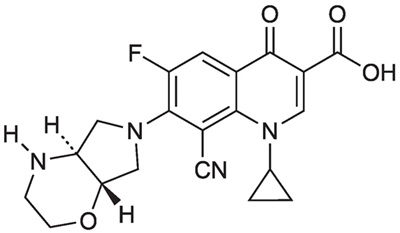
Chemical Diagram (Chemical)
Finafloxacin has a molecular weight of 398.4. Finafloxacin is a white to yellow powder or crystals that is slightly soluble in water (0.125 mg/mL).
XTORO (finafloxacin otic suspension), 0.3% is supplied as a sterile, preserved, aqueous suspension for topical otic use. It has a pH of approximately 6.0 and an osmolality of approximately 290 mOsm/kg.
XTORO contains Active ingredient: finafloxacin, 0.3%. Preservative: benzalkonium chloride (0.005%). Inactive ingredients include: sodium chloride, hydroxyethylcellulose, tyloxapol, magnesium chloride, and purified water. May contain hydrochloric acid and/or sodium hydroxide to adjust pH.
Finafloxacin is a fluoroquinolone antimicrobial [see Microbiology (12.4)].
Finafloxacin plasma concentrations were evaluated following single or repeated ototopical doses of XTORO (finafloxacin otic suspension) 0.3%. In healthy subjects administered 4 drops in each ear twice daily for seven days, quantifiable finafloxacin concentrations were observed in 2 of 14 subjects; and these concentrations were just above the quantitation limit (0.05 ng/mL). Similarly, in AOE patients administered a single dose of 4 or 8 drops in each ear, quantifiable finafloxacin concentrations of up to 0.234 ng/mL were observed in plasma samples from 2 of 36 AOE patients.
Finafloxacin belongs to the fluoroquinolone class of antibacterials which involves the inhibition of bacterial type II topoisomerase enzymes, DNA gyrase and topoisomerase IV, which are required for bacterial DNA replication, transcription, repair and recombination.
Finafloxacin has been shown to be active against most isolates of the following bacteria, both in vitro and clinical studies as described in the INDICATIONS and USAGE section of the package insert for XTORO
Pseudomonas aeruginosa
Staphylococcus aureus
Mechanism of Resistance
Resistance to fluoroquinolones occurs primarily by mutations in the chromosomal DNA that encode for DNA gyrase and DNA topoisomerase enzymes, decreased outer membrane permeability or drug efflux mechanisms. In vitro resistance to finafloxacin due to spontaneous mutation is rare.
Cross Resistance
Cross-resistance has been observed between finafloxacin and other fluoroquinolones. No cross-resistance has been observed between finafloxacin and other classes of antibacterial agents.
Carcinogenicity
Animal studies have not been conducted to determine the carcinogenic potential of finafloxacin.
Mutagenesis
Finafloxacin was shown to be genotoxic and clastogenic in vitro, with and without metabolic activation, and in vivo. In a bacterial reverse mutation assay, finafloxacin was positive in only one strain (TA102). Finafloxacin was positive in mammalian cell culture assays: mouse lymphoma cell forward mutation assays, a mutagenicity assay in V79 Chinese hamster lung cells, and a micronucleus test in V79 cells. Finafloxacin was clastogenic in mouse micronucleus studies.
Impairment of fertility
An oral rat fertility study detected a NOAEL for male and female fertility of 100 mg/kg/day (estimated 60,000 times the maximum human systemic exposure following topical otic administration with 0.3% finafloxacin). At 500 mg/kg/day, males were completely infertile, presumably due to low sperm count and sperm immobility.
General toxicity studies in rats have confirmed sperm toxicity following oral and intravenous dosing. Following intravenous dosing, the NOAEL for sperm toxicity was 30 mg/kg/day (150,000 times the maximum human exposure following topical otic administration with 0.3% finafloxacin).
In two randomized multicenter, vehicle controlled clinical trials, XTORO dosed four drops twice daily for 7 days was superior to its vehicle for both clinical and microbiological outcomes as well as in time to cessation of ear pain in patients with acute otitis externa (AOE).
Among 560 patients (161 with an otowick) that were pathogen positive (baseline microbiological specimen that contained Staphylococcus aureus and/or Pseudomonas aeruginosa), clinical cure on Day 11 was 71% in XTORO versus 37% in Vehicle. Among 1234 patients who received study treatment (Intent to Treat population (ITT)), aged 6 months to 85 years, clinical cures were 71% for XTORO and 50% in Vehicle.
| Study 1 | Study 2 | |||||
|---|---|---|---|---|---|---|
| a A clinical cure was attained if the sum of the numerical scores of the 3 signs and symptoms of AOE (tenderness, erythema, and edema) was 0 at Day 11 (TOC). | ||||||
| XTORO | Vehicle | XTORO vs. Vehicle Difference (95% CI) | XTORO | Vehicle | XTORO vs. Vehicle Difference (95% CI) | |
| Pathogen + Subset | 104/145 (71.7%) | 46/138 (33.3%) | 38.4% (27.6%, 49.1%) | 101/147 (68.7%) | 52/130 (40.0%) | 28.7% (17.4%, 40.0%) |
| ITT | 245/344 (71.2%) | 173/342 (50.6%) | 20.6% (13.5%, 27.8%) | 194/274 (70.8%) | 134/274 (48.9%) | 21.9% (13.9%, 29.9%) |
The median time to cessation of ear pain in pathogen positive patients treated with XTORO was 3.5 days compared to 6.8 days in Vehicle. The median time to cessation of ear pain in ITT patients treated with XTORO was 3.5 days compared to 5.3 days in Vehicle.
| Study 1 | Study 2 | |||||
|---|---|---|---|---|---|---|
| XTORO | Vehicle | XTORO vs. Vehicle Difference (95% CI) | XTORO | Vehicle | XTORO vs. Vehicle Difference (95% CI) | |
| Pathogen + Subset | 4.0 | 7.0 | -3.0 (-5.0, -0.8) | 3.0 | 6.5 | -3.6 (-5.0, -2.0) |
| ITT | 4.0 | 5.0 | 1.0 (-2.0, -0.5) | 3.0 | 6.5 | -2.2 (-3.0, -1.0) |
Among the pathogen positive patients, microbiological success (eradication of all baseline organisms) was achieved on Day 11 in 67% in XTORO versus 13% in the Vehicle treated patients.
| Study 1 | Study 2 | |||||
|---|---|---|---|---|---|---|
| b Microbiological success was attained if all pre-therapy bacteria were absent from the exit otic specimen. The presence of fungi and/or yeast was not considered in the determination of microbiological success. | ||||||
| XTORO | Vehicle | XTORO vs. Vehicle Difference (95% CI) | XTORO | Vehicle | XTORO vs. Vehicle Difference (95% CI) | |
| Pathogen + Subset | 97/145 (66.9%) | 18/138 (13.0%) | 53.9% (44.4%, 63.4%) | 97/147 (66.0%) | 15/130 (11.5%) | 54.4% (45.0%, 63.9%) |
In clinically cured pathogen positive patients, XTORO demonstrated eradication rates of 89% in both Staphylococcus aureus and Pseudomonas aeruginosa. Vehicle eradication rates were 33% for Staphylococcus aureus and 20% for Pseudomonas aeruginosa.
XTORO (finafloxacin otic suspension) 0.3% is a sterile, preserved, aqueous, otic suspension supplied in an opaque plastic bottle with a controlled drop tip and a white cap:
5 mL fill in a 5 mL bottle (NDC 83709-001-01)
Storage and Handling
Store at 2°C to 25°C (36°F to 77°F). Do not freeze.
Allergic Reactions
Advise patients that if a rash or allergic reaction occurs, they should discontinue the use of the product immediately and contact their physician.
Warm the Bottle in Hands Before Use
Advise patients or caregivers that prior to administration of XTORO, they should warm the bottle by holding it in their hands for one or two minutes to avoid dizziness which may result from the instillation of a cold solution.
For Use with an Otowick
Advise patients that following instillation of 8 drops at the time of otowick insertion, they should continue with the lower dose of 4 drops administered twice daily for seven days.
U.S. Patents Nos: 8,536,167; 9,119,859; 9,504,691; 9,993,483
©2026 Fonseca Biosciences, LLC
Manufactured For:
Fonseca Biosciences, LLC
2807 Long Beach Blvd Ste 1A
Long Beach Township, New Jersey 08008 USA
1-877-436-6732
[email protected]
NDC 83709-001-01
Xtoro® (finafloxacin otic suspension) 0.3%
®Fonseca Biosciences, LLC
STERILE
5 mL
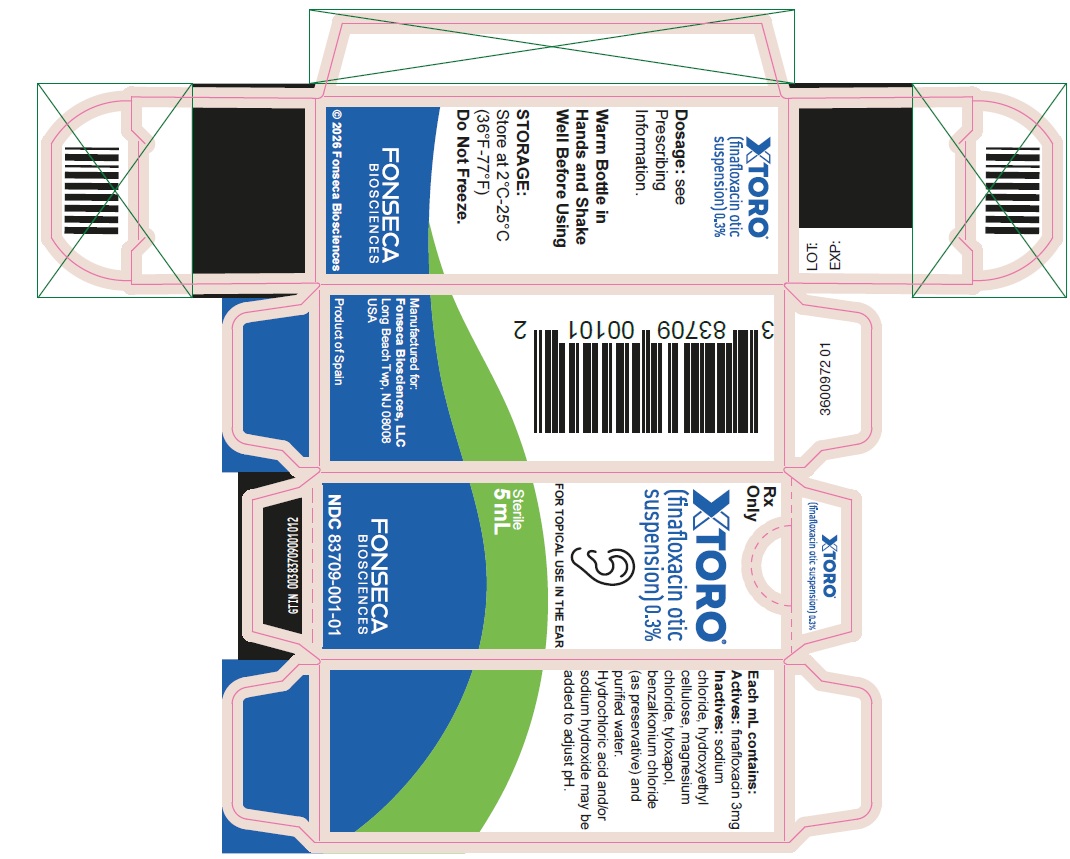
Carton (New Carton)
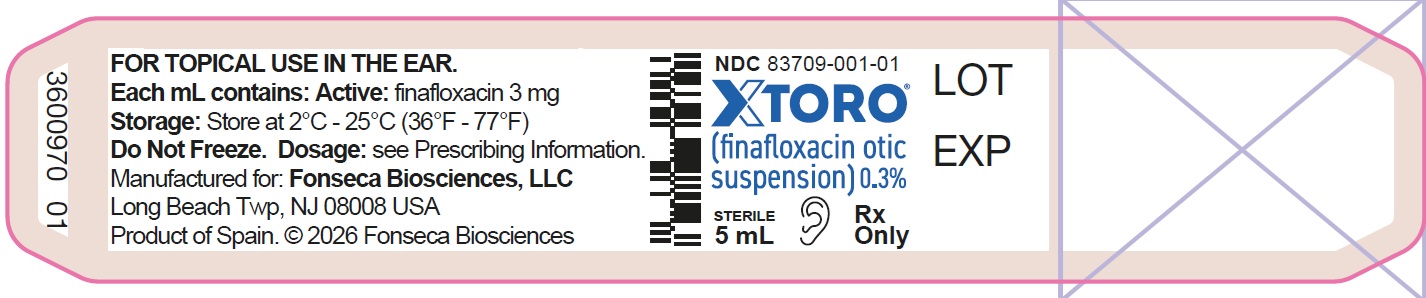
Bottle (New Container)
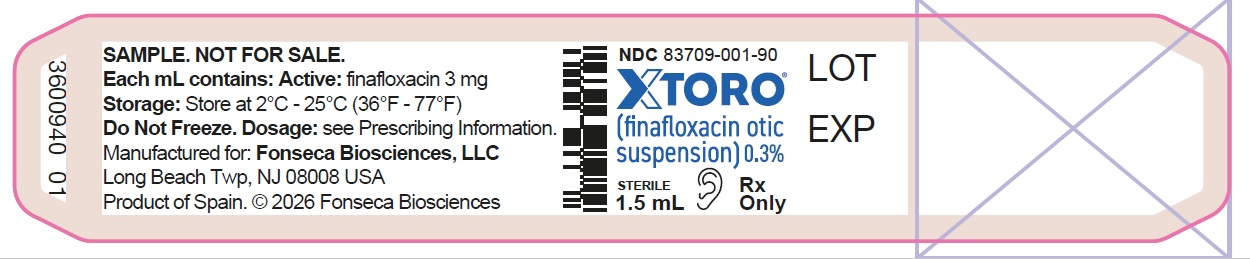
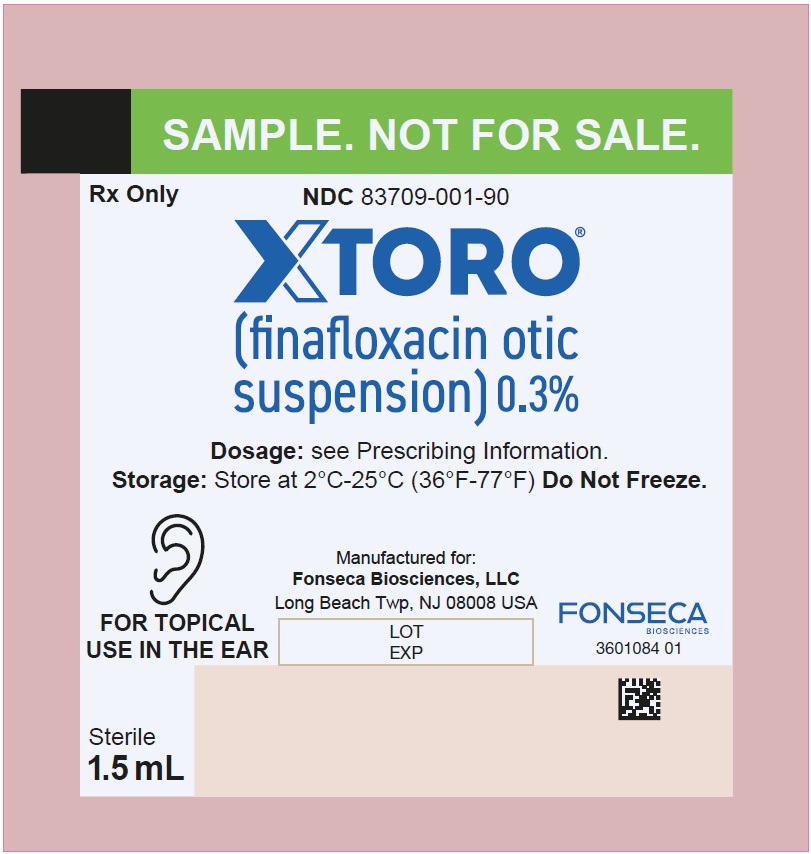
NDC 83709-001-90
Xtoro® (finafloxacin otic suspension) 0.3%
®Fonseca Biosciences, LLC
STERILE
1.5 mL
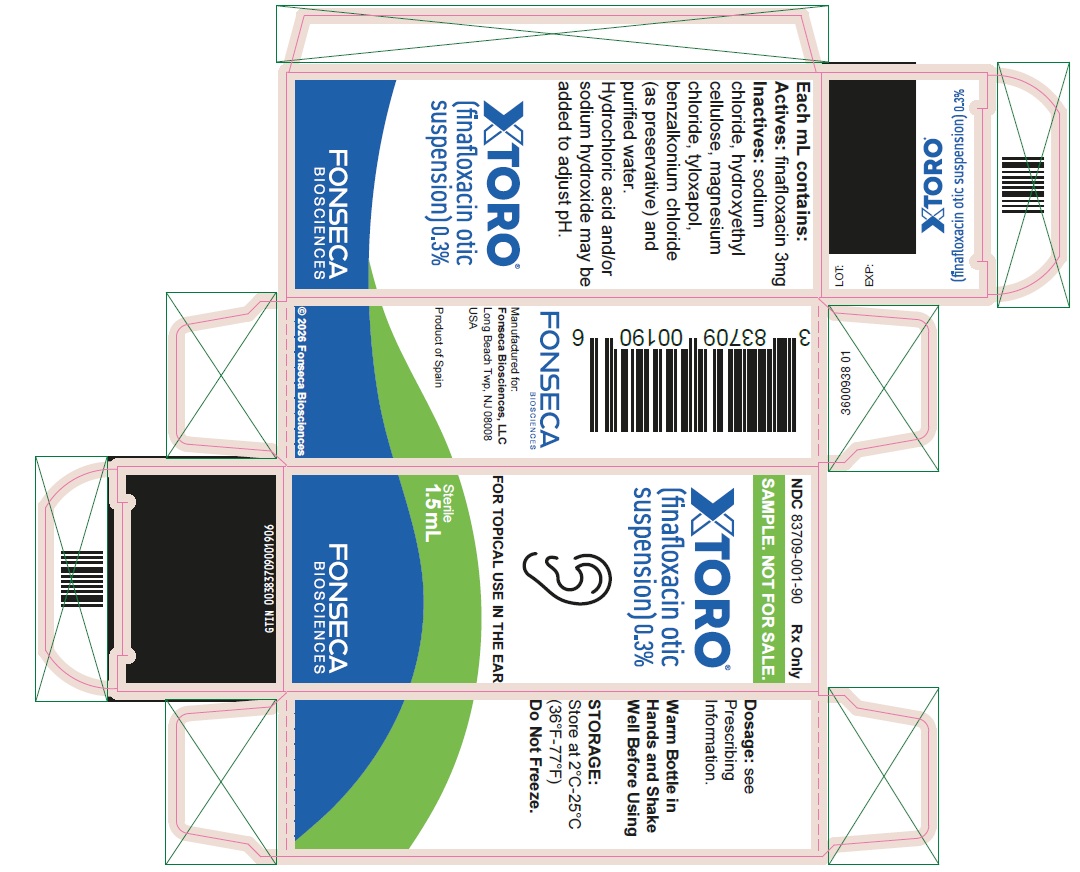
Carton-sample-1-5 (Sample Carton 1 5)
Bottle-sample-1-5 (Sample Bottle 1 5)
Pouch-sample-1-5 (Sample Pouch 1 5)
NDC 83709-001-91
Xtoro® (finafloxacin otic suspension) 0.3%
®Fonseca Biosciences, LLC
STERILE
5 mL
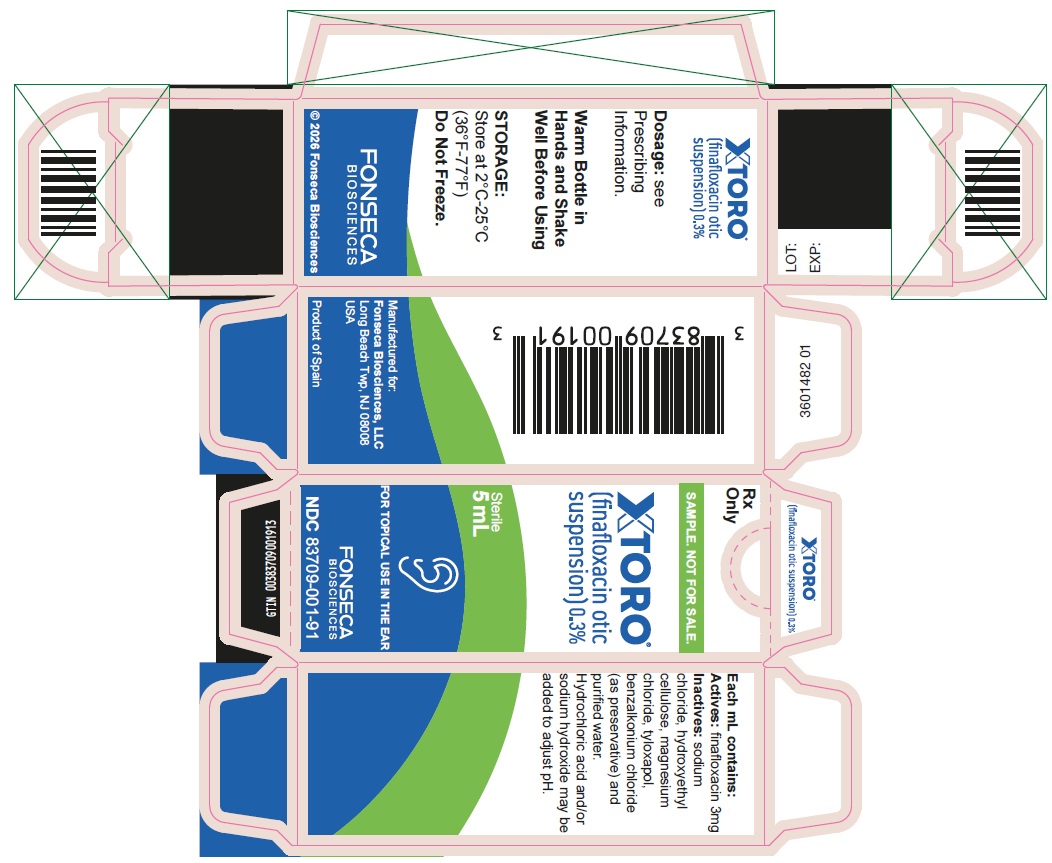
Sample-carton-5 (Sample Carton 5)
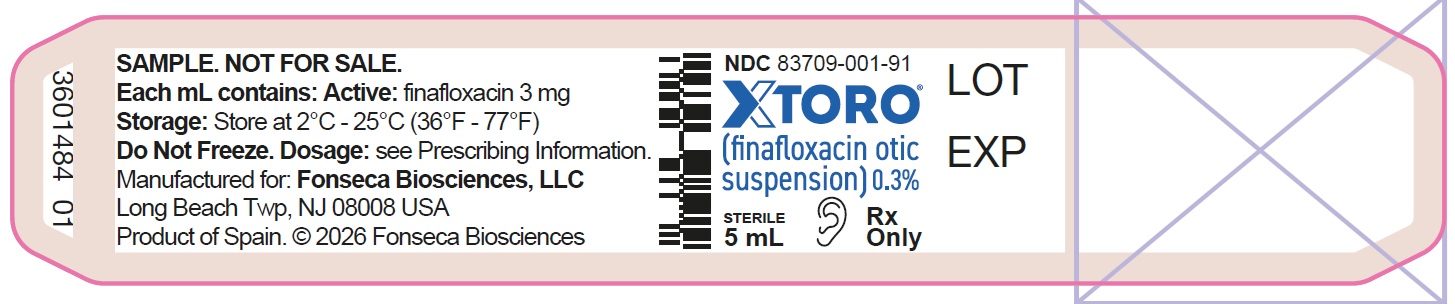
Sample-bottle-5 (Sample Bottle 5)
* Please review the disclaimer below.
