1 Indications And Usage
ISEMBYLD is indicated for the treatment of spinal muscular atrophy (SMA) in adults and pediatric patients 2 years of age and older who are currently receiving a survival motor neuron 2 (SMN2)-targeted treatment.
The following Structured Product Label (SPL) was submitted to the FDA by Scholar Rock, Inc. for the product Isembyld (NDC 84717-150). This document serves as the official prescribing information, containing essential scientific data and clinical materials required for healthcare providers and patients.
This specific version of the label includes detailed information regarding 1 indications and usage, 2.1 recommended dosage, 2.2 recommendations regarding missed dose, 2.3 preparation instructions, 2.4 administration instructions, 3 dosage forms and strengths, 4 contraindications, 5.1 fractures, and other regulatory disclosures. Use the navigation below to review specific sections of the FDA submission.
ISEMBYLD is indicated for the treatment of spinal muscular atrophy (SMA) in adults and pediatric patients 2 years of age and older who are currently receiving a survival motor neuron 2 (SMN2)-targeted treatment.
The recommended dosage of ISEMBYLD is 10 mg/kg administered once every 4 weeks as an intravenous infusion over approximately 60 minutes to 120 minutes at an infusion rate no greater than 150 mL/hour.
ISEMBYLD must be diluted prior to administration [see Dosage and Administration (2.3)].
Doses of ISEMBYLD of 20 mg/kg administered once every 4 weeks were also assessed in Study 1; however, this dosage is not recommended as it did not demonstrate additional efficacy [see Clinical Studies (14)].
If a planned dose is missed, it is recommended to administer ISEMBYLD as soon as possible and then restart the dosing schedule 4 weeks after the missed dose is administered [see Dosage and Administration (2.1)].
Alternatively, if a planned dose is missed, dosing may be resumed on the next scheduled dose to maintain the original dosing schedule.
ISEMBYLD must be diluted in 0.9% Sodium Chloride Injection to a final concentration of 5 mg/mL prior to intravenous infusion. The diluted solution for infusion must be prepared by a healthcare professional using aseptic technique as follows:
Injection: 150 mg/3 mL (50 mg/mL) apitegromab-mstn as a clear to moderately opalescent, colorless to slightly yellow solution in a single-dose vial.
None.
ISEMBYLD may increase the risk of fractures, including serious fractures [see Adverse Reactions (6.1)]. In Study 1 [see Clinical Studies (14)], 5/53 (9%) of patients treated with ISEMBYLD 10 mg/kg and 3/53 (6%) of patients treated with ISEMBYLD 20 mg/kg (twice the recommended dosage) experienced fractures compared with one patient in the placebo group (2%) who had a fracture. Femur fractures occurred in three patients treated with ISEMBYLD in Study 1. No patients discontinued treatment due to fractures. In an ongoing open label extension study in which patients received ISEMBYLD 20 mg/kg (twice the recommended dosage), fractures occurred in 22 patients (9%), including 5 serious events of femur fractures. Most patients with fractures had histories of low bone density or previous fractures, or contractures. Some fracture events did not have a clear precipitating event (such as a fall).
Animal studies have also demonstrated adverse effects in bone [see Nonclinical Toxicology (13.2)].
Use ISEMBYLD with caution in patients with a history of low bone density or multiple fractures. In patients who experience fractures, weigh the risks and benefits of continuing ISEMBYLD.
The following clinically significant adverse reactions are described elsewhere in the labeling:
Because clinical trials are conducted under widely varying conditions, adverse reaction rates observed in the clinical trials of a drug cannot be directly compared to rates in the clinical trials of another drug and may not reflect the rates observed in practice.
The safety of ISEMBYLD for SMA was evaluated in a randomized, double-blind, and placebo-controlled study (Study 1) [see see Clinical Studies (14)]. In Study 1, ISEMBYLD was evaluated in 128 patients with SMA (2 to 21 years at the start of the study), which included 53 patients 2 to 12 years of age [mean 7 years of age] who received the recommended dosage of ISEMBYLD (10 mg/kg once every 4 weeks) for a mean exposure of 49 weeks. Of those 53 patients, 43% were female, 66% were White, 11% were of Hispanic or Latino ethnicity, 4% were Asian, and 2% were Black or African-American. The adverse reaction information presented below is from the patients who received the recommended dosage of ISEMBYLD, unless otherwise noted.
The most common adverse reactions (reported in at least 20% of patients treated with ISEMBYLD and more frequently than in placebo) were upper respiratory tract infections, vomiting, cough, other viral infections, headache, gastroenteritis, pharyngitis, and hypersensitivity. Table 1 lists the common adverse reactions that occurred in at least 5% of patients treated with ISEMBYLD and at least 5% more frequently than placebo.
| 1 Includes nasopharyngitis, rhinovirus infection, sinusitis, viral upper respiratory tract infection, upper respiratory tract infection, nasal congestion, rhinorrhea, rhinitis. 2 Includes metapneumovirus infection, parvovirus B19 infection, COVID-19, respiratory syncytial virus infection, respiratory syncytial virus bronchiolitis, influenza, parainfluenzae, adenovirus, respiratory tract infection viral, and viral infection. 3 Includes other similar terms. 4 Includes pharyngitis, pharyngitis streptococcal, oropharyngeal pain. 5 Includes dermatitis acneiform, dermatitis atopic, eczema, flushing, rash, rash maculo-papular, urticaria. 6 Includes application site reaction, catheter site pain, infusion related reaction, infusion site bruising, infusion site pain, injection site bruising, injection site pain. 7 Includes other similar terms 8 Includes foot fracture, clavicle fracture, femur fracture, tibia fracture, torus fracture. 9 Includes fatigue, lethargy. | ||
| Adverse Reaction | ISEMBYLD (10 mg/kg) (N = 53) % | Placebo (N = 50) % |
| Upper respiratory tract infections1 | 66 | 54 |
| Vomiting | 30 | 16 |
| Cough | 28 | 22 |
| Other viral infections2 | 26 | 16 |
| Headache | 23 | 16 |
| Gastroenteritis3 | 23 | 8 |
| Pharyngitis4 | 21 | 14 |
| Hypersensitivity5 | 21 | 16 |
| Diarrhea | 17 | 0 |
| Injection site reactions6 | 13 | 0 |
| Abdominal pain7 | 13 | 6 |
| Arthralgia | 13 | 4 |
| Contusion | 11 | 6 |
| Fall | 11 | 6 |
| Fractures8 | 9 | 2 |
| Fatigue9 | 9 | 2 |
| Pain in extremity | 9 | 4 |
| Hematoma | 6 | 0 |
| Myalgia | 6 | 0 |
Acute Respiratory Failure
In Study 1, serious events of acute respiratory failure in the setting of lower respiratory tract infections occurred in two patients treated with ISEMBYLD at a dose of 10 mg/kg and in one patient that received placebo.
Pneumonia
In Study 1, serious adverse events of pneumonia occurred in three patients treated with ISEMBYLD at a dose of 10 mg/kg and in no patients that received placebo.
Laboratory Findings
Creatine Phosphokinase
In Study 1, CPK increases were seen more frequently in patients treated with ISEMBYLD 10 mg/kg (n=53) compared to placebo (n=50). By month 12, mean CPK levels increased by 91 U/L in patients treated with ISEMBYLD compared to 3 U/L in placebo. Increases in CPK were seen in 28% of patients treated with ISEMBYLD, compared to 12% in placebo; among these, 3 patients (6%) treated with ISEMBYLD had CPK elevations of greater than 2.5 times the upper limit of normal (ULN), compared to none in placebo. Similar patterns of elevations were seen in patients receiving ISEMBYLD who were over 12 years of age compared to those 2 to 12 years of age. One patient with elevated CPK at baseline who received ISEMBYLD 20 mg/kg (twice the recommended dosage) in the 13 to 21 age group had further CPK increases to greater than 10 times the ULN. Patients with CPK elevations in Study 1 have generally been asymptomatic.
Risk Summary
There are no adequate data on the developmental risk associated with the use of ISEMBYLD in pregnant women. Monoclonal antibodies, such as apitegromab-mstn, are known to cross the placental barrier with a higher likelihood of fetal exposure with administration during the third trimester; therefore, apitegromab-mstn may be transported from the mother to the fetus across the placenta during the pregnancy. When apitegromab-mstn was administered by IV infusion to rats throughout pregnancy and lactation, adverse effects on offspring reproductive and neurobehavioral function were observed at clinically-relevant maternal apitegromab-mstn exposures [see Animal Data].
In the U.S. general population, the estimated background risk of major birth defects and miscarriage in clinically recognized pregnancies is 2% to 4% and 15% to 20%, respectively. The background risk of major birth defects and miscarriage for the indicated population is unknown.
Data
Animal Data
In a study in which pregnant rats were administered apitegromab-mstn (0, 30, 100, or 300 mg/kg) by intravenous injection once-weekly throughout organogenesis (gestation days 6 to 17), no adverse effects on embryofetal development were observed. The no-effect dose for adverse effects on embryofetal development (300 mg/kg) was associated with maternal apitegromab-mstn exposures (AUC) approximately 2.5 times that in humans at the maximum recommended human dose (MRHD) of 10 mg/kg.
Once-weekly intravenous administration of apitegromab-mstn (0, 30, 100, or 300 mg/kg) to rats throughout pregnancy and lactation, resulted in delayed sexual maturation and altered neurobehavioral function (increased auditory startle response) in offspring of both sexes at all doses and impaired reproductive function in male offspring at the highest dose. A no-effect dose for adverse effects on pre- and postnatal development was not identified. The lowest dose tested (30 mg/kg) was associated with maternal apitegromab-mstn exposures (AUC) lower than that in humans at the MRHD.
Risk Summary
There are no data on the presence of apitegromab-mstn in human milk, the effects on the breastfed infant, or the effects of the drug on milk production. Maternal IgG is known to be present in human milk, and the potential for absorption of ISEMBYLD to lead to inhibition of myostatin activation in the breastfed infant is unknown. The developmental and health benefits of breastfeeding should be considered along with the mother’s clinical need for ISEMBYLD, and any potential adverse effects on the breastfed infant from ISEMBYLD, or from the underlying maternal condition.
The safety and effectiveness of ISEMBYLD for the treatment of spinal muscular atrophy have been established in pediatric patients 2 years of age and older. Use of ISEMBYLD for this indication is supported by evidence from an adequate and well-controlled study in pediatric patients 2 to 12 years of age, latent myostatin levels in pediatric patients 2 years of age and older, and pharmacokinetic (PK) modeling comparing pediatric patients 2 to 12 years of age to pediatric patients 13 years of age and older [see Adverse Reactions (6.1), Clinical Pharmacology (12.2, 12.3) and Clinical Studies (14)].
Safety and effectiveness in pediatric patients younger than 2 years of age have not been established.
Juvenile Animal Toxicity Data
Once-weekly intravenous administration of apitegromab-mstn (0, 30, 100, or 300 mg/kg) to juvenile rats from Postnatal Day (PND) 21 through PND 63 resulted in adverse effects on female reproductive function. When female rats exposed to apitegromab-mstn during the postnatal period were mated with naïve males in adulthood, corpora lutea were decreased, preimplantation loss was increased, and numbers of implantation sites and live fetuses were decreased. A no-effect dose was not identified. The lowest effect dose (30 mg/kg) was associated with apitegromab-mstn exposures (AUC) lower than that in humans at the maximum recommended human dose (MRHD) of 10 mg/kg.
Once-weekly subcutaneous administration of apitegromab-mstn (0, 30, 100, or 275 mg/kg) to juvenile rats from PND 7 through PND 28 produced no adverse effects on the developmental endpoints assessed; however, reproductive function was not evaluated. The highest dose tested (275 mg/kg) was associated with apitegromab-mstn exposures (AUC) approximately 7 times that in humans at the MRHD.
Clinical studies of ISEMBYLD did not include patients 65 years of age and older to determine whether they respond differently from younger patients.
Apitegromab-mstn, which targets proforms of myostatin, is a fully human IgG4 lambda monoclonal antibody produced by recombinant DNA technology in Chinese Hamster Ovary cells and has an approximate molecular weight of 147 kDa.
ISEMBYLD (apitegromab-mstn) injection is a sterile, preservative-free, clear to moderately opalescent, colorless to slightly yellow solution supplied in a single-dose glass vial for intravenous use.
Each 3 mL single-dose vial contains 150 mg apitegromab-mstn and histidine (4.44 mg), L-histidine hydrochloride monohydrate (6.57 mg), sodium chloride (22.80 mg), polysorbate 80 (0.6 mg), and Water for Injection, USP. Hydrochloric acid was added to adjust the pH. The pH is approximately 6.0.
ISEMBYLD is a fully human monoclonal IgG4 antibody that binds to promyostatin and latent myostatin and inhibits the activation of myostatin, blocking myostatin signaling.
In Study 1, the increase in serum total latent myostatin levels are comparable across ISEMBYLD 10 mg/kg and 20 mg/kg (twice the recommended dosage) doses in patients with SMA 2 to 12 years of age, and the 20 mg/kg dose in patients with SMA 13 years of age and older.
The PK of apitegromab-mstn were characterized in healthy adult subjects and in patients with SMA using population pharmacokinetic modeling.
Pharmacokinetics of apitegromab-mstn were linear and dose-proportional in the range of 10 mg/kg to 20 mg/kg (twice the recommended dosage) in patients with SMA.
Following administration of ISEMBYLD once every 4 weeks in patients with SMA, approximately 2-fold accumulation of apitegromab-mstn exposures were observed, and exposures reached steady state by approximately 16-20 weeks.
Distribution
The apitegromab-mstn mean (coefficient of variation % [CV%]) steady state volume of distribution in patients with SMA (2 to 21 years of age) was estimated to be 2.16 L (48%).
Elimination
Apitegromab-mstn is expected to be degraded into small peptides and amino acids via catabolism in the same manner as endogenous IgGs.
The mean value (CV%) of clearance of apitegromab-mstn in patients with SMA (2 to 21 years of age) was estimated to be 0.055 L/day (50%). The mean value (CV%) of the terminal elimination half-life of apitegromab-mstn was estimated to be 31.2 days (32%).
Specific Populations
Pediatric Patients
The PK of apitegromab-mstn was characterized in pediatric patients 2 years of age and older using a population pharmacokinetic model. Following weight-based dosing of ISEMBYLD 10 mg/kg, model-predicted steady state exposures (Cmax, Ctrough and AUC) of apitegromab-mstn was comparable between patients 2 to 12 years of age and 13 to 21 years of age.
Male and Female Patients and Racial or Ethnic Groups
Based on the population PK analysis, sex, race, and ethnicity had no effect on apitegromab-mstn PK in patients with SMA.
Patients with Renal or Hepatic Impairment
No clinical studies were conducted to evaluate the PK of apitegromab-mstn in patients with renal or hepatic impairment. Apitegromab-mstn is degraded by proteolytic enzymes and is not expected to undergo renal elimination or metabolism by hepatic enzymes.
Drug Interaction Studies
An effect of apitegromab-mstn on the PK of co-administered medications is not expected. Based on the population PK analysis, SMN-modulating therapies (nusinersen and risdiplam) had no effect on apitegromab-mstn PK in patients with SMA.
The observed incidence of anti-drug antibodies is highly dependent on the sensitivity and specificity of the assay. Differences in the assay methods preclude meaningful comparisons of the incidence of anti-drug antibodies in the studies described below with the incidence of anti-drug antibodies in other studies, including those of apitegromab-mstn or of other apitegromab products.
In up to 52 weeks of treatment in Study 1, 1/128 (0.8%) of patients treated with ISEMBYLD tested positive for treatment-emergent anti-apitegromab-mstn antibodies at a single time point. No neutralizing antibodies were detected; however, because of the limited data regarding anti-apitegromab-mstn antibodies, the effect of these antibodies on the pharmacokinetics, pharmacodynamics, safety, and/or effectiveness of apitegromab products is unknown.
Carcinogenesis
Carcinogenicity studies have not been conducted with apitegromab-mstn.
Mutagenesis
Genetic toxicology studies have not been conducted with apitegromab-mstn.
Impairment of Fertility
Once-weekly intravenous injection of apitegromab-mstn (0, 30, 100, or 300 mg/kg) to rats prior to and during mating and continuing in females to gestation day 6 resulted in decreased sperm concentrations, estrous cycle disruption, decreased male and/or female mating and fertility indices, and increased postimplantation loss at all doses. A no-effect dose for adverse effects on fertility and early embryonic development was not identified. The lowest dose tested (30 mg/kg) was associated with apitegromab-mstn exposures (AUC) lower than that in humans at the MRHD.
Adverse effects on bone were observed in toxicology studies conducted in rats. In a study in which apitegromab-mstn (0, 10, 30, 100, or 300 mg/kg) was administered weekly by intravenous injection for 12 weeks, fissure at the femoral head physis was observed at all doses at the end of the dosing and recovery periods. The fissure was associated with partial or complete absence of the epiphysis and with degenerative (resorption) and reactive (fibrosis, woven bone, hyperplastic osteoclasts) changes at the femoral neck and proximal metaphysis. Qualitative findings of partial or complete missing femoral head epiphysis were observed in computed tomography images of apitegromab-mstn-exposed animals. Weekly intravenous administration of apitegromab-mstn (0, 30, 100, or 300 mg/kg) to rats for 26 weeks resulted in a dose-related increase in the incidence and severity of adverse changes in the femoral head/neck (femoral head loss, thinning, fracture, fragmentation of the femoral neck) observed by in vivo radiography at the end of the dosing and recovery periods.
A no-effect dose for bone effects was not identified. The lowest effect doses for adverse effects on bone in 12- and 26-week studies in rats (10 and 30 mg/kg, respectively) were associated with apitegromab-mstn exposures (AUC) lower than that in humans at the MRHD.
The efficacy of ISEMBYLD for the treatment of spinal muscular atrophy (SMA) in patients 2 years of age and older was demonstrated in a randomized, double-blind, placebo-controlled, multicenter clinical trial (Study 1; NCT05156320).
Study 1 enrolled a total of 188 patients with a diagnosis of 5q SMA who were 2 to 21 years of age. Patients were randomized in a 1:1:1 ratio to receive ISEMBYLD 20 mg/kg (twice the recommended dosage), ISEMBYLD 10 mg/kg (the recommended dosage), or placebo, respectively, via intravenous infusion once every 4 weeks for approximately 1 year. All patients enrolled in this trial were receiving an approved SMN2-targeted treatment (either nusinersen or risdiplam). All patients were nonambulatory at baseline.
In Study 1, the main efficacy population consisted of patients who were 2 to 12 years of age (n=156). Of the patients 2 to 12 years of age, 53 patients received at least one dose of ISEMBYLD 10 mg/kg (the recommended dosage) and 50 patients received placebo. Of these patients, the mean age was 8 years, 47% were female, 74% were White, 8% were of Hispanic or Latino ethnicity, 4% were Asian, and 2% were Black or African-American. Baseline disease characteristics including age of disease onset, disease duration, and Hammersmith Functional Motor Scale Expanded (HFMSE) scores were balanced between patients treated with ISEMBYLD and placebo. Ninety-nine percent of patients completed the study.
The primary efficacy endpoint was the mean change from baseline at 1 year in HFMSE, which evaluates motor function in patients with SMA. HFMSE is comprised of 33 scored activities that give objective information on motor ability and clinical progression, such as the ability to sit unassisted, stand, or walk. The item scores are summed for a total score, with a maximum of 66. A higher total score reflects better motor function.
ISEMBYLD at the recommended dosage of 10 mg/kg every 4 weeks demonstrated a nominally statistically significant treatment effect at 1 year on the HFMSE compared to placebo in patients with SMA 2 to 12 years of age (2.2 LS mean change versus placebo, p-value 0.01) (Table 2 and Figure 1). A greater proportion of patients treated with ISEMBYLD 10 mg/kg achieved 3 points or greater improvement on HFMSE at 1 year compared to placebo.
Efficacy assessments in patients with SMA 13 to 21 years of age receiving 20 mg/kg (twice the recommended dosage) of ISEMBYLD showed a trend consistent with the patients 2 to 12 years of age who received the 10 mg/kg dose. Further, the observed treatment effect of ISEMBYLD was similar across predefined subgroups.
| 1 All patients on SMN2-targeted treatment and 2 to 12 years of age. 2 nominal p-value 3 The MMRM analysis included the fixed effects of treatment group, visit, treatment group-by-visit interaction, baseline HFMSE total score, baseline HFMSE total score-by-visit interaction, and type of SMN Therapy (i.e., nusinersen or risdiplam). 4 The Logistic regression model included covariates of Baseline HFMSE total score, and type of SMN Therapy (i.e., nusinersen or risdiplam). Analysis is based on imputed data when there are missing HFMSE total scores. Abbreviations: CI, confidence interval; HFMSE, Hammersmith Functional Motor Scale Expanded; LS, least squares; MMRM, Mixed Model Repeated Measure; N, number of subjects; SMA, spinal muscular atrophy; SMN, survival motor neuron. | ||
| Endpoint | ISEMBYLD1 10 mg/kg (N = 53) | Placebo1 (N = 50) |
| Primary Endpoint: | ||
| Change from baseline in HFMSE total score at 1 year | 1.0 | -1.2 |
| Difference from placebo, LS mean difference (95% CI)
p-value2,3 | 2.2 (0.49, 3.95) 0.0121 | |
| Key Secondary Endpoints: | ||
| Proportion of patients with a change from baseline in HFMSE total score of 3 or more at 1 year4 | 34.2% | 13.5% |
| Odds ratio for overall response (95% CI)
p-value2,4 | 3.8 (1.33, 10.90) 0.0125 | |
Figure 1: Mean Change from Baseline in HFMSE Total Score in Patients Aged 2 to 12 Years with SMA Through Year 1 (Study 1)
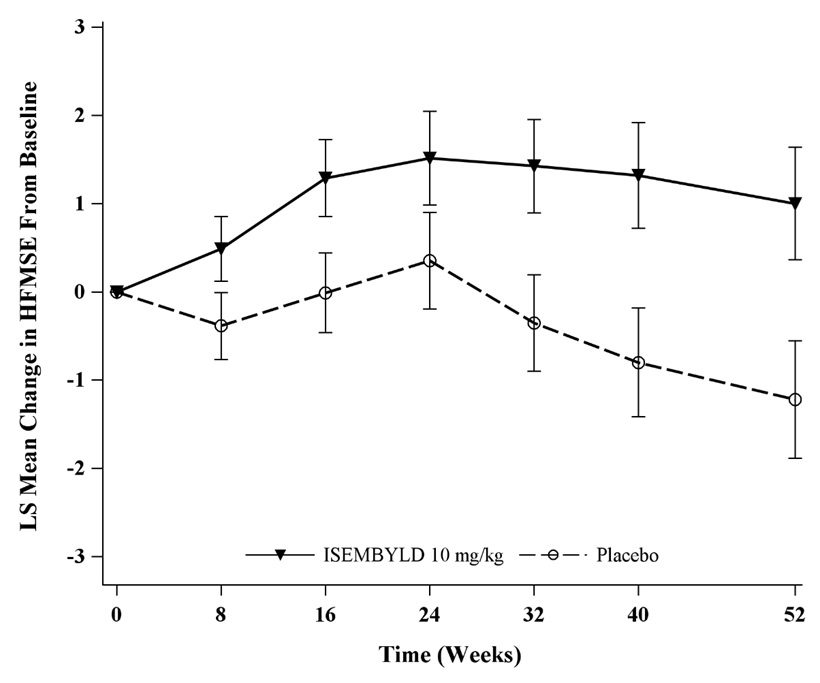
Figure 1 (Isembyld 01)
All patients on SMN2-targeted treatment.
Abbreviations: HFMSE, Hammersmith Functional Motor Scale Expanded; LS, Least Squares; SE, Standard Error; SMA, spinal muscular atrophy.
Note: Error bars represent +/- SE around the mean.
ISEMBYLD (apitegromab-mstn) injection is a clear to moderately opalescent, colorless to slightly yellow solution. It is supplied as one 150 mg/3 mL (50 mg/mL) single-dose glass vial per carton (NDC 84717-150-01).
Store ISEMBYLD vials in a refrigerator between 2°C to 8°C (36°F to 46°F) in the original carton to protect from light. Do not freeze. Do not shake. Discard unused portion.
For storage of the diluted infusion solution, see Dosage and Administration (2.3).
Advise the patient to read the FDA-approved patient labeling (Patient Information).
Missed Dose Instructions
Inform patients that if a planned dose is missed, they should either:
Fractures
Inform patients that ISEMBYLD may increase the risk of fractures, some of which can be serious [see Warnings and Precautions (5.1)].
Manufactured by:
Scholar Rock, Inc.
301 Binney Street
Cambridge, MA 02142 USA
U.S. License No.: 2372
©2026 Scholar Rock, Inc.
| This Patient Information has been approved by the U.S. Food and Drug Administration. | Issued: 09/2026 |
PATIENT INFORMATION ISEMBYLD™ (eye-SEM-bild)
| |
What is ISEMBYLD? ISEMBYLD is a prescription medicine used to treat spinal muscular atrophy (SMA) in adults and children 2 years of age and older who are currently receiving a survival motor neuron 2 (SMN2) targeted treatment. It is not known if ISEMBYLD is safe and effective in children under 2 years of age. | |
Before taking ISEMBYLD, tell your healthcare provider about all of your medical conditions, including if you:
Tell your healthcare provider about all the medicines you take, including prescription and over-the-counter medicines, vitamins, and herbal supplements. Keep a list of them to show your healthcare provider, including your pharmacist, when you get a new medicine. | |
How will I receive ISEMBYLD?
| |
What are the possible side effects of ISEMBYLD?
The most common side effects of ISEMBYLD include: These are not all of the possible side effects of ISEMBYLD. Call your doctor for medical advice about side effects. You may report side effects to FDA at 1-800-FDA-1088. | |
General information about the safe and effective use of ISEMBYLD. Medicines are sometimes prescribed for purposes other than those listed in a Patient Information leaflet. You can ask your pharmacist or healthcare provider for information about ISEMBYLD that is written for health professionals. | |
What are the ingredients in ISEMBYLD? Active ingredients: apitegromab-mstn Inactive ingredients: histidine, L-histidine hydrochloride monohydrate, sodium chloride, polysorbate 80, and Water for Injection. Hydrochloric acid was added to adjust the pH. Manufactured by: For more information, go to www.ISEMBYLD.com or call 1-877-ISEMBYLD (1-877-473-6295). | |
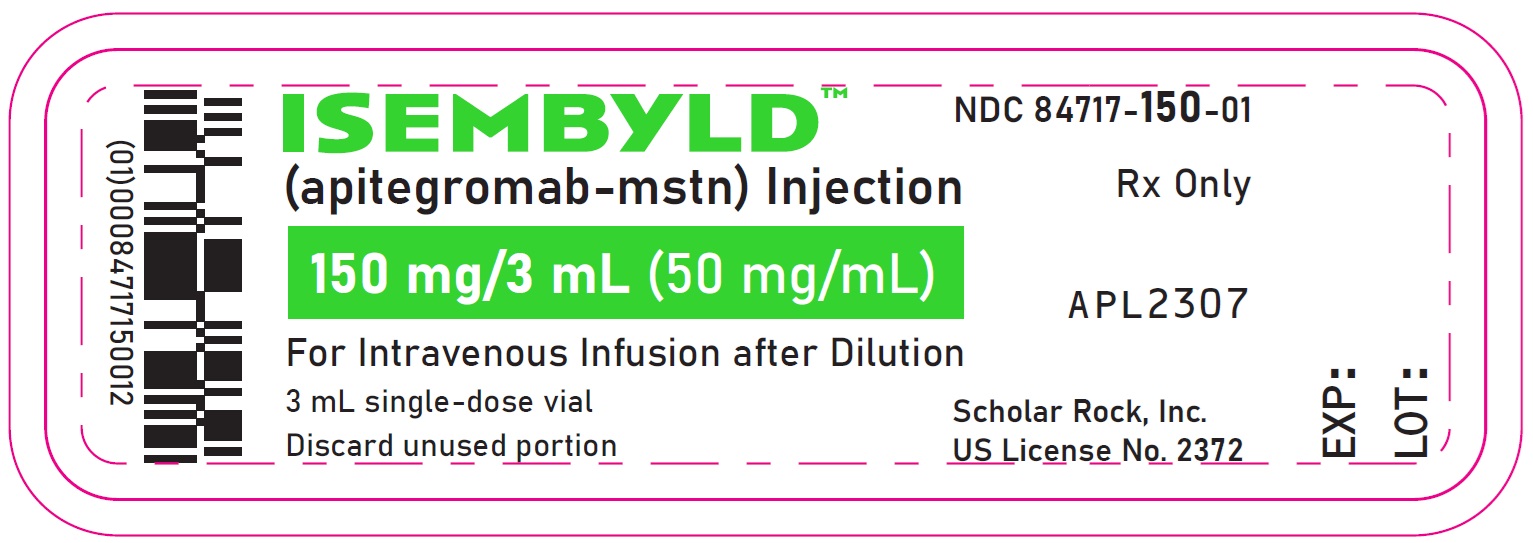
150 mg/3 mL (50 mg/ml) (Vial Label)
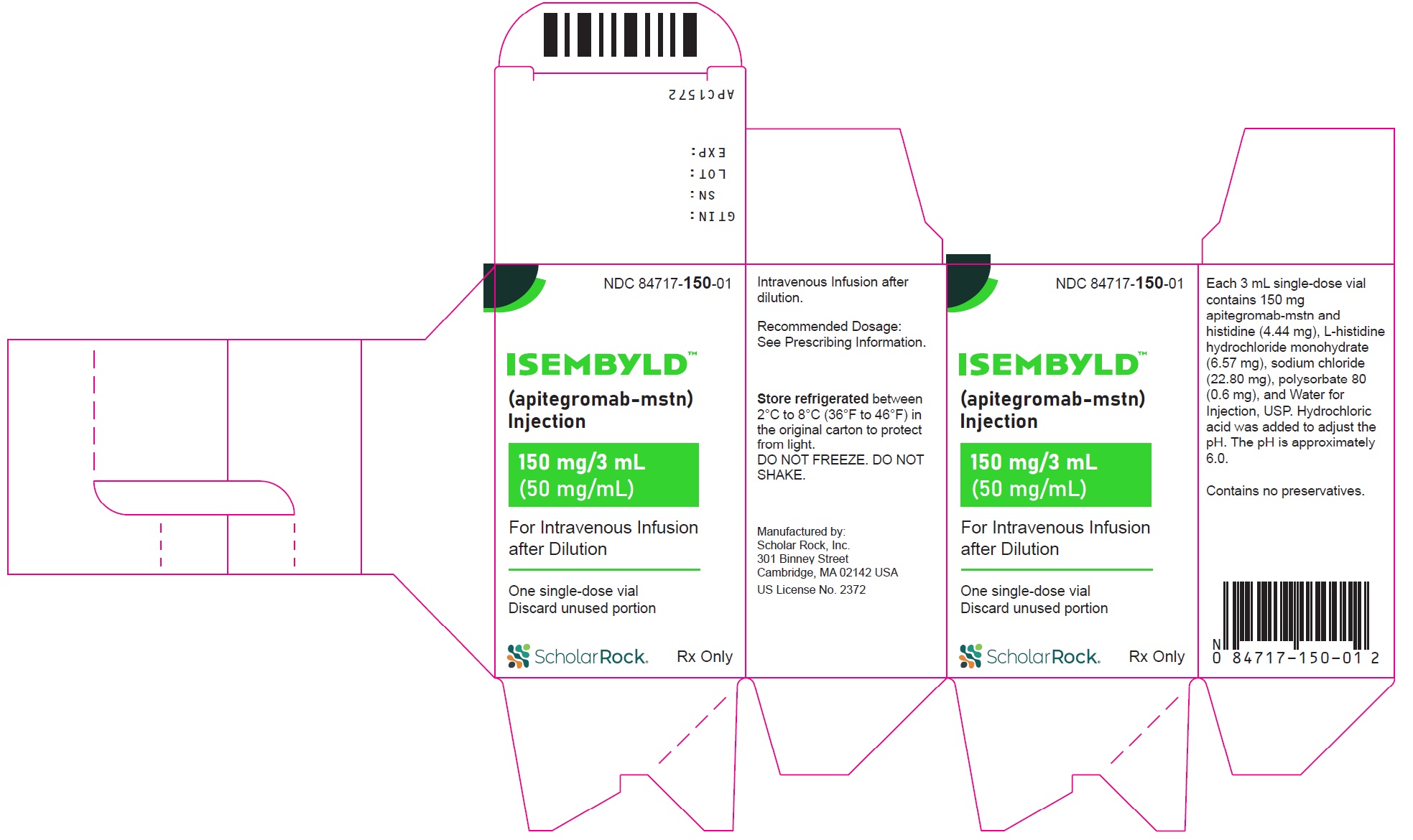
150 mg/3 mL (50 mg/ml) (Carton Label)
* Please review the disclaimer below.
