Lidocaine 4% Patch
Product Images NDC 85096-201

View Photos of Packaging, Regulatory Labels, and Product Appearance

Product Visual Gallery

This gallery contains 2 technical images submitted to the FDA as part of the official labeling for Lidocaine 4% (NDC 85096-201). Unlike standard consumer photos, these assets often include clinical data figures, molecular chemical structures, and official manufacturer packaging layouts.

As provided by Marcella Health, these visuals offer a comprehensive scientific overview of the product's physical and chemical identity, aiding pharmacists and researchers in product verification and study.

FDA Label Image

85096-201-01 (85096 201 01 Pouch)
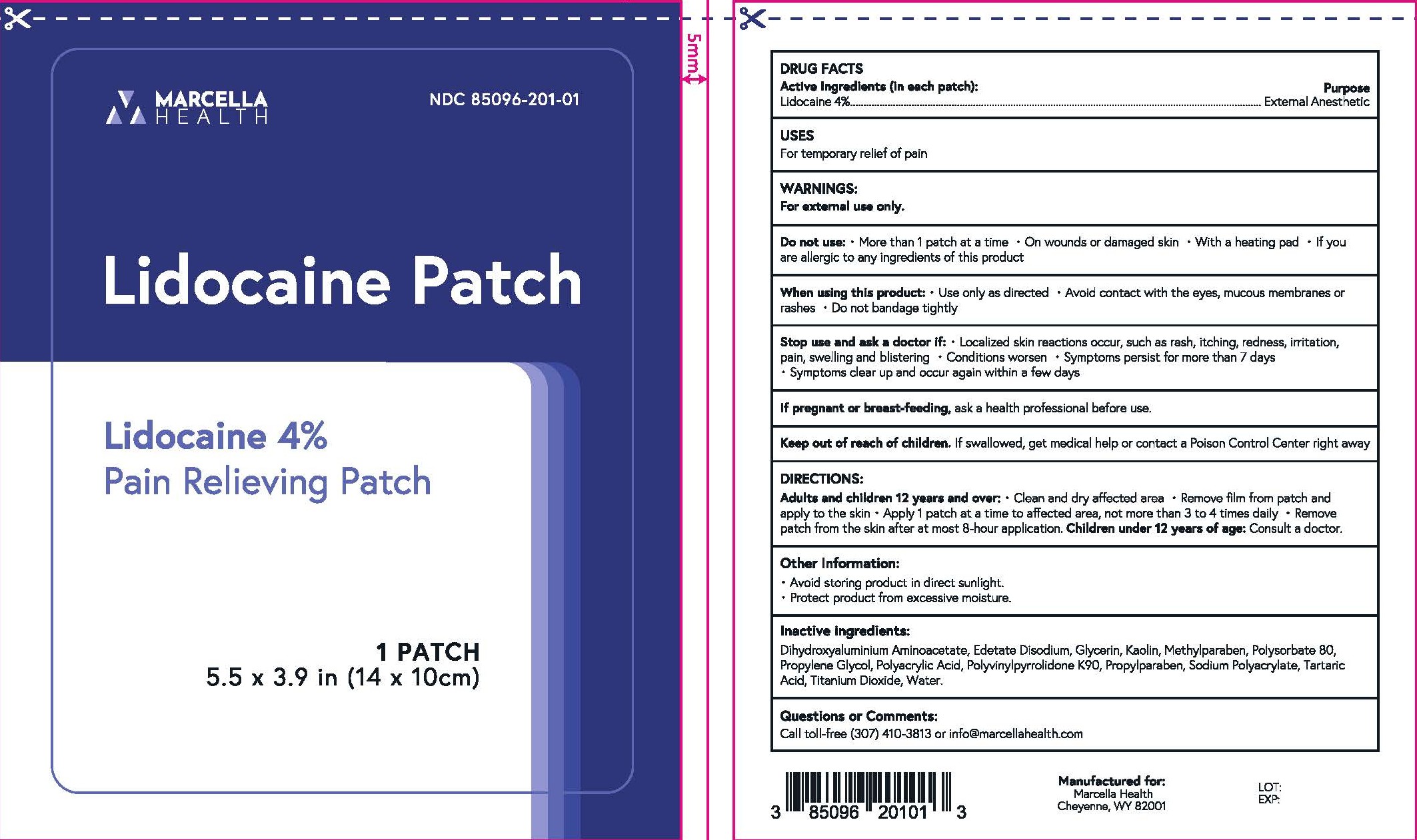
85096-201-01 (85096 201 01 Pouch)
This text provides information about a Lidocaine Patch, containing 4% lidocaine for pain relief. The patch is for temporary pain relief and should be applied externally to clean, dry skin. There are warnings and directions for use, including not using more than one patch at a time and not using on wounds or damaged skin. Other information about inactive ingredients and contact details for questions or comments are also included.*
FDA Label Image

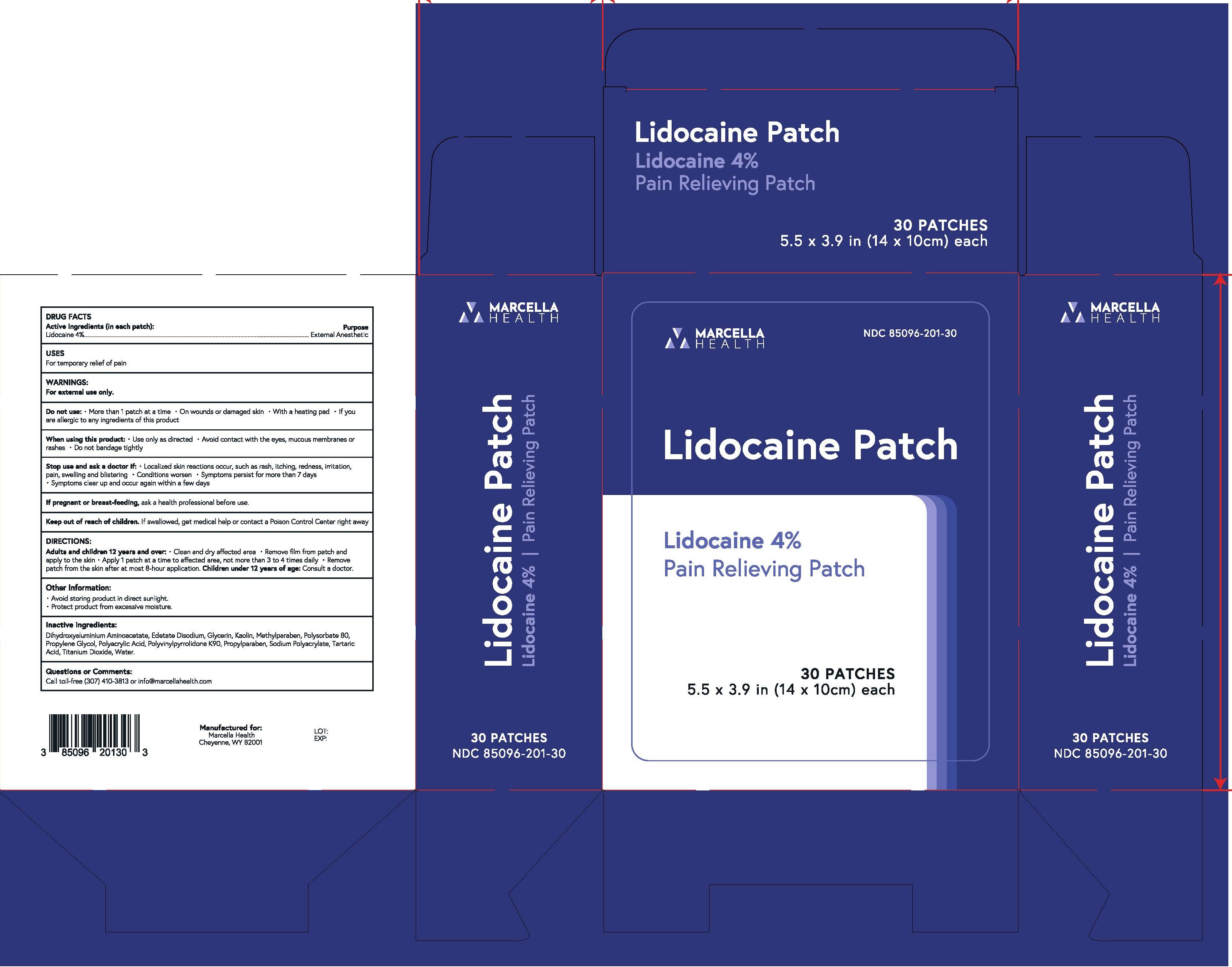
85096-201-30 Box (85096 201 30 Box Artwork)

85096-201-30 Box (85096 201 30 Box Artwork)
This text provides drug facts for Lidocaine patches, which are external anesthetics used for pain relief. The warnings caution against using more than one patch at a time and on wounds or damaged skin. Instructions for usage include cleaning and drying the affected area, applying one patch at a time up to 3 to 4 times daily, and removing the patch after an 8-hour application. It is advised to consult a doctor before use for children under 12 years of age, and pregnant or breastfeeding individuals should seek advice from a healthcare professional. Inactive ingredients and contact information for questions or comments are also provided. It is essential to keep the product out of reach of children and seek medical help if swallowed.*

* These product label images have been analyzed using experimental machine learning. Please verify findings with the primary label text.