Piflufolastat F-18 Injection
FDA Label NDC 85347-001

Full FDA labeling including Indications, Dosage, Usage, and Precautions

Structured Product Label

The following Structured Product Label (SPL) was submitted to the FDA by Aphelion Llc for the product Piflufolastat F-18 (NDC 85347-001). This document serves as the official prescribing information, containing essential scientific data and clinical materials required for healthcare providers and patients.

This specific version of the label includes detailed information regarding 1 indications and usage, 2.1 radiation safety – drug handling, other, 2.3 patient preparation, 2.4 image acquisition, 2.5 image display and interpretation, 2.6 radiation dosimetry, 3 dosage forms and strengths, and other regulatory disclosures. Use the navigation below to review specific sections of the FDA submission.

1 Indications And Usage

PYLARIFY TRUVU is indicated for positron emission tomography (PET) of prostate-specific membrane antigen (PSMA) positive lesions in men with prostate cancer:

  • with suspected metastasis who are candidates for initial definitive therapy
  • with suspected recurrence based on elevated serum prostate-specific antigen (PSA) level

2.1 Radiation Safety – Drug Handling

Handle PYLARIFY TRUVU with appropriate safety measures to minimize radiation exposure during administration [see Warnings and Precautions (5.3)] . Use waterproof gloves and effective radiation shielding, including syringe shields, when preparing and handling PYLARIFY TRUVU.

Radiopharmaceuticals, including PYLARIFY TRUVU, should be used by or under the control of healthcare providers who are qualified by specific training and experience in the safe use and handling of radionuclides, and whose experience and training have been approved by the appropriate governmental agency authorized to license the use of radionuclides.

Other

Recommended Dose

The recommended amount of radioactivity to be administered for PET imaging is 333 MBq (9 mCi) with an acceptable range of 296 MBq to 370 MBq (8 mCi to 10 mCi) administered as a single bolus intravenous injection.

Preparation and Administration

  • Use aseptic technique and radiation shielding when preparing and administering PYLARIFY TRUVU.
  • Visually inspect the radiopharmaceutical solution. Do not use if it contains particulate matter or if it is discolored (PYLARIFY TRUVU is a clear, colorless to pale yellow solution).
  • Calculate the necessary volume to administer based on calibration time and required dose. PYLARIFY TRUVU may be diluted with 0.9% Sodium Chloride Injection.
  • Assay the dose in a suitable dose calibrator prior to administration.
  • Post Administration Instructions

    • Follow the PYLARIFY TRUVU injection with an intravenous flush of 0.9% Sodium Chloride Injection.
    • Dispose of any unused PYLARIFY TRUVU in compliance with applicable regulations.
    • Androgen deprivation therapy and other therapies targeting the androgen pathway

      Androgen deprivation therapy (ADT) and other therapies targeting the androgen pathway, such as androgen receptor antagonists, may result in changes in uptake of piflufolastat F 18 in prostate cancer. The effect of these therapies on performance of PYLARIFY TRUVU PET has not been established.

      Risk Summary

      PYLARIFY TRUVU is not indicated for use in females. There is no information on the risk of adverse developmental outcomes in pregnant women or animals with the use of piflufolastat F 18. All radiopharmaceuticals, including PYLARIFY TRUVU, have the potential to cause fetal harm depending on the fetal stage of development and the magnitude of the radiation dose.

      Risk Summary

      PYLARIFY TRUVU is not indicated for use in females. There is no information on the presence of piflufolastat F 18 in human milk, the effect on the breastfed infant, or the effect on milk production.

      Distribution

      Following intravenous administration of piflufolastat F 18, blood levels decline in a biphasic fashion. The distribution half-life is 0.17 ± 0.044 hours and the elimination half-life is 3.47 ± 0.49 hours.

      Piflufolastat F 18 distributes to the kidneys (16.5% of administered activity), liver (9.3%), and lung (2.9%), within 60 minutes of intravenous administration.

      Elimination

      Elimination is by urinary excretion. In the first 8 hours post-injection, approximately 50% of administered radioactivity is excreted in the urine.

      OSPREY

      OSPREY enrolled a cohort of 268 men with biopsy-proven prostate cancer who were considered candidates for radical prostatectomy and pelvic lymph node dissection. These patients were all considered to have high risk disease based on criteria such as Gleason score, PSA level, and tumor stage. Each patient received a single piflufolastat F 18 PET/CT from mid-thigh to skull vertex.

      Three central readers independently interpreted each PET scan for the presence of abnormal piflufolastat F 18 uptake in pelvic lymph nodes in multiple subregions, including the common iliac lymph nodes. The readers were blinded to all clinical information. While readers also recorded the presence of piflufolastat F 18 PET-positive lesions in the prostate gland and outside the pelvis, those results were not included in the primary efficacy analysis.

      A total of 252 patients (94%) underwent standard-of-care prostatectomy and template pelvic lymph node dissection and had sufficient histopathology data for evaluation of the pelvic lymph nodes. Surgical specimens were separated into three regions: left hemipelvis, right hemipelvis, and other. For each patient, piflufolastat F 18 PET results and histopathology results obtained from dissected pelvic lymph nodes were compared by surgical region. PET results in locations that were not dissected were excluded from analysis.

      For the 252 evaluable patients, the mean age was 64 years (range 46 to 84 years), and 87% were white. The median serum PSA was 9.3 ng/mL. The total Gleason score was 7 for 19%, 8 for 46%, and 9 for 34% of the patients, with the remainder of the patients having Gleason scores of 6 or 10.

      Table 5 shows piflufolastat F 18 PET performance by reader through comparison to pelvic lymph node histopathology at the patient-level with region matching, such that at least one true positive region defines a true positive patient. Approximately 24% of the evaluable patients had pelvic lymph node metastases based on histopathology (95% confidence interval: 19%, 29%).

      Table 5: Patient-Level, Region Matched Performance of Piflufolastat F 18 PET for Detection of Pelvic Lymph Node Metastasis in OSPREY (n=252)
      Reader 1Reader 2Reader 3
      Abbreviations: CI = confidence interval, PPV = positive predictive value, NPV = negative predictive value
      True Positive231723
      False Positive749
      False Negative364337
      True Negative186188183
      Sensitivity, % (95% CI)39 (27, 51)28 (17, 40)38 (26, 51)
      Specificity, % (95% CI)96 (94, 99)98 (95, 99)95 (92, 98)
      PPV, % (95% CI)77 (62, 92)81 (59, 93)72 (56, 87)
      NPV, % (95% CI)84 (79, 89)81 (76, 86)83 (78, 88)

      In exploratory analyses, there were numerical trends towards more true positive results among patients with total Gleason score of 8 or higher and among patients with tumor stage of T2c or higher relative to those patients with lower Gleason score or tumor stage.

      CONDOR

      CONDOR enrolled 208 patients with biochemical evidence of recurrent prostate cancer, defined by serum PSA of at least 0.2 ng/mL after radical prostatectomy (with confirmatory PSA level also at least 0.2 ng/mL) or by an increase in serum PSA of at least 2 ng/mL above the nadir after other therapies. The mean age was 68 years (range 43 to 91 years), and 90% of patients were white. The median serum PSA was 0.82 ng/mL. Prior treatment included radical prostatectomy in 85% of the patients.

      All enrolled patients had conventional imaging evaluation (for most patients, CT or MRI) within 60 days prior to receiving piflufolastat F 18 PET, and this evaluation was negative or equivocal for prostate cancer. All patients received a single piflufolastat F 18 PET/CT from mid-thigh to skull vertex with optional imaging of the lower extremities.

      Three central readers independently evaluated each piflufolastat F 18 PET scan for the presence and location of positive lesions. Location of each lesion was categorized in one of 19 subregions that were grouped into 5 regions (prostate/prostate bed, pelvic lymph nodes, other lymph nodes, soft tissue, bone). The readers were blinded to all clinical information.

      Depending on the reader, a total of 123 to 137 patients (59% to 66%) had at least one lesion that was identified as piflufolastat F 18 PET-positive (Table 6, TP + FP + PET-Positive Without Reference Standard). The region most commonly observed to have a piflufolastat F 18 PET-positive finding was pelvic lymph nodes (40% to 42% of all PET-positive regions) and the least common region was soft tissue (6% to 7%).

      Depending on the reader, 99 to 104 patients with a piflufolastat F 18 PET-positive region had location-matched composite reference standard information available (Evaluable Set, Table 6, TP + FP) that consisted of histopathology, imaging (CT, MRI, ultrasound, fluciclovine PET, choline PET, or bone scan) obtained within 60 days of the piflufolastat F 18 PET scan, or response of serum PSA level to targeted radiotherapy. Reference standard information for PET-negative regions was not systematically collected in this study.

      Table 6 shows patient-level performance results of piflufolastat F 18 PET by reader, including location -matched positive predictive value [true positive / (true positive + false positive)], also known as Correct Localization Rate (CLR). For these results, a patient was considered true positive if they had at least one matching location positive on both piflufolastat F 18 PET and the composite reference standard. In addition to calculating location-matched positive predictive value in the Evaluable Set (CLR), an exploratory analysis of positive predictive value in all scanned patients (Imputed CLR) was performed in which piflufolastat F 18 PET-positive patients who lacked reference standard information were imputed using an estimated likelihood that at least one PET-positive lesion was reference standard positive, based on patient-specific factors.

      Table 6: Patient-Level Performance of Piflufolastat F 18 PET in CONDOR (n=208)
      Reader 1Reader 2Reader 3
      Abbreviations: TP = true positive, FP = false positive, CLR = location-matched positive predictive value in the Evaluable Set [TP/(TP + FP)], Imputed CLR = location-matched positive predictive value in all scanned patients using an imputation approach based on patient-specific factors for PET-Positive Without Reference Standard, CI = confidence interval
      True Positive (TP)898784
      False Positive (FP)151315
      PET-Positive Without Reference Standard332424
      PET-Negative718485
      CLR % (95% CI)86 (79, 92)87 (80, 94)85 (78, 92)
      Imputed CLR % (95% CI)78 (71, 85)81 (74, 88)79 (72, 86)

      An exploratory analysis of region-level positive predictive value using only PET-positive regions that had sufficient composite reference standard information to determine true positive or false positive status demonstrated results of 67% to 70% with the lower bound of the 95% confidence interval ranging from 59% to 63%.

      The percentage of patients categorized as true positive in a location-matched analysis out of all patients scanned with piflufolastat F 18 was an additional exploratory endpoint. Using the same imputation approach for PET-positive patients who lacked reference standard information as in Table 6 above, this value was 47% to 51%, with the lower bound of the 95% confidence interval ranging from 40% to 45%.

      Table 7 shows patient-level piflufolastat F 18 PET results from the majority read stratified by serum PSA level. Percent PET positivity was calculated as the proportion of patients with a positive piflufolastat F 18 PET out of all patients scanned. Percent PET positivity includes patients determined to be either true positive or false positive as well as those in whom such determination was not made due to lack of composite reference standard information. The likelihood of a patient having at least one piflufolastat F 18 PET-positive lesion generally increased with higher serum PSA level.

      Table 7: Patient-Level Piflufolastat F 18 PET Results and Percent PET Positivity

      Percent PET positivity = PET positive patients/total patients scanned. PET positive patients include true positive and false positive patients as well as those who did not have reference standard information.

      Stratified by Serum PSA Level in the CONDOR Study Using Majority Result Among Three Readers (n=199)

      Six patients were excluded from this table due to lack of baseline PSA level. Three patients were excluded from this table due to lack of majority result among the categories true positive, false positive, PET positive without reference standard, and PET negative.

      PSA
      (ng/mL)
      PET positive patientsPET negative patientsPercent PET positivity, (95% CI)
      TotalTPFPWithout reference standard
      With reference standard
      Abbreviations: TP = true positive, FP = false positive, CI = confidence interval
      <0.52411494535 (24, 46)
      15
      ≥0.5 and <11812331850 (34, 66)
      15
      ≥1 and <22115331068 (51, 84)
      18
      ≥2575034690 (83, 98)
      53
      Total1208813197960 (54, 67)
      101

      How Supplied

      PYLARIFY TRUVU (piflufolastat F 18) injection is supplied as 37 MBq/mL to 4,440 MBq/mL (1 mCi/mL to 120 mCi/mL) of piflufolastat F 18 in up to 55 mL at end of synthesis as a clear, colorless to pale yellow solution in a multiple-dose glass vial (NDC# 85347-001-01).

      PYLARIFY TRUVU does not contain a preservative.

      Adequate Hydration

      Instruct patients to drink a sufficient amount of water to ensure adequate hydration before their PET study and urge them to drink and urinate as often as possible during the first hours following the administration of PYLARIFY TRUVU, in order to reduce radiation exposure [ see Dosage and Administration (2.3)and Warnings and Precautions (5.3)].

      Manufactured for:
      Aphelion LLC
      201 Burlington Road
      Bedford, MA 01730

      PYLARIFY TRUVU™ is a trademark of Progenics Pharmaceuticals, Inc., used under license by Aphelion LLC.

      Patent: http://www.lantheus.com/patents/index.html

      516181-0325
2.3 Patient Preparation

Instruct patients to drink water to ensure adequate hydration prior to administration of PYLARIFY TRUVU and to continue drinking and voiding frequently for the first few hours following administration to reduce radiation exposure [see Warnings and Precautions (5.3)] .

2.4 Image Acquisition

The recommended start time for image acquisition is 60 minutes after PYLARIFY TRUVU administration. Starting image acquisition more than 90 minutes after injection may adversely impact imaging performance. Patients should void immediately prior to image acquisition. Position the patient supine with arms above the head. Image acquisition should start from mid-thigh and proceed to the skull vertex. Scan duration is 12 minutes to 40 minutes depending on the number of bed positions (typically 6 to 8) and acquisition time per bed position (typically 2 minutes to 5 minutes).

2.5 Image Display And Interpretation

Piflufolastat F 18 binds to prostate-specific membrane antigen (PSMA). Based on the intensity of the signals, PET images obtained using PYLARIFY TRUVU indicate the presence of PSMA in tissues. Lesions should be considered positive if uptake is greater than physiologic uptake in that tissue or greater than adjacent background if no physiologic uptake is expected. Tumors that do not express PSMA will not be visualized. Increased uptake in tumors is not specific for prostate cancer [ see Warnings and Precautions (5.1)].

2.6 Radiation Dosimetry

Radiation absorbed dose estimates are shown in Table 1 for organs and tissues of adult male patients from intravenous administration of PYLARIFY TRUVU. The radiation effective dose resulting from administration of 370 MBq (10 mCi) of PYLARIFY TRUVU to an adult weighing 70 kg is estimated to be 4.3 mSv. The radiation doses for this administered dose to the critical organs, which are the kidneys, liver, and spleen, are 45.5 mGy, 13.7 mGy, and 10 mGy respectively. When PET/CT is performed, exposure to radiation will increase by an amount dependent on the settings used in the CT acquisition.

Table 1. Estimated Radiation Absorbed Doses in Organs/Tissues in Adults Receiving PYLARIFY TRUVU
Organ/TissueMean Absorbed dose per Unit Administered Activity
(mGy/MBq)
MeanStandard Deviation
Adrenal glands0.01310.0013
Brain0.00210.0003
Breasts0.00580.0007
Gallbladder wall0.01410.0012
Lower large intestine wall0.00730.001
Small intestine0.00890.0009
Stomach wall0.00920.0008
Upper large intestine wall0.00910.0009
Heart wall0.01710.0022
Kidneys0.1230.0434
Liver0.0370.0058
Lungs0.01020.0016
Muscle0.00690.0008
Pancreas0.01240.0011
Red bone marrow0.00710.0007
Osteogenic cells0.00990.0012
Skin0.00520.0006
Spleen0.02710.0115
Testes0.00590.0008
Thymus gland0.0070.0008
Thyroid0.00620.0009
Urinary bladder wall0.00720.001
Effective dose0.0116 (mSv/MBq)0.0022 (mSv/MBq)

3 Dosage Forms And Strengths

Injection: 37 MBq/mL to 4,440 MBq/mL (1 mCi/mL to 120 mCi/mL) of piflufolastat F 18 in up to 55 mL at end of synthesis as a clear, colorless to pale yellow solution in a multiple-dose vial

4 Contraindications

None.

5.1 Risk Of Image Misinterpretation

Imaging interpretation errors can occur with PYLARIFY TRUVU imaging. A negative image does not rule out the presence of prostate cancer and a positive image does not confirm the presence of prostate cancer. The performance of PYLARIFY TRUVU for imaging of patients with biochemical evidence of recurrence of prostate cancer seems to be affected by serum PSA levels [ see Clinical Studies (14)]. The performance of PYLARIFY TRUVU for imaging of metastatic pelvic lymph nodes prior to initial definitive therapy seems to be affected by risk factors such as Gleason score and tumor stage [ see Clinical Studies (14)]. Piflufolastat F 18 uptake is not specific for prostate cancer and may occur with other types of cancer as well as non-malignant processes and in normal tissues. Clinical correlation, which may include histopathological evaluation of the suspected prostate cancer site, is recommended.

5.2 Hypersensitivity Reactions

Monitor patients for hypersensitivity reactions, particularly patients with a history of allergy to other drugs and foods. Reactions may not be immediate. Always have trained staff and resuscitation equipment available.

5.3 Radiation Risks

PYLARIFY TRUVU exposes patients to radiation [see Dosage and Administration (2.6)] . Radiation exposure is associated with a dose-dependent increased risk of cancer. Ensure safe handling and preparation procedures to protect patients and health care workers from unintentional radiation exposure. Advise patients to hydrate before and after administration and to void frequently after administration [see Dosage and Administration (2.3)] .

6 Adverse Reactions

The following clinically significant adverse reactions are described elsewhere in the labeling:

6.1 Clinical Trials Experience

Because clinical trials are conducted under widely varying conditions, adverse reaction rates observed in the clinical trials of a drug cannot be directly compared to rates in the clinical trials of another drug and may not reflect the rates observed in practice.

The safety of PYLARIFY TRUVU has been established based on data from clinical studies of another formulation of piflufolastat F 18 in patients with prostate cancer [see Clinical Studies (14)] . The results of these two studies are presented below.

The safety population included 593 patients, each receiving one dose of piflufolastat F 18. The average injected activity was 340 ± 26 MBq (9.2 ± 0.7 mCi).

The adverse reactions reported in >0.5% of patients within the studies are shown in Table 2. In addition, a hypersensitivity reaction was reported in one patient (0.2%) with a history of allergic reaction.

Table 2. Adverse Reactions with a Frequency >0.5% in Patients Who Received Piflufolastat F 18 (n = 593)
Adverse Reactionn (%)
Headache13 (2%)
Dysgeusia10 (2%)
Fatigue7 (1%)

8.4 Pediatric Use

The safety and effectiveness of PYLARIFY TRUVU in pediatric patients have not been established.

8.5 Geriatric Use

Of the 593 patients in completed clinical studies of piflufolastat F 18, 355 (60%) were ≥65 years old, while 76 (12.8%) were ≥75 years old. No overall differences in safety or effectiveness were observed between these patients and younger patients.

10 Overdosage

In the event of an overdose of PYLARIFY TRUVU, reduce the radiation absorbed dose to the patient where possible by increasing the elimination of the drug from the body using hydration and frequent bladder voiding. A diuretic might also be considered. If possible, an estimate of the radiation effective dose administered to the patient should be made.

11.1 Drug Characteristics

PYLARIFY TRUVU (piflufolastat F 18) injection is a radioactive diagnostic drug for intravenous use.

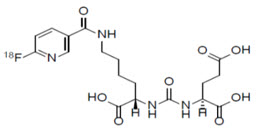
The chemical name of piflufolastat F 18 is 2-(3-{1-carboxy-5-[(6-[18F]fluoro-pyridine-3-carbonyl)-amino]-pentyl}ureido)-pentanedioic acid. The molecular weight is 441.4 and the structural formula is:

Chemical Structure (Piflufolastat F18 01)

Chemical Structure (Piflufolastat F18 01)

PYLARIFY TRUVU is a sterile, clear, colorless to pale yellow solution. Each mL contains 37 MBq to 4,440 MBq (1 mCi to 120 mCi) piflufolastat F 18 at end of synthesis, ≤8 μg of piflufolastat, 5 mg to 15 mg of ascorbic acid, and ≤7.89% (w/v) of ethanol in 0.9% sodium chloride injection. The pH of the solution is 5.0 to 7.0.

The specific activity is at least 1,000 mCi/µmol at the time of administration.

11.2 Nuclear Physical Characteristics

PYLARIFY TRUVU is radiolabeled with fluorine-18 (F 18), a cyclotron produced radionuclide that decays by positron emission to stable oxygen-18 with a half-life of 109.8 minutes. The principal photons useful for diagnostic imaging are the coincident pair of 511 keV gamma photons, resulting from the interaction of the emitted positron with an electron (Table 3).

Table 3. Principal Radiation Produced from Decay of Fluorine-18
Radiation Energy (keV)Abundance (%)
Positron249.896.9
Gamma511193.5

The point source air-kerma coefficient for F 18 is 3.75 × 10 -17Gy m 2/(Bq s). The first half-value thickness of lead (Pb) for F 18 gamma rays is approximately 0.6 cm. The relative reduction of radiation emitted by F 18 that results from various thicknesses of lead shielding is shown in Table 4. The use of 8 cm Pb decreases the radiation transmission (i.e. exposure) by a factor of about 10,000.

Table 4. Radiation Attenuation of 511 keV Gamma Rays by Lead Shielding
Shield Thickness cm of Lead (Pb)Coefficient of Attenuation
0.60.5
20.1
40.01
60.001
80.0001

12.1 Mechanism Of Action

Piflufolastat F 18 binds to cells that express prostate-specific membrane antigen (PSMA), including malignant prostate cancer cells, which usually overexpress PSMA. Fluorine-18 (F 18) is a β+ emitting radionuclide that enables positron emission tomography.

12.2 Pharmacodynamics

The relationship between piflufolastat F 18 plasma concentrations and image interpretation has not been studied.

13.1 Carcinogenesis, Mutagenesis, Impairment Of Fertility

Animal studies to assess the carcinogenicity or mutagenic potential of piflufolastat have not been conducted. However, piflufolastat F 18 has the potential to be mutagenic because of the F 18 radioisotope.

No animal studies with piflufolastat have been performed to evaluate the potential impairment of fertility in males or females.

14 Clinical Studies

The safety and effectiveness of PYLARIFY TRUVU have been established based on data from two prospective, open-label, multi-center clinical studies of another formulation of piflufolastat F 18 in men with prostate cancer: OSPREY (NCT02981368) and CONDOR (NCT03739684). The results of these two studies are presented below.

Storage And Handling

Storage and Handling

Store PYLARIFY TRUVU upright in the original container with radiation shielding at 20°C to 25°C (68°F to 77°F) [see USP Controlled Room Temperature].

The expiration date and time are provided on the container label. Use PYLARIFY TRUVU within 10 hours from the time of end of synthesis.

Dispose of any unused product in compliance with applicable regulations.

This preparation is for use by persons under license by the Nuclear Regulatory Commission or the relevant regulatory authority of an Agreement State.

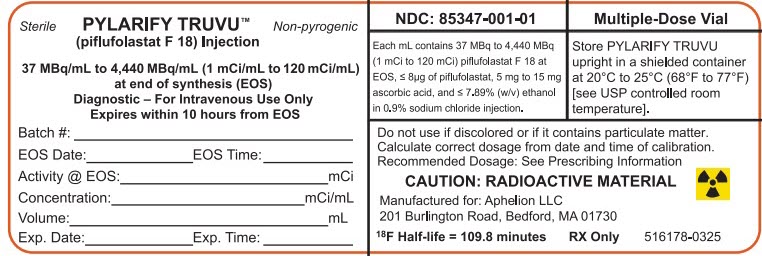
Principal Display Panel - 50 Ml Vial Label

Sterile

PYLARIFY TRUVU™
(piflufolastat F 18) Injection

Non-pyrogenic

37 MBq/mL to 4,440 MBq/mL (1 mCi/mL to 120 mCi/mL)
at end of synthesis (EOS)
Diagnostic – For Intravenous Use Only
Expires within 10 hours from EOS

Batch #: _____________________________

EOS Date:__________EOS Time:________

Activity @ EOS:___________________mCi

Concentration:__________________mCi/mL

Volume:___________________________mL

Exp. Date:__________Exp. Time:_________

Principal Display Panel (50 mL Vial Label)

Principal Display Panel (50 mL Vial Label)

* Please review the disclaimer below.